
Hands at work reveal the care and lessons behind each story in Vogue Philippines’ first Love Issue.
Between the pages of the February 2026 issue of Vogue Philippines, love reveals itself differently in every story. Sometimes, it appeared in precision and care, in arrangements so thoughtful they didn’t need explaining. Other times, it sat quietly in curiosity, and in the kind of devotion that keeps what matters from slipping away.
Here’s what stayed with us from conversations, sets, and shared moments.
Staying human often begins with what we make with our hands
The scent of acrylic lingers in the sunlit corners of Imelda Cajipe Endaya’s studio, where every surface bore marks of ongoing creation. A pioneering figure in Philippine visual art, Imelda has spent more than five decades shaping feminist discourse through her work. As we worked through the space, a cat moved in and out during the shoot, unbothered, as if accustomed to the rhythm of work. Empty bottles of Berocca sat beside brushes and tools, subtle traces of long days and sustained effort unfolding before us.
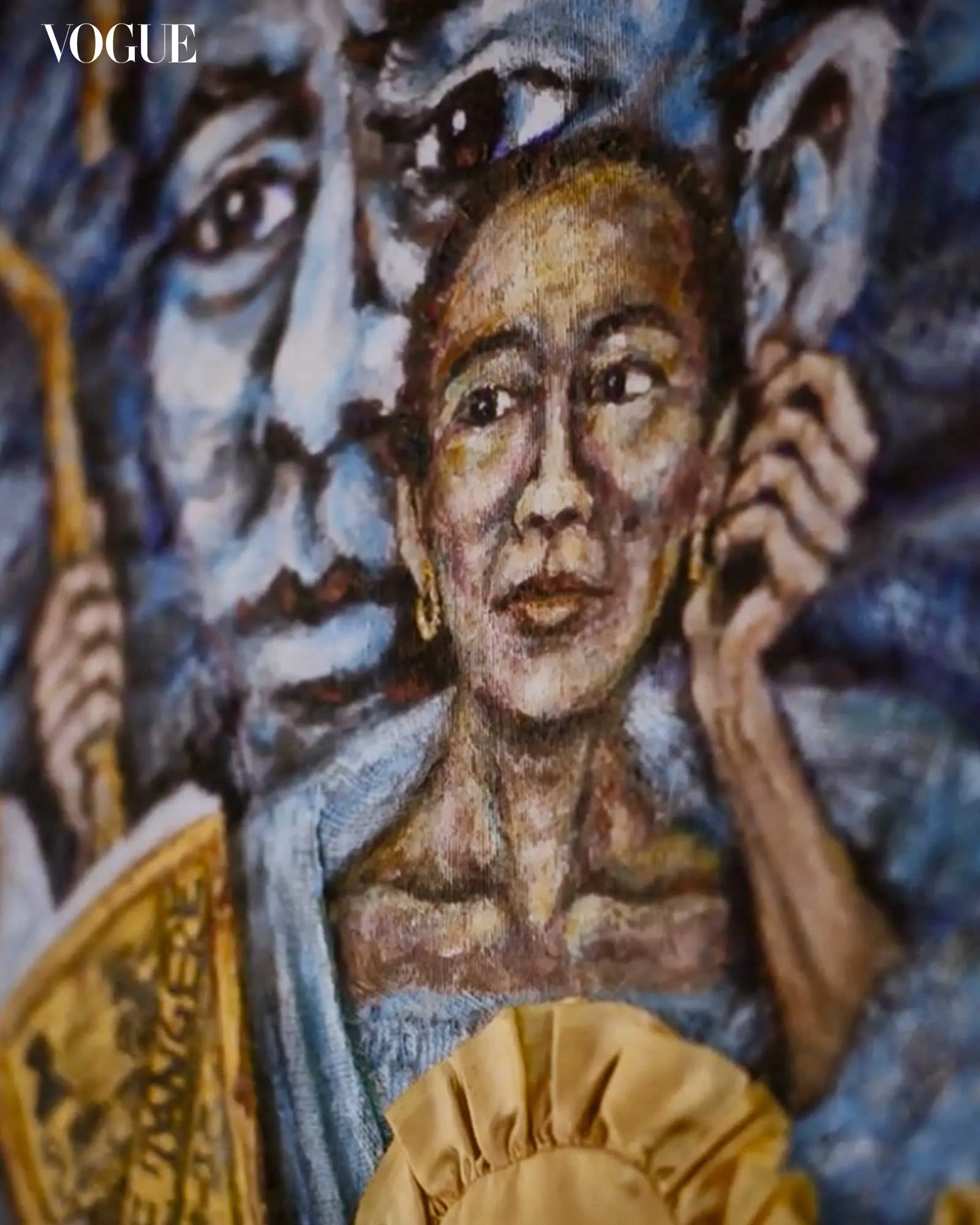
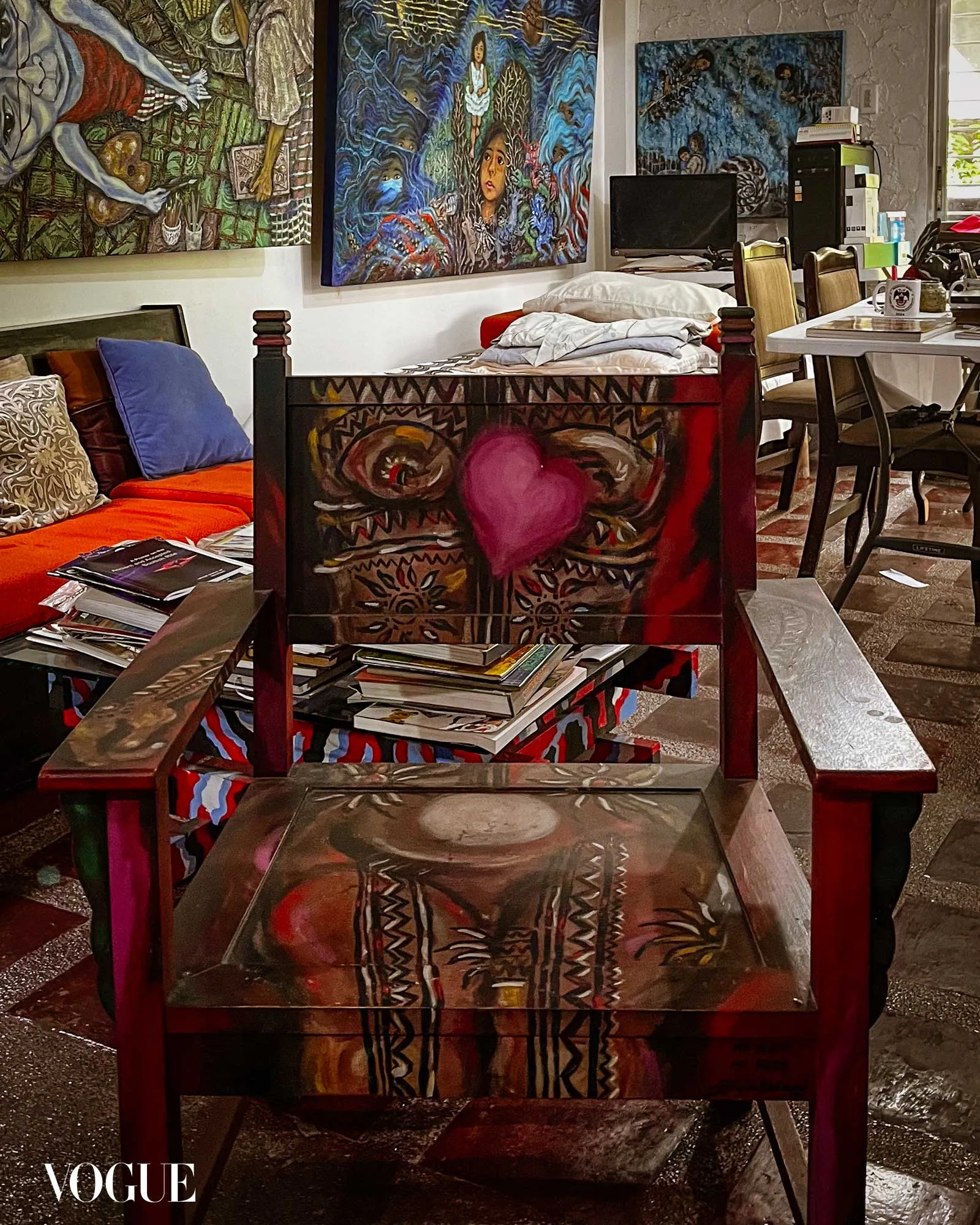
Before we began, Imelda put together her own look for the shoot, pairing color and pattern with the same care she brings to her practice. Nothing felt accidental; everything was considered. As she spoke to us about art as an act of feminism, one rooted in persistence and care, it felt less like a statement and more like something lived. “I think it’s important still to do things that are tactile,” she told us, noting how technology can enhance but also distance. Watching her move through the space, hands always at work, the lesson became unmistakable: staying human is a commitment.
After more than 55 years of practice, what she leaves behind is presence. Sometimes, the most radical thing is simply to keep making. When we asked about her process, she described it as a conversation. “I converse with the material. I confront a blank canvas, and whatever objects I have, I throw in. It seems to talk to me, tells me to respond.”
Vulnerability is an unspoken strength
Antonio Garcia welcomes everyone who enters the flower shop with a hug, his arms already scented with fresh earth and petals. The founder of Mabolo Flower Shop, he is known for his intuitive approach to floral design and his advocacy for sustainability within the local industry. We knew immediately that the gesture set the tone for the shoot: warm, unguarded, generous. Between takes, our conversation drifted naturally toward the work itself. He spoke to us about arrangement not as decoration, but as intuition. Knowing when to intervene, when to step back, when to let things unfold on their own. Watching him handle each bloom, it became clear to us that restraint is attention.


As it often does on set, the conversation shifted from the poetry of the work to the conditions that make it possible. “If the government does not put in what they need to assist the industry,” he told us, hands still busy with stems, “we bleed.”
He held a large bouquet of roses with bare hands, thorns intact. “Love is painful,” he said, without hesitation. As the shoot wound down, he pressed bouquets into our hands, insisting everyone take one before leaving. In both the act and the offering, vulnerability revealed itself to us as generosity: an openness to discomfort, care, and giving, without needing to soften the truth.
Understanding the past is an act of care
The rustle of pages and the warm scent of old books wraps around us inside Ambeth Ocampo’s space, where shelves of history shared room with small plush toys kept close for sentiment. A historian and professor, Ocampo is widely known for making Philippine history accessible through his writing and public scholarship. Sitting with him, we listened as he spoke about how understanding the past became his way of making sense of the world. He reminded us that history explains not just who we were, but why we are the way we are.
Over lunch and a plate of kare-kare, a dish he associates with home, Ocampo reflected with us on his time in the monastery, where manual labor was both discipline and devotion. The work was a form of poverty, a service to the community, a way of praying with the hands. He recalled being assigned to clean a library instead of scrubbing floors, a task somebody questioned because it felt too enjoyable for him to count as labor.
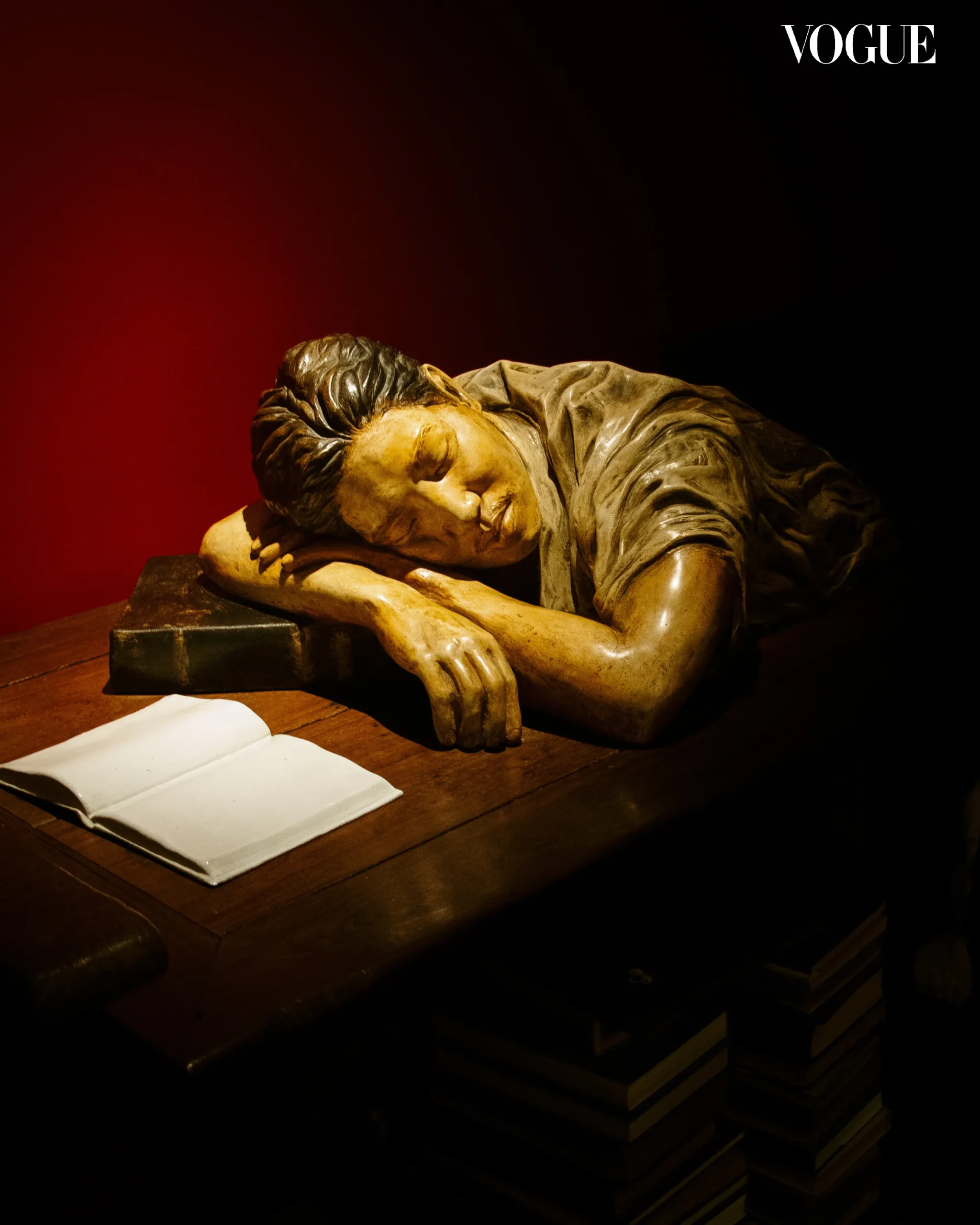
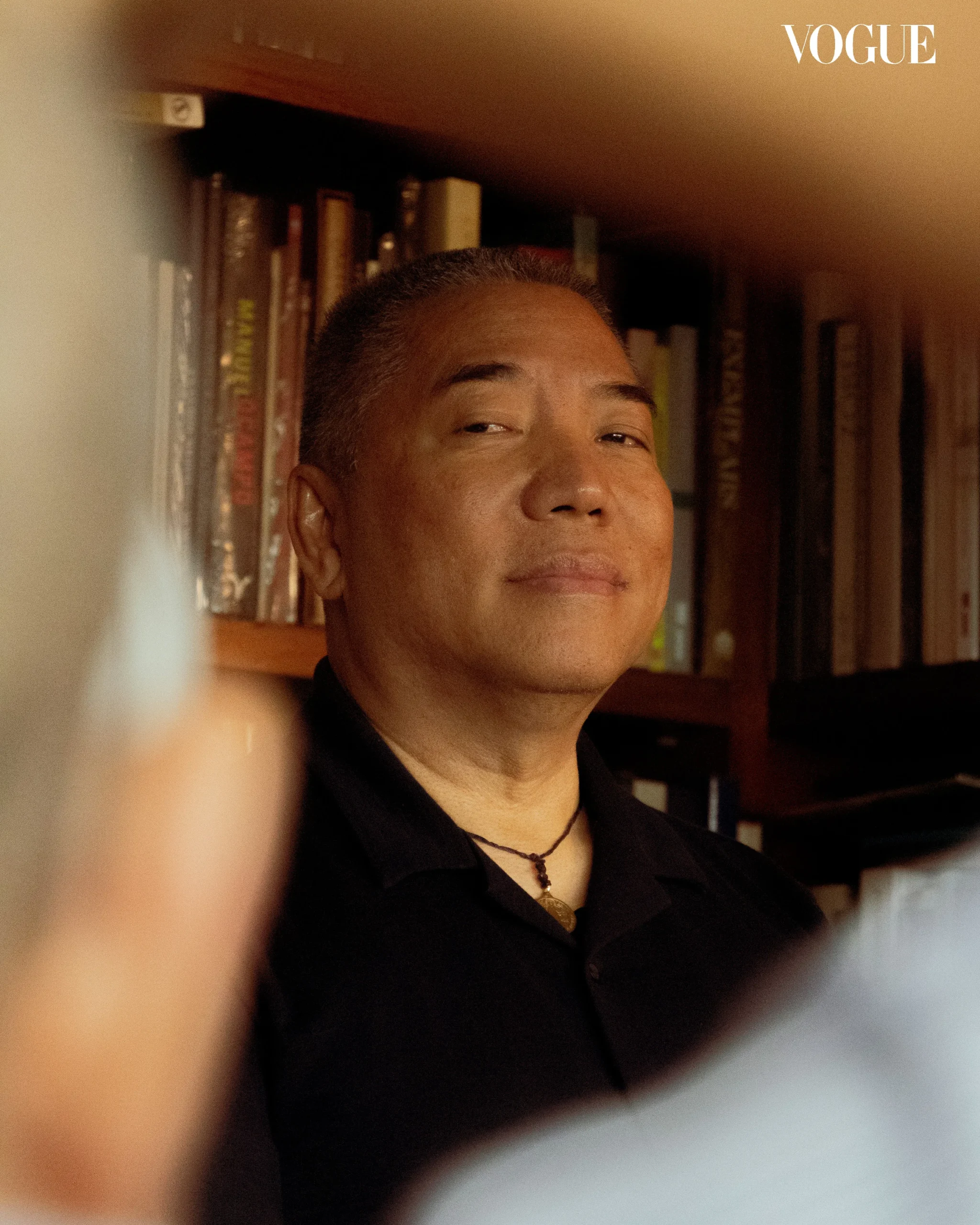
Purpose, he suggested, shapes how we care for what is entrusted to us. Surrounded by books, memory, and rituals that ground him, Ocampo reminded us that love often reveals itself through preservation: of knowledge, of memory, and of the small things we choose to keep close.
Love takes its shape through shared purpose
Morning mist carries the scent of fresh herbs and sizzling pans as we arrive at Jayjay and Rhea Sycip’s kitchen in Tagaytay. The husband-and-wife duo behind The Fatted Calf, the Sycips are known for their farm-driven cooking rooted in seasonality and close relationships with local farmers. We met them and watched how their cooking unfolded with a simple conviction: that every meal is an opportunity to bring people together and honor where ingredients come from. As we watched them move through the kitchen, it became clear how sourcing from local farmers, adapting the menu to what the land offers, and approaching desserts and savory dishes with equal seriousness all stem from care and consistency.


During a lighthearted interview, stories of their own love surfaced easily. Jayjay narrates to us how Rhea baked for him for the first time, prompting his father to say, “Anak, pakasalan mo na ’yan. Hindi ka magugutom diyan (Son, you should marry her. You won’t go hungry with her).” Childhood classmates, first suitors, always seated beside each other because they were the tallest in the room, their story mirrored their cooking. Love, for them, is practiced through instinct, through making sure everyone leaves nourished.
The shoot ended the way their work often does, with a feast. Before we moved on to the next set, they insisted on feeding us, filling plates and refilling them. Love, served warm.
Love remains a distinctly human act


This Love Issue came together through many hands. Hands we experienced in action, clutching cameras and light boxes, arranging flowers and plating food, turning pages, painting brushstrokes, taking notes, raising questions, and offering time. Each movement, however small, carried intention. What unfolded across our shoots felt deeply like an act of care. One that required presence, collaboration, and trust among us. Innovation may refine the tools we use, but it cannot replace the human impulse behind them.
From studios to kitchens, libraries to flower-filled rooms, we were reminded that love begins where attention is given. In choosing to make, to hold, to remember, and to give, it is these hands behind the pages that bring our stories to life.


