
Photographed by Gabriel Nivera for the December 2025/January 2026 Issue of Vogue Philippines
Across Basilan, age-old practices of care reveal a deep kinship between nature and community.
The sea journey from the Port of Zamboanga to Isabela City feels like crossing a threshold. As the boat cuts through the Basilan Strait, the island rises into view: houses on stilts stacked over the shore, boats hoisted in makeshift garages. This littoral zone, where land recedes and water takes precedence, is called home to searing peoples like the Sama Dilaut, whose kinship extends across the waters to Indonesia and Malaysia.
The Sulu archipelago lies at the southernmost reaches of the Philippines, and with the exception of Sulu province and the city of Isabela de Basilan, it belongs to the Bangsamoro Autonomous Region in Muslim Mindanao (BARMM). Administratively and spiritually, it stands apart from the rest of the country, and for many decades was defined by its history of conflict. As peace began to settle in recent years, travelers have begun to look past old headlines and discover the island’s wealth, woven in the geometric precision of Yakan textiles, the smoky, coconut-rich flavors of Tausug food, and its sense of harmony with the natural world.
In June 2025, Basilan was officially declared “Abu Sayyaf-free,” a milestone for a province that once bred the notorious terrorist group. Over the past decade, former insurgents have surrendered and reintegrated into society through the joint work of government, faith, and community. Lives were rebuilt, and Basilan began to define itself anew. The region now invites travelers to experience its culture through the intertwined themes of Habi (weaving), Halal (Cuisine), and Hilom (Wellness). Hilom means healing or quieting down, and this last dimension can be elusive, the most subjective. We sought to find out what wellbeing means to the inhabitants of Basilan, and what it might offer us as visitors, neighbors, and fellow Filipinos.
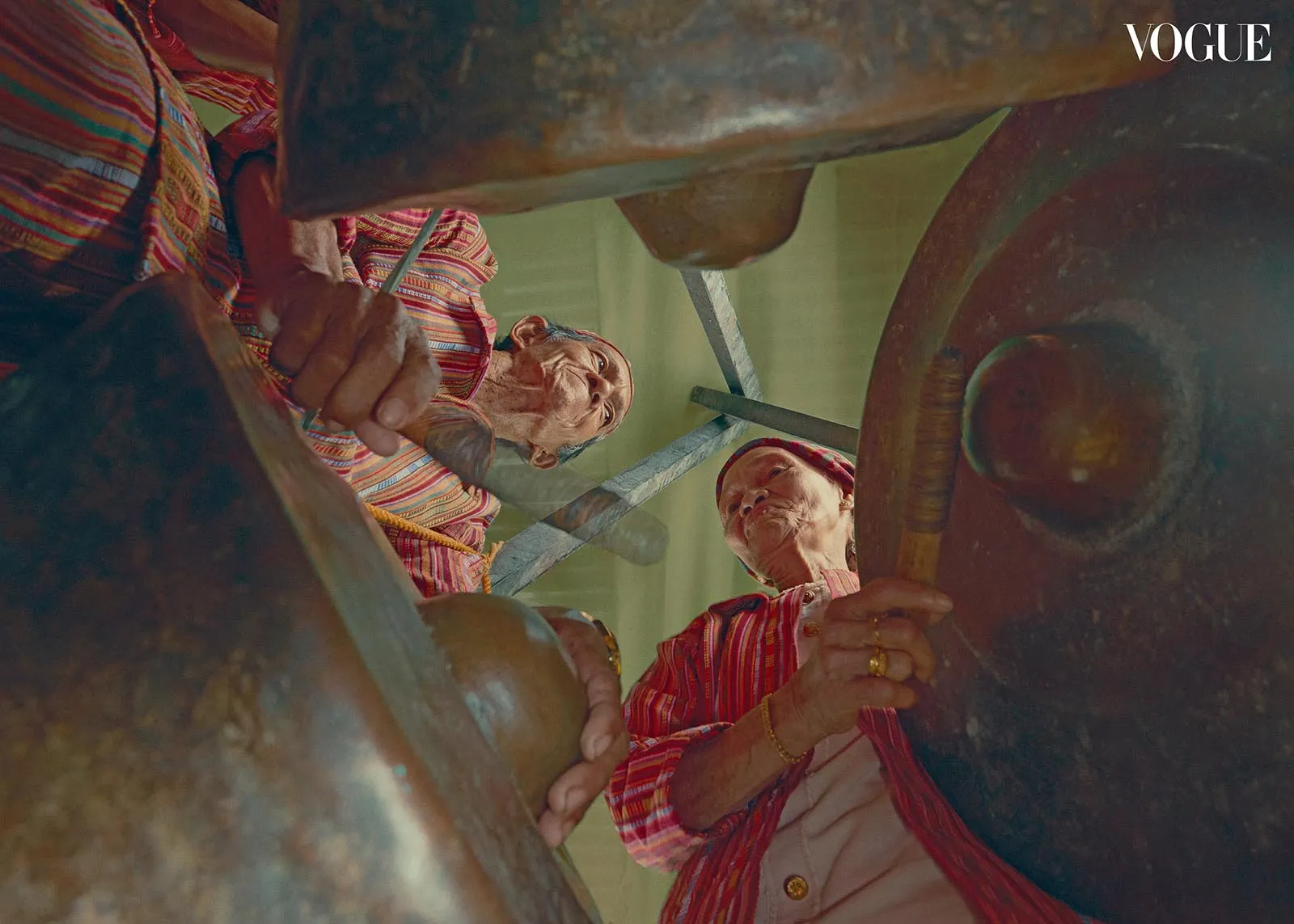
We first glimpse this spirit at a community center in Kapatagan Grande, which also happens to be the barangay captain’s home. Women from the Tennun Weavers Association, a collective of Sama Banguingui and Yakan artisans, demonstrated their skills in weaving, music, and cooking in a generous celebration of their culture.
The preparation of panyam and jaa, two ceremonial pastries, is almost meditative. Batter made from glutinous rice flour, brown sugar, and coconut milk, is swirled through a coconut shell sieve into a wok of hot oil. A steady tap of a bamboo stick keeps rhythm as the strands of dough weave into a lace-like cake, folded into triangles or other intricate forms. Panyam, meanwhile, is shaped into a disc and spun deftly with two wooden spatulas until it puffs at the center, its scalloped edges crisp and golden. Though delicious eaten fresh off the stove, locals say it’s best the next day, dipped in hot coffee. On feast days, panyam and jaa are arranged around a dulang, a platter of food surrounding a large cone of rice. The grander the occasion, the more elaborate the dulang.
Here, food is always shared. Spread out on a mat, gathered around, eaten with your hands. Touching a meal connects you to the food and the hands that prepared it. For those raised in a hygiene-obsessed world, eating utensil-free can feel uncomfortable at first, but once that hesitation falls away, so does a kind of invisible wall. Eating becomes communion. What nourishes your body nourishes mine, and what is shared by hand is also shared in spirit.
More tapping sounds emerge from the gong ensemble who threshes out percussive rhythms on the kulintang, the agung, and the gandang. An instrument specific to harvest rituals called the tungtungan consists of a suspended wooden plank and a jar resonator. The plank is pounded on one end, mimicking the pounding of rice. As Earl Francis Pasilan, a cultural advocate and Yakan, explains in a video, the tungtungan is played to give thanks to the spirits for granting a bountiful harvest. “The Yakan have an instrument played at each part of their life. These instruments and their sounds remind them of who they are, their identity as farmers, as weavers, as people of the earth.” This is music that predates colonial Philippines, a soundtrack to rice planting ceremonies, infant naming rituals, weddings, and gatherings where spirits are appeased or called on for protection and blessing.
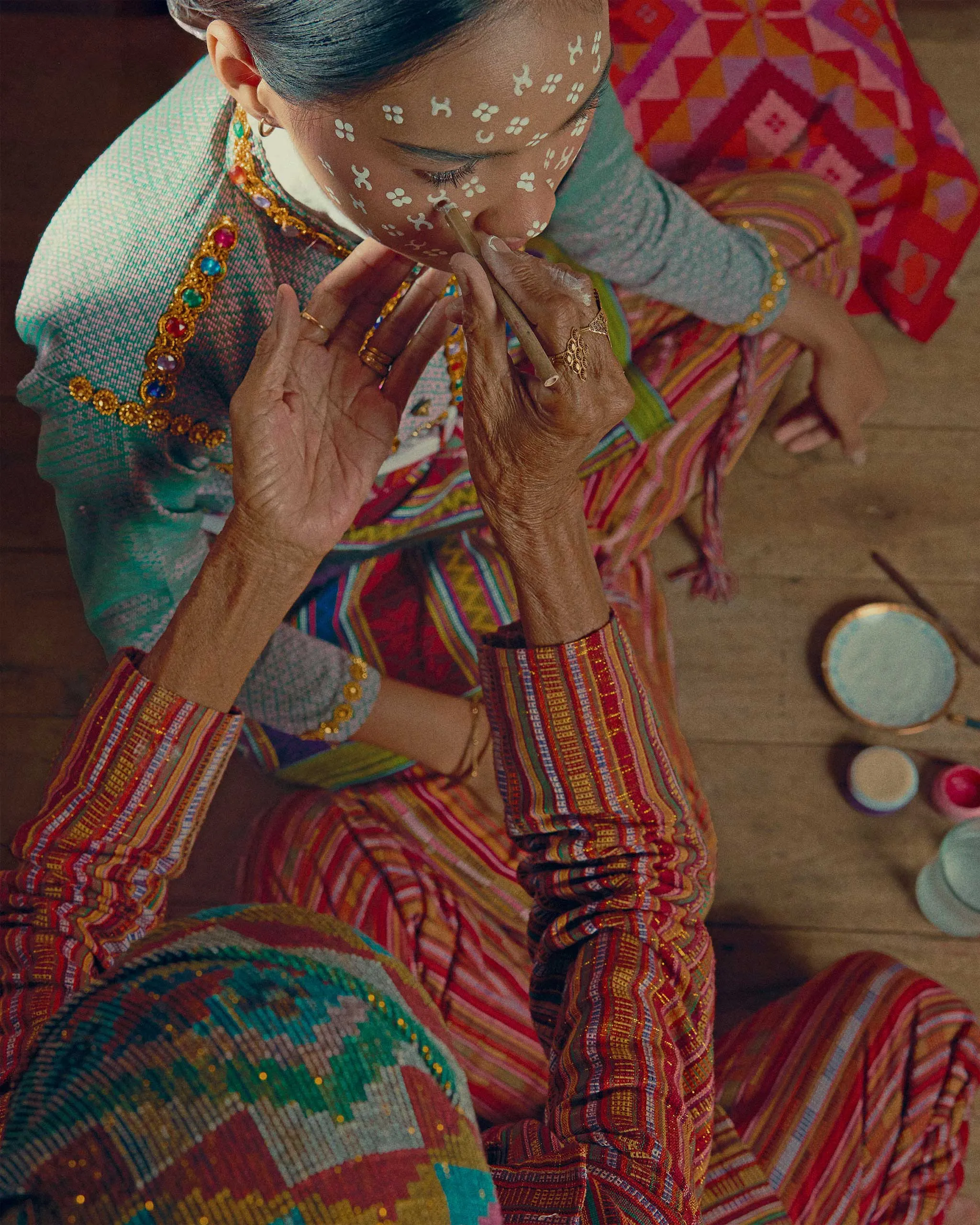
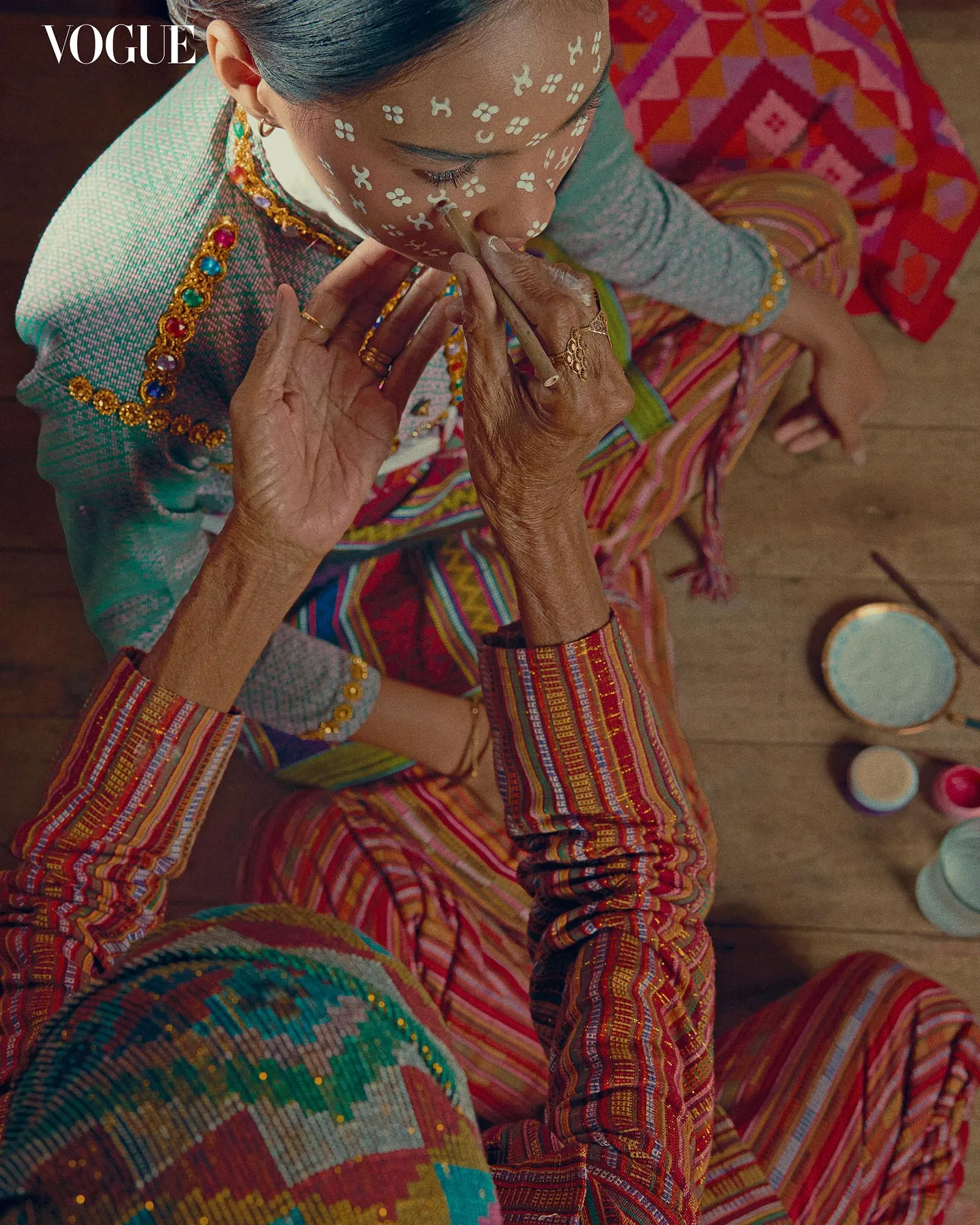
In certain celebrations, Yakan women adorn their faces with delicate white patterns made from rice powder and water. These days, few still grind rice by hand and so Meimei face powder from China often takes its place. The face painter, usually an elder versed in the tradition, uses a tanyak, or patterned bamboo stick, to stamp motifs on the faces of the bride and groom. The designs echo those found in Yakan weaving, from diamonds, dots, and crescents, symbolizing fertility, cycles of planting, and their Islamic faith. Charcoal darkens the eyebrows, deepening the contrast with the white. This ritual, known as tanyak-tanyak, creates a mask that conceals the couple’s identities from malevolent spirits, while affirming their place in Yakan heritage.
“It has to flow. You become mindful of everything around you.”
Among the Tausug, another major ethnolinguistic group in Basilan, beauty and protection take another form in burak, a traditional face mask. Made by grinding rice, turmeric, and the leaves of kambang tuli or hummingbird plant into a yellow-green paste, the process becomes a drawn-out pleasure. Women turn the task into a kind of spa day or bonding moment between mother and daughter, chatting and laughing as they crush herbs with a pestle. The paste is spread thickly over the face and left to dry into a stiff mask that also shields skin from the sun. Turmeric lends brightening, anti-inflammatory properties, while kambang tuli offers freshness from natural antioxidants. The mask can also be applied to the whole body like a scrub, a devotional ritual that leaves skin feeling renewed.
At the Marang Marang floating cottages, set in the midst of a mangrove sanctuary, we witness another form of hilom. This Basilan attraction has won numerous sustainable tourism awards for the women who run it, the Marang Marang Women’s Association, most of them Sama Banguingui and Sama Bajau women who have long been marginalized in society. Yet here they are rewriting the narrative through hospitality, food, and dance. By opening their world to visitors, they have shown how a group of women can transform their lives and bring prestige to their community. Guests are welcomed with an immense spread of Sama and Tausug seafood dishes whose ingredients are all sourced locally, while women standing on papet boats slowly sway their arms in a dance known as the pangalay.
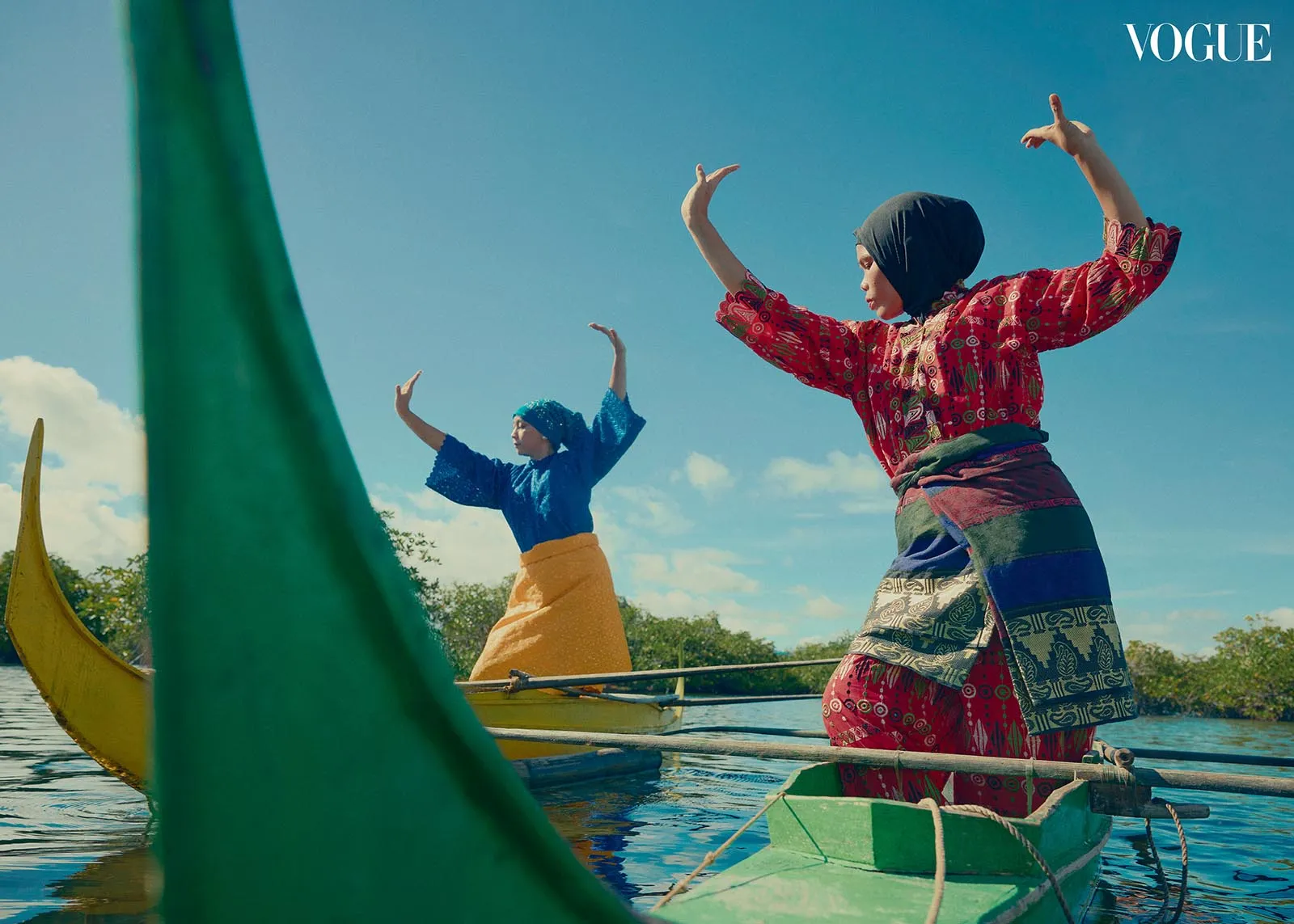
Hands become waves, wrists turn in slow, deliberate arcs. Pangalay is not a dance in the sense most of us know. There is no fixed choreography or sequence of steps to memorize. When photographer Gabe Nivera tried capturing two performers together, he found they could hardly hold a shared pose; each moved according to her own rhythm. Every gesture rises from within, as offering or prayer. Isabela City Mayor Sitti Djalia Tubarin Hataman, who is both Yakan and Tausug and has known pangalay since childhood, explains that the dance comes from a place of inner stillness. “It has to flow,” she says. “If I’m not at peace with my inner self, I can’t do it. You become mindful of everything around you. Your relationship has to be good with nature.”
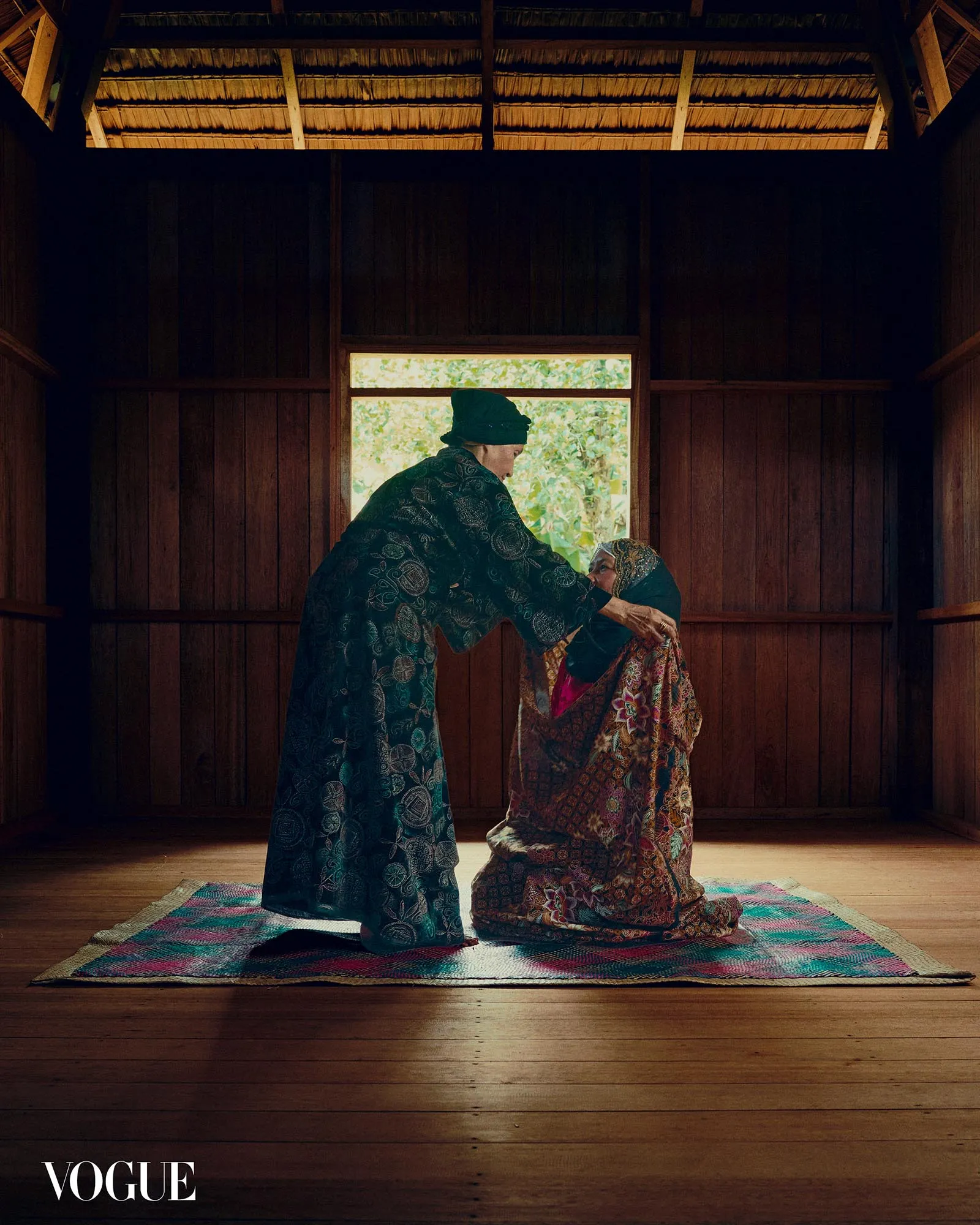
Nature is the first healer, and for generations the indigenous people of the Sulu Archipelago have turned to their forests as a living apothecary. At a Sama Banguingui stilt home, we witness how community cares for their new mothers. The Sama postpartum traditions share similarities with many traditional cultures around world, centering on a period of confinement and rest after childbirth that lasts 40 days or more. During this time, the mother is not permitted to bathe for the first two weeks; instead, she receives a restorative massage using heated river stones wrapped in a fragrant blend of grated coconut, hummingbird plant, castor leaves, and turmeric. The rising steam smells both earthy and sweet and entirely nourishing. To be given this massage once or twice a day during the lying-in period is a luxury that even modern moms are deprived of. The warmth restores circulation and returns the body’s inner heat, believed to be lost in childbirth. The same steaming poultice is used for suob, a cleansing ritual in which the mother sits inside an enclosed malong, allowing herbal vapors to heal her.
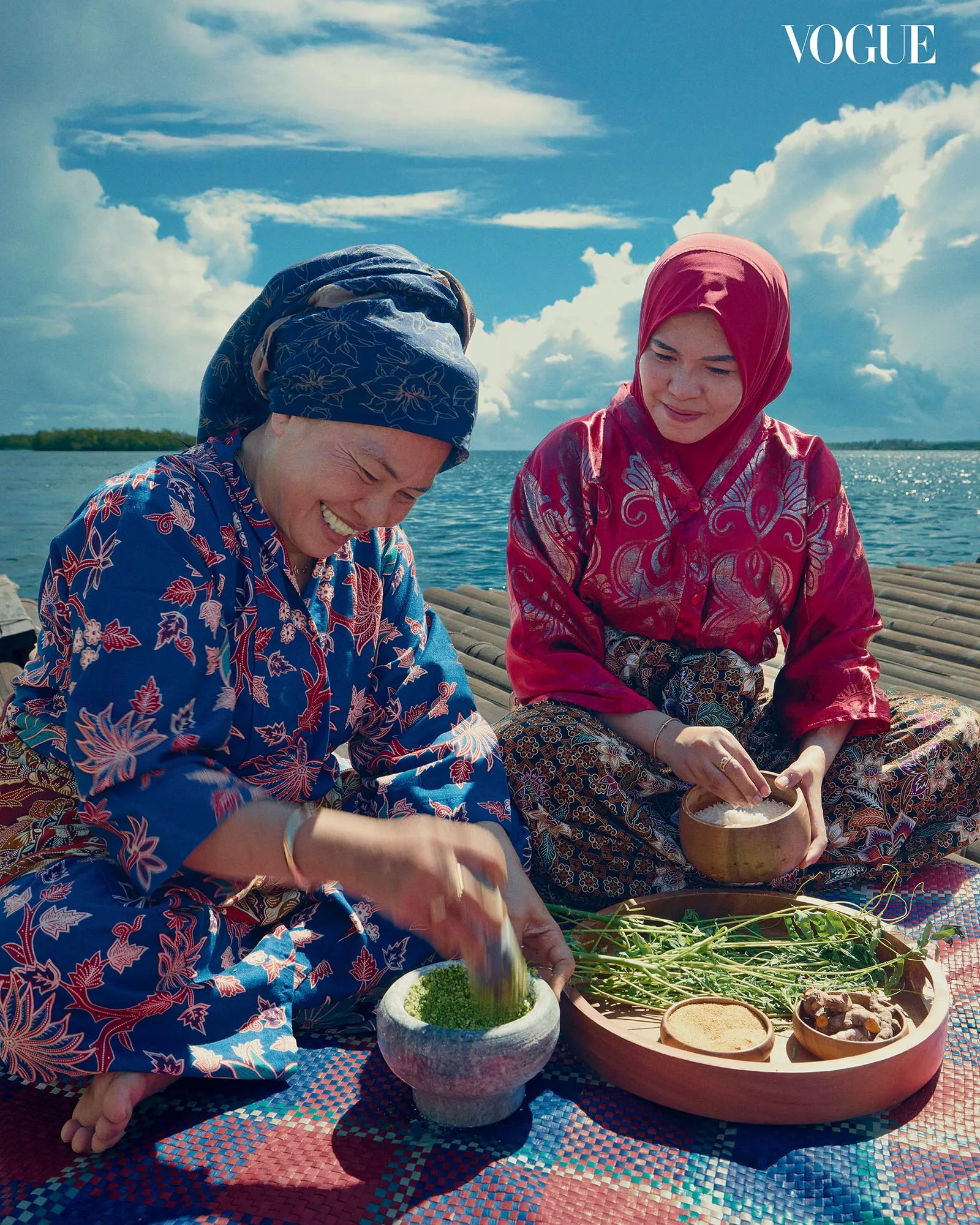
In Basilan and across the islands, the practices of healing, of wellness, and of being one with the world are bound by a common thread, that hilom is not an individual pursuit. It is shaped by women’s hands, as knowledge is passed down, pressed upon, and kneaded into another’s body. The land and the sea provide the raw ingredients, but it is the circle of women who bring their warmth, grace, and wisdom to these acts of care.
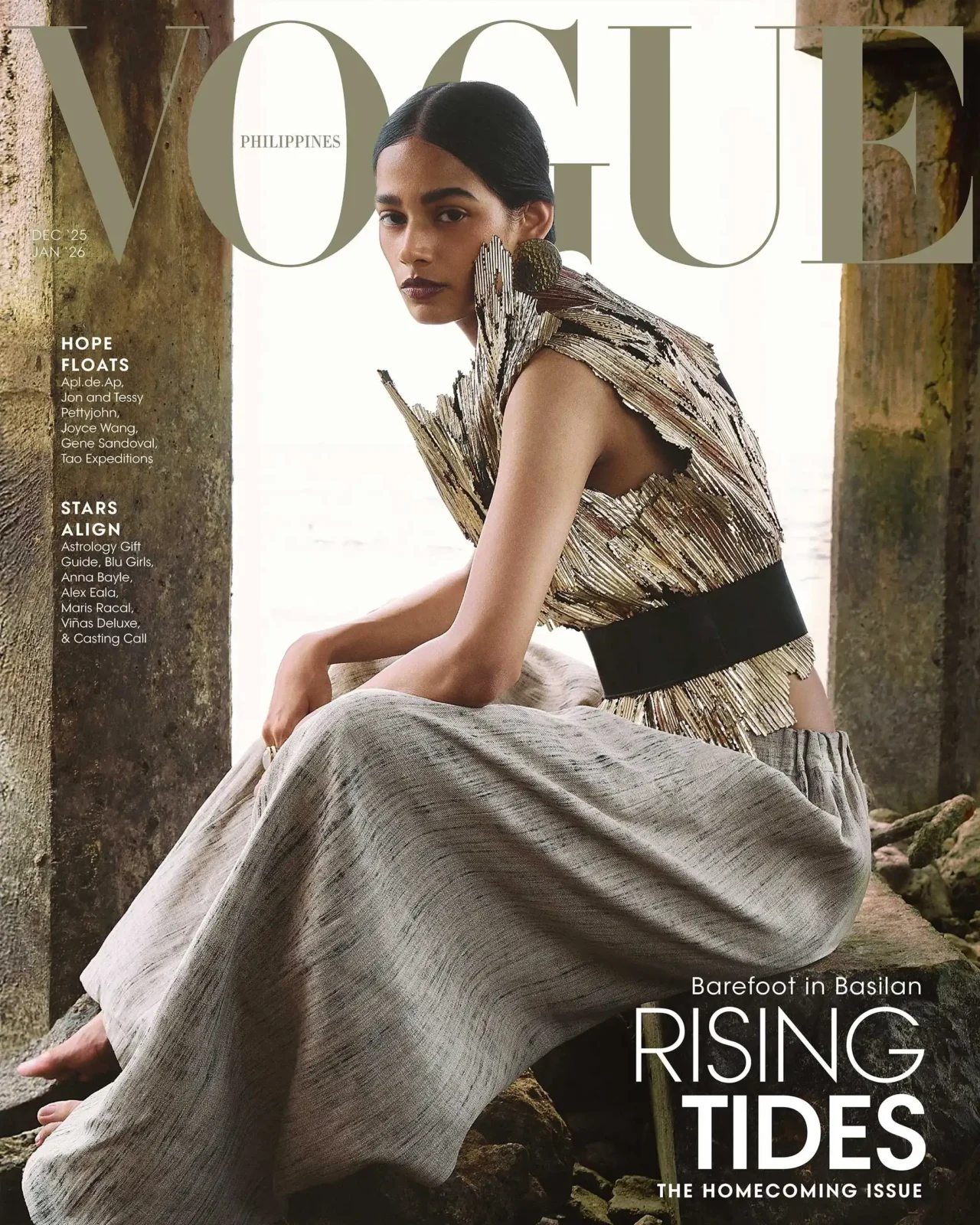
By AUDREY CARPIO. Photographs by GABRIEL NIVERA. Beauty Editor JOYCE OREÑA. Art Director: Jann Pascua. Producer: Mavi Sulangi. Photography Assistant: Sela Gonzales. Special thanks to Mayor Sitti Djalia Hataman, Marian Pastor Roces, Iñigo Roberto P. Roces, and Maria Fe Quiroga for research consultancy, curators of TAOINC, Pane Gadayan, Hazel Tan, Arriana Kani Jupakkal, and the Isabela de Basilan Tourism Department


