
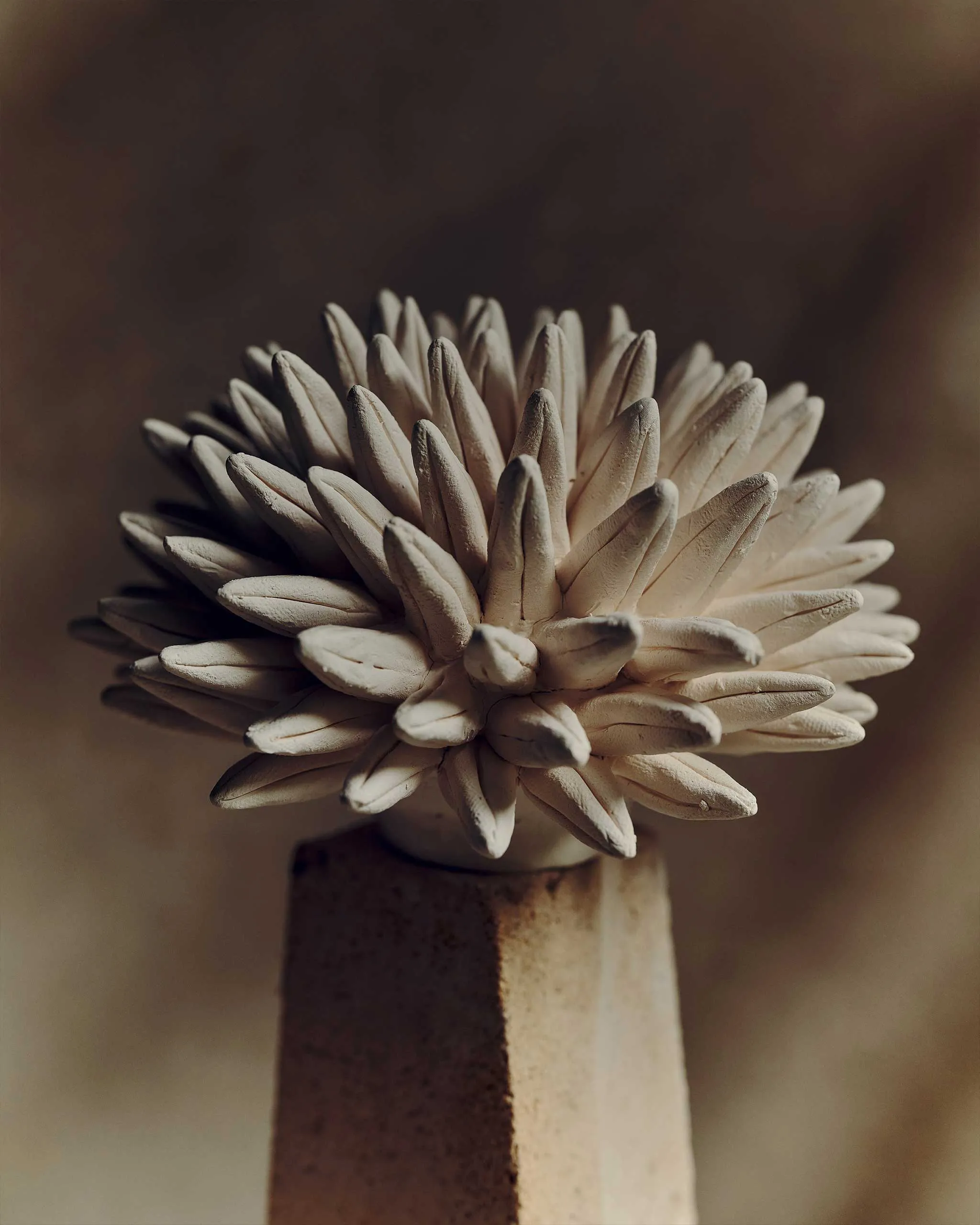
The Pettyjohns have been pivotal figures in revitalizing the Filipino ceramics scene, co-founding a workshop and school that bridged traditional craft and contemporary expression across five decades. Photographed by Artu Nepomuceno for the December 2025/January 2026 Issue of Vogue Philippines
Fifty years on, Jon and Tessy Pettyjohn’s home remains a living archive of Philippine ceramics and the community it birthed.
It’s hard to say what exactly draws artists to Mount Makiling. For decades, its foothills have been home to sculptors, budding actors, multihyphenates, and students from the Philippine High School for the Arts and the University of the Philippines Los Baños. Here, they come to its slopes in order to hone their craft.
Perhaps it’s the quiet. Perhaps it’s the way mist rolls through the trees. Whatever it is, it has called ceramicists Jon Pettyjohn and Tessy Pettyjohn here, too. “When we climbed up the hill there were two rainbows,” Tessy recalls the first time they set foot on the property, in 1980. “So I told Jon, ‘Ah, this is it. This is the sign that we needed.’” The sign, she laughs now, might as well have come from Maria Makiling herself.
Their residence in Laguna sits beneath the mountain, and from the road, it looks like an old Filipino home, built from aged wood, capiz windows, with the scent of damp earth permeating the air. In the early mornings, the light catches the bronze glaze of their work, pieces scattered throughout their home like living things. Nearly everything, from the cups they drink from to the plates they eat on are theirs. Every surface is lined with vessels, each one made by the same two pairs of hands that have called this space their own for almost 50 years.
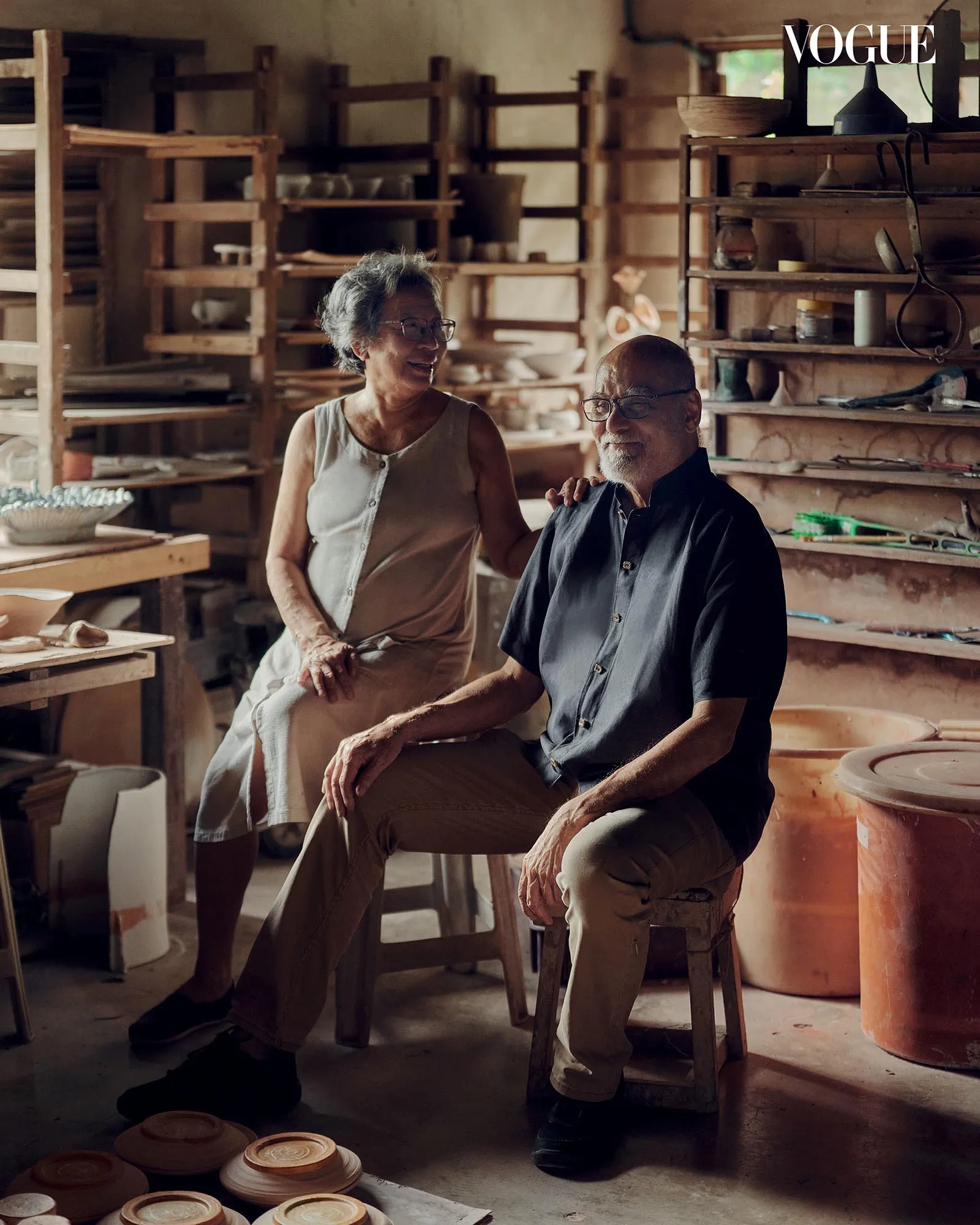
Pottery, for them, is both a practice and a way of being. It has shaped every choice they’ve made, including their decision to leave Cavite, where they first lived. “We had a kiln that had fire coming out of the chimney, very close to the other houses,” Tessy says. Unhappy neighbors eventually led them to settle here, where the very ingredients of their craft sit beneath their feet. During their shoot with Vogue Philippines, they served baked bananas, dried fish, kesong puti, and homemade juice, all sourced from the surrounding land and plated with pieces from their studio. Even through their food, you feel a deep, instinctive connection to the earth.
Jon puts it simply. “If you’re a chef, the more you go to the source of your food, and the more contact you have with your raw ingredients, the better the outcome. A good clay artist should probably start like that.”
And the two artists talk about pottery in a way others might talk about faith. As an art form it moves at a snail’s pace. It demands patience. Something, they both admit, not everyone has. “If you ask potters about that, they’re going to say the medium chooses you,” Jon explains. “It takes a special temperament to work with clay. You can’t see your finished work for a month, two months, or three months. So you make something and you don’t know what it looks like. It’s like you’re waiting for Christmas and only then do you get to see the finished thing.” But it’s precisely that feeling of anticipation that has captivated them. “Maybe 40 percent is up to God and 60 percent is us,” Jon jokes, his voice tinged with truth. There is skill in the art of working with clay and stoneware, but chance does play its part.
“Like Bourdain said, we’re one of the only real fusion cuisines. In other countries, it’s artificial. Here, it’s evolved through hundreds of years. Maybe that’s what happens in our art, too.”
Advertisement
For Tessy, forms have come to her through dreams. Her pieces often echo her surroundings: petals, coral, and light. “I wanted to create flowers, because there was a time when I was meditating, and it just came to me. Beautiful scenery with all these flowers growing,” she explains her foray into floral motifs. Jon’s work, meanwhile, carries a different rhythm. Functional, grounded, and textured by time.
In the late 1970s, when the duo started out, five or six potters made up the ceramic community in the Philippines. A small but tight-knit group of artists would exhibit annually. “We hardly saw each other. Maybe, once a year. The ceramic exhibits were like once every two years or something,” Jon says.
To cultivate the medium, Jon and Tessy started teaching, at one point setting up a gallery and school in the Glorietta mall in Makati. They moved this back to Pansol, and from their home workshop grew a community that would define a generation of Filipino potters. Students came from all backgrounds: office workers, expats, the simply curious. There were a few standout students who stayed on working with them, cultivating their own stoneware practice, including ceramicist Jose Perfeto. “One of them, Anton Cu Unjieng, even told us ‘I don’t want to go to college,” Tessy says. “I want to be a potter.’”
Tessy affectionately calls them the “pottery kids.” Their own daughters, too, grew up in that world. One of their children, Hanna, became an artist herself. In March of this year, she and Jon exhibited together for the first time. “My last show, with our daughter Hanna, was one of my best experiences,” recounts Jon. That show, Reflections, in situ, featured Hanna’s renditions of her parents’ ceramics plus vignettes from around the Laguna home and studio. The images came out in her paintings, hung on the gallery’s walls, and also fired onto Jon’s ceramics. Hanna’s work added a different dimension to Jon’s usually austere vessels.
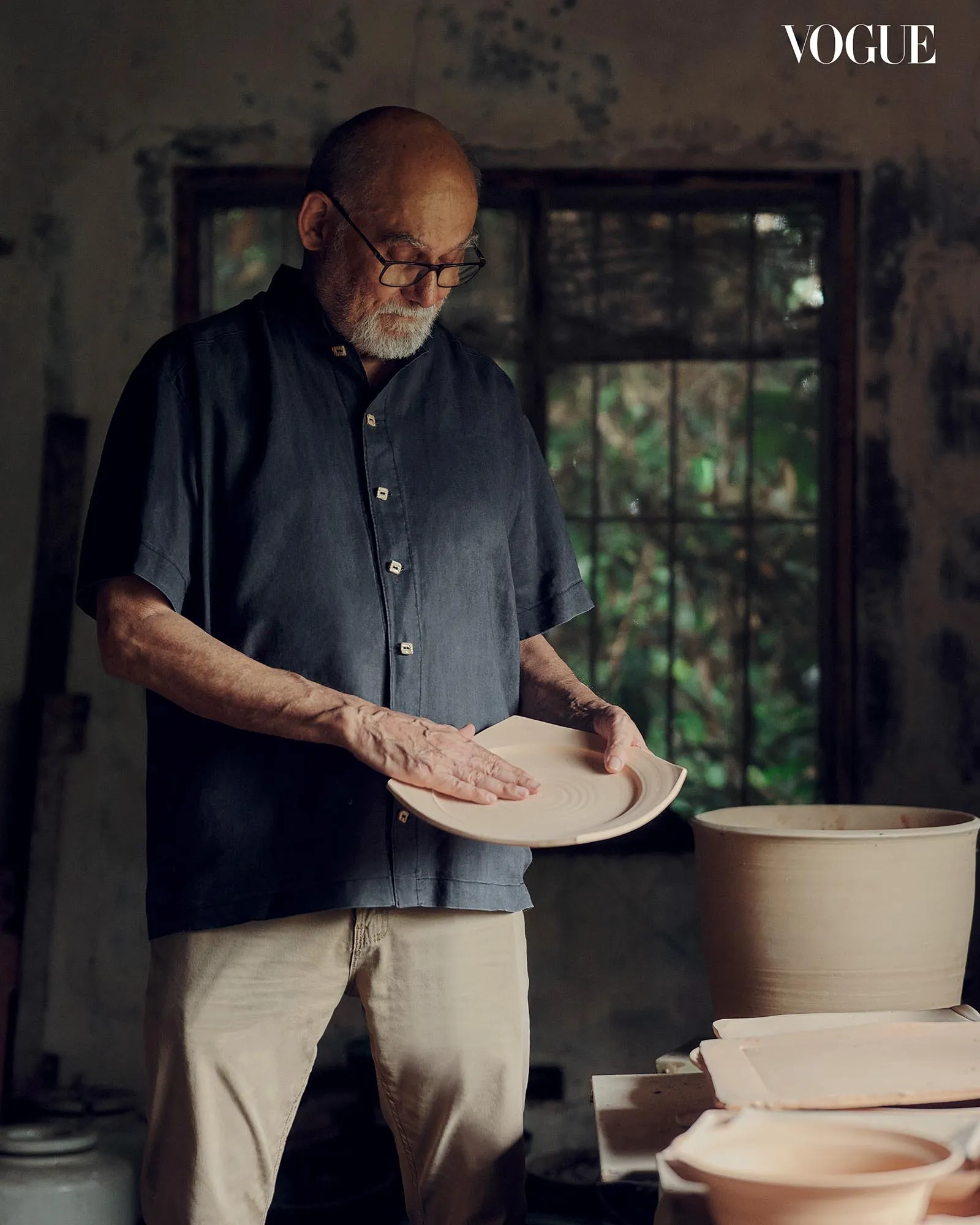
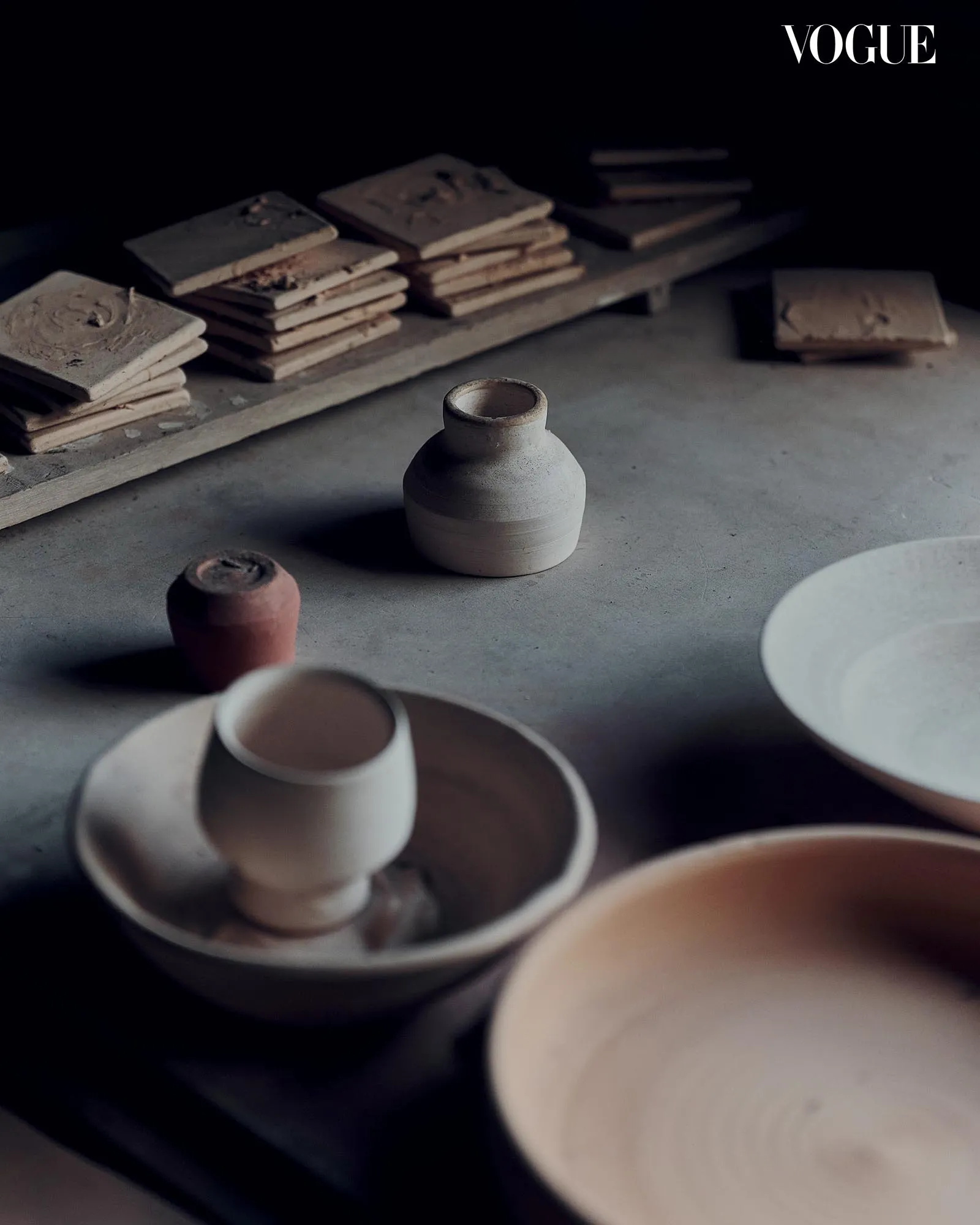
Looking back, they remember how little support there was for ceramicists 50 years ago. Yet, they believe this is what makes artists from that era strong. They built their own equipment, prepared their own clays and glazes, and had to develop a “jack-of-all-trades” mentality. It is that self-reliance that has ended up becoming part of their philosophy, passing this independence down to their students. “If you have gatekeepers that hold things back, it just doesn’t do anything for the scene,” Jon says, reflecting on sharing his technique. “Young artists always challenge you. There’s a point when you see the young guys are getting pretty good and you feel threatened by it, but then you realize, that’s great! If the community wasn’t growing and improving, it would be horrible.”
Today, this community continues to grow, “it’s just continuously exciting,” Jon mentions. “Almost every week, someone will contact you about something. A lot of the young ceramic artists ask us questions all the time, and that’s very exciting for us. We always like it when young people are interested.” And in their work, Jon and Tessy see an evolution of the Filipino eye, one that is energetic, vivid and rooted in both the East and West. “There’s a very expressive trend in the minds of young Filipino artists,” he observes of their abundance of color and a desire to fill negative space. “It’s a kind of fusion,” he muses, comparing it to our food, a natural blending of what’s come before. “Like Bourdain said, we’re one of the only real fusion cuisines. In other countries, it’s artificial. Here, it’s evolved through hundreds of years. Maybe that’s what happens in our art, too.”
After five decades of working with clay, Jon and Tessy have stayed close to where it all began. Their home has become an extension of their craft. Around them, the community they helped nurture continues to grow, carried forward by younger artists who once learned from their kiln’s warmth. Somewhere under the shadow of Mount Makiling, the two artists still rise each day to touch the same earth that has sustained them all these years, the same earth that, some time ago, chose them first.
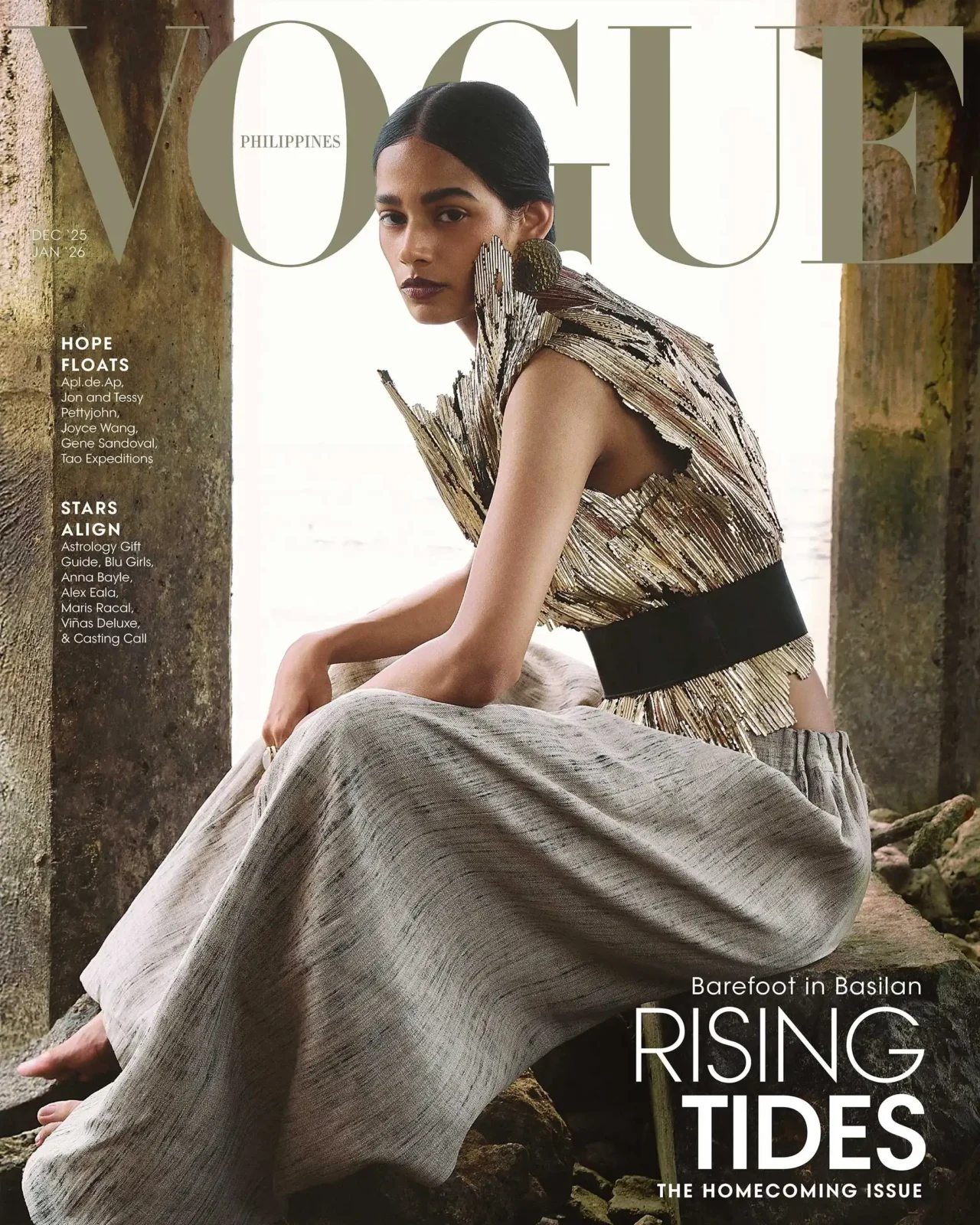
By GABRIEL YAP. Photographs by ARTU NEPOMUCENO. Talents: Tessy and Jon Pettyjohn. Deputy Editor: Trickie Lopa. Art Director: Jann Pascua. Producer: Julian Rodriguez. Photography Assistants: Odan Juan and Lynyrd Matias.


