
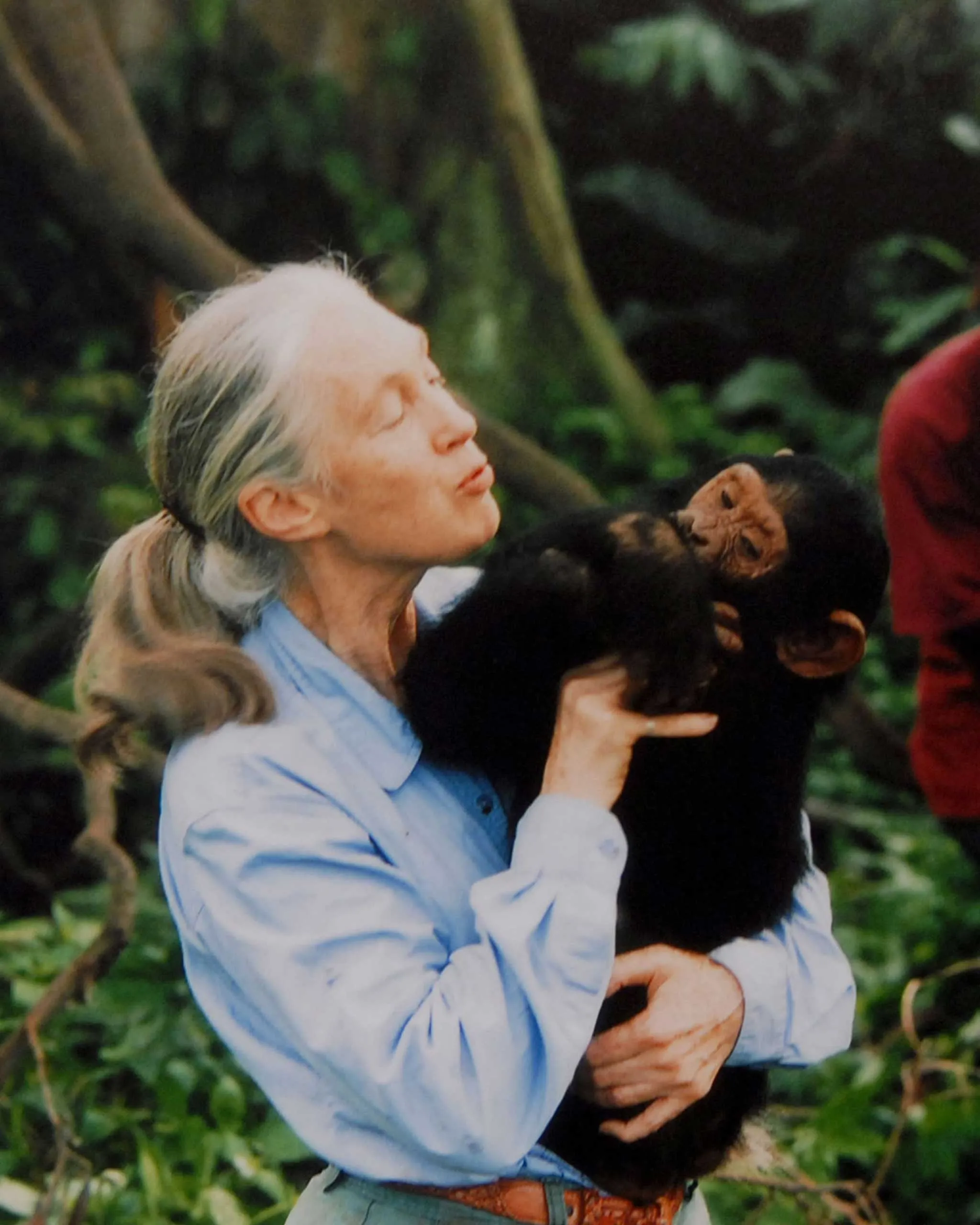
Photo: Apic/Getty Images
Dr. Jane Goodall lived an extraordinary life. In 1960, at the tender age of 26, she traveled from England to what is now Gombe Stream National Park in Tanzania to study chimpanzees in the wild. Goodall made the groundbreaking discovery that chimpanzees use tools, with personalities and emotional responses to rival humans.
I met Goodall at New York Climate Week last September, a week before her death at the age of 91. Sixty-five years after her first trip to Gombe, Goodall was still relentlessly spreading her message of hope, fundraising to protect chimpanzees, and encouraging the next generation of scientists and nature lovers. On Monday night, the UK branch of the Jane Goodall Institute (JGI) staged a celebration of Goodall’s life at The Peninsula London — the inaugural Hope Gala, designed to secure her legacy.
It was an event designed to pull at people’s heartstrings, and open their wallets in the process. The room was dressed to look like a rainforest, with the sounds of Gombe Stream National Park immersing the audience in the habitat they were there to protect. There was an art exhibition by the entrance — by French street artist Mr. Brainwash — as celebrities mingled with financiers and explorers. The approach was not dissimilar to the inaugural Nat Gala at New York Climate Week last September, using culture as a Trojan Horse for conservation.
“We are competing against so much noise, we have to connect with people’s emotions,” says JGI UK trustee and director of strategic partnerships Rosemary Reed, who organized the event. “You don’t make people care by telling them something; you have to make them feel connected. And while we don’t have Jane physically anymore, we do have her energy, as well as a lot of people who were touched by her work.”
On the eve of the gala, I sat down with Reed to hear more about JGI’s work, her efforts to build its presence in the UK, and how fashion and beauty could step up to support conservation at this critical junction.
Making conservation part of culture
The gala guest list showed just how widespread Dr. Goodall’s appeal was. Executives from Disney and National Geographic came out in force, rubbing shoulders with actors like James Nesbitt and Peter Egan, comedian Ricky Gervais, Domino’s Pizza UK founder Lord Rumi Verjee, and singer Jess Glynne. Throughout the night, JGI wheeled out several of these well-loved figureheads to hammer home Goodall’s message of hope.
“Despite witnessing environmental loss and human suffering on a global scale, Jane never turned away in despair. Instead, she spoke of what she called reasons for hope. She believed hope was not something we wait for, but something we practice and something we choose. It is this belief that has stayed with me, and it resonates deeply with the mission of the Earthshot Prize, too,” William, Prince of Wales said in a pre-recorded video statement. “Even in the most difficult moments, optimism can be a powerful call to action — to seek out solutions, to support those who dare to innovate, and to scale change with the urgency this moment demands.”
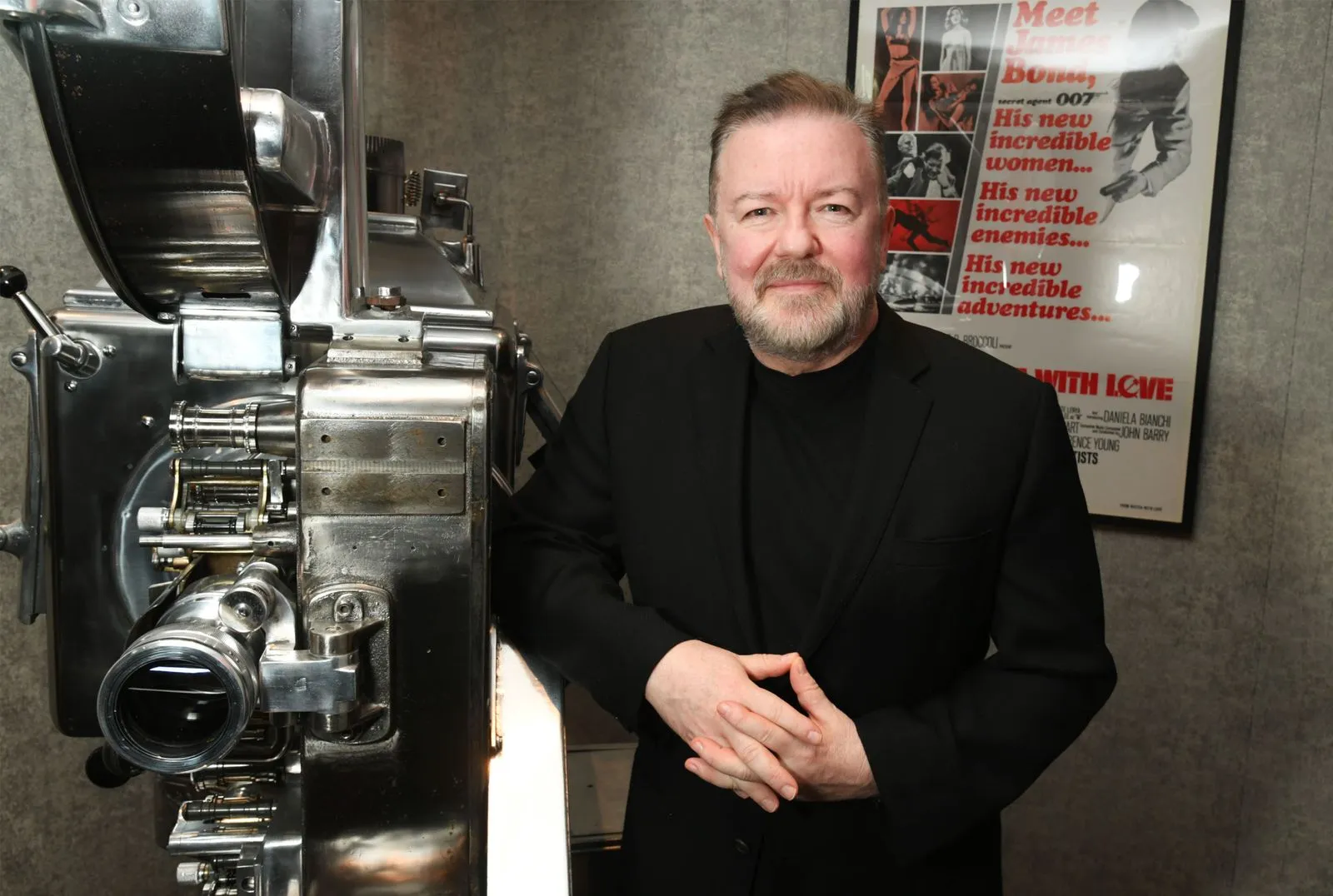
Onstage, Downton Abbey actor Lesley Nicol walked the audience through Goodall’s early years, recalling how the primatologist once went missing as a child, only to be found hours later sitting quietly among the hens, hoping to understand how they laid eggs. Dr. Anthony Collins, who studied under Dr. Goodall in the ’70s and is now director of the Baboon Project at Gombe Stream National Park, gave a moving speech about his mentor, citing her advice to “be peaceful and be open”. Akash Mehta, co-founder of ayurvedic beauty brand Fable & Mane, founder of conservation organization The Fable Fund, and ambassador to JGI’s Roots and Shoots program, brought two 10-year-old schoolchildren onstage to describe how Goodall’s work had inspired them to become young activists. They quickly won over the audience.
Raising Goodall’s profile through cultural moments and corporate collaborations is nothing new, says JGI’s Reed. While she was alive, Goodall spoke at Glastonbury, appeared on the Call Her Daddy podcast, collaborated with Stella McCartney on a skincare campaign, launched a jewelry collection with Brilliant Earth, developed her own Barbie doll with Mattel, and more. “When purpose becomes part of culture, that’s when behaviour shifts and real impact happens,” says Reed.
Reed is cautious, however, to preserve the integrity that Goodall was so beloved for. “She used to say to me: ‘I’ve sat down with the devil, but if you can’t have a cup of tea with these people, they will never change,’” she recalls. “And Jane did manage to change a lot of influential people in the world of finance, science, and politics. So for me, this approach is in complete alignment with our work at the institute. But we are very selective. If something doesn’t feel authentic, we simply won’t do it. Once you start to dilute the trust Jane built, you will lose something far more valuable than any partnership.”
As the night drew to a close, a clip of Goodall from the Netflix series Famous Last Words appeared onscreen. Released after her death, the video captured a few poignant parting reflections from Goodall herself: “Every single day you live, you make a difference in the world, and you get to choose the difference that you make. I want you to understand that we are part of the natural world, and even today — when the planet is dark — there is still hope. Don’t give up hope.”
A tough climate for fundraising
It’s a tough climate for sustainability fundraising. Even at the best of times, it can be hard to make people care about enduring, long-term crises like biodiversity loss and species extinction. But the current landscape is particularly challenging, with distinct political pressure on individuals and businesses to turn away from sustainability, be it European policymakers watering down sustainability regulations or the Trump administration cracking down on ESG. Both headwinds are having a stark impact on philanthropic funding, putting vital work at risk in fashion and beyond.
JGI is not immune to this, says Reed. Its funding from USAID was cut last year, and the loss of its eponymous figurehead has been a serious blow to the organization. “The drop in American sponsorship — particularly from the current government — has been very challenging, not just for JGI,” she explains. “Conservation and education don’t always attract the same immediate attention as other causes, even though the impact is profound and long-term.”
Comedian Gervais, who was awarded the inaugural Jane Goodall Award for Unwavering Advocacy for Animals, joked about this during his acceptance speech. “I do a bit. I tweet. I sign petitions. I give a bit of cash. What I don’t do is go and live with chimps for 40 years — that is above and beyond the call of duty,” he told attendees, tongue-in-cheek. “People who help animals are the best people. They’re also really annoying. They’ve got my email now. They’re always on the scrounge.”
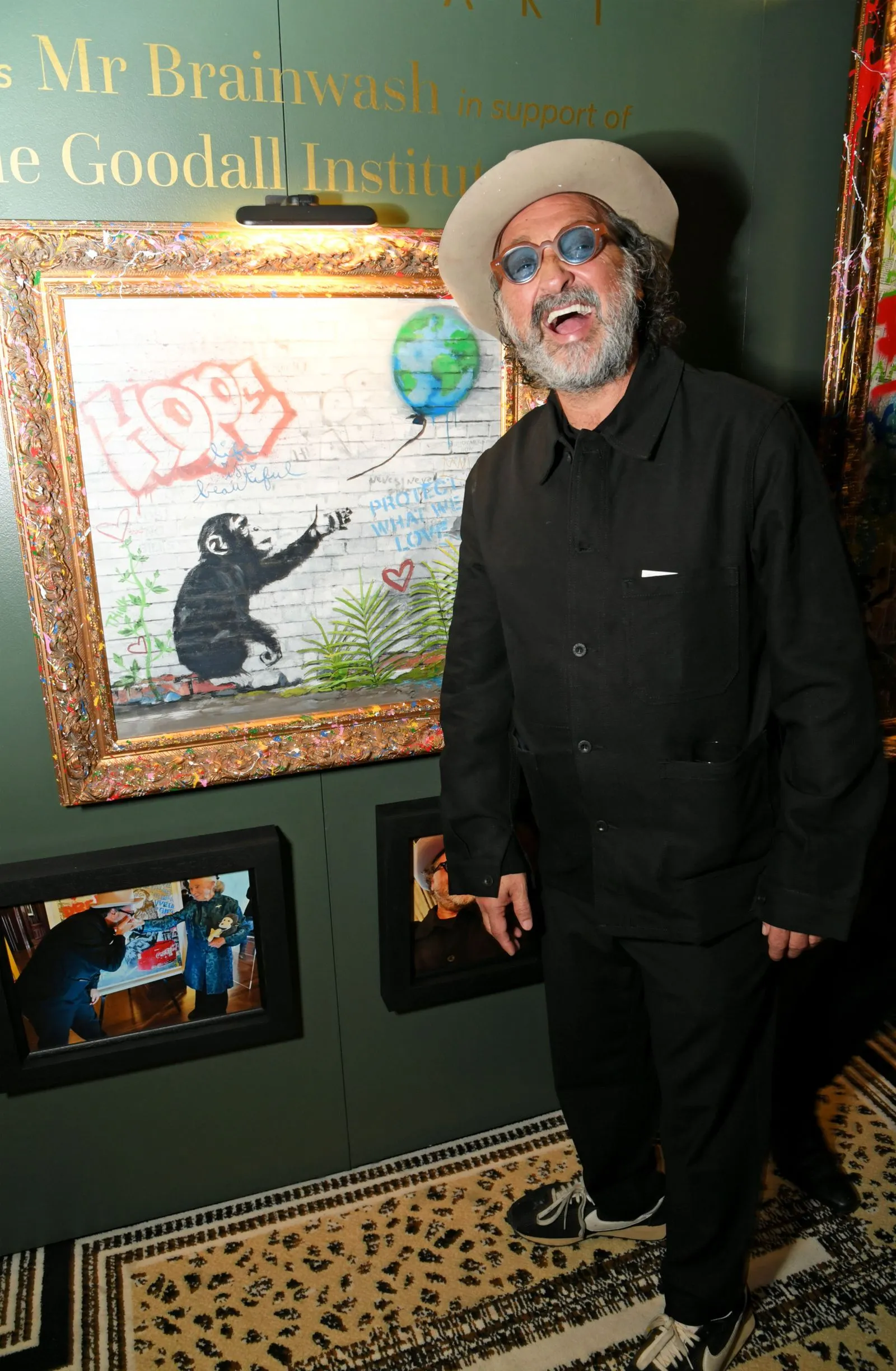
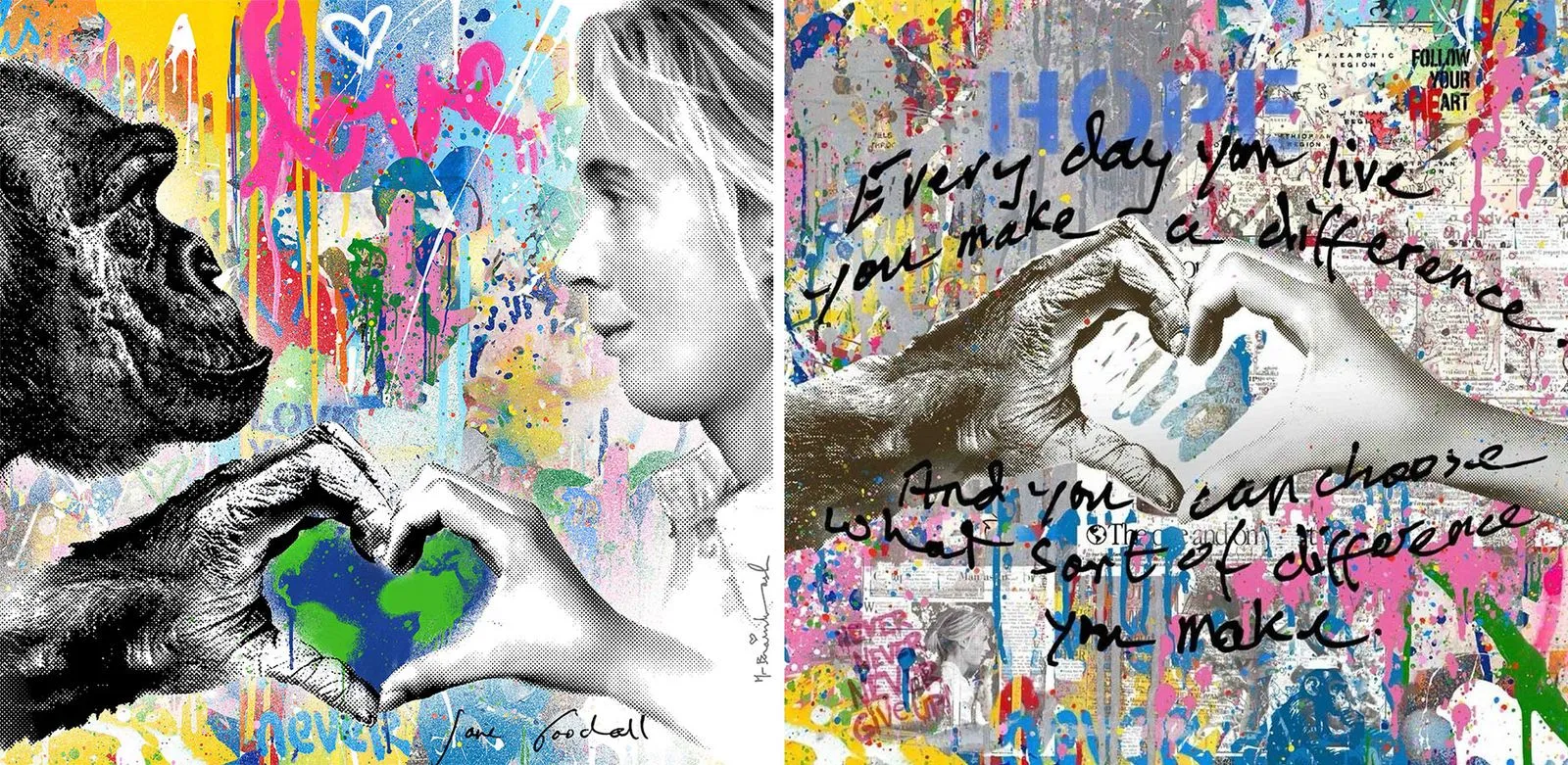
Seasoned auctioneer CK Swett had his work cut out raising the £250,000 target. The opening lot — an eight-day trip to Gombe for four, to walk in Dr. Goodall’s shoes and witness the chimpanzees she dedicated her life to — sold on the opening bid at £35,000. A selection of custom paintings inspired by Goodall, by Mr. Brainwash, failed to attract the desired showdown between bidders: the main piece (which will be permanently housed in London’s Science Museum) sold to an absent bidder for £70,000, while two others sold for £20,000 each on their opening and only bids. As the auction continued, attendees were slow to lift their bidding paddles, with some momentum building as the calls for donations dwindled from £50,000 to £500.
Outside the gala, JGI has seen the most success leveraging personal relationships with donors, rather than applying for grants where they are competing with “five or six thousand other applicants”, says Reed. “When Jane was alive, she did a lot of fundraising, meeting up with people from the world of entertainment or philanthropists. Jane had a healing and calming energy that I’ve rarely seen in anybody else. She was the brand, and she knew her name was the most important thing for opening doors — she opened a lot of them.”
Looking ahead, the charity is laser-focused on replicating her energy for conservation, and inspiring donations just as much as Goodall, continues Reed. “Jane had the power of persuasion — people would be writing a check for £5 million before they knew it, even if they had no intention of doing that when they met her,” she says. “But most charities don’t remember that you have to be self-sufficient to survive. That’s what we’re trying to do now.”
This article was originally published on Vogue.com.


