
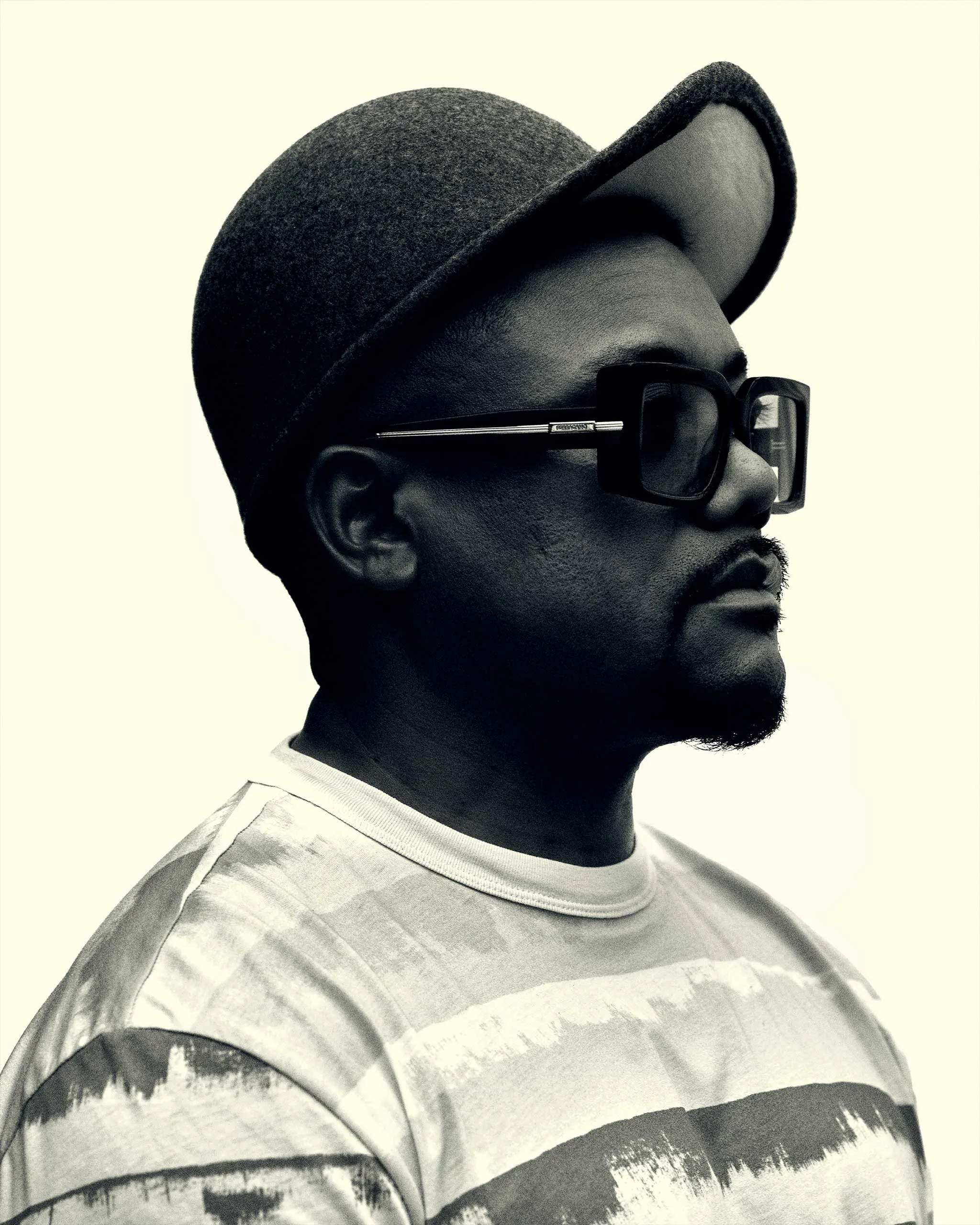
“I hope that the young Filipinos know that farmers are rockstars.” Photographed by Choi Narciso for the December 2025/January 2026 Issue of Vogue Philippines
For Apl.de.Ap, a childhood memory becomes the seed for a nationwide effort to restore land, livelihood, and legacy.
Tucked away in the flatlands of Pampanga, is a mango tree that marked the slow afternoons of Apl.de.Ap’s childhood. He would sit beneath it, taking moments of rest in between helping his grandmother tend to the family farm. It was a memory he played back to himself quite often, at a time when the musician questioned his future in the industry as live performances were cancelled during the pandemic. “I thought about what last made me happy, and what I would do if I couldn’t perform music anymore,” he recalls. “The last thing I did that really made me happy was helping my Lola on the farm as a child. That mango tree brings me back there.”
From that memory grew one of the most ambitious environmental movements in the country: a plan to plant 100 million coconut trees across the Philippines. It’s a vision that stems not only from nostalgia, but from an impulse to give back to the land that shaped him.
Before he was Apl.de.Ap, Allan Pineda Lindo Jr. was a farmer’s grandson from Angeles City. Adopted at 14 by an American sponsor through the Pearl S. Buck Foundation, he officially moved to Los Angeles where music became both an escape and a bridge to his roots. Even as co-founder of the hip-hop group the Black Eyed Peas, his global success never erased where he came from; only deepening his awareness of how opportunity, when shared, could be transformative. Over the years, he has supported Filipino education and creative development through his philanthropy; now, his focus has turned toward the earth itself.
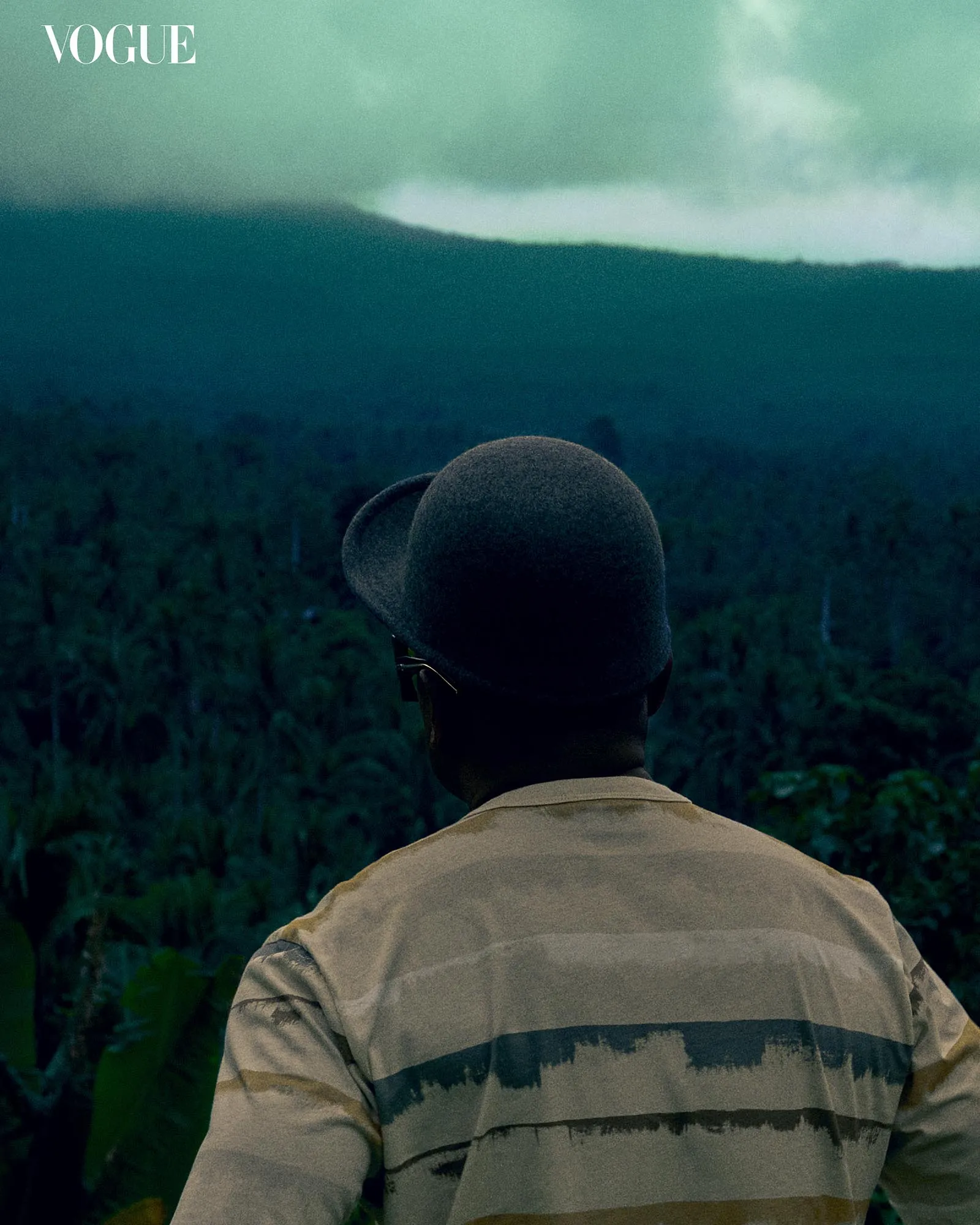
“This movement came from learning more about how the country wanted to restore its position as the leader in coconut,” he says. “For so long, we have just assumed that we were the de facto largest coconut exporter in the world, because once upon a time, 90 percent of all coconuts in the world came from here. But these things take constant care.”
That realization led Apl and his team to the ground, literally. Their research into soil degradation revealed that coconut husks, often discarded as waste, are rich in carbon. Through a process known as biochar, these husks can be converted into a material that restores nutrient-poor soil and captures carbon in the process. Partnering with the Philippine Coconut Authority (PCA) and guided by soil scientists and technologists, the project is now being designed with a purpose to reforest and regenerate.
As Uynghiem Ngo of Earth Sama explains, traditional monocropping depletes land and yields diminishing returns. The team’s solution was to design “food forests,” a series of layered ecosystems of coconut, cacao, coffee, and moringa. Inspired by regenerative models from Ghana and Burkina Faso, this method sustains biodiversity and creates multiple income streams for farmers while qualifying for “carbon credits” (a trading system organizations use to compensate for their greenhouse gas emissions by purchasing credits from entities that reduce greenhouse gas emissions) under global climate standards. “You can’t call it a carbon project if you’re just planting coconuts,” Ngo says, but through creating a living, layered forest, it becomes sustainable, measurable, and fair.
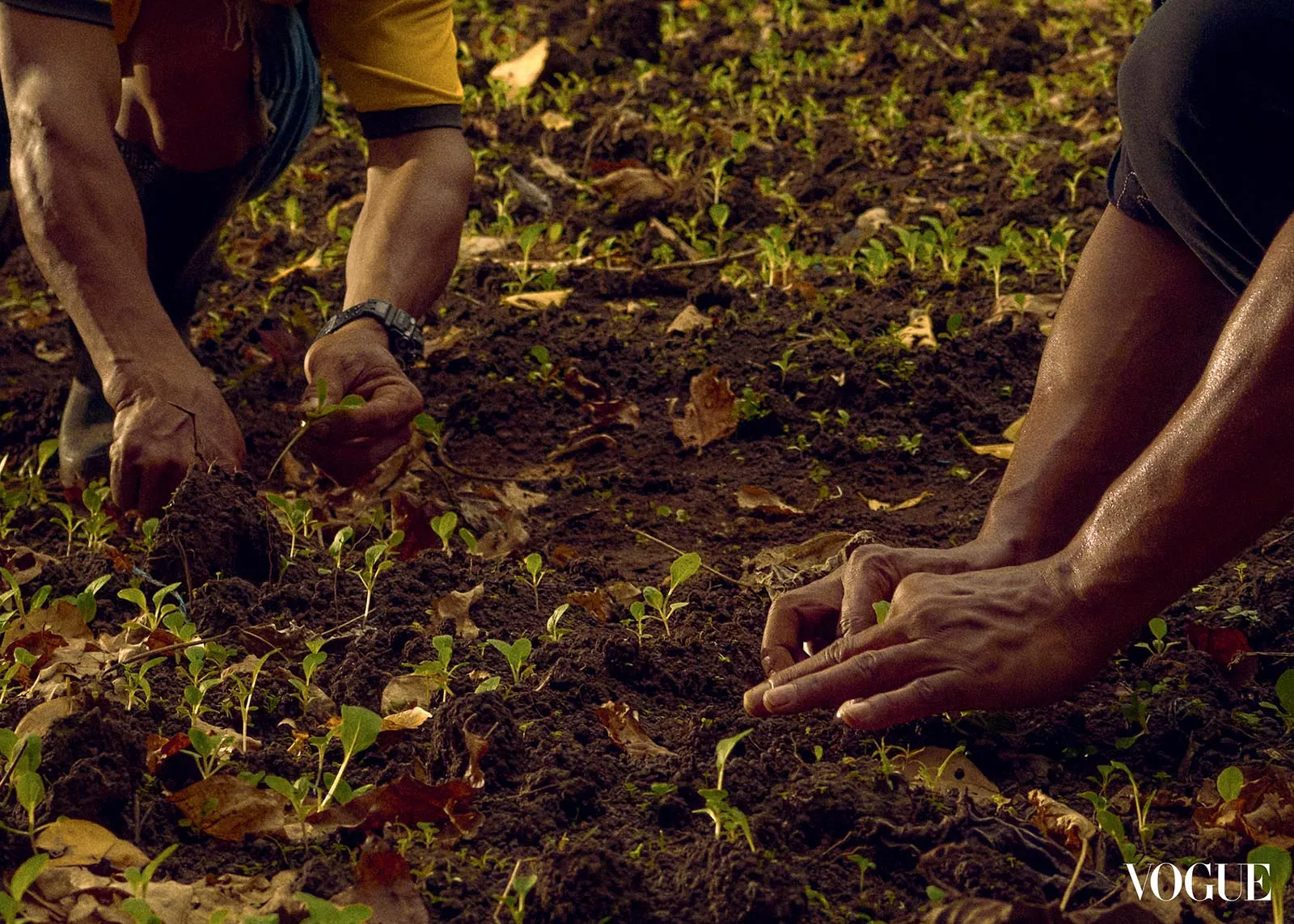
To track such vast replanting, the group built the aforementioned digital platform Earth Sama, described as a kind of “Uber for carbon credit creation.” Farmers receive seedlings and guidance through an app that walks them step-by-step through planting and maintenance, using photo verification and GPS to prove each tree’s survival. “It’s like a gamified farm diary,” explains Derek Ruth of Our Mission to Save Earth (OMTSE) Ventures, who co-manages the venture with Apl.
That traceability solves a long-standing issue in agricultural aid: opacity. In past reforestation campaigns, seedlings were delivered but unmonitored, often vanishing before they matured. Here, every tree is tokenized, recorded, and visible in real time to both funders and farmers. The transparency also opens access to microfinance, allowing smallholders, many of whom lack formal IDs or bank accounts, to build credit histories through proof of work.
The economic context is also just as urgent as the ecological one. The group discovered that in the Philippines, most coconut farmers own two hectares or less, earning as little as 80 to 90 pesos a day. Around 60 percent of the country’s coconut trees are considered senile, producing a fraction of their potential yield. Without capital or access to fair markets, younger generations have been leaving the farms for cities, often for jobs now threatened by automation.
Apl sees this as a chance to reframe what it means to work the land. “By showing that if it’s financially viable, people will want it as a career,” he explains. “We have unfortunately come to expect the current middle man system as normal, shortchanging the farmer. But we need agriculture, it’s the backbone for so many economies.” To make farming viable again, the team is also building agro-industrial hubs that process coconut water, shells, and husks locally, turning waste into value. In Palawan’s Brooke’s Point, where the project began, discarded coconut water once pooled into acidic mounds that degraded the soil. Now, that waste is being captured and repurposed.
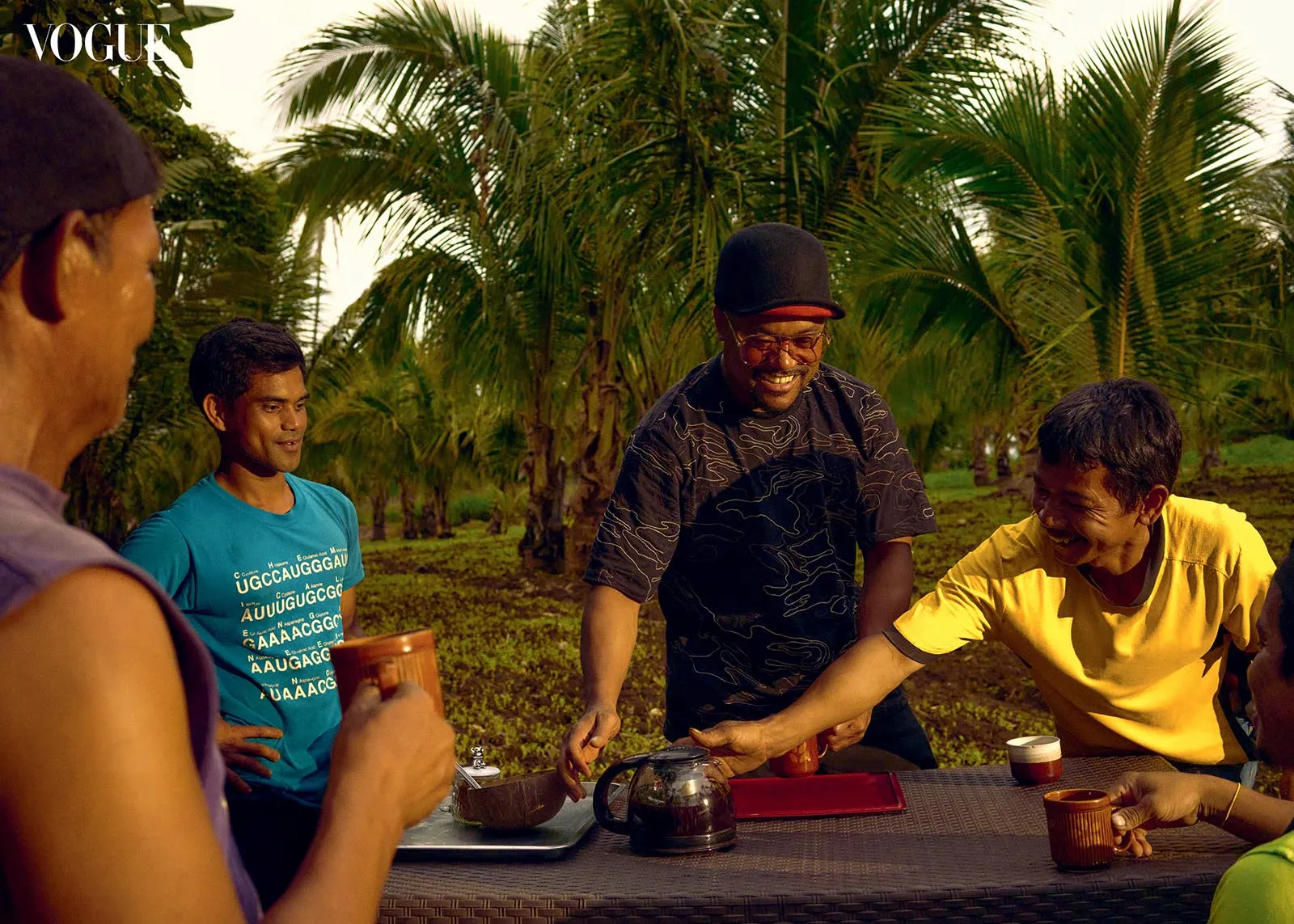
Though technology is central, so is education. Through the Apl.de.Ap Foundation International (APLFI), the team plans to integrate agricultural learning with digital literacy, creating pathways for young Filipinos to see farming as both a livelihood and a technological frontier. “The jobs getting disrupted by AI are happening everywhere,” Apl says, “[but] the last jobs to be replaced are the ones that require us to use our hands and work with the soil: farming.”
Apl’s longtime manager and partner in the venture, Dan Vo, also describes it as a “returning home” of sorts. “He’s always called himself a global OFW,” Vo says, with Apl having spent much of his life sending money home, building schools, and giving scholarships. For them, the project is about building something Filipinos can own.
If successful, it will cover 700,000 hectares across major islands in its first phase, eventually expanding to 380 million trees. But beyond the numbers, the goal is symbolic: to make the coconut, once a pillar of the Philippine economy, a source of pride. “I hope that the young Filipinos know that farmers are rockstars,” Apl says, echoing the tagline that guides the movement. “This mission to re-green the Philippines will make it a global agricultural leader once again.”
From stages to the farmlands, his journey feels cyclical, an artist returning to where his roots first took hold. Beneath the shade of a mango tree, he learned the satisfaction of nurturing something that grows beyond himself, and decades later, that same impulse guides him once more, this time toward planting not just trees, but futures.

By GABRIEL YAP. Photographs by CHOI NARCISO. Talent: Apl.de.Ap. Features Editor: Audrey Carpio. Producer: Julian Rodriguez. Hair and Makeup: Kim Roy Opog. Photography Assistants: Jom Ablay and Odan Juan.
Shot on location at Esmeris Farm, Liliw, Laguna.


