
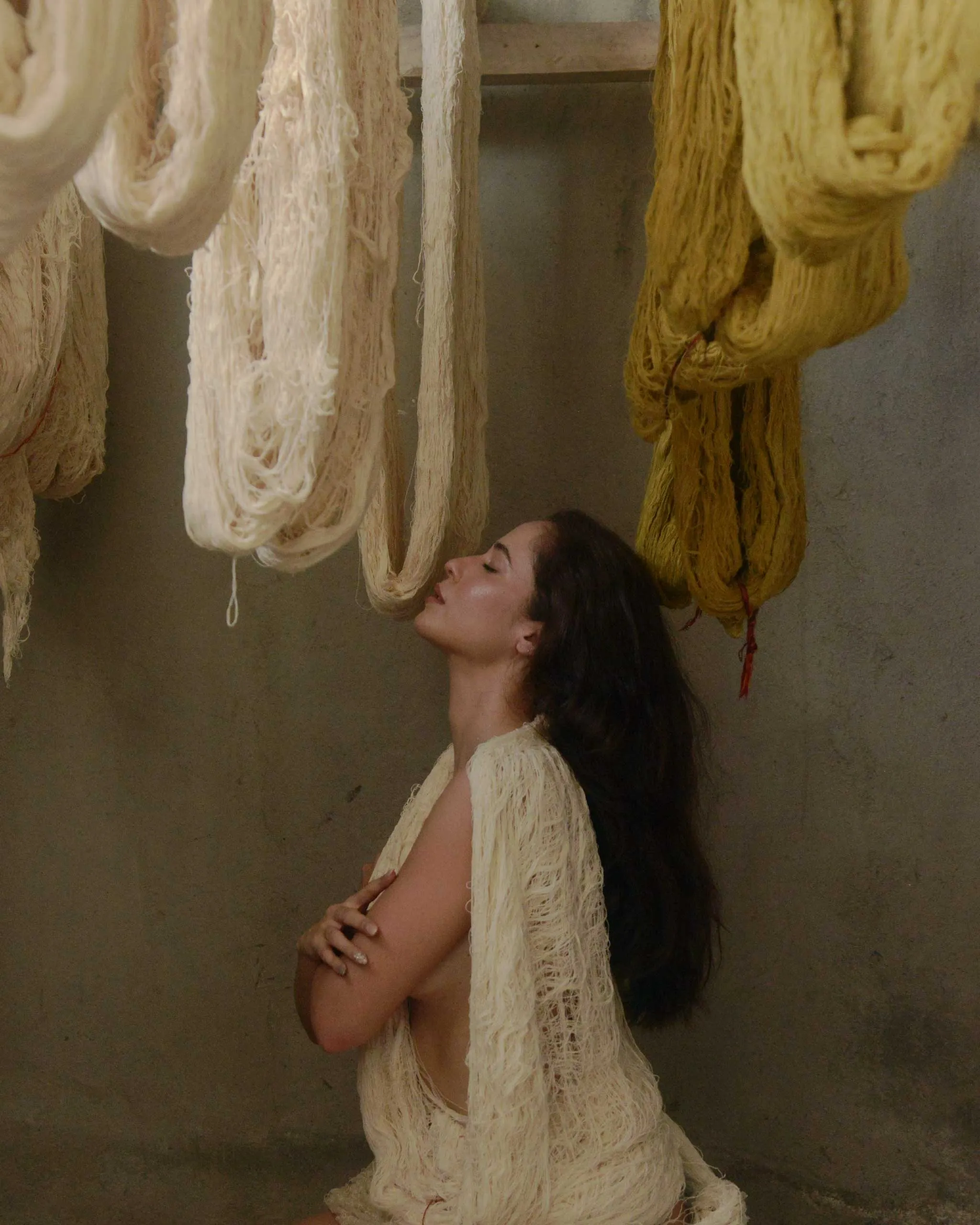
Photographed by MJ Suayan
Working with Kalinga weavers and a new generation of designers, the Tesoro siblings explain how Philippine textiles can shape the country’s modern fashion identity.
According to Nina Tesoro-Poblador and Raffy Tesoro, the true value of a garment isn’t its silhouette or design, but the invisible network of people and generations-old techniques that bring a garment to life. The farmers who grow the fibers, the indigenous artisans who spin and dye them, the weavers who translate thread into cloth.
Their latest project celebrates fashion at its most elemental starting point: thread. “In fashion, we’re so focused on the design and on the designer,” Raffy says. “But we tend to forget the craftsmen that the designer tends to look for or use to create their design. That would be tailors, weavers, yarners. We’ve forgotten how intrinsic and important their craft is to creating fashion.”
It bridges the Cordilleras and Manila, representing both a cultural exchange and a continuation of the Tesoro family’s long relationship with local textiles. Named after the Kalinga word for “curiosity,” The Masda Aw Project connects Kalinga artisans with a team of creatives from Manila and Baguio, alongside the Kalinga Indigenous Weavers Association, led by Florence Amily Ao-wat, and cultural leaders such as musician Arnel Banasan, through workshops, classroom engagements, photoshoots, public installations, and a fashion show at the National Museum.
For Nina, who manages the project, the initiative grows directly from the values instilled by their mother, Patis Tesoro. “Community engagement has always been part of our mother’s work,” she says. “Apart from the whole art and culture part of it, it’s also helping the poor.” That ethos shaped the project from the beginning. When Nina was invited to collaborate on a cultural initiative in Kalinga, her first instinct was to ask a practical question: where are the weavers?
The answer led her to Florence Amily Ao-wat’s weaving community, which supports artisans outside traditional weaving villages. The shared values between the collaborators became apparent. “They’re doing it for community, they love the craft, and they’re artists in their own right,” Nina says.
At the core of the initiative lies the revival of Katutubong Kulay, the natural dye initiative launched by Patis Tesoro in 1998 to reintroduce traditional Philippine dyeing techniques to fashion. For Raffy, returning to that practice decades later felt like returning something that had shaped their lives. “We were part of that project also,” he recalls. “We went around the country and started reviving several things, including natural dyes. We were actually the first practitioners outside of the tribal masters to learn Philippine natural dye.”
At the time, natural dyeing was barely understood or used in the Philippine fashion industry. “It took another ten or fifteen years before the idea of natural dye became mainstream,” Raffy says. “And even then, it’s still barely used because there aren’t a lot of practitioners.” The Masda Aw Project reconnects that earlier work with Kalinga weavers, combining ancestral dyeing techniques and exploring natural pigments such as Atsuete from India and Kalinga Coffee in a two-week residency in Tabuk City.
Raffy sees it as a homecoming. “It was like reviving the knowledge in our heads that had been dormant for the past two decades and refining that knowledge with the experience of age,” he says. The collaboration also revealed the complexity of textile culture itself. “Weaving is actually the first high culture that any civilization develops,” Raffy explains. “It involves arithmetic, supply chains, craftsmen, and laborers. You need an entire economy of people to create weaving.”
Historically, the Philippines once occupied a strong place in that global textile ecosystem. The country was known for lacework, embroidery, and even exporting indigo during the Spanish colonial period. Raffy points to the Manila district of Tayuman as an example. “Tayuman was where they sold tayum,” he says, referring to the Tagalog word for indigo. “It used to be an indigo market.”

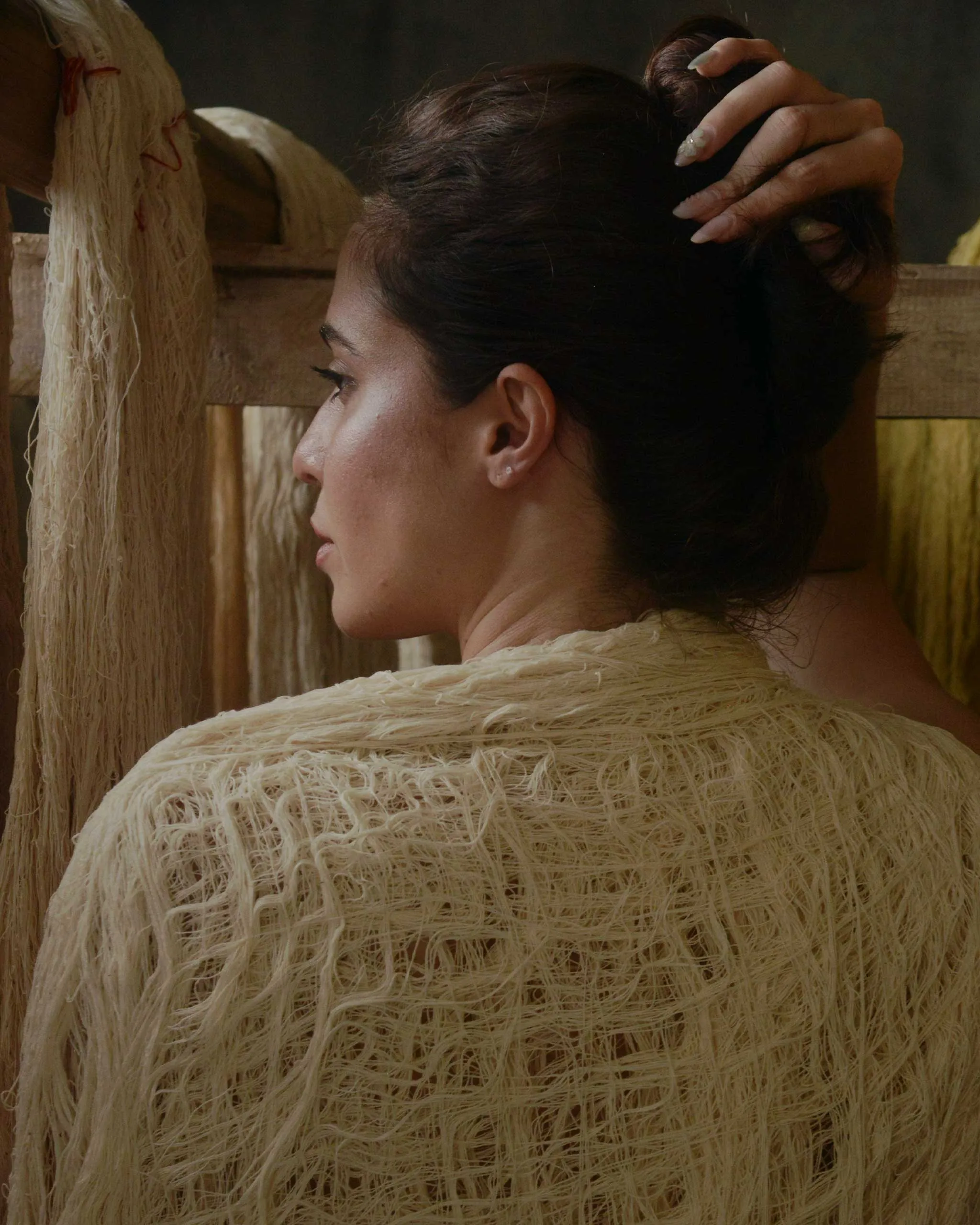
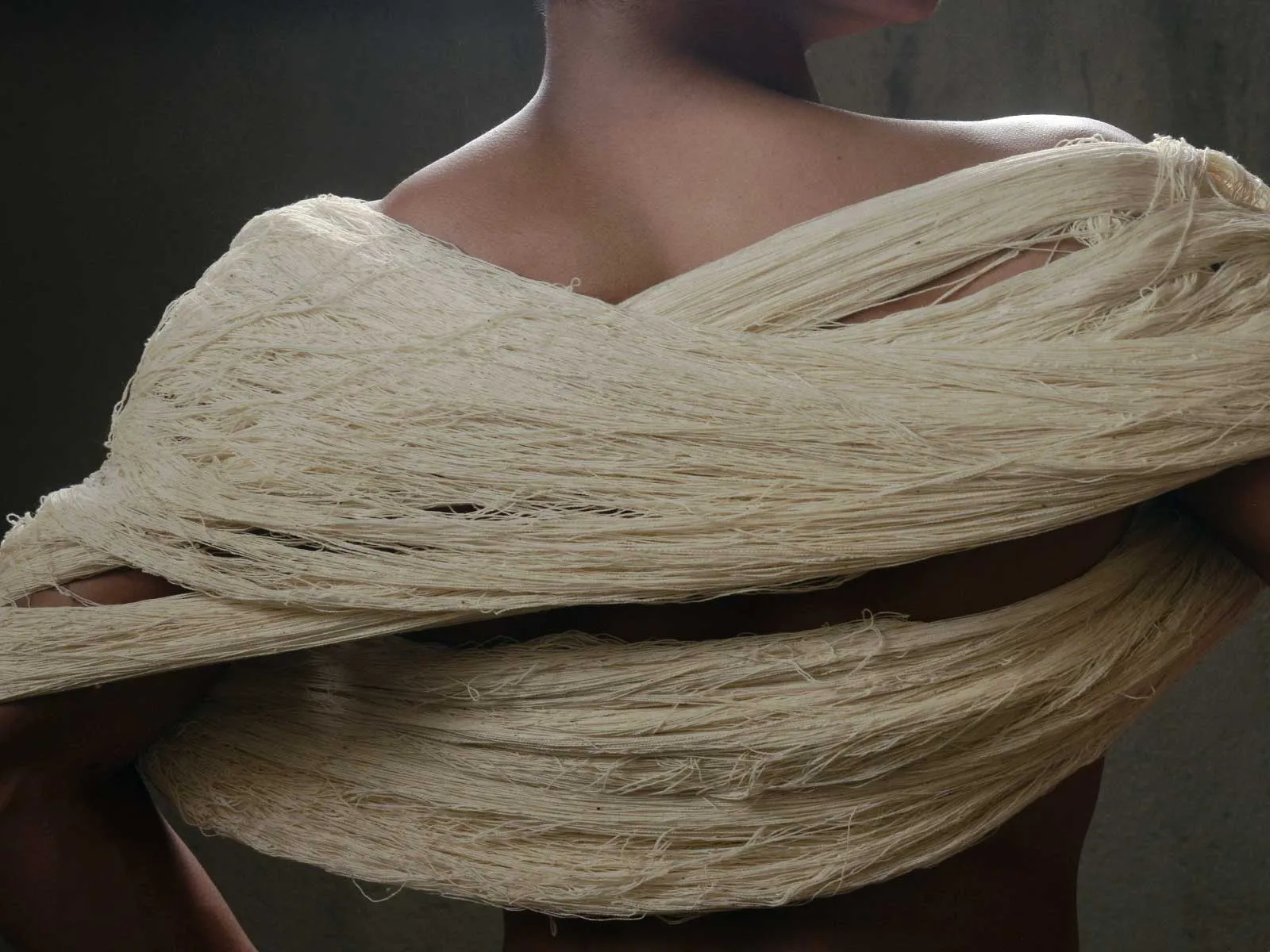
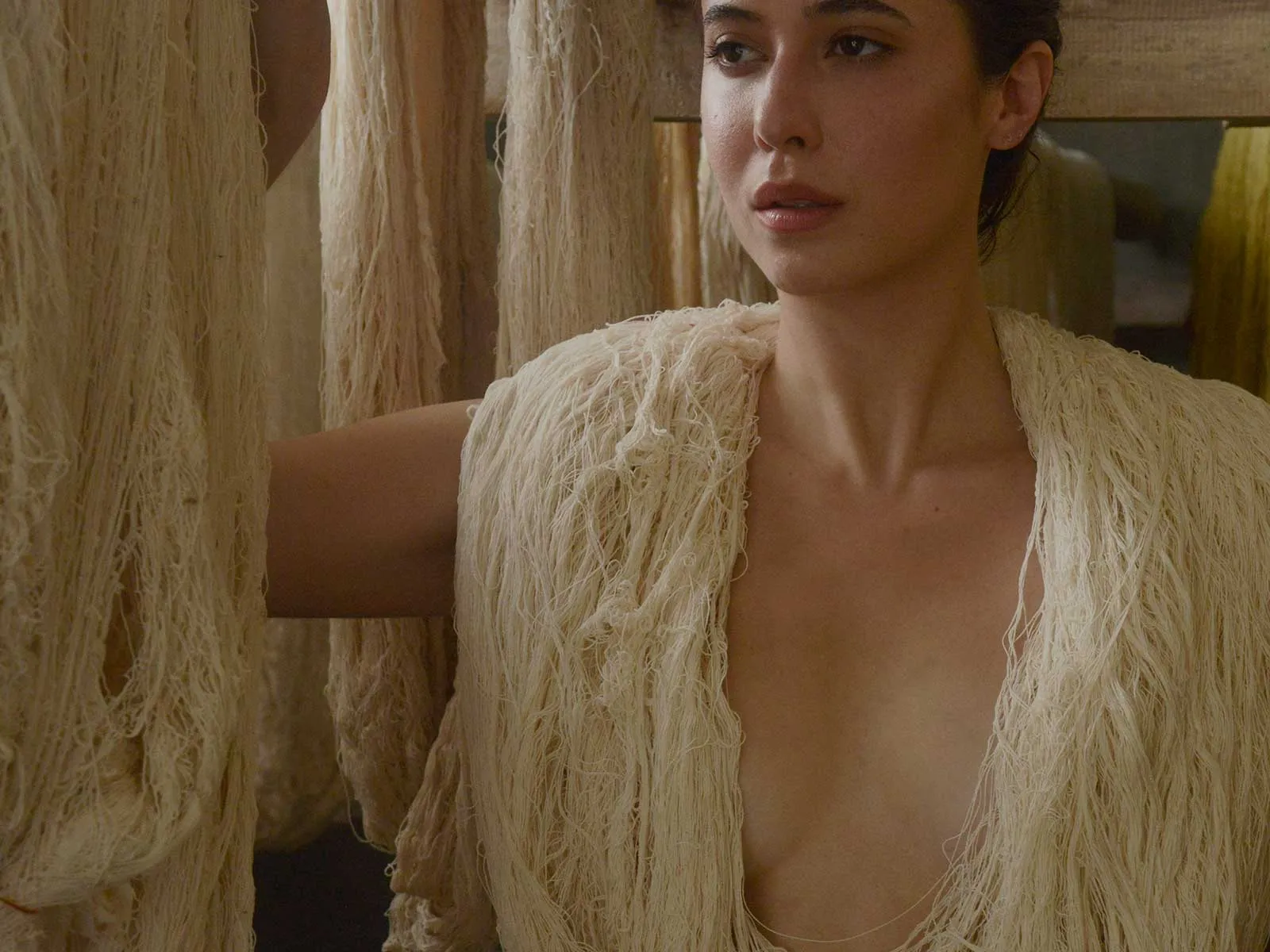
Photographed by MJ Suayan, the collective created Threads, a photo series that explores the illusion of clothing before weaving, with ghostlike forms that allude to dresses and bodices. “Before you can do cut and pattern and structure, it starts with the thread,” says Raffy. “It looked like a Maria Clara, it was a bodice, it was a dress. But they weren’t even woven. And somehow it still came out looking like clothing.” He believes that understanding how textiles are produced is essential for any designer, a philosophy that also shaped Patis Tesoro’s work. “If you look closely at her designs, it’s the textile that really shines,” he says. “She’s actually more of a textile designer.”
While the Masda Aw Project honors tradition, its mission is to ensure these crafts continue to thrive. Through a partnership with the Philippine Fiber Industry Development Authority and De La Salle–College of Saint Benilde, seven graduate designers were invited to experiment with locally produced fabrics and challenged to reinterpret them through contemporary silhouettes. For Raffy and Nina, involving young designers was essential. “The future of design is always with the next generation,” he says. “If they don’t get immersed already early on with the type of fabrics that we have and the threads that we have, then they won’t use them.”
Many have studied Western design, making it harder to navigate indigenous materials, and perceptions of value also influence their approach. “A lot of people are willing to drop a hundred dollars for Chinese silk,” he says. “But they won’t do the same for Filipino fabrics.” By encouraging designers to work with these materials, the project aspires to expand the possibilities of local textiles beyond the Terno and Barong Tagalog.
For Nina, the heart of the project is community empowerment, with workshops at the Tabuk District Jail where inmates learn craft techniques from master basket weavers and participate in artistic activities that promote cultural expression and rehabilitation. Ultimately, Nina and Raffy hope to translate the project into a guidebook for future entrepreneurs and sustainable social enterprises, covering indigenous knowledge, design, skills exchange, branding, and market development.
Yet beyond socioeconomic development, it raises questions about cultural identity. “Community means identity,” Raffy reflects. “And the Filipino has none on a global scale when it comes to fashion.” Japan has the kimono, Indonesia has batik, and Thailand continues to weave traditional dress into everyday life. In the Philippines, Filipiniana is mostly reserved for special occasions rather than daily wear.
Nina and Raffy are helping revitalize a unique and distinctive fashion identity, not just through educating and training others in textile culture, but by rebuilding a cultural ecosystem that starts with a single Filipino thread.


