
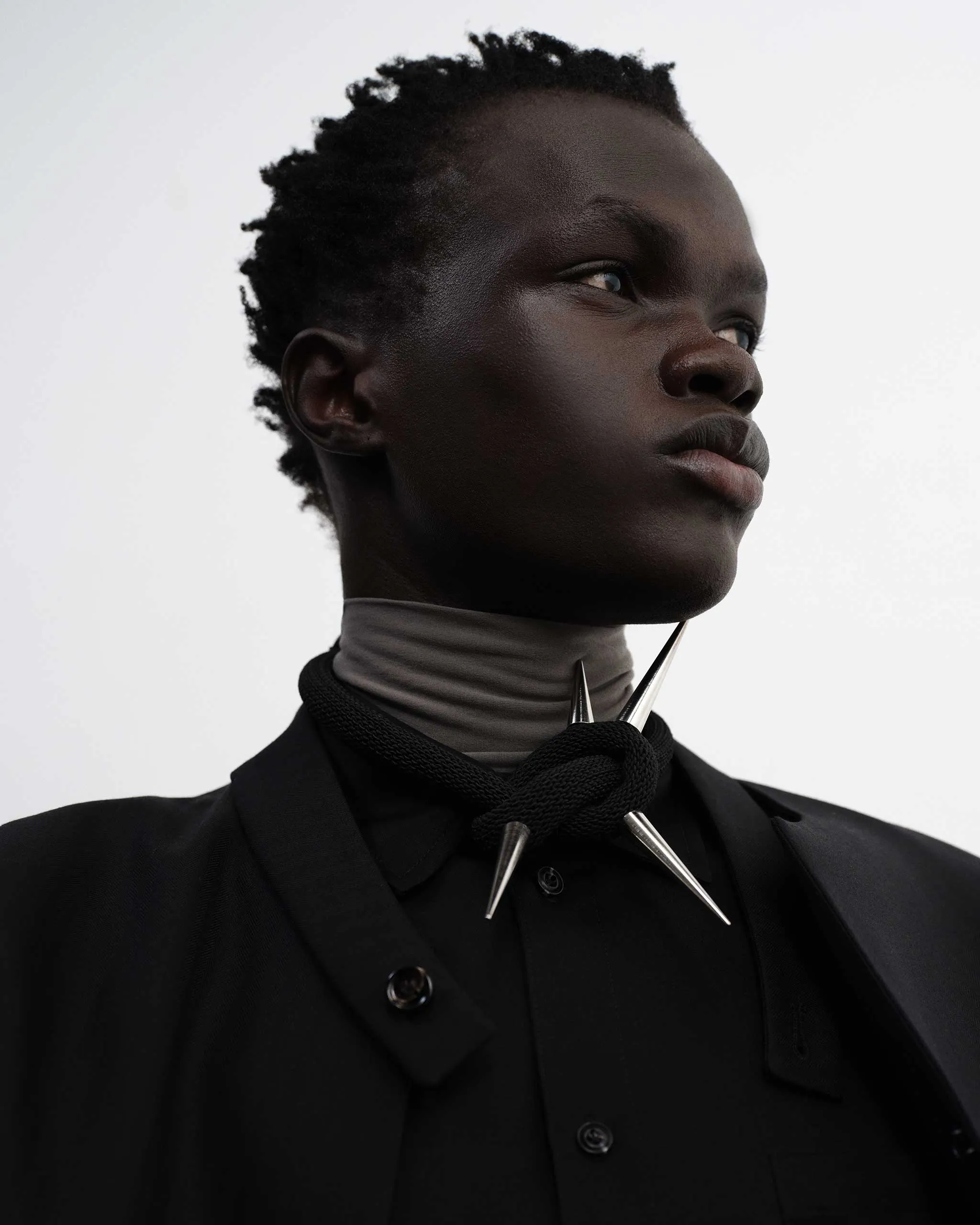
After hitting pause during the pandemic, British Filipino designer Nicomede Talavera resumes his sartorial soundtrack with Episode Seven, a collection that orchestrates his brand’s architectural rhythm and debuts womenswear.
What does it mean to be Filipino in Great Britain? Is it the streets of ‘Little Manila’ nestled in Princess Diana’s old neighborhood of Earl’s Court, the nurses and healthcare assistants keeping the NHS afloat, ube brûlée iced lattes at Pret, or the voices of Ari Reid and Angelina Perello-Javar guiding a digital diaspora? For Nicomede Talavera, the question is no longer not to be.
“It all started about three years ago for me,” he says from his webcam in Shanghai. “I was in a place of reflection, isolation. There were so many signals that were leading me to come back, but I knew that when I returned, I wanted to build a new narrative around Filipino identity and what that means, as a British Filipino.”
In a cultural hub where Filipino representation is still scarce, Nicomede’s achievements and ascent place him in the fast lane. He was mentored by Professor Louise Wilson in one of her final cohorts at Central Saint Martins’ holy-grail MA Fashion program, and interned at Lanvin and 3.1 Phillip Lim. His graduate collection, inspired by the young Muslim hypebeasts that shaped his boyhood in Hounslow, received global acclaim. Leading to a collaboration with Eastpak, a debut at London Fashion Week with Fashion East, and stockists including Dover Street Market, Joyce, and Galeries Lafayette.
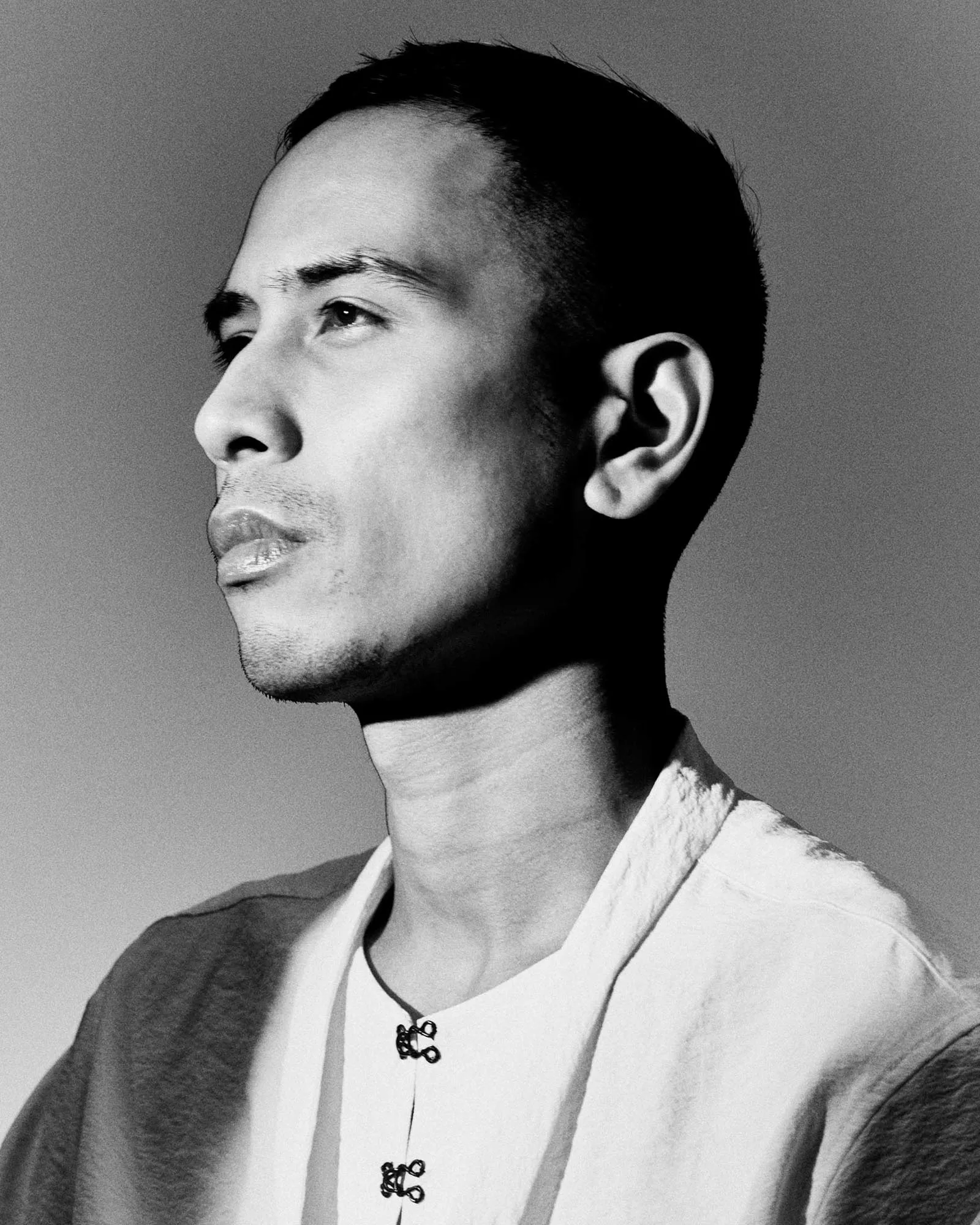
Everything was moving forward at full sail, until a sudden storm altered the horizon. When his mother became unwell, Talavera made the decision to take a sabbatical to care for her at home. “It was a really important thing for me,” he says. “It was as if it was a life contract that I was here to do that.” Alongside caring for his mother, he continued independently consulting for other brands. “It allowed a space for me to reflect more on what I wanted to do and where I wanted to move forward.”
He charted his return to the Philippines not as a pilgrimage, but as a reverent voyage to navigate the next chapter. “For me, it started with asking, ‘What do I want to create, and how do I want to create?’” he says. “It’s a new era. It’s creating in my truth. It’s a story of courage and resilience, which very much embodies the Filipino spirit.”
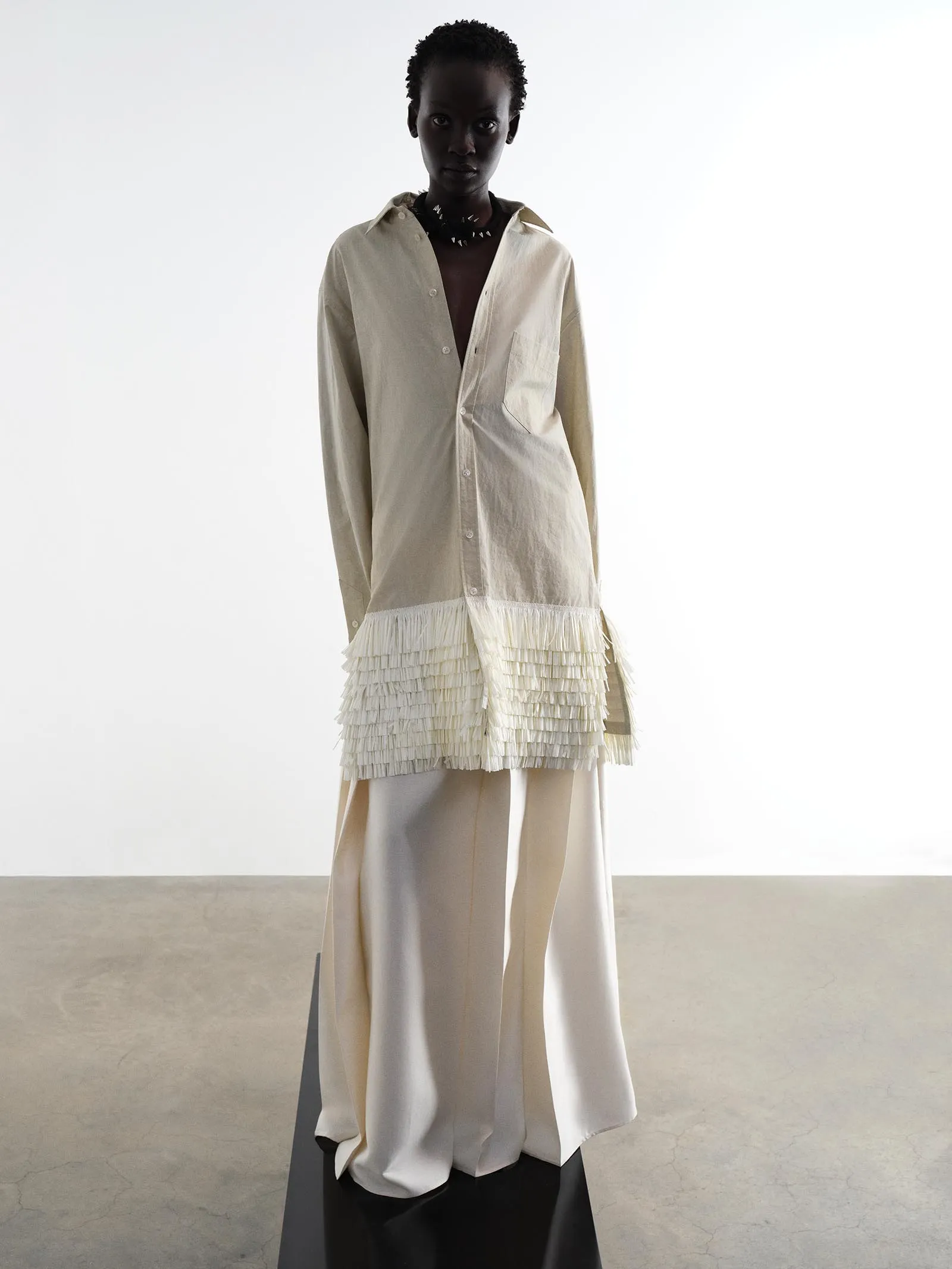
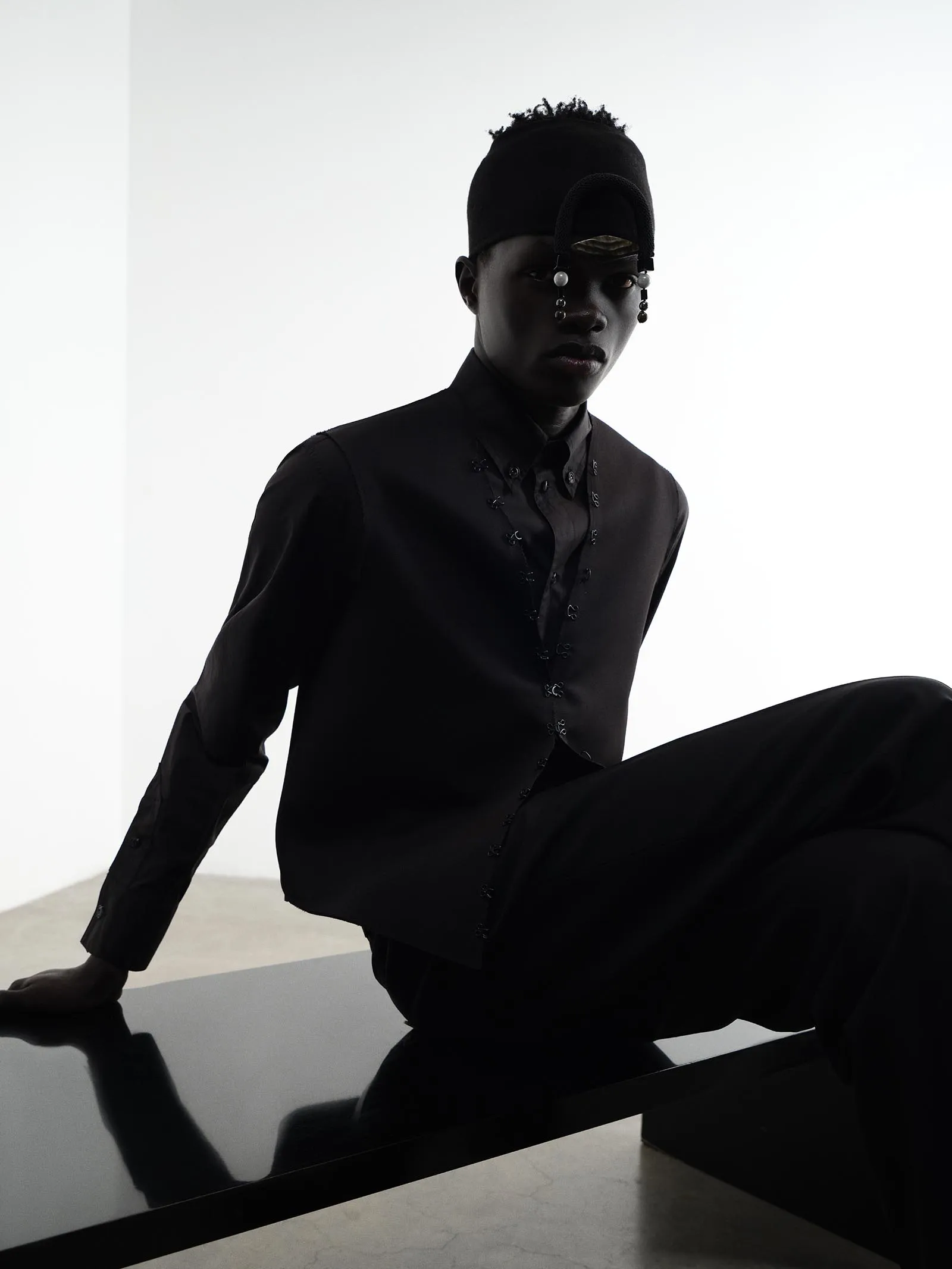
This year marks the relaunch of his eponymous label (pronounced nee-co-med-ee) with ‘Sacred Journey,’ a futuristic collection of “soulful elegance, underpinned by the island spirit,” cultivated and distilled into 30 looks. Talavera describes his memories in the Siargao that became the bedrock of the collection. “I would be sitting in my hotel room, then going for a swim in the ocean and doing meditations there,” he recounted. “It was such a sacred process of connecting to the land.”
It’s this reconnection that lured him into plunging into womenswear, a concept long overdue in gestation. “When I was selling to stores, they were buying the menswear and putting it into the womenswear department,” Talavera explains. “The silhouette completely changes on a woman. That engagement was already happening.”
Approaching womenswear required a shift in mindset. “I didn’t train in womenswear,” he admits. “Menswear has these classics that build a man’s wardrobe. Womenswear felt like the art of the possible.” Approaching the female form without preconceptions brought a newfound curiosity to the entire collection. “Exploring womenswear and understanding the female form was all new to me,” he adds.
“It’s a new era. It’s creating in my truth. It’s a story of courage and resilience, which very much embodies the Filipino spirit.”
Advertisement
These garments don’t abandon his established codes, but extend and compliment his rulebook: sculptural tailoring, streamline gowns, and structured sportswear, are elevated through quality fabrics and heavy duty hardware. Talavera credits the women around him as a main influence. “I have many empowering women around me who are strong, courageous, humorous, beautiful,” he asserts. “That’s something I really wanted to celebrate within the work.”
Deconstructed lapels and reworked collars appear throughout, synthesized with equilibrate folds, pintuck stitches, and drapery. “Tailoring is quite integral for me,” the designer says. “I wanted to bring a sense of freedom and irregularity. I felt like it was a modern take of a classic.” The result is clothing that feels intellectually avant-garde, yet accessible to an international luxury customer.
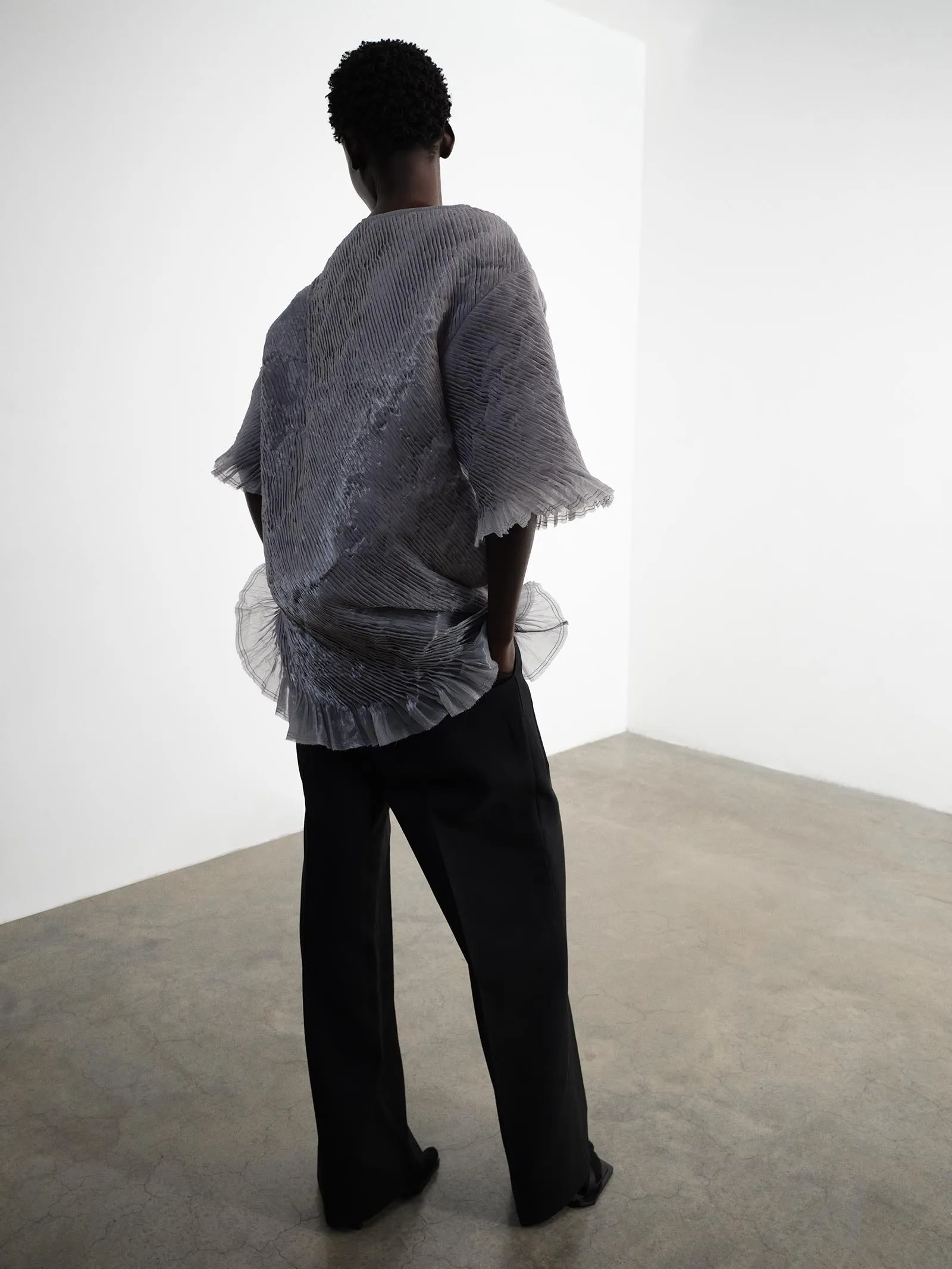
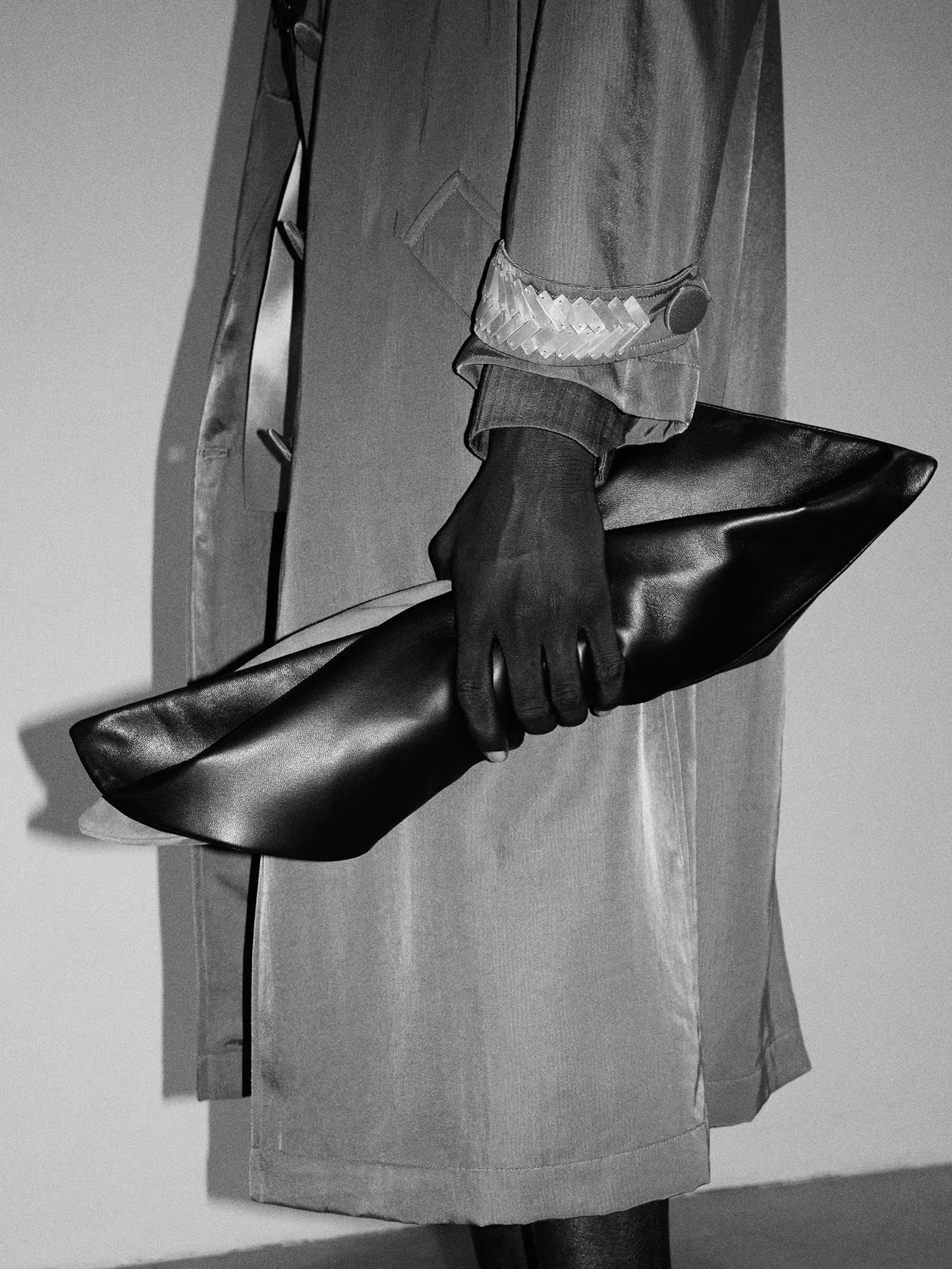
Arturo Luz, a National Artist of the Philippines and a pioneer in multi-discipline modernism informed the visual identity of the collection. “When I discovered his work, it really resonated with me,” Talavera says. He was drawn to the geometry and emotional restraint of Luz’s Shells and Boxes paintings. “I grew up in a house adorned with shell objects from the Philippines,” he adds. “We still have those shells today. They’re probably about 40 years old.”
Those memories materialise with tessellating mother-of-pearl embroidery and cowrie shells detailing on cuffs, ties, and clothes, translating traditional Filipino craftsmanship for the modern era. Handmade jewelry by classmate Berlin-based designer Ekaterina Pronina continues an ongoing partnership, incorporating geometric beads, crystals, and studs that he describes as a ‘British’ attitude. The hats reinterpret the box forms in Luz’s paintings as escarpment-like structures, intended for flexibility for the wearer.
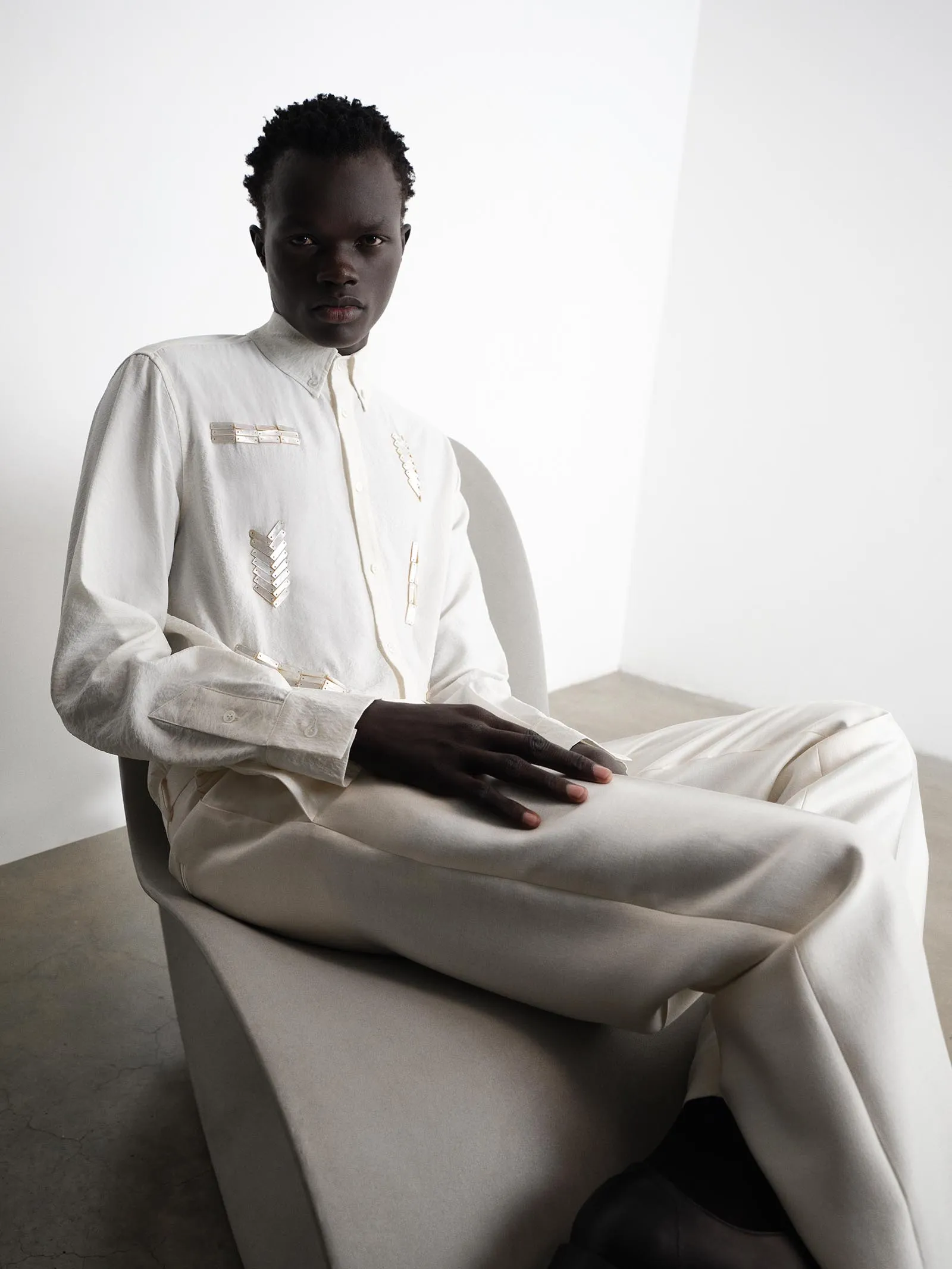
Above all, Sacred Journey is about how clothing nourishes the soul. “I hope women feel beautiful,” Talavera proclaims. “I hope they feel empowered.” For men, he notes an equally meaningful response. “When men wear my menswear, they tell me it makes them feel handsome. And that is something that doesn’t really get spoken about in clothing.”
Looking ahead, Talavera’s vision is anchored firmly in our country. “My research from the Philippines is so rich,” he confesses. “Mythology, attire, identity.” What follows is not nostalgia, but a heartfelt tenderness for a nation. “I want to tell a new way of showing Filipino artistry with a global outlook.” As he continues to work episodically, outside rigid fashion calendars, he remains guided by momentum rather than expectation. “I’m really looking at everything with optimism and faith.”
By LAWRENCE ALBA. In this story: Photographs by Steve Harnacke, courtesy of Nicomede. Stylist: George Krakowiak. Hair: Kim Rance. Grooming: Chiao Li Hsu Casting: Jon Johnson Studios. Models: Aliet and Wal.


