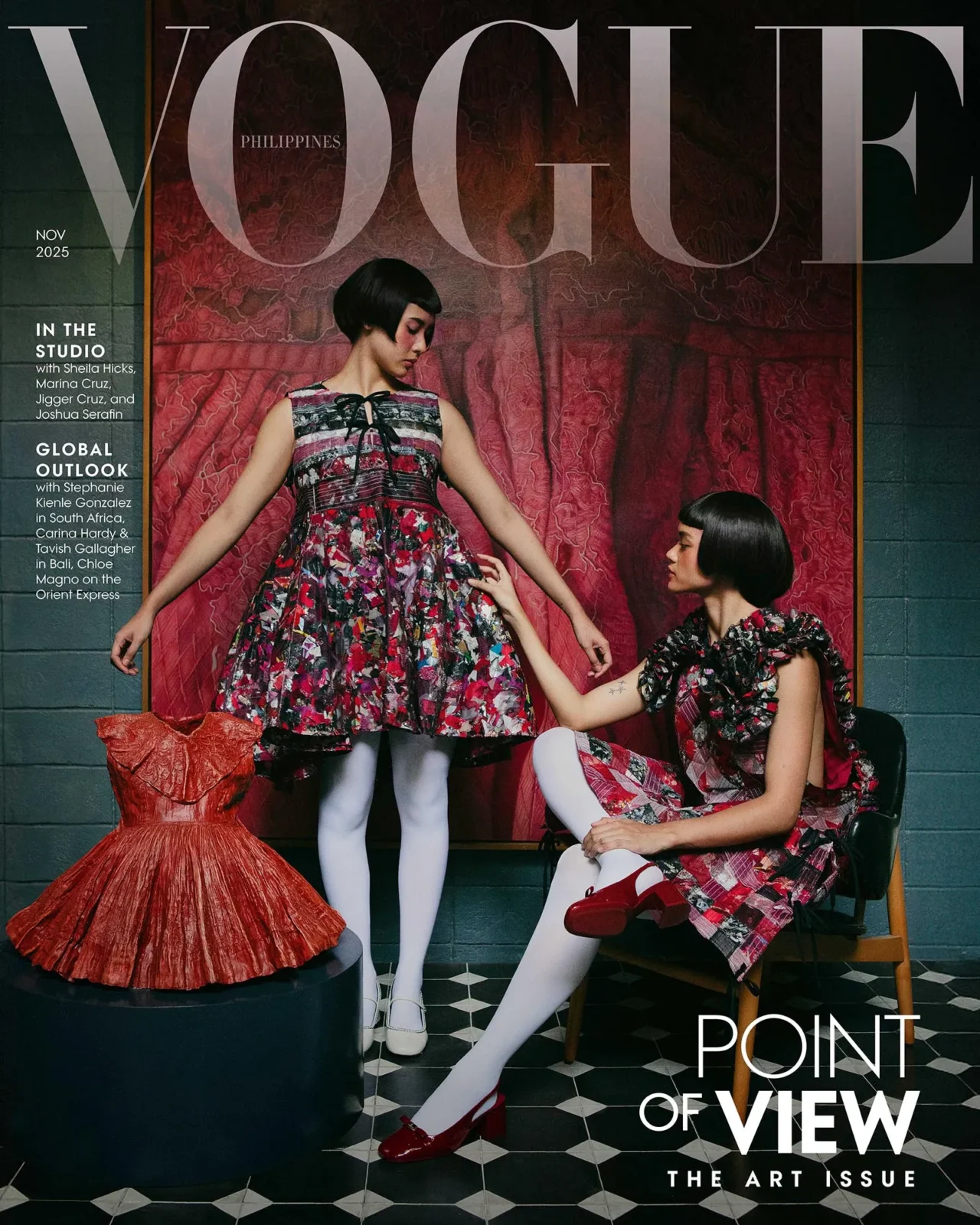

Photographed by Zhamak Fullad
Co-founders Phoebe Gates and Sophia Kianni left Stanford to build Phia, an AI shopping assistant that does the deal hunting for you.
It’s late on a Tuesday evening in Los Angeles, and Phoebe Gates and Sophia Kianni have spent their day filming The Burnouts, their new podcast. Far from sounding burnt out, the co-founders are eager to share that their app Phia has hit over half a million downloads in under six months.
Phia is Phoebe and Sophia’s new AI shopping tool that the two started in their shared Stanford dorm room two years ago. In one tap, Phia aggregates product listings from over 40,000 retail and resale sites to find you the best price. Think Google Flights, but for fashion.
The roommates-turned-best friends took a generative AI class focused on entrepreneurship that encouraged them to consider opportunities for disruption. While a Bluetooth tampon was the first idea they landed on, they had enough self-awareness to realize they weren’t the right pool to build that particular technology. Instead, they “focused on identifying what problems we both experienced,” Sophia says, “and where we felt there was a novel opportunity for an application of AI to really be part of the tailwinds of time.”
As roommates who often borrowed each other’s clothes, they zeroed in on a pain point that triggered them both: the frustration of online shopping. Countless open tabs, fast fashion, the lack of price transparency, and the inability to seamlessly compare costs online. They decided to build a solution for it.
An early USD250,000 grant from a Stanford social entrepreneurship program and encouragement from a professor gave them the confidence to make the move from Palo Alto to New York and work on building Phia full-time. For Sophia, that meant temporarily dropping out of Stanford. “Our goal was to learn, as quickly as possible, as much as we could about the industry that we would be operating in,” she explains. Sophia eventually finished her degree while building the company in the city that never sleeps.
Developing a fashion app may seem like a wide pivot for the pair. Sophia was considering a legal career, while Phoebe was on the pre-med track. Both are also staunch activists: Phoebe has been an outspoken advocate for women’s health and reproductive rights, while Sophia founded Climate Cardinals, the largest youth-led climate non-profit, and was appointed to the United Nations Secretary-General’s Youth Advisory Group on climate change. Born to Iranian immigrants, Sophia’s activism was ignited at an early age by an eye-opening trip to Iran that exposed her to the realities of climate change. Rather than taking them away from their work around social and environmental activism, however, they believe Phia reinforces the causes they’ve been fighting for.
“For us, it was really this idea of, ‘How can we continue with our passions for advocacy work and address this giant market opportunity that we saw in front of us?’” Phoebe explains. While she and Sophia were doing their own hacky way of shopping to find the best deals, they realized that their experience was far from unique. Countless shoppers spend too much time combing the internet in search of the lowest prices.
The common thread running through both their work, whether in the realm of fashion tech, climate justice, or reproductive rights, is empowerment. Information empowers better decisions.
“We’re building what we wish existed when we were in college.”
The journey hasn’t been smooth-sailing since Phoebe and Sophia stepped into their roles as co-founders. Initial development and early testing brought about tough learnings followed by hard pivots. They quickly discovered that while pain points may be common, shoppers’ priorities differ.
As they were rapidly iterating, building, and rebuilding the product based on user feedback, they were emboldened by mentorship and investment from other women who have blazed the trail, like Kris Jenner, Sheryl Sandberg, and Spanx and Sneex founder Sara Blakely, who saw its potential to reshape the shopping experience. Phoebe and Sophia also secured funding from Annie Case at Kleiner Perkins, the blue-chip venture capital firm that backed Google and Amazon.
Who’s not an investor in Phia is just as significant. When your father is the co-founder of one of the world’s biggest tech companies, you would naturally think of tapping not only him but his team to help you build your AI tool. Not Phoebe Gates. While acknowledging her privilege, there’s no questioning how crucial it is to Phoebe that she prove herself without the financial backing of Bill and Melinda Gates. What Phoebe did get from her parents was the founder advice she needed to hear, to toughen up, to learn to deal with all the rejection, and to forge on.
But why would Phoebe herself need, let alone want to build a bargain-hunting app like Phia? Phoebe explains that it is about time as much as price. “You would have had to scour across a million different sites to find that exact item. The product is not limited by who you are for it to be valuable.”
When you’re looking at a product online, tap on Phia’s “Should I buy this?” prompt and Phia will scan tens of thousands of sites using its AI search technology and tell you if the price is typical, high, or fair. It also surfaces cheaper options, both new and secondhand.
Knowing that shopping secondhand reduces carbon emissions by 80 percent, Phoebe and Sophia also want Phia users to shop in a more sustainable, yet still delightful way. Phoebe speaks about her own recent score from luxury reseller Vestiaire Collective. “I recently got this buttercream yellow Khaite sweater that I had forever in my Phia wish list folder,” she says.
Sophia shares that they saw a ton of desire for “this price graph where you can understand a product’s average retail price point and then also understand what its average secondhand price point is.” If the price difference isn’t that much, shoppers are more inclined to buy new. “It then boils down to a cost per wear situation. You’d rather purchase a higher quality luxury item that’s often more sustainable and wear it for a longer period of time. And often, those are the items that actually end up retaining a lot of their resale value.”
Since the launch, the co-founders have been thrilled to discover users taking Phia beyond fashion. Sophia’s mom used it to shop (and compare) for a toaster. From kitchenware, furniture, and electronics, the Phia team is hoping their community will make the most of it this holiday season.
With less than 10 full-time employees, the Phia team has been racing to add features users want, like price drop alerts, international shipping and tariff calculations. With the price as just their starting point, the vision for Phia is to become a true end-to-end AI shopping assistant. Sophia says, “We really want to build an AI shopping assistant that’s able to answer the question ‘Should I buy this?’ for every single person with true personalization.”
Phoebe and Sophia are well aware that the answer to that question can be like day and night from one person to the next. “We really see an opportunity where every person has their own AI agent. That it’s able to not just help you while you’re shopping but also anticipate your needs, using all the context that we have on you as a person, and to be able to give you the most relevant, hyper-curated recommendations as possible.”
Being a female founding duo has had its advantages, as they understand their users. “We’re building what we wish existed when we were in college,” Phoebe says.
The friendship-turned-partnership has been working out well in this case. “When you’re living with someone you learn very quickly about each other and how to communicate,” Phoebe shares. “If we disagree about something, there’s a timer for when we have to make a decision and commit towards something. The reality is, we both don’t know all the answers. We just need to learn.”
They’re also lifting the curtain and sharing that learning process through their podcast, The Burnouts, taking their followers behind the scenes of founder mode. Guests have included Bumble founder Whitney Wolfe Herd, Karlie Kloss, and Paris Hilton. With over 100 million views in just five months, it’s apparent that people not only want to shop like them but want to learn alongside them.
Despite their different backgrounds, the multi-hyphenate innovators are proving that the real luxury is being able to do what you love and make a positive impact along the way. Getting to do it with your best friend is the icing on top.