
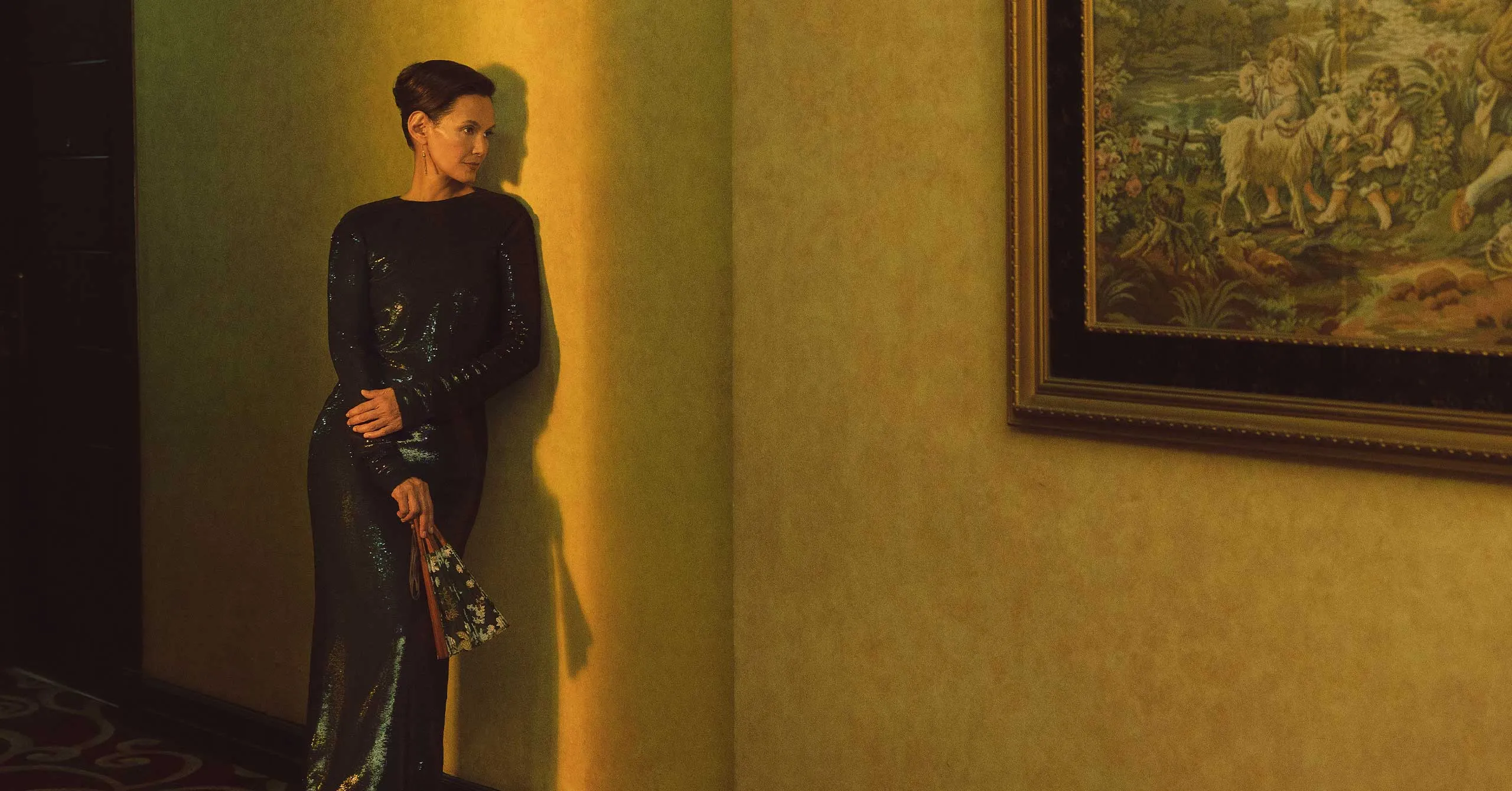
Photographed by Joseph Pascual for the September 2025 Issue of Vogue Philippines
Photographed by Joseph Pascual for the September 2025 Issue of Vogue Philippines
The abanico once fluttered through society balls and state dinners as a silent yet powerful signal. Today, through Casa Mercedes, Monchet Olives helps the fan remain part of Philippine fashion’s vocabulary.
With temperatures rising and Jisulife fans becoming symbols of status, Monchet Olives offers a more enduring and responsible form of cool. As the steward of Casa Mercedes, the Philippines’ oldest fan manufacturer, he has inherited not only a business, but also an art form with a code of conduct. For him, each abanico is not merely an accessory but a cultural emblem, a fashion statement, and a reminder of a society where the flick of a wrist once spoke volumes.
Casa Mercedes was born in 1951 out of a family’s vision to bring the artistry of Spanish abanicos into Filipino hands. Mercedes Diokno Rivera, the formidable aunt behind the company’s name, had been working at Philippine Airlines during its pioneering years. She often traveled to Spain, where friends and acquaintances would ask her to bring home abanicos. Eventually, she wondered why such pieces could not be made in Manila. Together with her sisters, Angelita Diokno Olivas and Dr. Nora Diokno-Casas, she began a small enterprise that would grow into a heritage brand.
The timing was right. Postwar Manila was rebuilding itself into a cosmopolitan capital, and the social calendar was vibrant with balls, receptions, and diplomatic dinners. The abanico became an essential accessory for women in society, paired with ternos and evening gowns. It was a symbol of refinement, completing the image of elegance, and it carried echoes of a Spanish colonial past when the abanico served as both ornament and language. In high society, it was more than a cooling device. It was a code. A woman could signal interest, dismissal, or intrigue with a simple gesture.
“I think the fan itself is a carryover from the Spanish period and has evolved from being just an accessory to something you carry with you because we’re in Manila, it’s the heat,” Monchet explains. He remembers how in the 1950s and 60s fans were matched to clothes, shoes, and handbags.
For Monchet, the story of Casa Mercedes is also deeply personal. Born in 1963, he grew up in San Juan, where the factory was within the family compound. “What I remember is that the factory was in our home,” he recalls, “I could see it growing up.” Though surrounded by the craft, he initially charted a different path, building a long career in media. After more than three decades at ABS-CBN, he retired and found himself searching for the next chapter. Friends urged him to take up the family mantle. “Three people approached me, all friends of mine, and they all told me, you have to keep this heritage going. That is when I said, okay, this is a good idea. So I talked to my sister and said, “Let me get involved.”
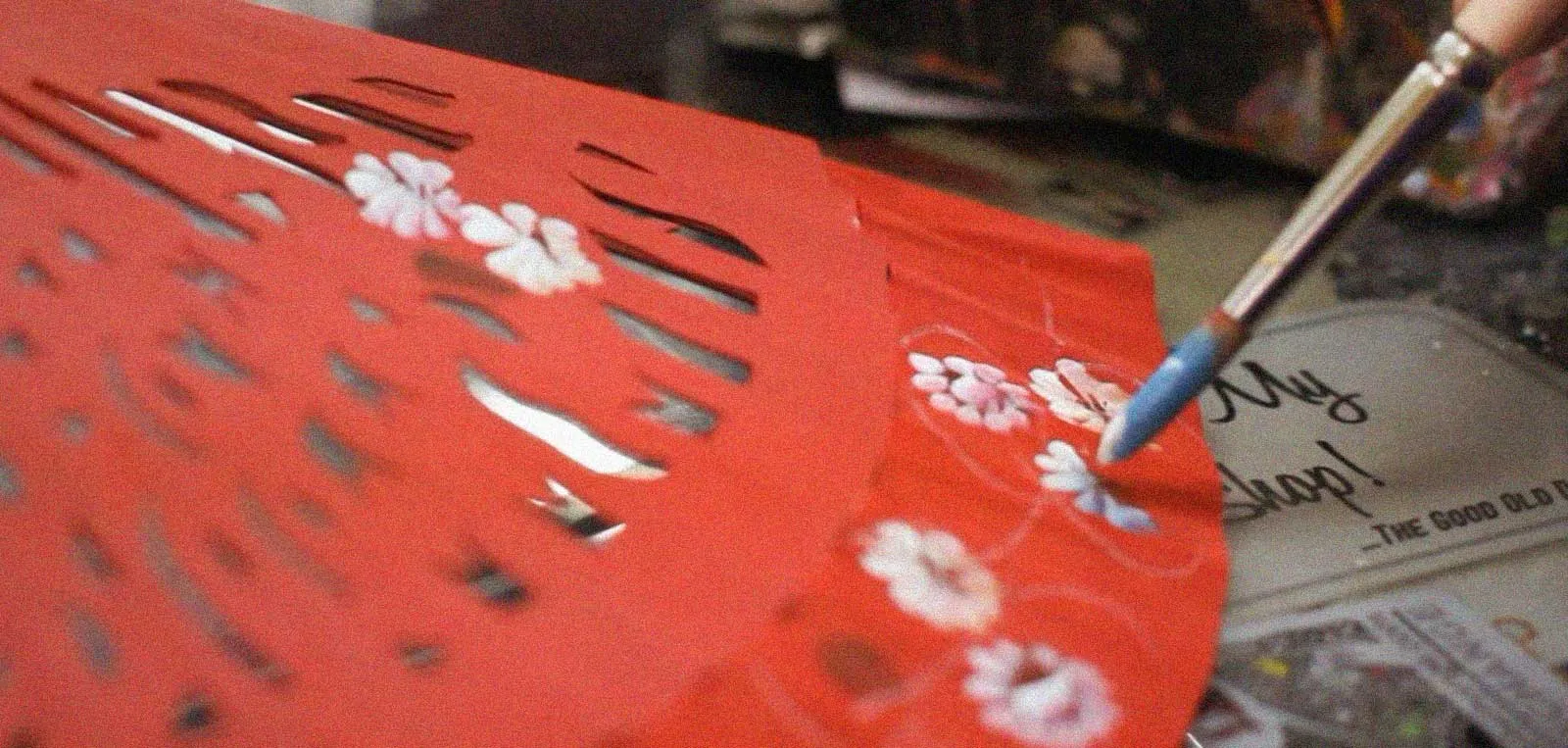
What he inherited was not just a business but a responsibility to keep the abanico relevant. He began experimenting with contemporary designs, blending heritage with wit. The Icono series featured digitally printed abanicos emblazoned with hashtags and Filipino expressions. The most famous was “Puneta,” a phrase his mother often used. “That’s what kind of put us back on the map as a novelty item,” Monchet says. This bold move bridged Casa Mercedes’ old-world craftsmanship with pop culture, allowing the abanico to be both collectible and current.
The craft itself remains unchanged. Abanicos are made by hand, using the same processes the sisters learned in Spain more than seventy years ago. “The elements of a fan include the wood, which we use from sustainable sources. The wood is cut into thin veneers, dried, punched, and sanded into ribs. Then the fabric is chosen, starched by hand, sun-dried, pleated, and finally attached to the frame. The wood is varnished or painted, and the fabric can be plain, embroidered, or lace. We still do it the same way my aunt and my mom saw it done in Spain.”
Some creations are simple, others astonishingly elaborate. Monchet tells the story of the “petal fan,” created in the 1970s at the request of designer Pitoy Moreno. “He wanted a fan to match a terno covered in petals,” Monchet recalls. His mother devised an abanico made entirely of petals, a design that has remained part of Casa Mercedes’ repertoire ever since. Other commissions have been just as remarkable, from embroidered narra wood abanicos gifted to dignitaries to special collaborations for luxury houses. “We’ve made fans for the Empress of Japan, Queen Sofía of Spain, even as a gift for Karl Lagerfeld,” he says. More recently, Casa Mercedes has quietly supplied abanicos for Louis Vuitton and Dior, proof that the tradition resonates far beyond Manila society.
Still, Monchet is not driven by celebrity names or prestige orders. What matters to him is sustaining a heritage that is both fragile and vital. “It is rare to have a business in handicraft that has been running in the Philippines for over 75 years,” he reflects. “My hope is to remain relevant, and to see it still here at a hundred. Every fold, every piece of wood, every flick of the fan is part of Philippine culture.”
In a world that relishes the new, Monchet has positioned Casa Mercedes as both heirloom and accessory. The abanico can be a playful novelty or a ceremonial gift. It can be matched to couture at Ternocon, or sold at Rustan’s and Tesoro’s, where generations of Filipinos continue to seek them out. It is precisely this duality that makes Casa Mercedes resonate today.
“When someone opens a Casa Mercedes fan,” Monchet says, “I want them to feel heritage, to appreciate that with every fold and every rib runs the story of a country.” For him, the abanico is not a relic of the past but a living symbol, as stylish as it is historic. In his hands, the flick of an abanico is once again a language, one of continuity, culture, and quiet power.
Photographs by JOSEPH PASCUAL. Styling by MIGUEL URBINA TAN. Creative Director PAULINA PAIGE ORTEGA. Deputy Editor PAM QUIÑONES. Fashion Editor DAVID MILAN. Talent: Tweetie de Leon-Gonzales. Producer: Bianca Zaragoza. Makeup: Zidjian Paul Floro. Hair: Gab Villegas. Beauty Writer and Associate: Bianca Custodio. Associate Producer: Angelo Tantuico. Multimedia Artist: Mcaine Carlos. Nails: Extraordinail. Makeup Assistant: Arman Adriano. Director: Judd Figuerres. Cinematographer: Mycko David. Gaffer: Ronald dela Cruz. Keygrip: Frederick Neypes. Camera Operator: Kevin Rutia. Assistant Camera: Johm Mozo. Caretaker: EM J Guzman.
Shot on location at Ramon Magsaysay Center, Rizal Park Luneta, and The Luneta Hotel Manila.
- Lady of the Hour: Cinematic Stills Reimagined in Filipino Grace
- Alfredo and Isabel Aquilizan Bring Their Migrant Narratives to London
- From Cardin to Patou: How Roy Gonzales Became the First Filipino to Lead a French Couture House
- Why Sara Sozzani Maino Is Betting on Filipino Designers with the 2025 FASHIONPhilippines Milan Mentorship Program


