
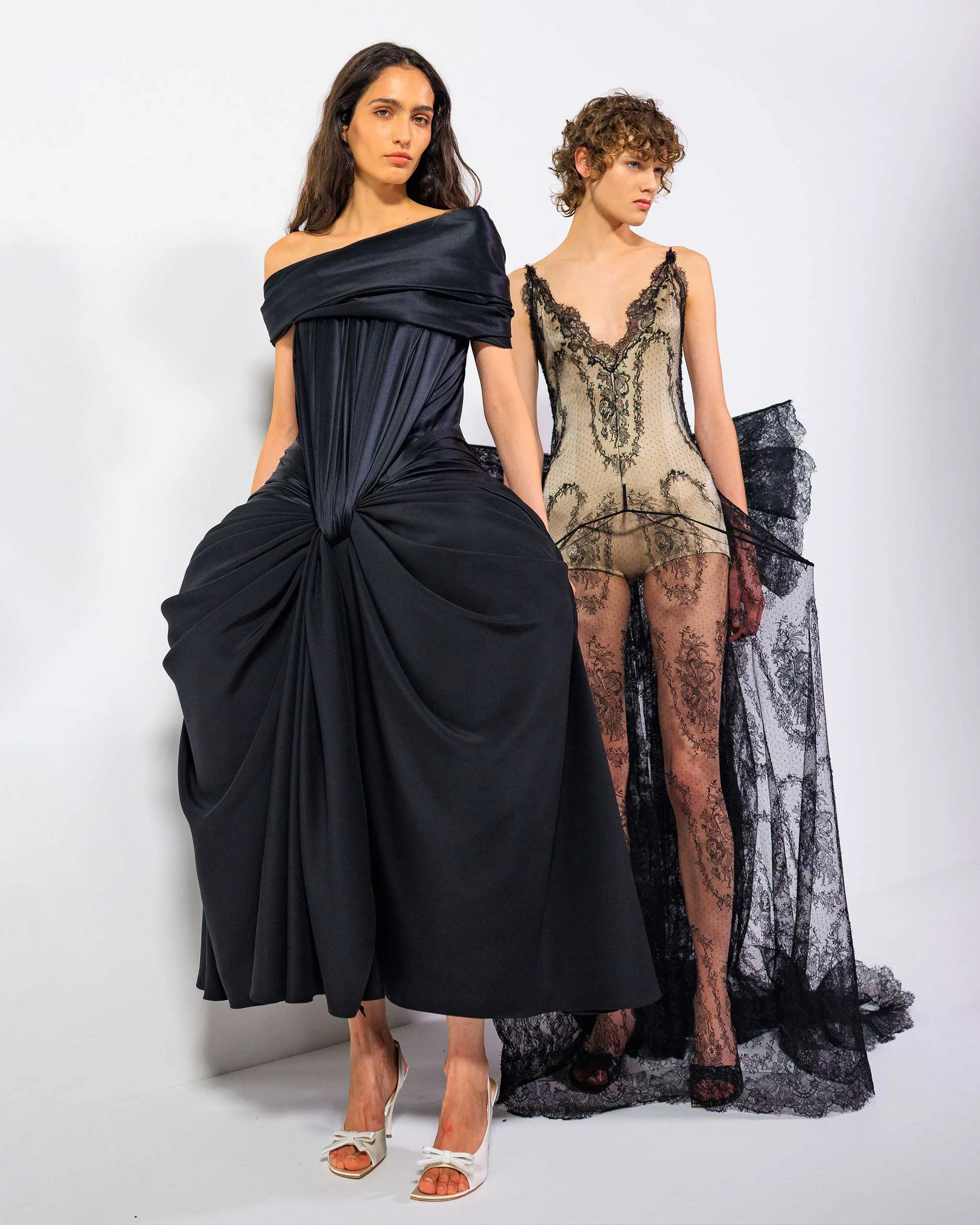
Photo: Photographed by Acielle / Style Du Monde
Jonathan Anderson’s Dior spring 2026 show in Paris combined cinematic staging with scrapbook innovation, marking a decisive new chapter for the house.
The Paris runways have become a testing ground for the future of fashion. As Matthieu Blazy prepares his debut collection for Chanel and Pierpaolo Piccioli takes on Balenciaga, the industry observes a generational transition at the height of luxury. In this context, Dior’s Spring/Summer 2026 show was one of the most eagerly awaited events of the season, held with the seriousness of a state ceremony. Jonathan Anderson, already in charge of Dior menswear, made his first appearance for womenswear. This debut carries the weight of a brand deeply linked to French heritage and the commercial dominance of LVMH.
The staging underscored the gravity of the moment. In the Jardin des Tuileries, guests sat in a circular formation beneath a vast inverted pyramid, its sides flashing with a fever-dream film directed by Adam Curtis. It risked veering into gimmickry, even recalling Alexander McQueen’s famed ‘illusion of Kate Moss’ Pepper’s Ghost finale from Autumn/Winter 2006, but charged the atmosphere with the sense of witnessing a historic moment. Horror movie fragments collided with Dior’s archival triumphs: Christian Dior’s postwar “New Look,” Yves Saint Laurent’s trapeze, Gianfranco Ferré’s jewel-toned architecture, Galliano’s theatre, Simons’ minimalism, Chiuri’s feminist tableaux. The montage, laced with Marlene Dietrich, Princess Diana, and paparazzi chaos, suggested both the glamour and neurosis of inheriting such a lineage. Anderson’s Dior was framed not as a clean slate but as a dialogue messing with the ghosts of the brand’s own Pandora’s box.
The front row reflected the spectacle’s cultural reach. Andrew Bolton, Brigitte Macron, Carla Bruni, Taylor Russell, Kim Jisoo, Jenna Ortega, and Juergen Teller flanked the runway, while Luca Guadagnino and Stefano Baisi, longtime collaborators steeped in queer cinephilia, lent the proceedings the air of cinematic authorship. This was not simply a fashion show but a performance staged as collective memory and filmic narrative, with Anderson positioned at its center.
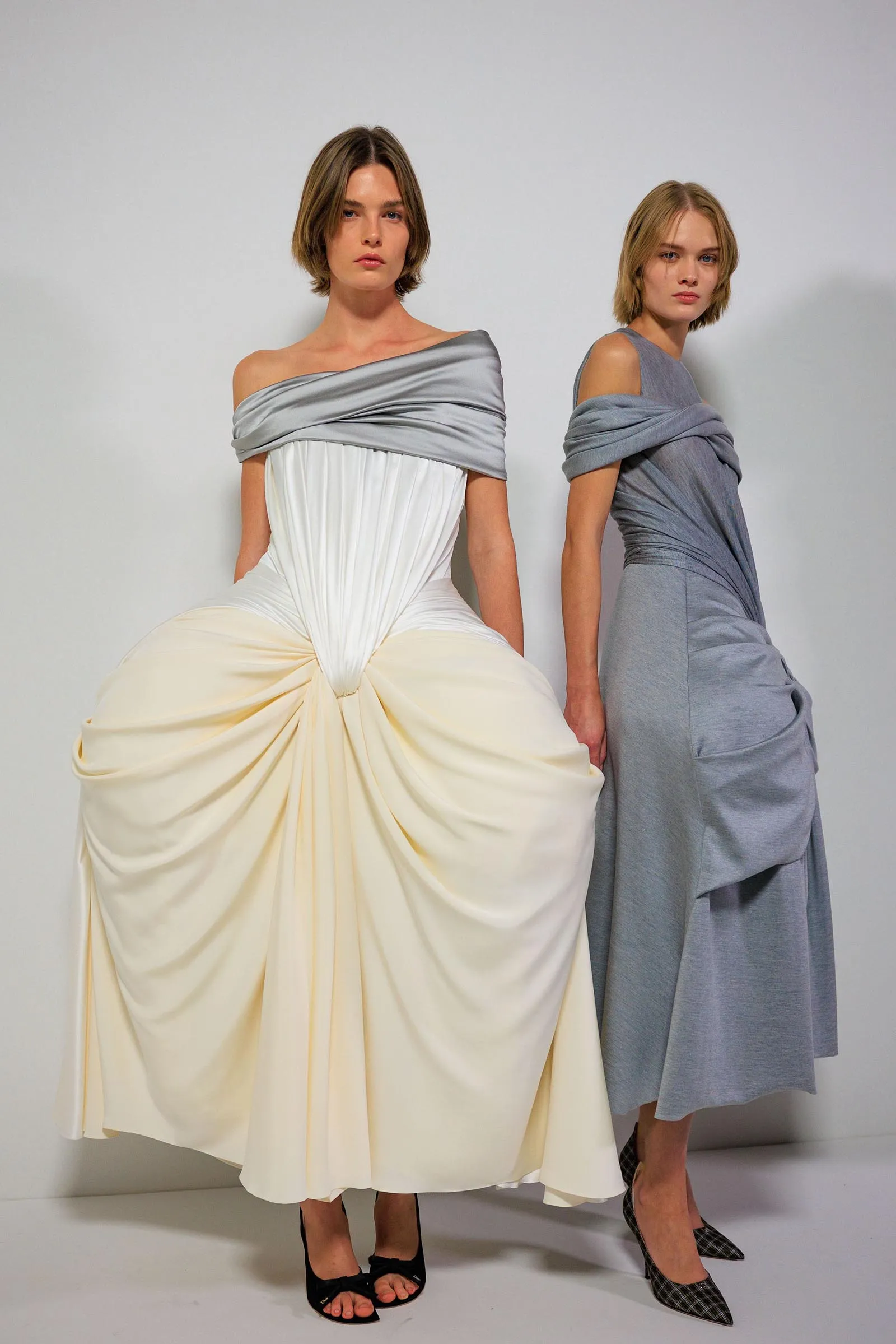
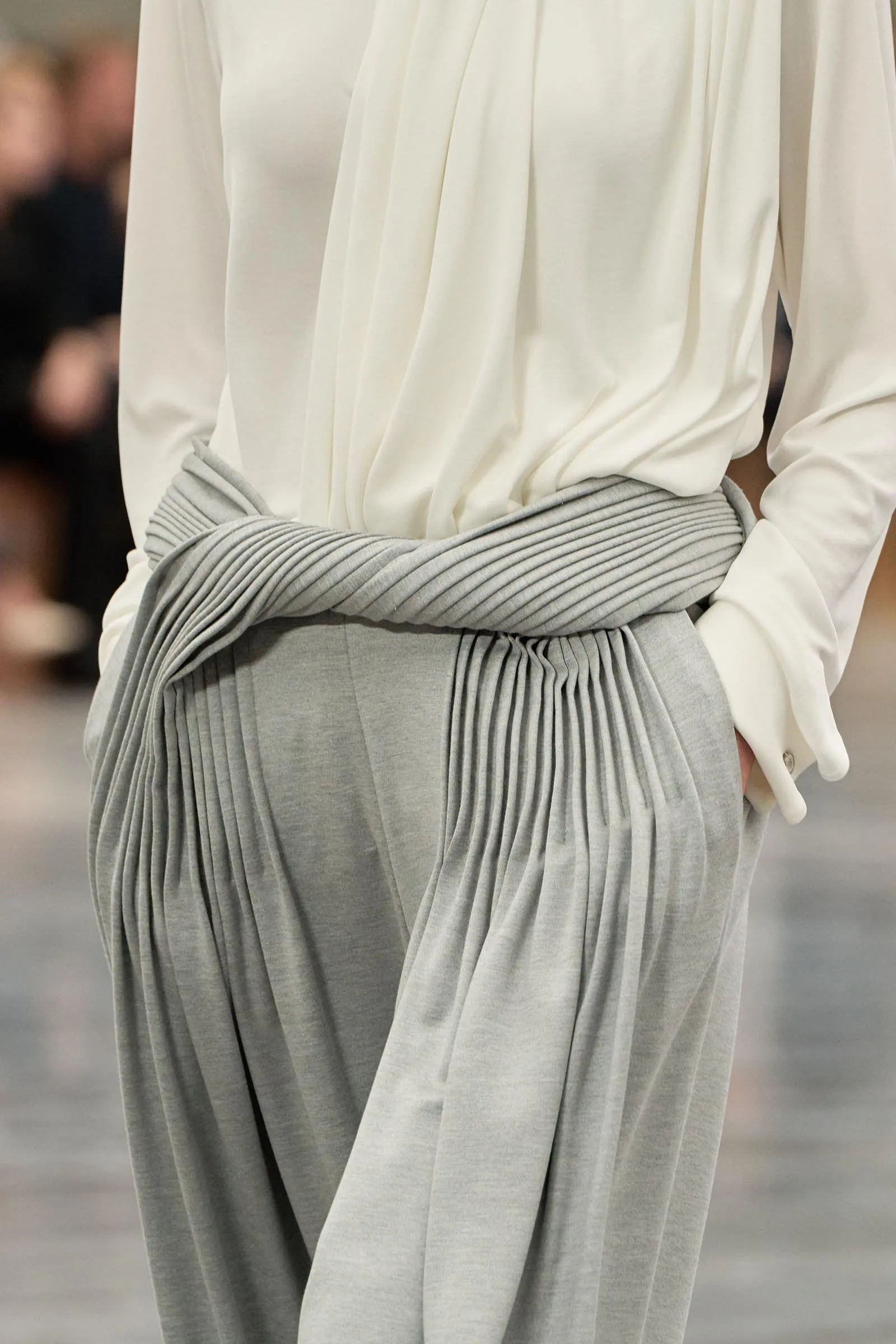
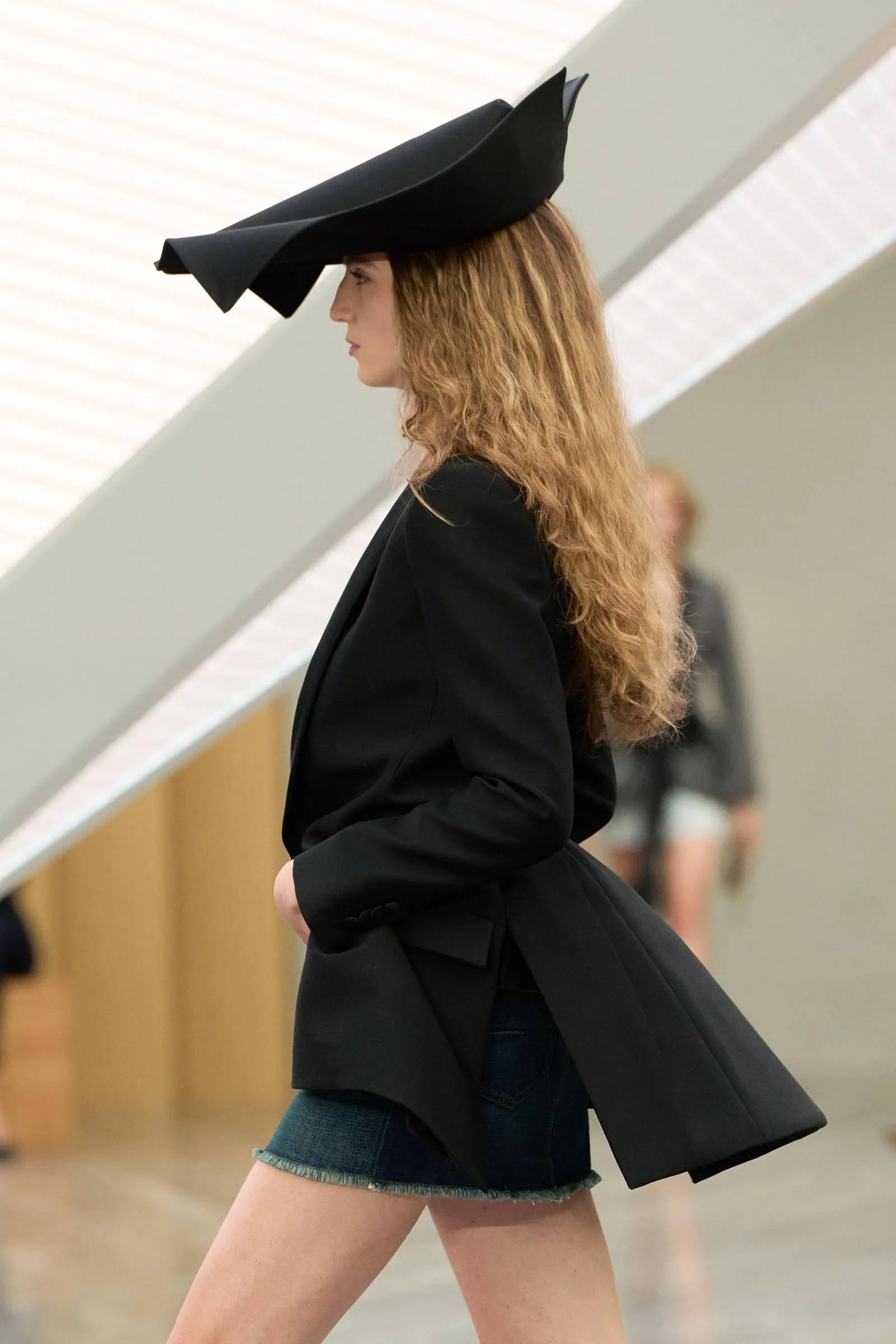
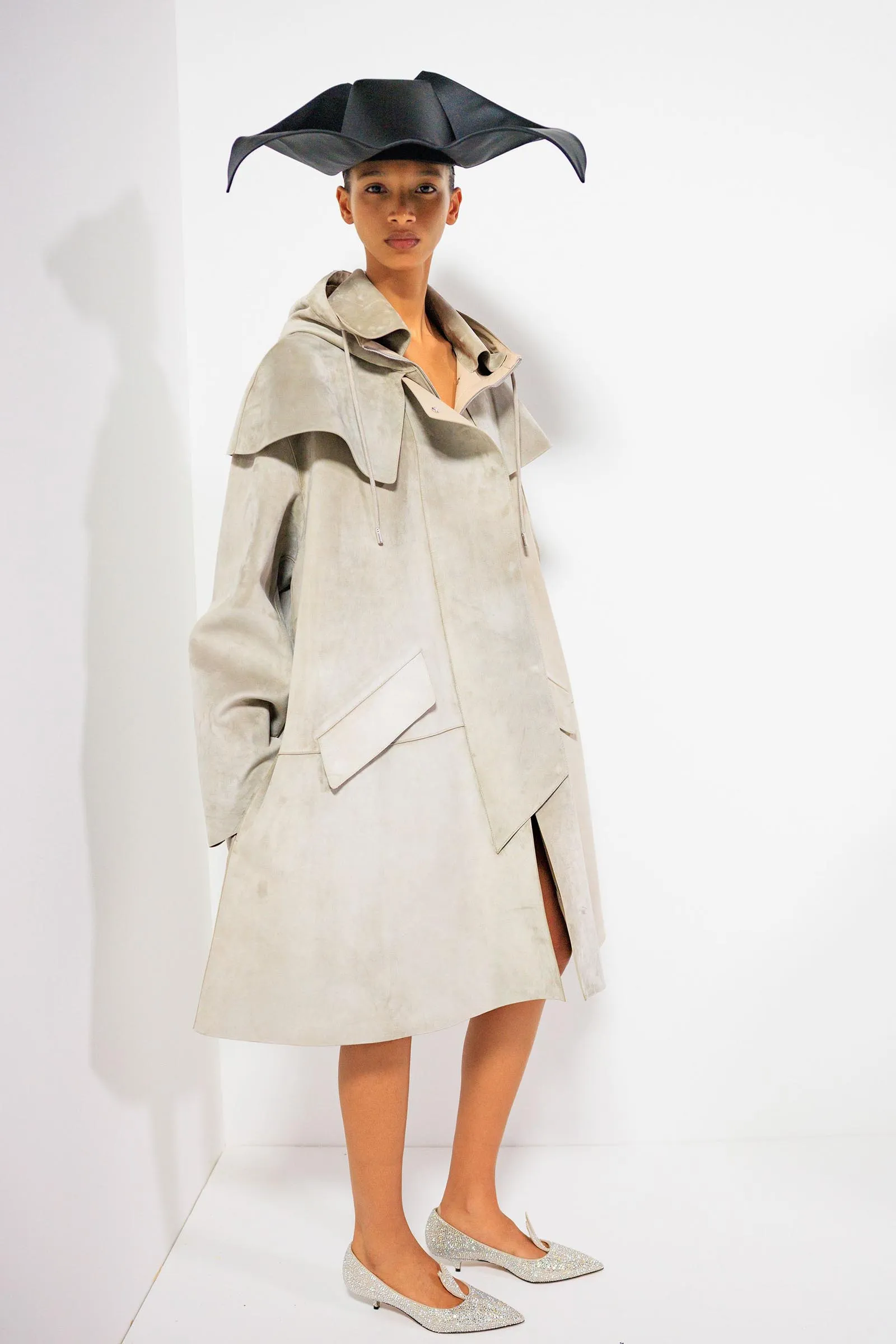
The first look, a white bell-shaped crinoline wrapped in jersey and punctuated with bows, served as Anderson’s blank page. What followed was a series of archetypes lifted and reframed from the Dior canon. A black tuxedo jacket with a flared peplum was cut against a raw denim mini, topped with a Galliano-like tricorne by milliner Stephen Jones. The Bar jacket, Dior’s defining silhouette, appeared in several guises: shrunk to doll-like proportions in Donegal tweed with a tiny pleated skirt; skewed upward so its peplum rose toward the bust, disrupting the hourglass into something uncanny. These distortions signaled Anderson’s approach: neither preservation nor rupture, but deliberate misalignment.
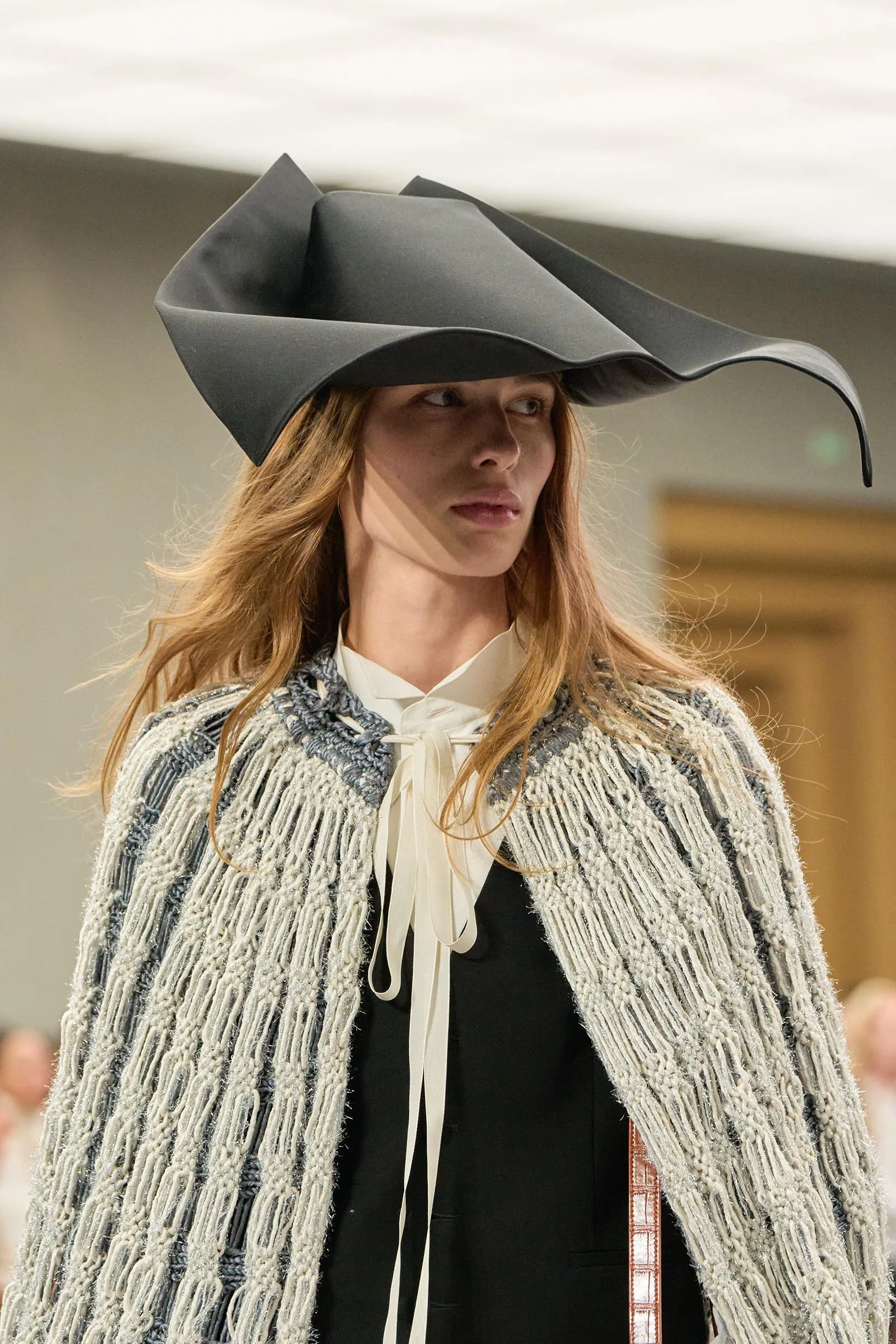
Throughout the collection, he drew inspiration from Dior’s archive of shapes and fantasies, reinterpreting them with his own surrealist wit. Chantilly lace slips transformed into butterfly wings, reminiscent of Dior’s 1952 Cigale gown. Bubble dresses and pouf skirts strike a balance between youthful playfulness and adult irony. A scarlet satin top featured a stiff lace collar that obscured the model’s face before flowing into a dramatic train, blending Elizabethan costume with a touch of horror-film menace. Capes appeared throughout the collection, some sweeping in plaid, others cropped in pink or transparent chiffon, portraying garments that could shift from fairytale protection to urban practicality.
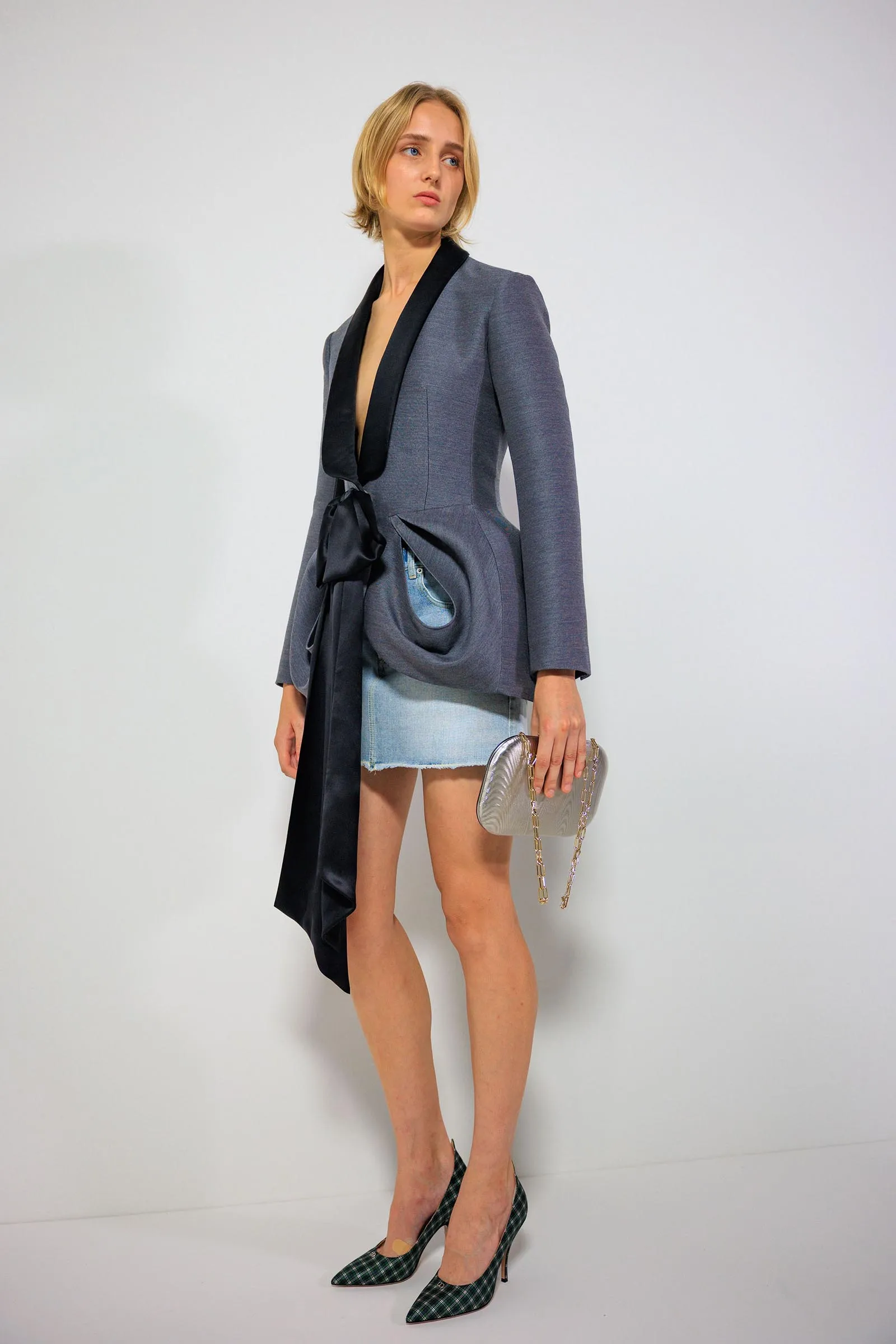
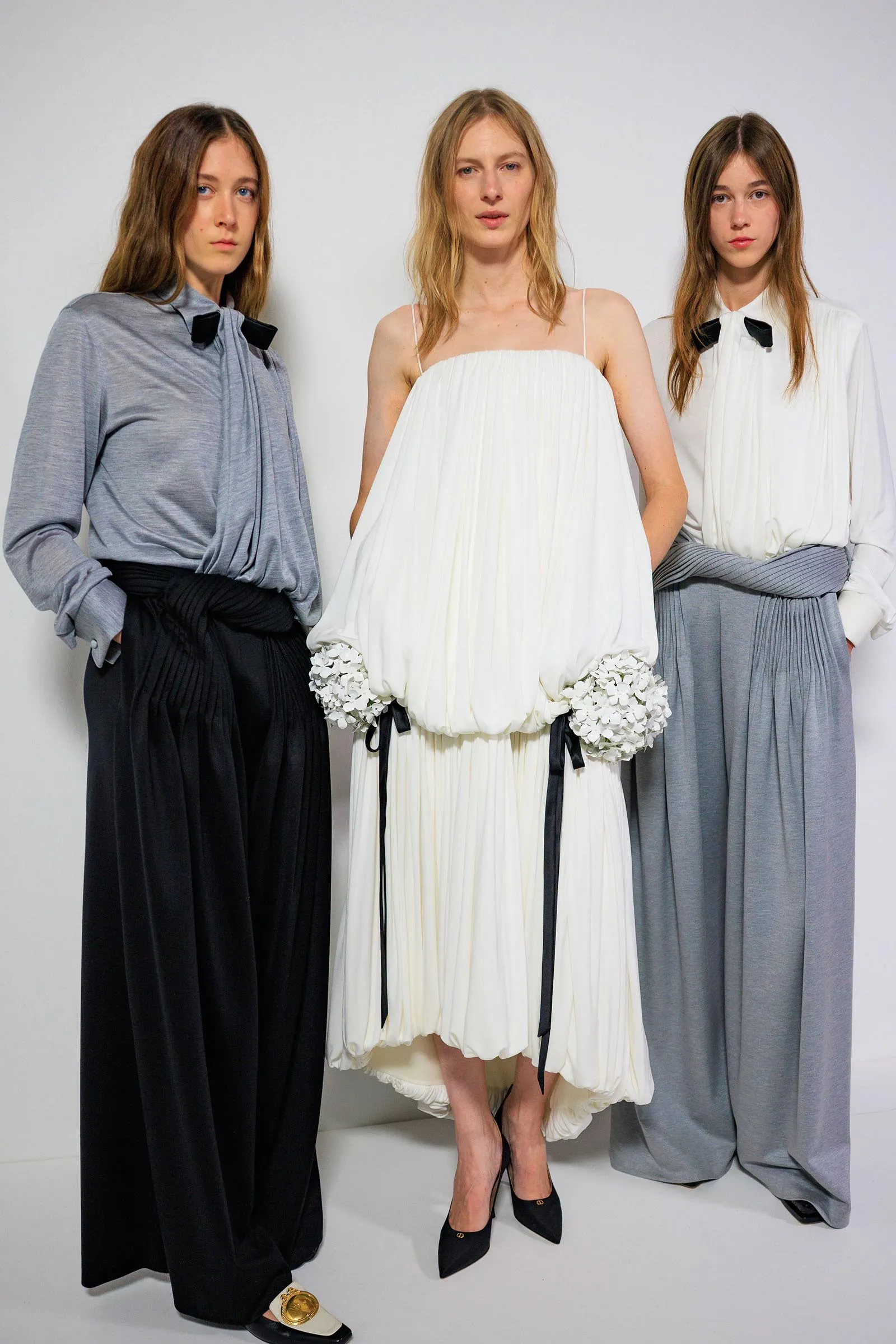
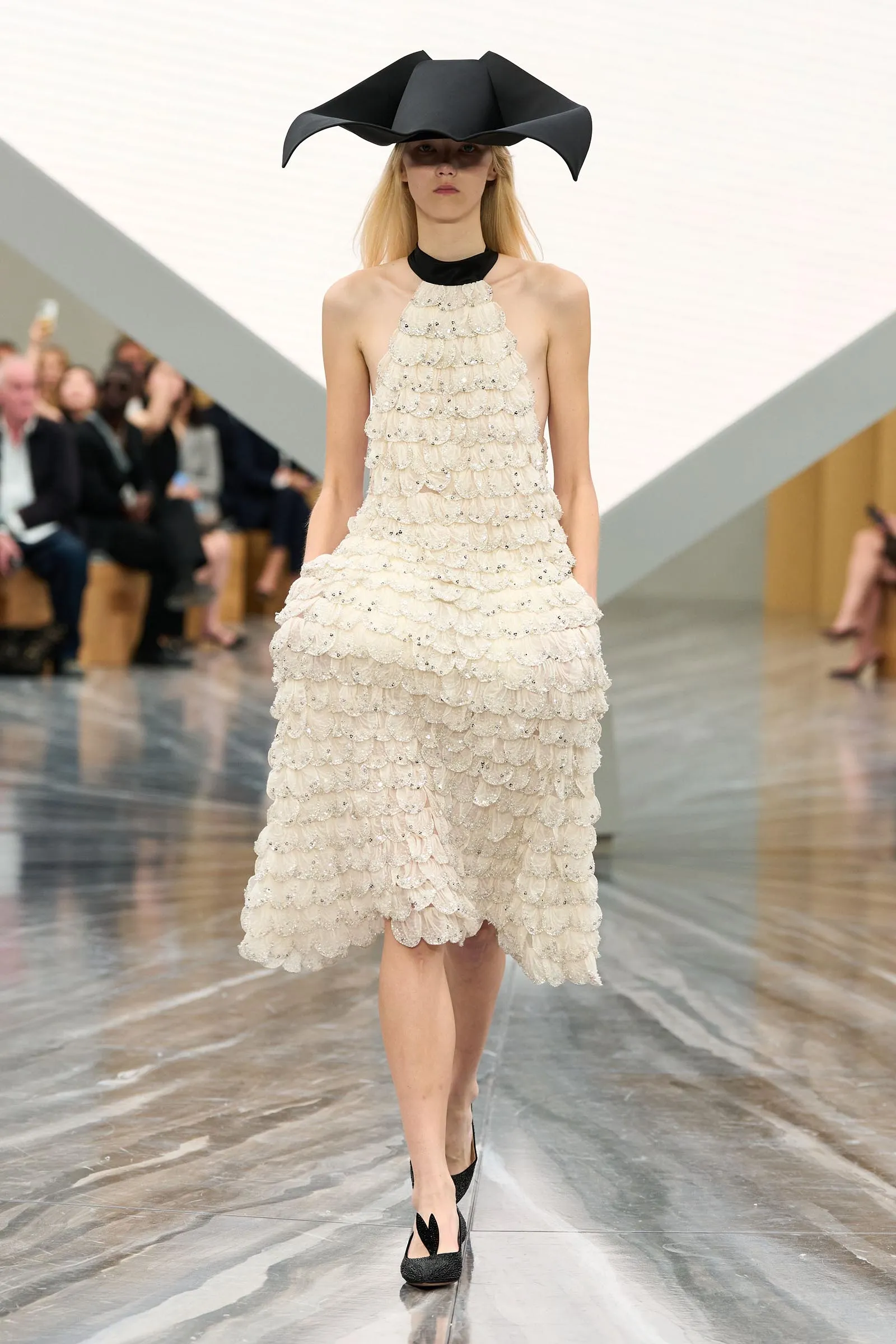
The references spanned centuries. Anderson revived 18th-century pannier volumes in the form of “double balloon” silhouettes that swayed with an eerie rhythm, while dropped waistlines and tiered skirts paid homage to the 1920s. The tuxedo was fractured into knit bibs and blouses, frothing with exaggerated ruffles, and chiffon was cut into feather-light gowns layered over nude bodysuits. Dior’s 1949 Junon dress was reinterpreted as sequined minis with scalloped petal edges, painstakingly constructed from hundreds of hand-finished panels.
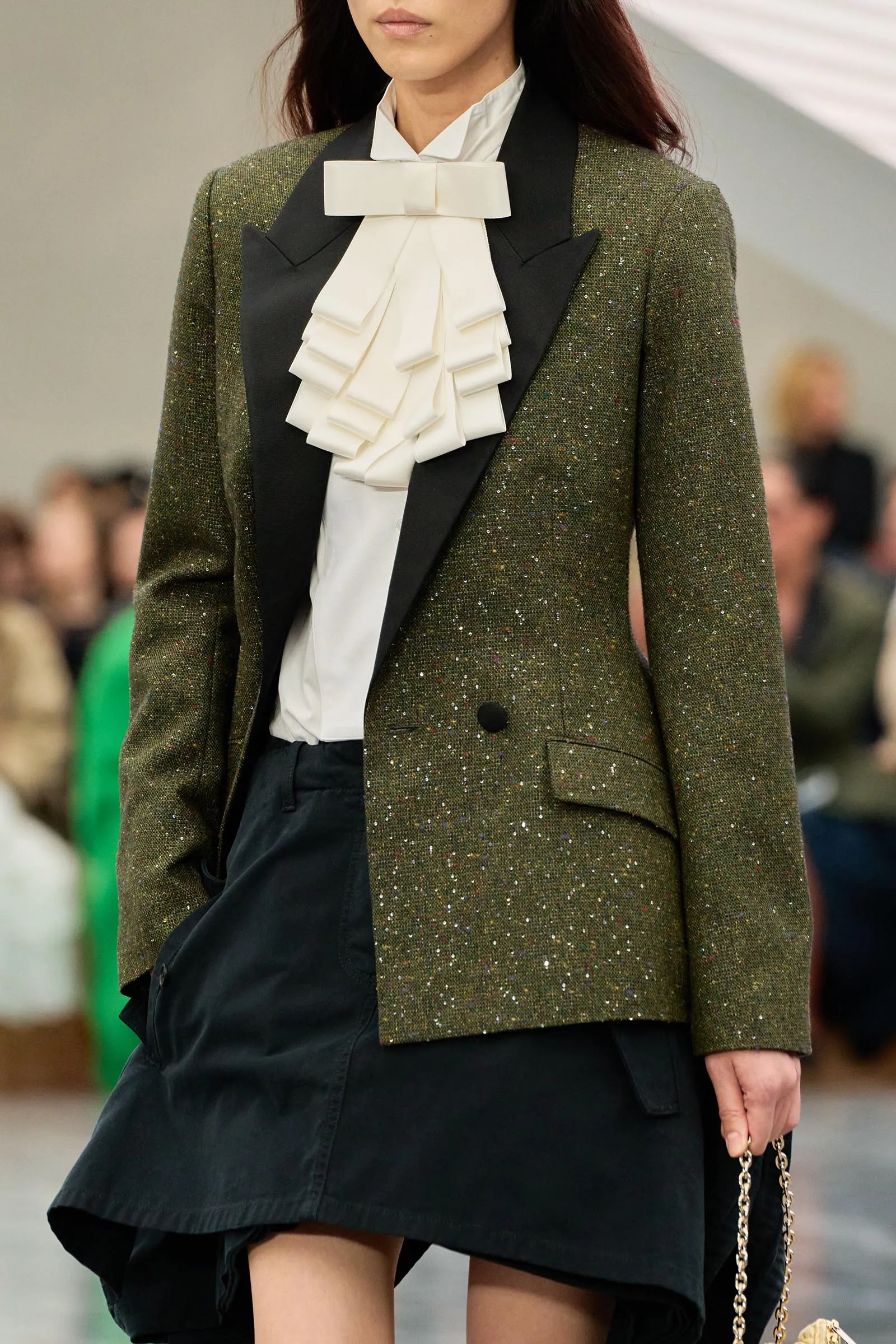
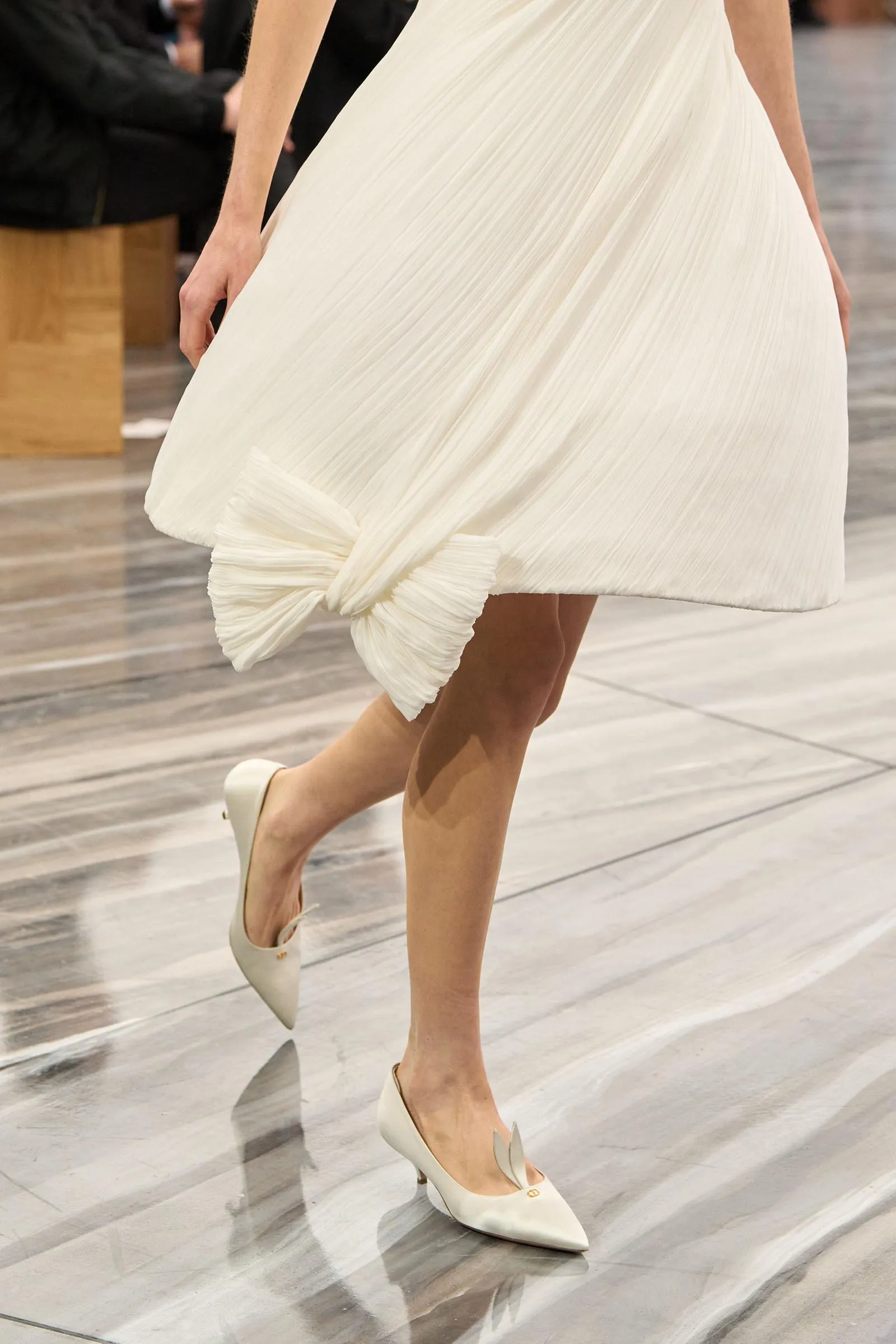
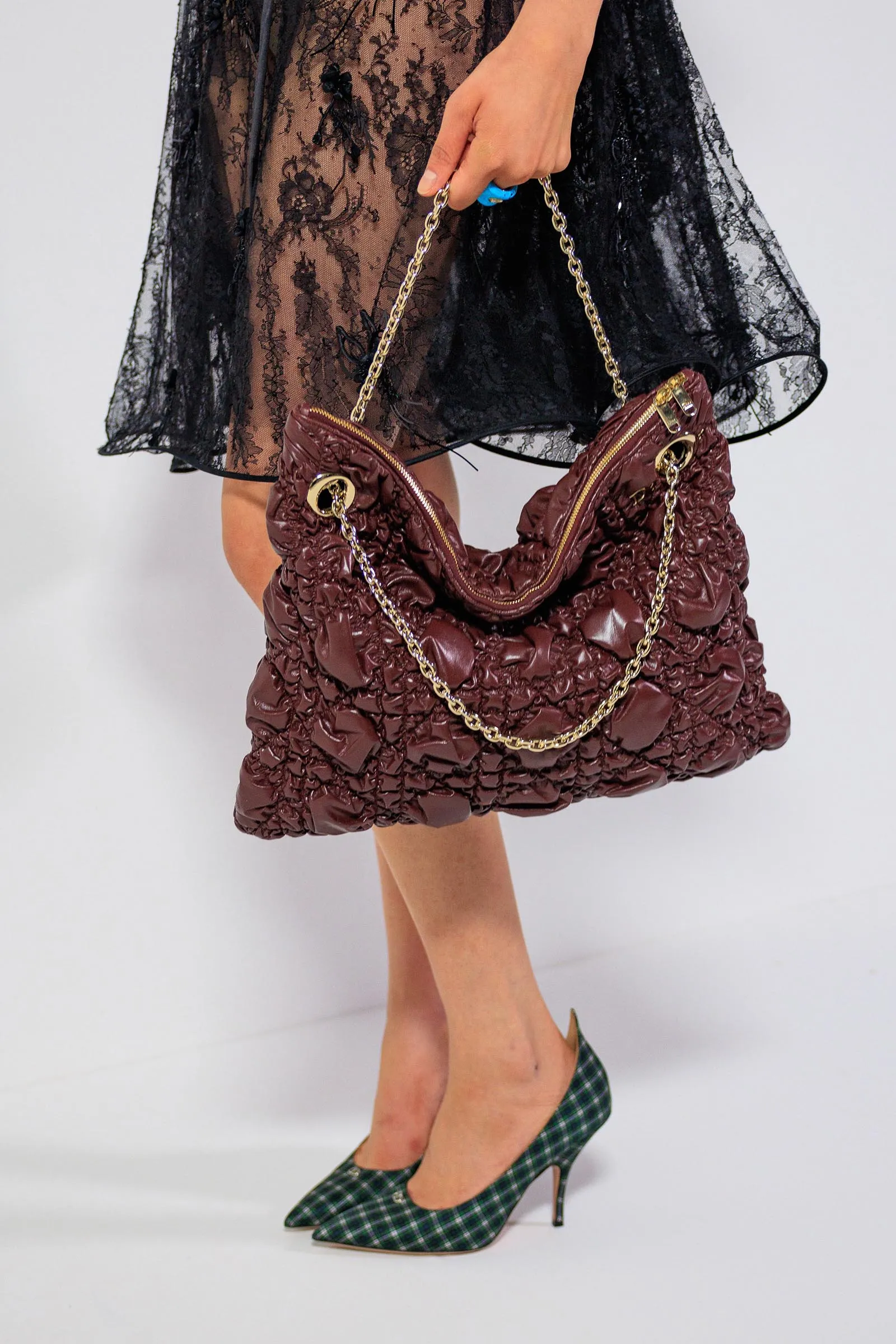
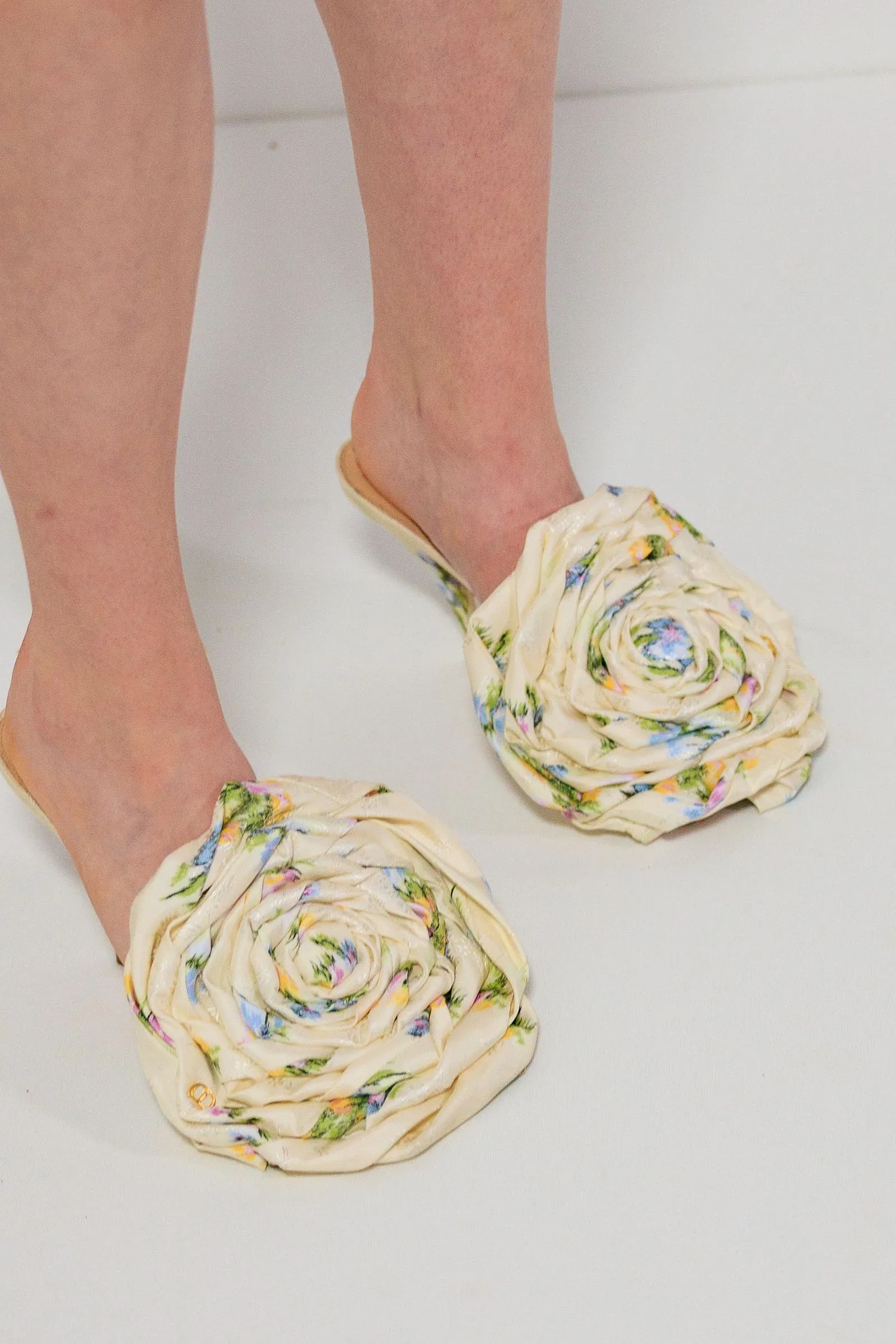
Accessories injected both humor and commerce. Shoes sprouted roses at the toe, bunny ears at the vamp, or were cut to reveal the “O” from Dior’s name. Bags ranged from softened suede bowling silhouettes to slouchy leather hobos with dangling ‘D-I-O-R’ charms, and wicker clutches in cannage weave. These flourishes suggested Anderson’s intent to seed commercial desirability alongside couture drama, echoing his transformation of Loewe from leather goods brand to cultural phenomenon.
Rather than relying on a single, defining silhouette, the collection offered a constellation of shapes and moods, reflecting his exploratory approach to Dior’s codes. If one look came closest to encapsulating this new vision, it was the baby-blue crinoline gown with basket-weave detailing, worn by Anya Taylor-Joy and shown on the runway three times in different colorways.
Yet that very fragmentation seemed intentional, and Jonathan’s strength lies in his ability to collage the archive into something alive. Anderson’s Dior unfolded as a series of probing gestures rather than a manifesto, mirroring Curtis’ film collage of ghosts and fragments. The strategy was not to produce a singular new look but to bend and refract the house’s codes, to box and unbox its history repeatedly.
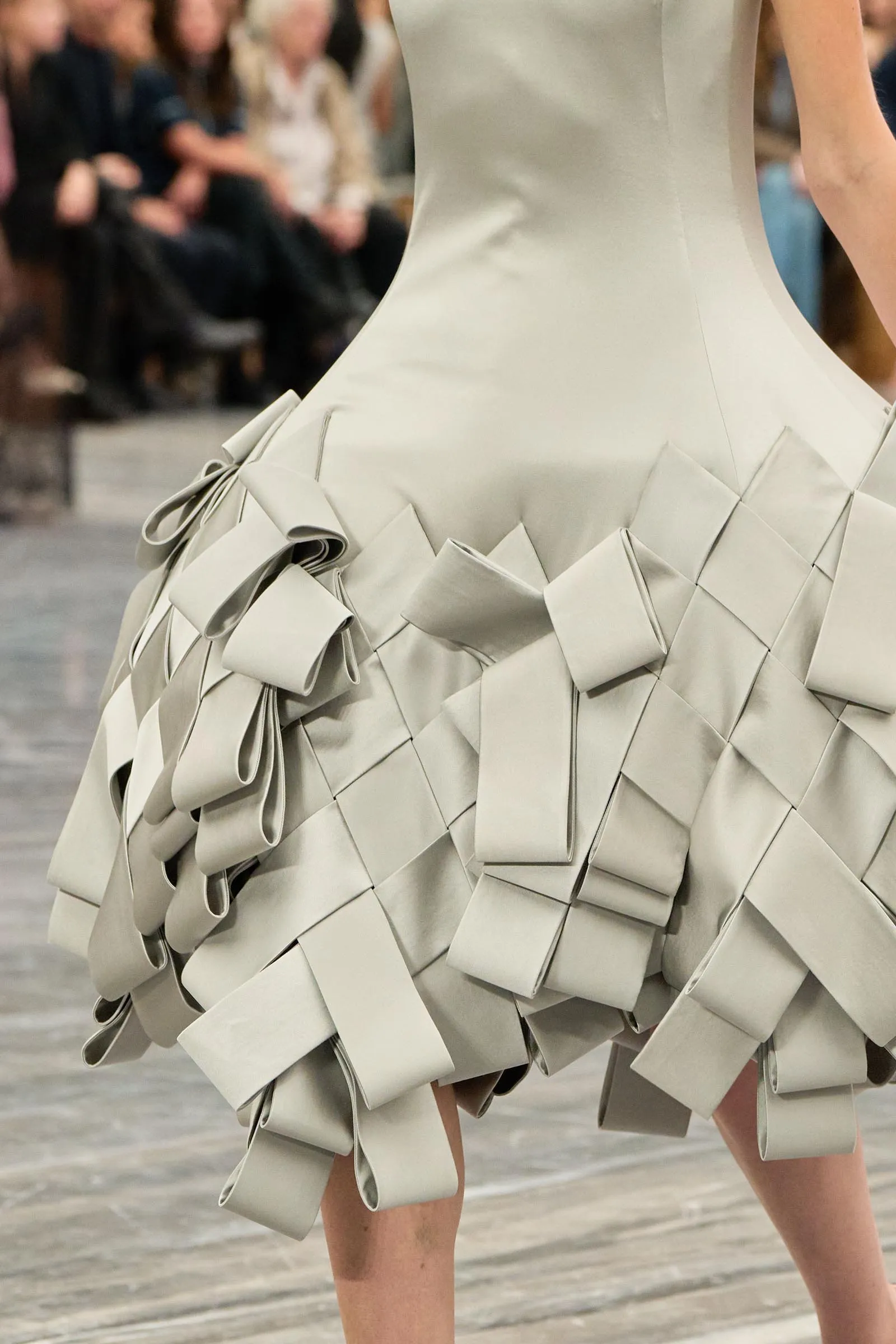
The broader context made the stakes higher still. Dior, the crown jewel of LVMH, faces the pressures of a slowing luxury market. For the first time since Monsieur Dior, one designer now oversees men’s, women’s, and haute couture. Anderson’s task is to make the house relevant to both couture clients and younger consumers, bridging atelier excellence with commercial vitality. His debut leaned into this duality: architectural lace gowns and couture-level embroidery on one end, denim minis and casual polos on the other. The finale saw scalloped gowns shimmering with sequins, followed by an ovation that confirmed the audience’s readiness to follow Anderson into his version of Dior.
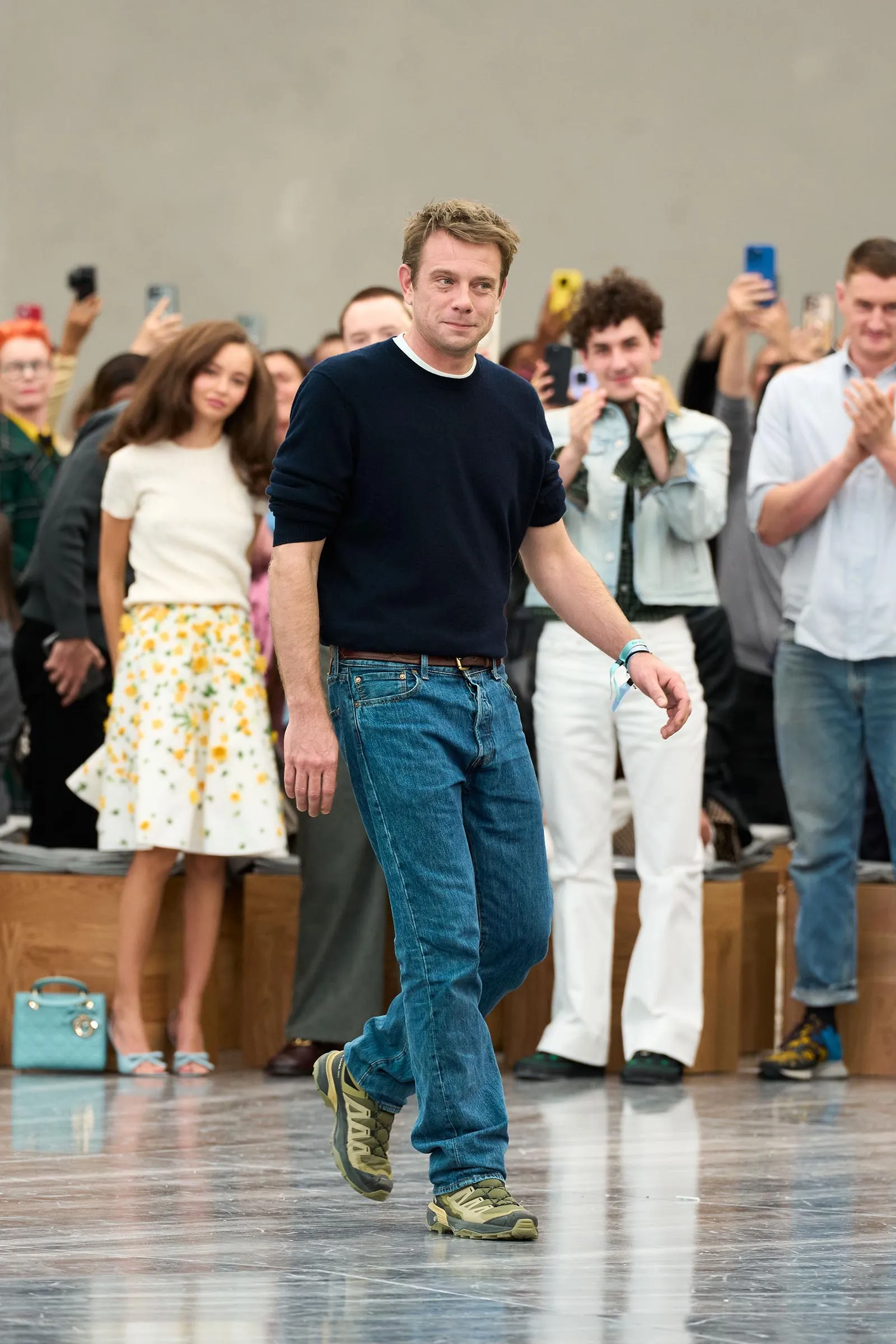
In that sense, Anderson has reframed Dior for the present moment. Fashion today thrives less on singular silhouettes than on collages and multiplicity. His Dior is not about erasure but layering, not about declaring the next definitive shape but about showing that heritage itself can be reimagined. The question is not whether this debut delivered clarity but whether it opened space for Dior’s future. On that front, Anderson succeeded: a show haunted by history, alive with possibility, and poised at the edge of reinvention.
- Jonathan Anderson Has Been Appointed Sole Creative Director of Dior
- A 1950s Fashion History Lesson: Dior’s New Look, Hollywood Bombshells, and The Golden Era of Couture
- Maria Grazia Chiuri’s First Project Post-Dior? The Restoration and Revival of a Roman Theater
- Jisoo’s Custom Dior Look in Los Angeles Is a Glimpse Into Jonathan Anderson’s New Era


