
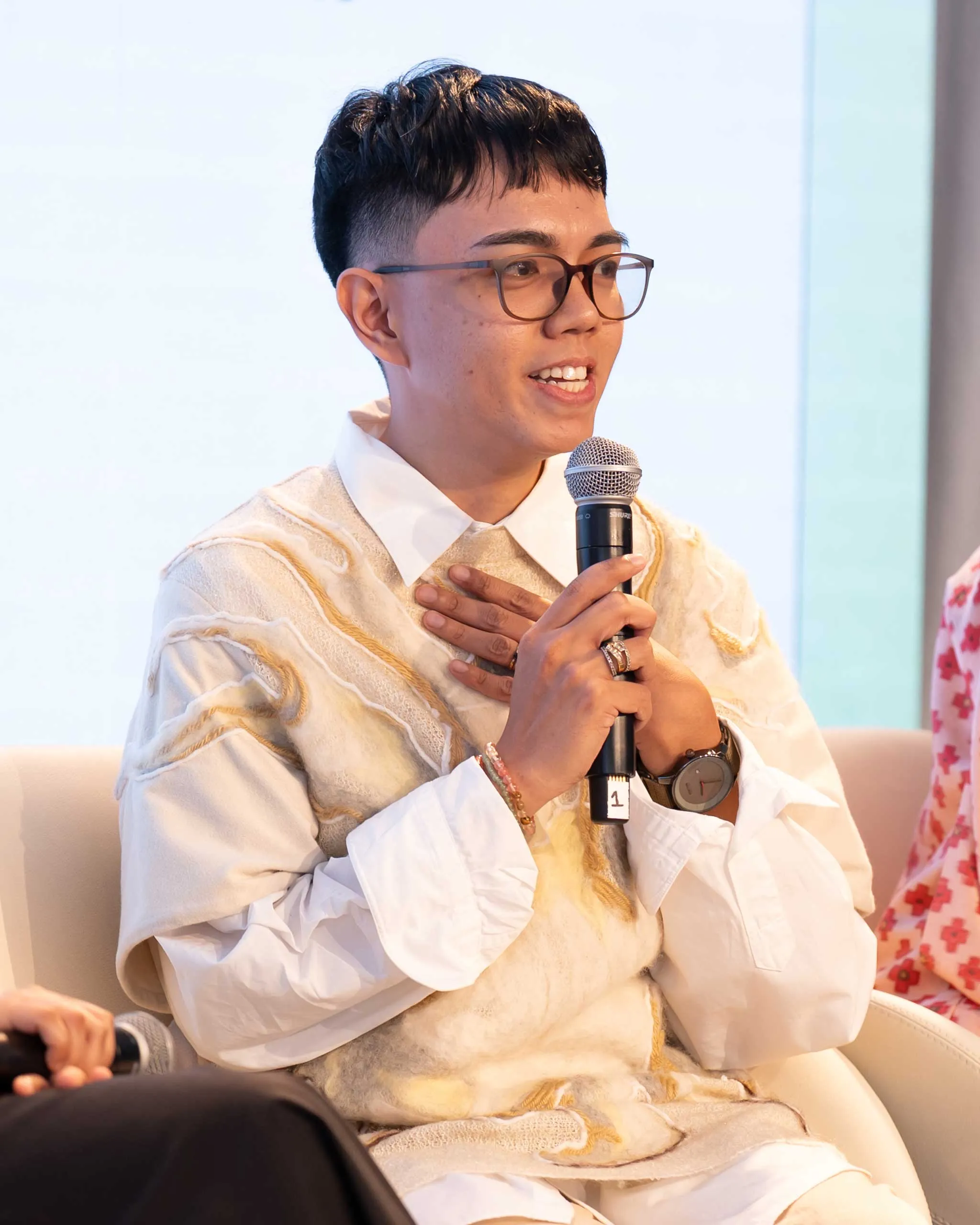
Courtesy of Jann Bungcaras
Jann Bungcaras brought the Philippines’ textile waste crisis into the global conversation on circular fashion in New York.
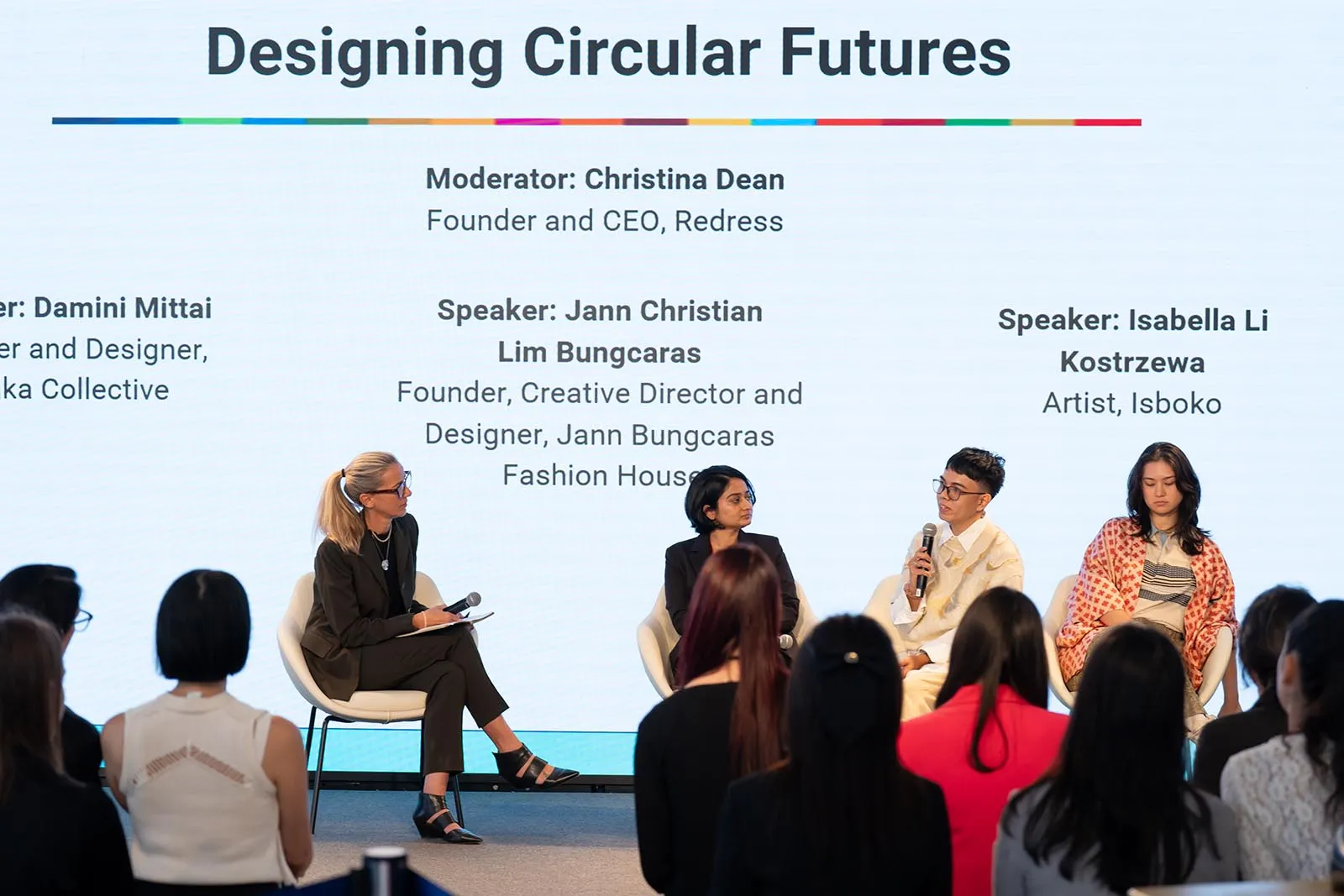
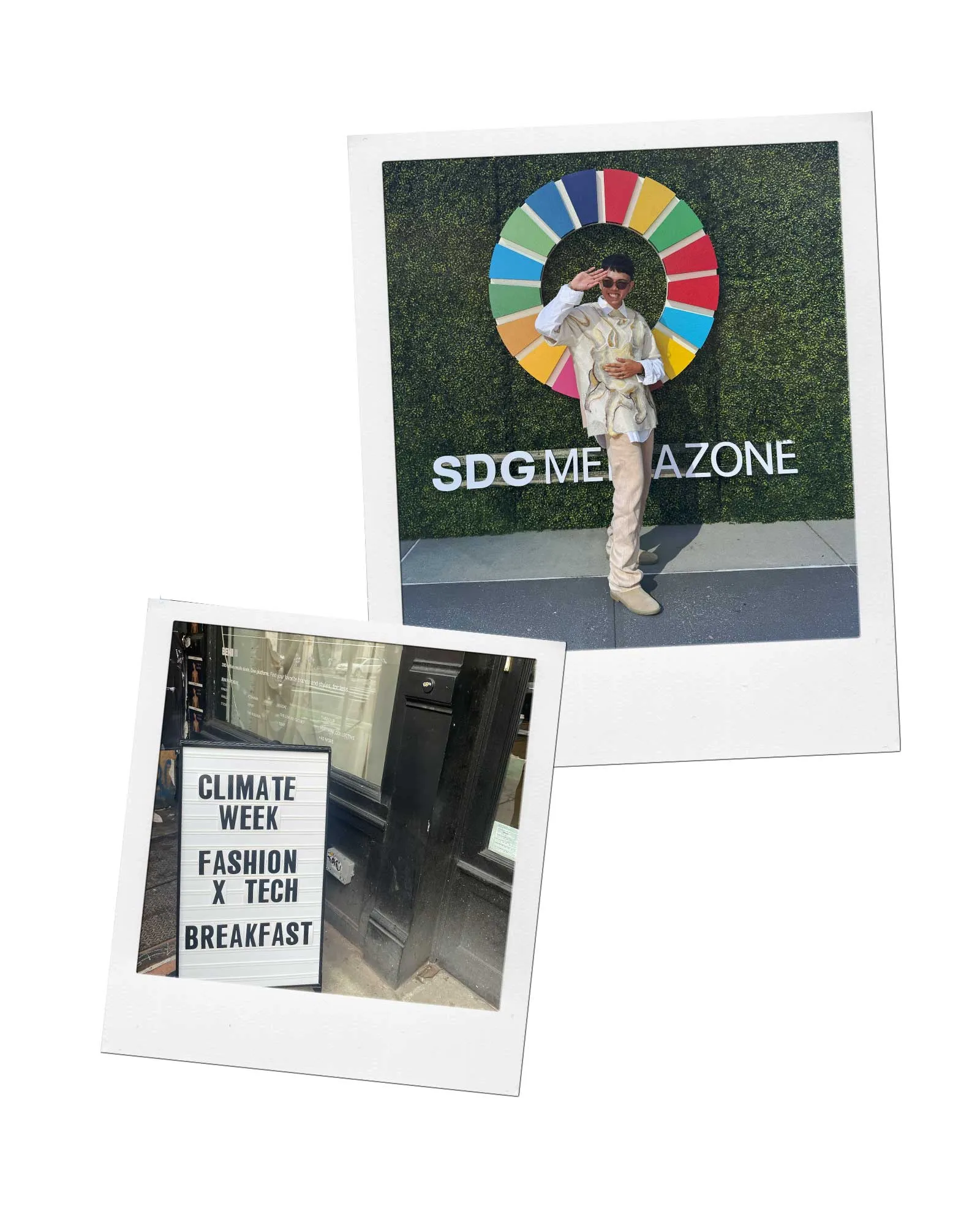
In September last year, as diplomats, policymakers, scientists, and activists convened across the five boroughs of New York City for Climate Week NYC, Cebu-based designer Jann Bungcaras was one of the few Filipino voices invited to speak at the United Nations Fashion and Lifestyle Network panel, held in partnership with Redress.
He addressed the paradox of a business producing some of the world’s greatest creatives while also contributing significantly to global pollution: fashion. With textile waste overflowing, overproduction increasing, and consumption cycles growing ever more relentless, clothing has become a key theme of environmental debates. For Bungcaras, the invitation represented both recognition and responsibility. “To be given an immense platform to talk about what we do in our brand as a creative leader and innovator in correlation with the Sustainable Development Goals is an immeasurable honour and responsibility,” he says.
The story he brought to New York was rooted in a reality he had witnessed near his home in Cebu. “The waste facilities are within walking distance from my village,” Bungcaras explains. “I can hear trucks every Monday night unloading discarded textiles. By Tuesday morning, people are already there, scavenging and sorting them.” The materials arriving there include factory offcuts, unsold garments, damaged imports, and secondhand overflow. They are remnants of a global fashion system that produces far more clothing than it can sustainably absorb.
According to Bungcaras, the Philippines discards roughly 267,111 tonnes of textile waste each year. Much of this waste is connected to global production networks rather than local consumption. “The majority of the waste contributing to the textile waste thrown annually in the country are imported waste, unwearable donations, unsold imported secondhand clothes, and industry textile waste coming from manufacturers hired by international companies,” he says. These include cut-and-sew scraps from factories producing garments for international brands, overrun inventory, and damaged clothing shipments. Bungcaras describes the situation as a form of modern textile-waste colonialism, in which developing economies absorb the environmental consequences of global overproduction.
The designer’s work has grown directly out of this reality. Bungcaras’s own label operates on a circular model that transforms discarded textiles into garments intended for both runway presentation and everyday wear. “The brand’s number one purpose is to create runway and wearable pieces out of waste in order to cause a positive impact on the environment and successfully function as a closed-loop circular system,” he says. Instead of beginning with newly manufactured fabrics, his process starts with materials that already exist, including textile scraps, unused fabrics, and garments that might otherwise end up in landfills.
This approach requires reconsidering the design process itself. “More than 85 percent of a garment’s environmental impact is locked in the design process,” Bungcaras explains. “This stage is where we are tested most as circular designers, because every design decision we make must lean toward conservation, circularity, and responsibility.” His creative process often begins with three questions. “What story do we need to tell? What emotion do we want to radiate? And what are the discarded materials available?” he says. “The third question is the most important because our purpose is to create pieces from waste.”
Storytelling plays a starring role in Bungcaras’s collections. Drawing from literature, mythology, and history, he reframes contemporary social issues through fashion narratives that move beyond aesthetics. His debut collection, Wanderings of a Child Prince, referenced Antoine de Saint-Exupéry’s The Little Prince, translating the story’s themes of innocence and discovery into garment form. Howling: a Wolf’s Longing reimagined the wolf from Little Red Riding Hood through the perspective of a trans woman. “It was released just weeks after a real-life transpinay was publicly humiliated by using the women’s washroom in Manila,” Bungcaras explains. In Eromenos: Loving the Beloved, he drew from relationships between men in ancient Greece and Rome to support the passage of the SOGIE Equality Bill, while For Fiyero, inspired by the musical Wicked, became “a love letter to everyone who changed for the better as they fought for good governance in the 2022 elections.”
Bungcaras studied at SoFA Design Institute, where he studied fashion illustration, design studio practice, merchandising, and fashion history. The experience introduced him to the conceptual and technical foundations of the industry. “It was there that I realised the power of fashion and art to evoke emotions,” he says. “Fashion can be more than clothing. It can be a narration that creates emotional connection.” He later completed courses in sustainable fashion at Copenhagen Business School in 2021 and fashion design at Parsons in 2022.
His international recognition accelerated after he entered the Redress Design Award, one of the world’s leading competitions dedicated to sustainable fashion. In 2020, Bungcaras won the People’s Choice Award, becoming the first Filipino designer to receive the recognition. “I will never be who I am today if it weren’t for Redress,” he says. “They took a gamble on me during the pandemic.” Through the programme, he gained access to educational resources and international opportunities, which widened his understanding of circular design. “It was through Redress that I learned about designing for materiality, low-impact materials, circularity, recyclability, and longevity,” he says.
The Redress network also introduced him to a tight-knit community of designers working toward similar goals. Bungcaras presented work at Hong Kong’s CENTRESTAGE, closed the Mercedes-Benz Hong Kong runway in 2021, and competed in the Triathlon de la Mode Éthique in Paris. “It was the catapult that hoisted me into a fashion trajectory that I could only dream of,” he says.
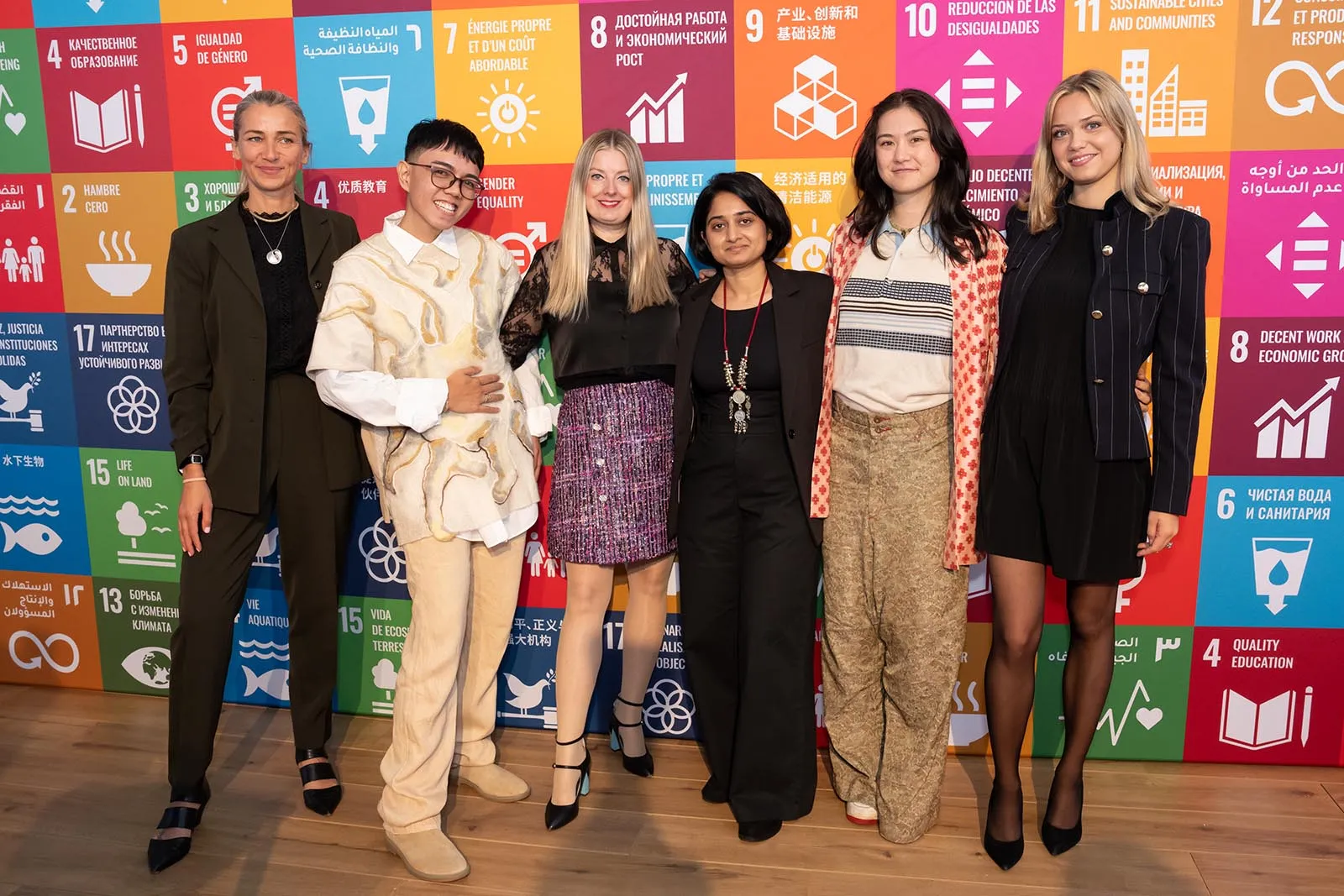
New York itself was unforgettable. Bungcaras remembers receiving confirmation while stranded at his master tailor’s home during heavy flooding in Cebu. “Can you imagine I got the news while I was stranded at my master tailor’s house due to heavy flooding?” he says. “It was truly an out-of-body experience as we all celebrated the achievement.” Once in New York, he approached the panel as an opportunity to speak about the realities he had witnessed in the Philippines. “My role was truly to present myself as the person that I always aspire to be,” he says. “Trying to convince people and business owners in a creative space to make eco-sustainable choices.”
During the discussion, Bungcaras also emphasised cultural practices that historically extended the life of clothing. One example is the Filipino tradition of tinubu-an, in which garments are handed down to younger relatives once they no longer fit the previous owner. “Even before the words sustainable and circular existed, Filipinos were already practicing it,” he says. He explains examples from his own family unit. “My grandmothers used flour sacks to create dresses and household textiles, and they embellished the same formal dress with beads and sequins so they could rewear it to different events.” Practices like these demonstrate that sustainability was already embedded in everyday life before fast fashion accelerated consumption. “These actions are often associated with poverty,” Bungcaras says. “But in reality, we do them because it is the right thing to do.”
Although Bungcara is committed to circular design, he understands and acknowledges that innovation alone cannot solve the scale of fashion’s environmental impact. “Design solutions like zero-waste patterns and circular business models are important,” he says, “but they will not have much impact if consumers continue buying environmentally damaging products.” For him, meaningful change will require policy intervention and stronger sustainability frameworks by conglomerates and nations alike.
He continues to approach his passion with cautious optimism. “I can admit that sometimes trying to reverse fashion’s negative effects toward the environment feels like a fool’s game,” he says. Yet he believes that change happens gradually. Every conversation about second-hand or upcycling, every garment crafted from discarded materials, and every person who chooses circular fashion contributes to a broader shift in awareness. “In every conversation we have, every person we encounter, every client we dress in clothing made from discarded materials, a seed of eco-sustainability and circularity is planted,” Bungcaras says. “We may not feel it, we may not see it, but a forest of informed and responsible people is growing.”


