
Courtesy of Gucci
Given that the biggest share of fashion’s carbon footprint comes from the production of materials, it makes sense that there’s been so much innovation in this space in recent years, from mushroom leather to algae sequins. It’s also why Gucci set up a research centre in the Tuscan town of San Miniato, where some of the world’s most famous tanneries are based, in 2024. “The centre was created for the research, development and testing of all our innovative materials,” Marie-Claire Daveu, chief sustainability and institutional affairs officer at Gucci’s parent company Kering, tells Vogue.
While a whole host of start-ups has cropped up (and failed, considering the challenges of scaling up innovative new materials) over the years, Gucci decided to bring its R&D in-house to ensure that any innovations match the Italian fashion house’s necessary specifications. “We [need] to combine, of course, sustainability, and superior technical performance, to be sure that at the end of the day, it will be at the level expected for Gucci and in luxury,” Daveu says of the move to establish the brand’s own research centre.
A key focus? Leather, which is known for its large carbon footprint, with Gucci exploring more sustainable ways of producing animal leather, as well as vegan alternatives. “The ambition is to shape a tannery model of the future, capable of processing leather plus new materials, increasing quality, versatility and also be[ing] more efficient, more sustainable and more circular,” Daveu explains. “When you do that, you tackle climate change, water consumption, water pollution.”
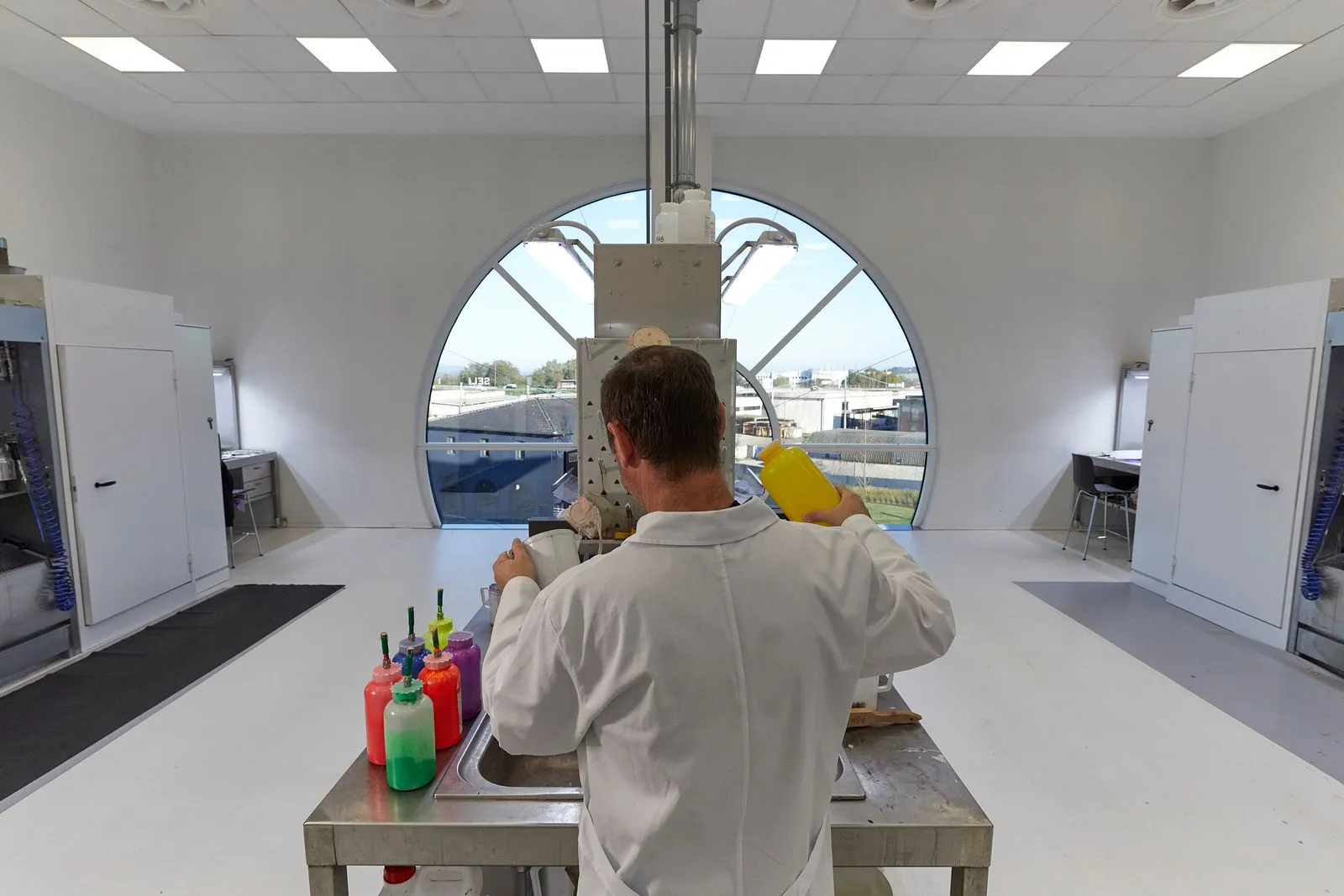
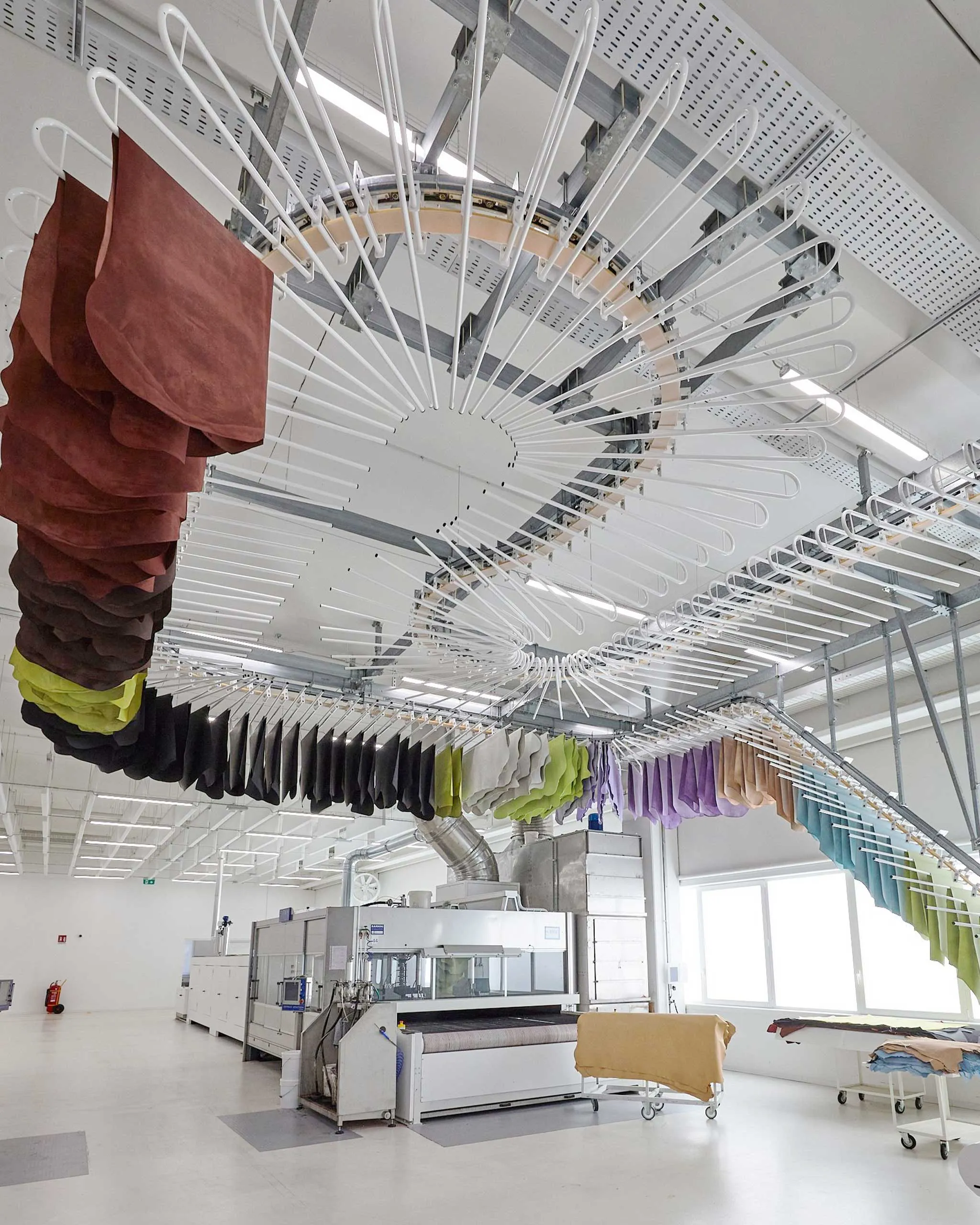
Inside the research lab, which is based within Gucci’s Marbella tannery, hundreds of leather samples hang from a conveyor belt in an assortment of colours, from classic black to zingy lime green. At any one time, scientists are testing numerous iterations of between 10 and 20 new materials, coming up with concoctions for different “recipes” in an airy room nicknamed the “kitchen.” Next door, various machines allow the team to assess how the materials respond to different finishing processes, from dyeing to embossing. Then there’s the impressively hi-tech climatic chamber, which tests how the samples will age over time by putting them under tropical conditions.
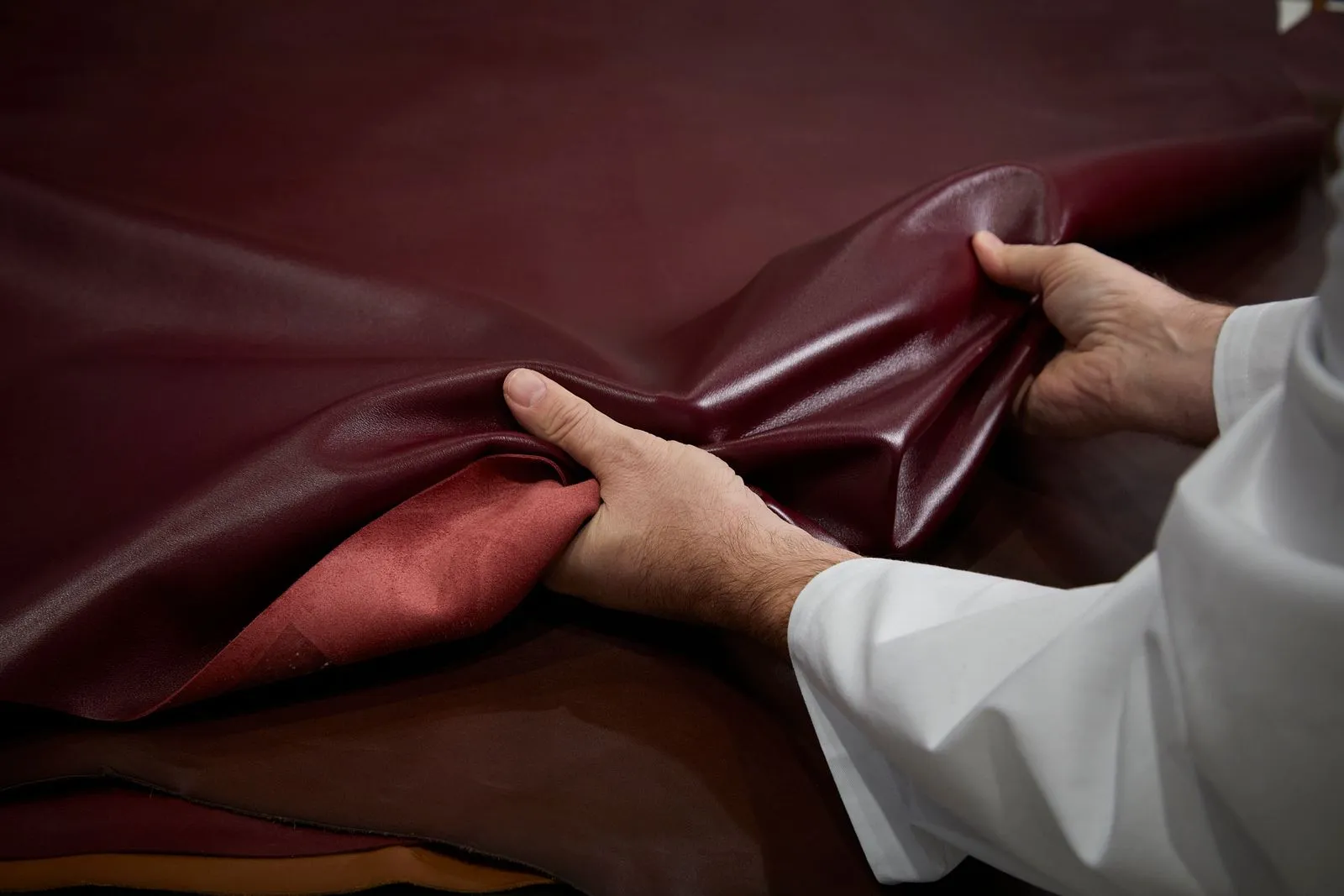
Before the centre was officially established in 2024, it was in this lab that Demetra, Gucci’s vegan alternative to leather launched in 2021, was conceived. Made from 75 per cent plant-based materials, including responsibly sourced viscose, wood pulp and non-GMO corn-based plastic, Demetra—which was used as part of the brand’s Horsebit 1955 bag line in 2023—has a lower carbon and water footprint compared to traditional leather. “If we want to reach all our [climate] targets, we need to have innovative raw materials,” Daveu says. “The way that Gucci was able to develop the innovation [means] you have the performance, the quality.”
Beyond the development of new materials, Gucci has been exploring ways to reduce waste in the leather production process, as part of its Scrap-less initiative. While leather is typically cut at the end of the finishing process, the brand has been experimenting with cutting the hide earlier on, allowing any leftover material to be used as high-quality fertiliser. Another pilot programme involves using AI to detect defects in the hide, again to avoid waste. “It’s about how [to be] the most efficient as possible,” Daveu explains.
Alongside its research lab, Gucci launched its Circular Hub in 2023, focusing on driving more sustainable and circular practices within the company. Projects to date include the brand’s Denim Evolution fabric, which comprises 74 per cent regeneratively grown fibres, as well as an internal marketplace that allows deadstock fabrics to be used by other brands within Kering. Given that group has set a target to reduce its absolute emissions by 40 per cent by 2035, it makes sense that Gucci is sharing its learnings with its stablemates, such as Saint Laurent, Bottega Veneta, Balenciaga and Alexander McQueen.
In many ways, Gucci’s research centre shows the ways in which brands across the fashion industry need to adapt and innovate in order to meet their sustainability targets. Still, the lab is also very much in line with how the brand has operated over the past 100 years and counting. “It’s a place where craftsmanship and tradition merge with technological innovation,” Daveu concludes.
This article was originally published on British Vogue.


