
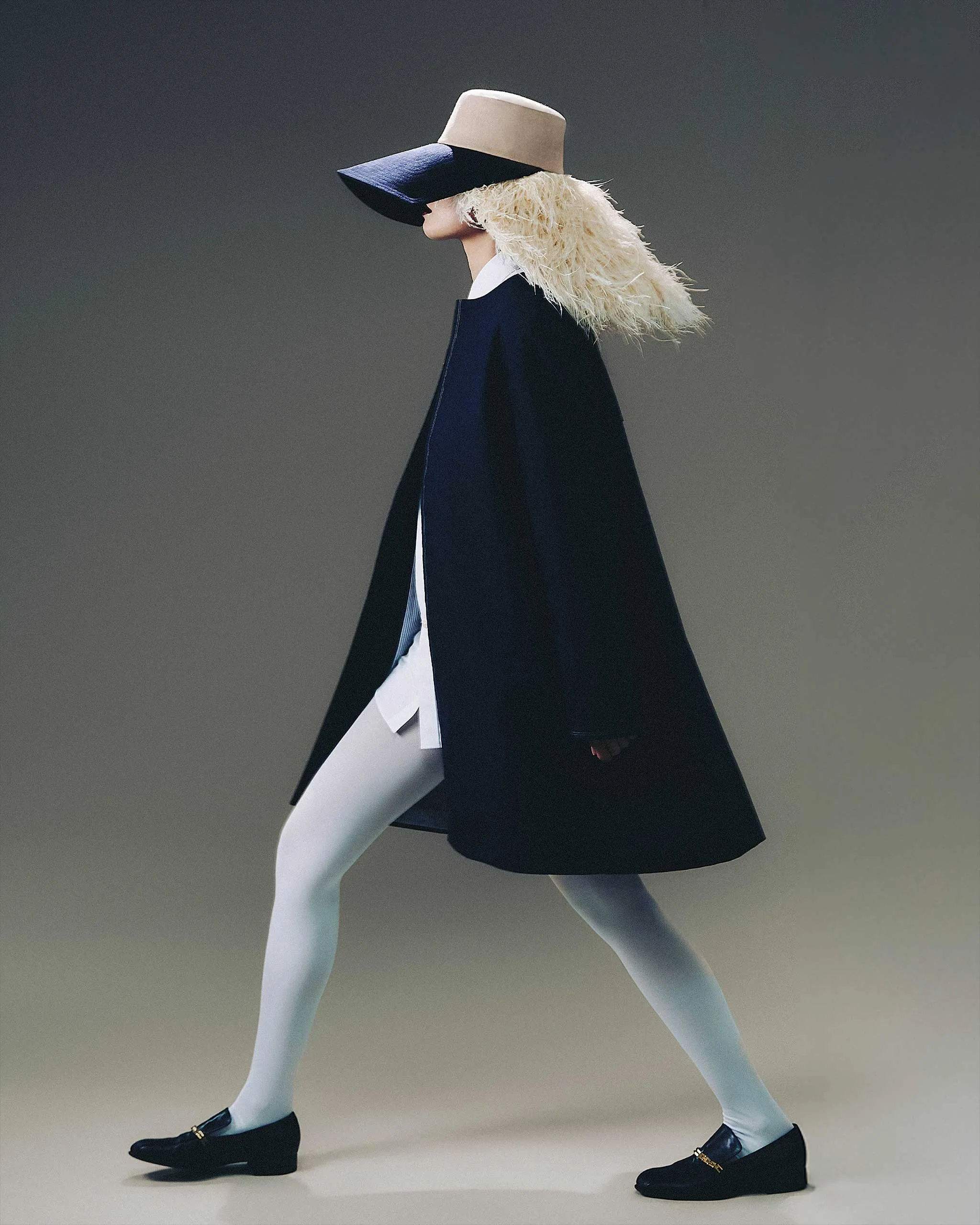
MICH DULCE Vakul hat, JOEY SAMSON coat, CELINE archival loafers. Photographed by Karl King Aguña for the October 2025 Issue of Vogue Philippines
From London ateliers to a Manila worktable, Mich Dulce brings her practice home in a solo millinery exhibition.
In her Manila workshop, milliner Mich Dulce leans over a gumamela [hibiscus] hat. Its vermilion flowers drift from temple to nape with floating globules anchored to the base like a constellation of bubbles lifted from a childhood memory.
It is just after 7 P.M. on a Wednesday night. She landed this morning, but she has already been at the bench for hours, working each detail by hand.
On the table: a dome inspired by the Ivatan vakul, trailed in ostrich feathers. A denim study of Samar’s Biri Island, cut and sewn like rocks shaped by storms. A molded cone that nods to the Ilocano tabungaw [gourd], a tribute to the Gourd Hat by master artisan Teofilo Garcia. A salakot [traditional field hat] drawn in wire, then translated into a version set loose in ribbon. A woven banig [mat] that hovers around the face. A Cebuano death mask in gold leaf that transforms ritual into a viewfinder.
These ornate pieces join Nagsasalitang Ulo (or “Talking Heads”), her solo millinery exhibition at Finale Art File’s Tall Gallery in Manila, on view last September. “I want to delve deeper to find [out] what Filipino millinery could [be].” She reiterates that British millinery leans on Filipino fibers such as abaca, sinamay, and buntal. What changes when the maker sets the terms? She starts where her story begins: the Philippines.
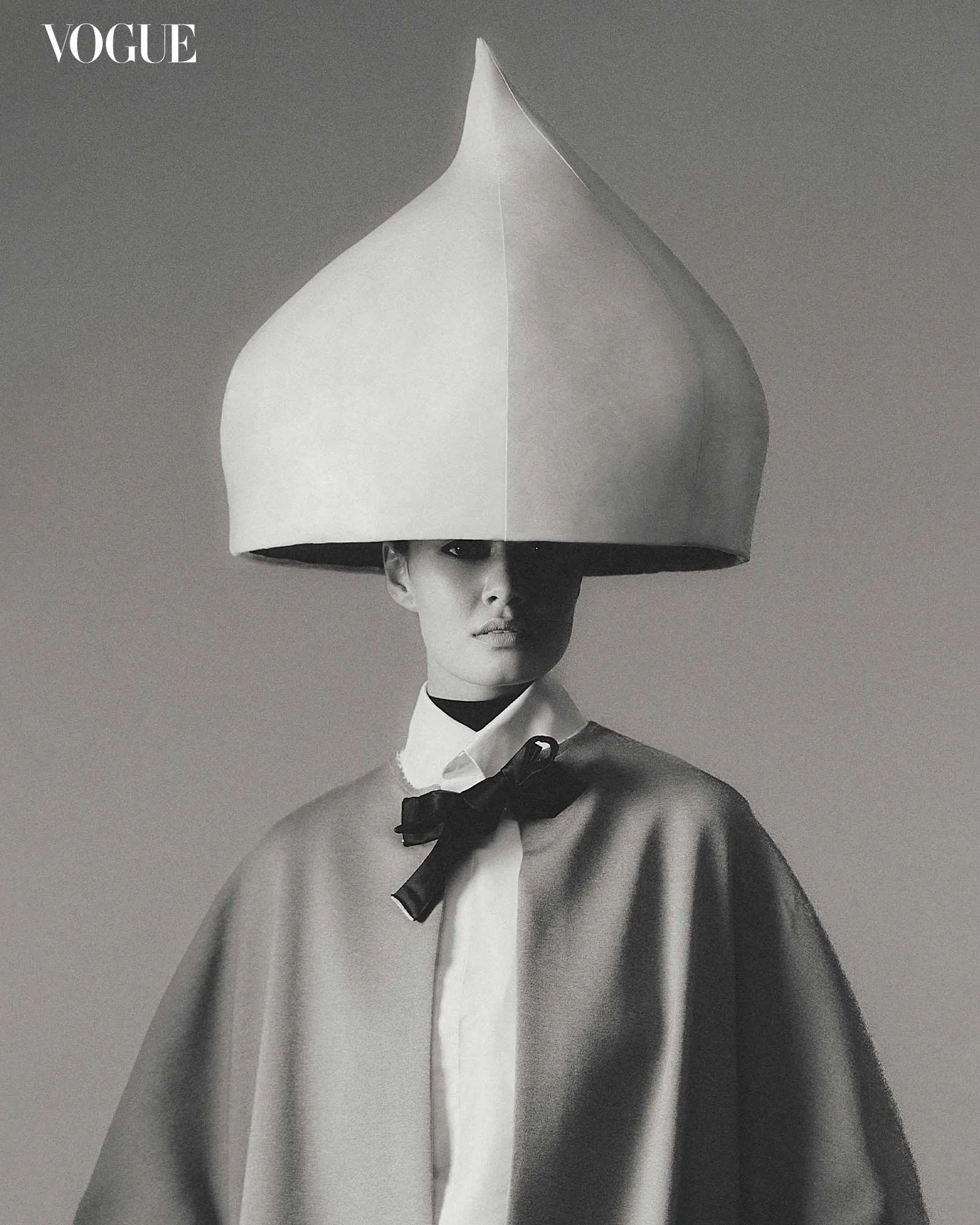
What emerges, however, is more like a synthesis: craft in dialogue with history. She mentions, “This time I wanted to tell a story and [present] the research that went into it.” The title takes its name from Marian Pastor Roces’ essay, “Talking Heads,” a text that anchored her inquiry and provided her with a map of forms and sources.
Twenty-five years into design and 15 into hats, now based in London and fluent in the codes of British and French ateliers, Dulce shifts the work from material supply to cultural statement. Before this show, Dulce’s path ran through the great workrooms. She later served as assistant artistic director at Chanel’s Maison Michel in 2015, working on ready-to-wear and Chanel orders inside Le 19M, Chanel’s craft campus, with neighboring ateliers such as Lesage and Lemarié within reach.
Paris revealed the scale of the grandes maisons ecosystem: “There are so many different ateliers you can source your inspiration from.” She adds, “It was another caliber of work and a different way of working.”
Maison Michel also produced hats for other houses, including Yves Saint Laurent. She recalls designing a pale wedding headpiece of dove-grey rosettes for Princess Astrid of Belgium, worn at Prince Amedeo’s wedding in Rome in 2014. During her tenure at the atelier, a meeting with Maison Margiela’s John Galliano turned into an on-the-spot trial. “It was really one of the most surreal experiences of my life because I met John and his whole design team.”
Upon arrival, Galliano was straightforward: “‘I really want a turban, can you make it?’”
Then the fabric appeared. “‘Here, can you please drape this turban for me?’” What stayed with her was the pressure of draping in front of Galliano and the house. She only had 10 minutes. The piece never went into production, but “it remains one of my most memorable and also scariest experiences.”
“This is the first time that I’m making hats for art’s sake rather than wearability.”
Back in London, she joined Noel Stewart’s studio, contributing as part of his team to Balenciaga Couture’s Collection 53 under Demna. “I have such a deep respect for Noel because I think he’s such an excellent milliner.” Her years of training now sit beneath Nagsasalitang Ulo.
Today, she passes it on. Through an eight-month Métiers d’Art Millinery Fellowship with The King’s Foundation, Chanel, and Maison Michel, she teaches six young British milliners to work at an atelier standard.
That groundwork changed how she approaches work. “This is the first time that I’m making hats for art’s sake rather than wearability,” she explains of the new exhibition, a study in artistic potential over the purely practical. This collection telegraphs a feeling we don’t often ascribe to statement pieces: tenderness. “If Gabbie Sarenas has a love letter to the Philippines, this is my love letter to hat-making in the Philippines.” The point is authorship, rather than material purity. “If I think about the aesthetic of the Filipino historically… what would a range of hats that were inspired by the Philippines look like, without the limitations of material?” With her complete repertoire of skills, she gives the Philippines a shape in hats so viewers can envision the extent of what Filipino millinery can become.
Abaca, sinamay, and buntal have always been the backbone of millinery practice and have been travelling out of the archipelago and into European studios. “Sinamay, buntal, and buri all come from the Philippines, and yet all these British milliners had no idea that we have so many other things beyond this.” Here, the Philippines emerges as form and remembrance instead of a checklist of fibers.
It raises a larger question: “If the Philippines exports all of these materials, why can’t we [move beyond] being an exporter? We have to be the creatives behind the millinery trade.” Process and creativity through technological innovation are part of the statement. Petals are sculpted one by one, dyes applied by hand, elements manipulated with a heat gun, feathers are set and stitched. The technical know-how gathered over the years from a range of cultural influences regenerates old school skills and historical silhouettes into new forms for the upcoming presentation.
For Dulce, the Philippines appears in objects. Denim stands in for limestone in the Samar piece. Inspired by Biri Island’s wind-cut terrain, it stacks shallow ledges around the crown like rocks carved by storms and swell. An off-kilter plane pitches forward as if in mid-gust, its erosion expressed through pattern and cut.
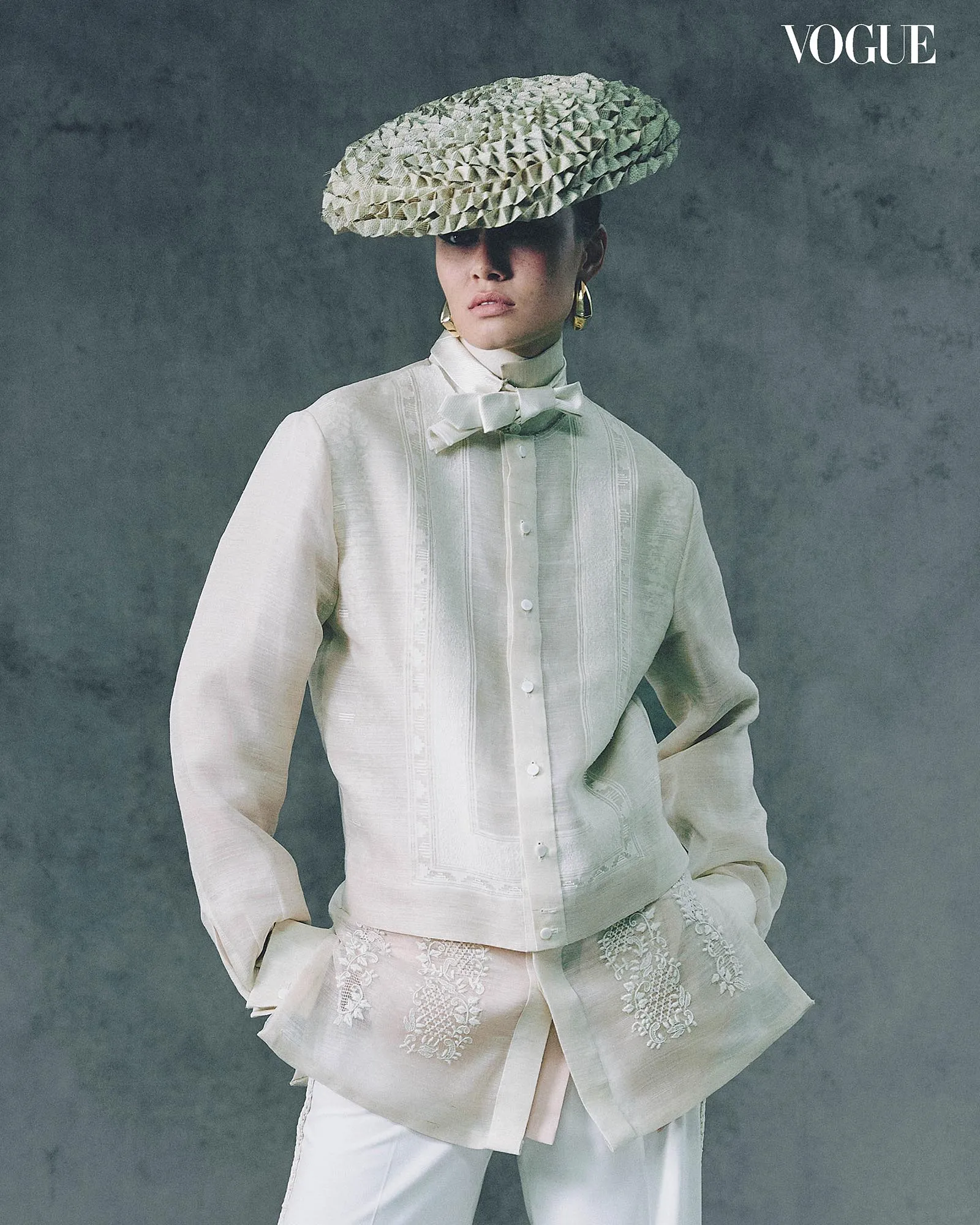
The gourd study keeps the unpolished tone you see before a hat is “shined and blocked.” It carries the lineage of Ilocano makers and the mastery of legendary Filipino hatter Teofilo Garcia, while the latex and buckram recasts Dulce’s signature material into a rural form. Topography is the focal point of the rice-terrace piece. She carved her own blocks to imitate paddies. The hours at the worktable are reflected in the detailed tiers of the finished hat. She adds, “I learned woodworking specifically so I could make the shape of the terraces [from] hand.”
Gold once laid over the eyes and mouth enters the showcase as an outline in the Cebu Precolonial Death Mask piece. “In Cebu, people are buried with gold on top of their eyes, their nose, and their mouth so your soul does not escape your body.” Here, the plates are rendered in leaf and set to frame rather than cover, so the wearer looks out through history instead of from behind it.
The research is deeply personal. “I am a Filipino in the United Kingdom and I wanted to connect [to my heritage] and use my own roots as the inspiration for everything.” For Dulce, all roads lead home.
She continues with a lightness, “That’s the [reason why] there are things like the gumamela hat, [inspired by] gumamela flowers with bubbles because of [my own] memory. Everyone makes floral hats, but who has a childhood where you pound the flowers to create bubbles? Only us.” The job, as she tells it, is to “bring our stories to the rest of the world.” This exhibition is how she intends to do it.
A musician at heart, Dulce keeps a studio tempo: block, dry, wire, assemble. She listens to classical music when the work turns technical and to podcasts when the hours lengthen. While sound keeps her company, the steady knock of blocking counts the hours. The practice is demanding. “It’s not a joke and it’s time-intensive,” she elaborates. At home, this exhibition honors the depth and craft of hat-making; for the world, it argues what the hats represent and who gets to say so.
“We have so much to offer that people don’t know about.”
Dulce brings the origin forward. “When I think of the Philippines [as] a material, [we] would be abaca because we are the most resilient people and that is so local to us. That is the foundation of many Filipino crafts and of the millinery trade.”
As a Filipino couture milliner, she felt she had to establish her credibility in European workrooms. “When it’s hard to prove myself, I always think that going back to where you come from is the way to [succeed].”
Her new instinct is to teach what’s been overlooked. “It’s them that need to learn about us. We have so much to offer that [people] don’t know about.” She adds, “I am Filipino, so if there’s anyone who should tell this story, it should be me.”
Nagsasalitang Ulo is a living index of technique and a study in cultural reference, opening the door for the Filipino milliner and the infinite possibilities that come with the discipline.
Dulce intends to spin full collections from each hat’s motifs, deepening the research behind them. She calls the experience emotional: the memory of waving palm branches during Sunday mass with her Nanay lives in the intricacy of the woven Palm Sunday hat. The sidewalk ritual of gumamela bubbles, petals crushed with water and perhaps a trace of soap, is set permanently here in glass.
What moves her is seeing everything at once: a self-portrait of her life and scholarship under one roof. “If the people who attend the show have an affinity to these places and understand, ‘I know what that is,’ I think that is quite a wonderful place to be.”
See more exclusive photographs from this story in the October 2025 Issue of Vogue Philippines, available at the link below.
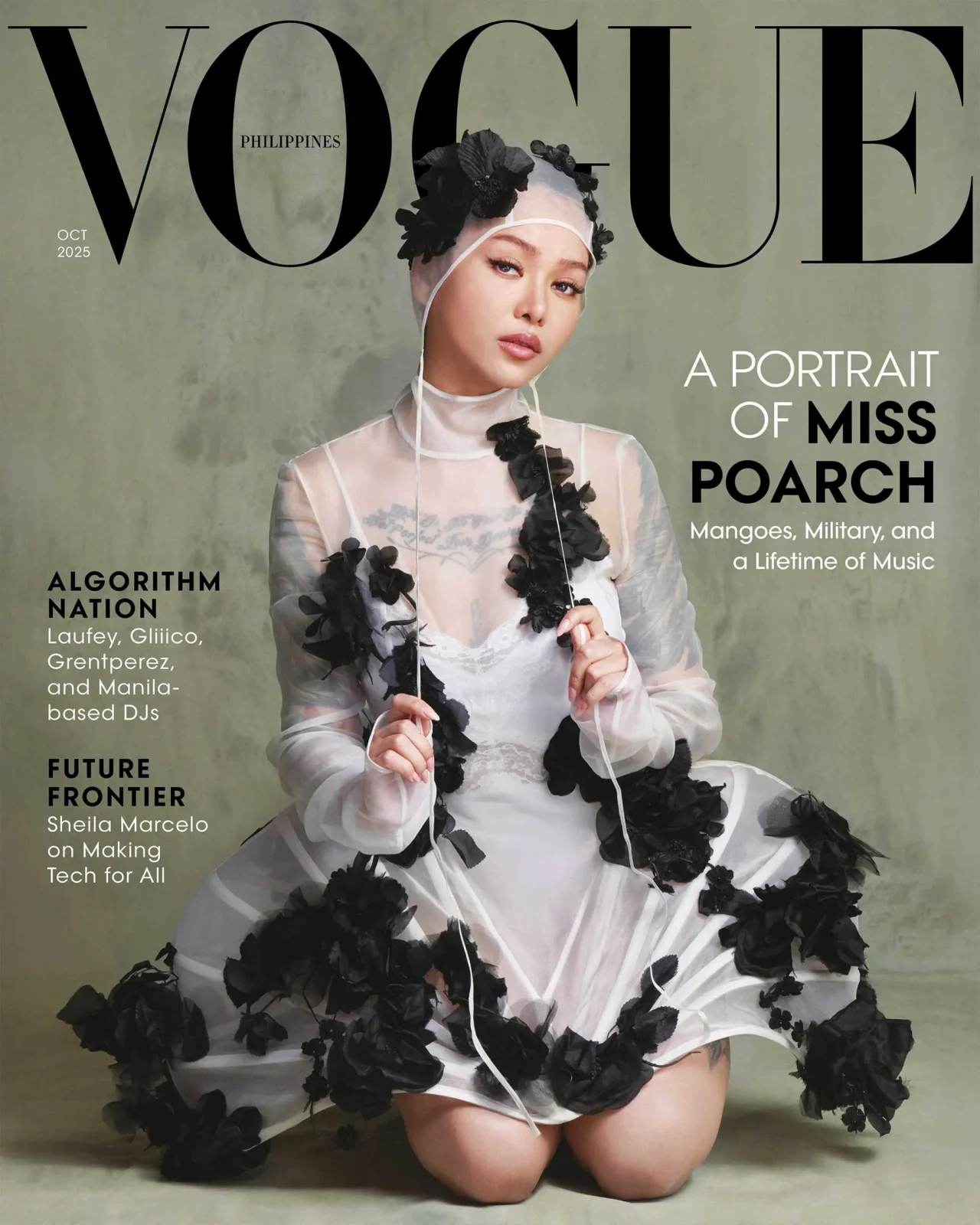
By KARINA SWEE. Photographs by KARL KING AGUÑA.Fashion Editor DAVID MILAN. Beauty Editor: Joyce Oreña. Producer: Bianca Zaragoza. Makeup: Pam Robes. Hair: Miggy Carbonilla. Model: Kiara Louise of Luminary Manila. Nails: Extraordinail.
- Mich Dulce’s Latest Exhibition Shows Why Filipino Identity in Millinery Matters
- Odd Romance: Mich Dulce’s Intimate Ballet of Form and Flow“Raising Hope” in the spirit of International Women’s Month
- For Mich Dulce, It Was Really ‘Craft That Was the Emphasis’
- Odd Romance: A Serene Moment in Paris with Nadine Lustre


