
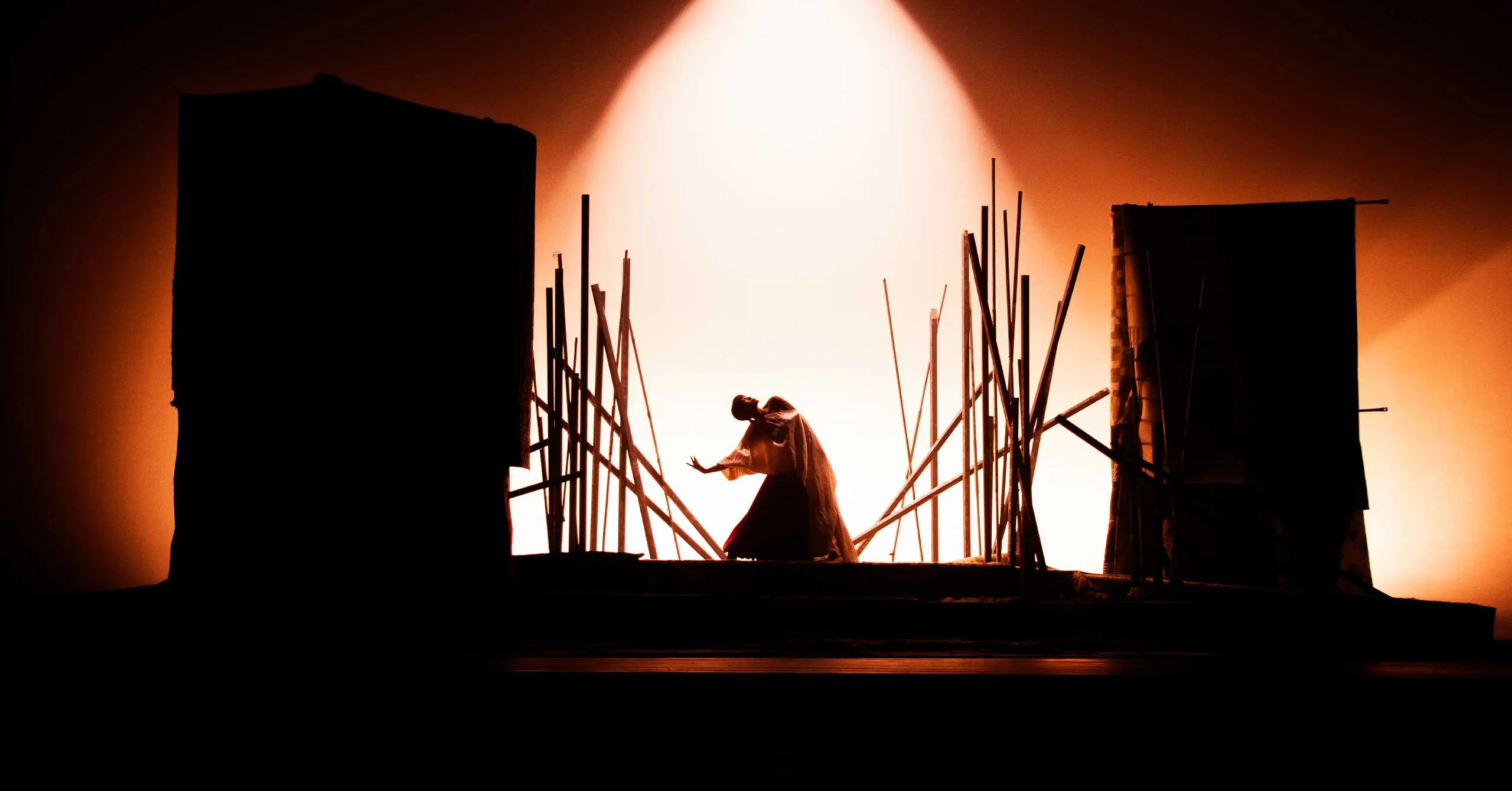
Photographed by Mcaine Carlos
Photographed by Mcaine Carlos
The collaborators behind Vogue Philippines’ Women and Next Gen issue share what they witnessed when women stepped forward and shaped the story.
For the March 2026 issue of Vogue Philippines, I found myself surrounded by women who are shaping the present while building what comes next. Across film, dance, and fashion, the issue brings together artists, makers, and cultural voices whose work continues to expand the possibilities for the next generation.
Inside these pages are collaborators who witnessed these moments unfold on set. Inside studios and fitting rooms, between lighting tweaks and wardrobe changes, we watched as these stories took shape in real time, not just through the images, but through the presence of the women at their center.
Each shoot carried its own energy and revealed something new in its own way. They also prompted the same question: what happens when women are allowed to lead the frame?
How progress moves
In the beauty section, we feature the Emmy Award-winning choreographer Karla Puno Garcia, who made her directorial debut this month with Theatre Group Asia’s staging of A Chorus Line at the Samsung Performing Arts Theater in Makati. The space we were in felt less like an editorial set and more like the center of a pulsing rhythm.
In the brief intermissions between layouts, the director-choreographer revealed another role she carries every day: motherhood. In those pauses, she stepped away to tend to her daughter KitaRose, who watched intently from the sidelines as if the movements unfolding across the theater floor were meant for an audience of one.
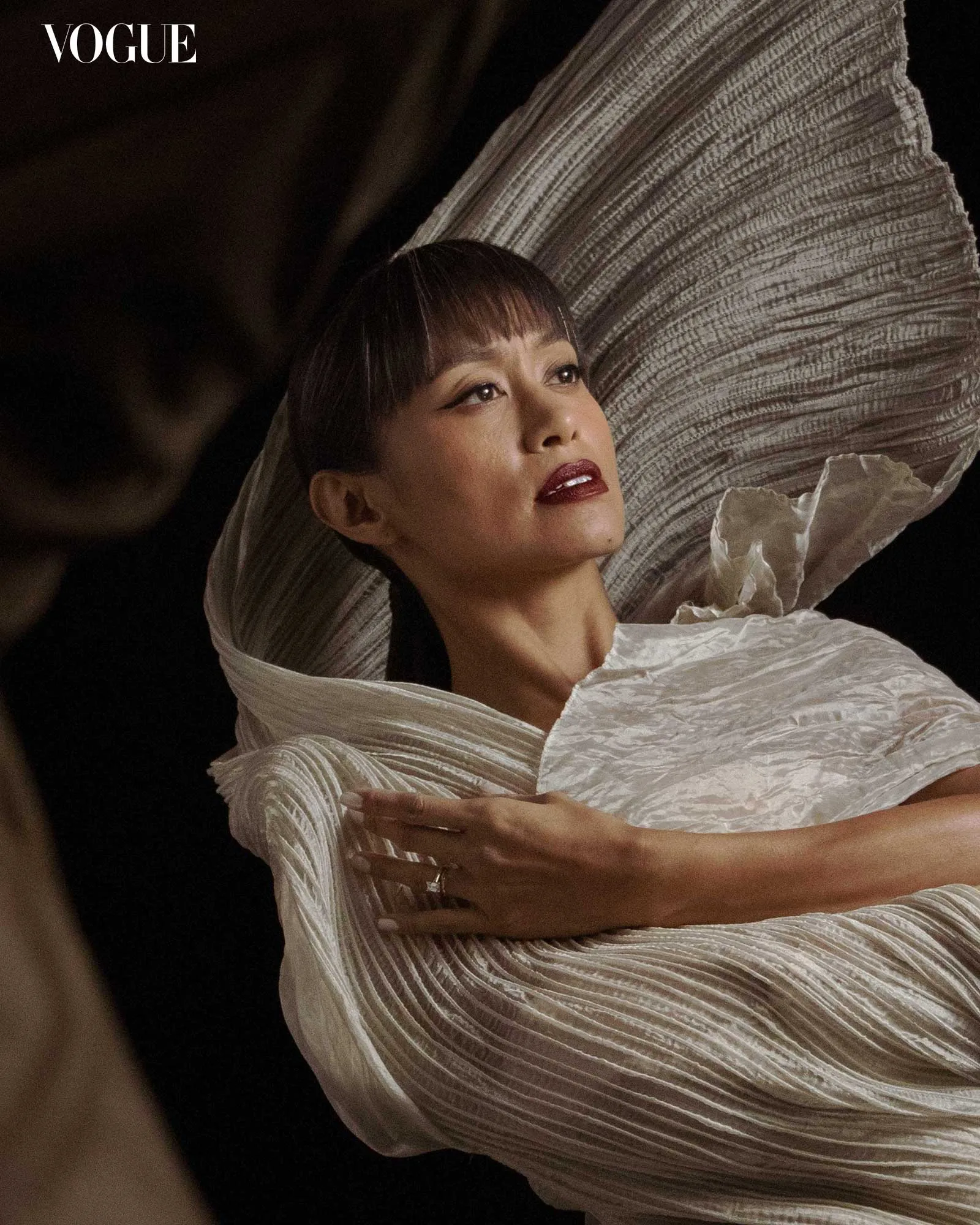
As soon as the music resumed, so did her movement, without missing a beat. Garcia danced through each garment she wore with remarkable ease, transforming every layout into a moment of choreography. Pieces by Rajo Laurel, Rhett Eala, Gucci, and more moved, breathed, and responded to her every step.
On set, it became clear to me that progress does not always arrive with grand declarations. Sometimes it appears in the insistence that a woman can hold many roles at once and still command the stage.
When women lead, life and work no longer need to compete. They move together.
Authenticity is its own kind of power
Working with the lead actress for Filipiñana (2026), Jorrybell Agoto reminded the team that the most compelling presence on camera is often the most unguarded one.
From the beginning of the shoot, writer Daphne Sagun observed that “there was an easy openness to her energy.” She later recalled that at one point, photographer Colin Dancel asked what song Agoto wanted to play on set. Without hesitation, she chose the once again-viral “Bebot.”
The request drew laughter across the room, but it also revealed something about her outlook. Outside of the characters she digs deep to find, she was not interested in being anyone other than herself.
Agoto laughed and freewheeled about the set, as Sagun described, allowing emotion to surface naturally in front of the camera. Watching it unfold, we realized how disarming vulnerability and openness could be, and how impactful it can be translated through the lens.
When women lead the frame, authenticity becomes its own kind of power.
Success becomes a starting point
One of this month’s fashion features, which centers on emerging Filipina designers, revealed another side of leadership: the discipline of continuing to create even after recognition arrives. Designers Krizia Jimenez, Steph Verano, Renée de Guzman, and Palengke’s Jilliane Santos and Paulina Dayrit represent a generation who aim to redefine what it means to build a fashion brand today.
Many of them operate as small, often one-woman teams, moving fluidly between design, production, branding, retail, and more. They shared that their practice extends beyond sketchbooks and ateliers to encompass much more, including strategy, storytelling, and community building.
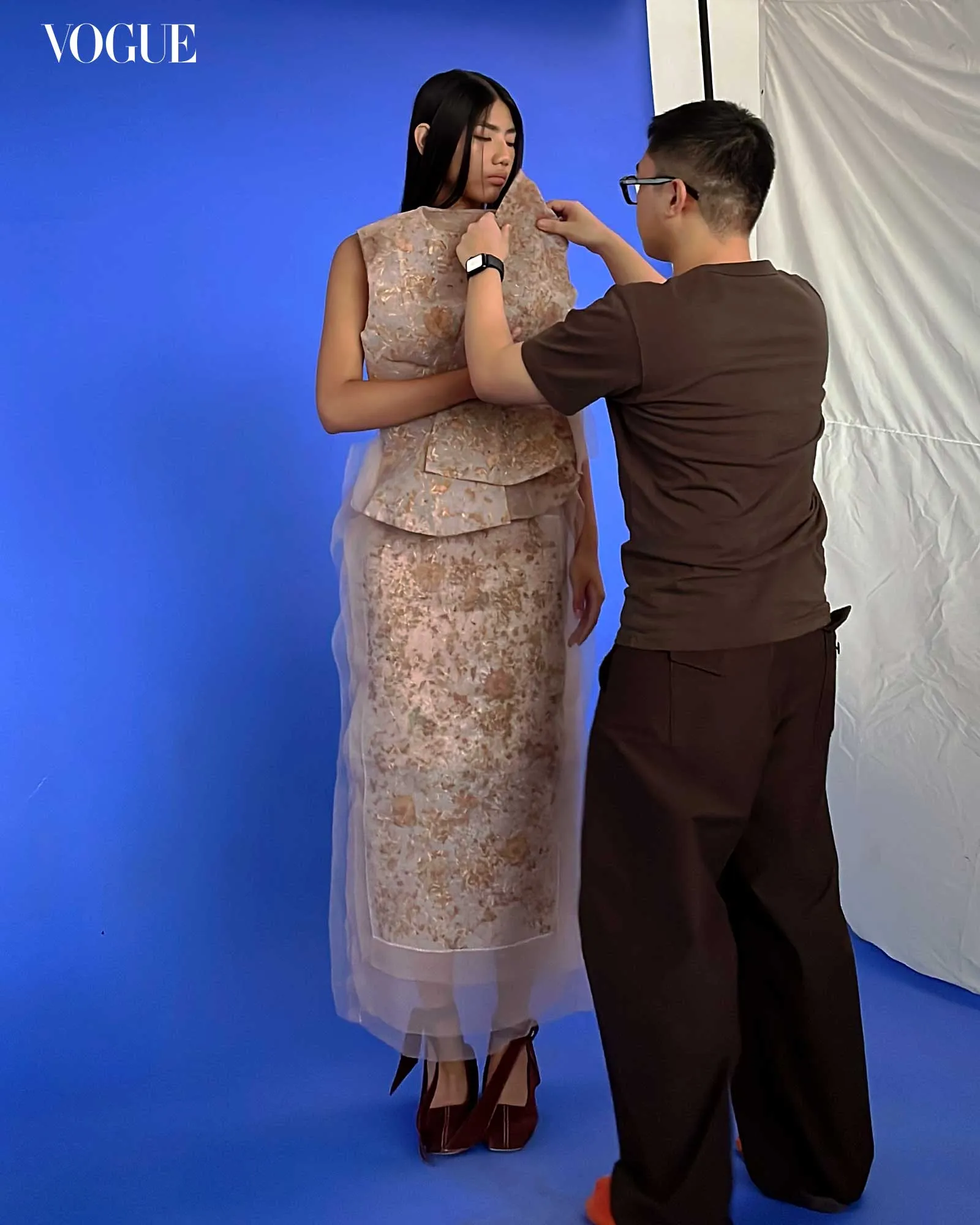
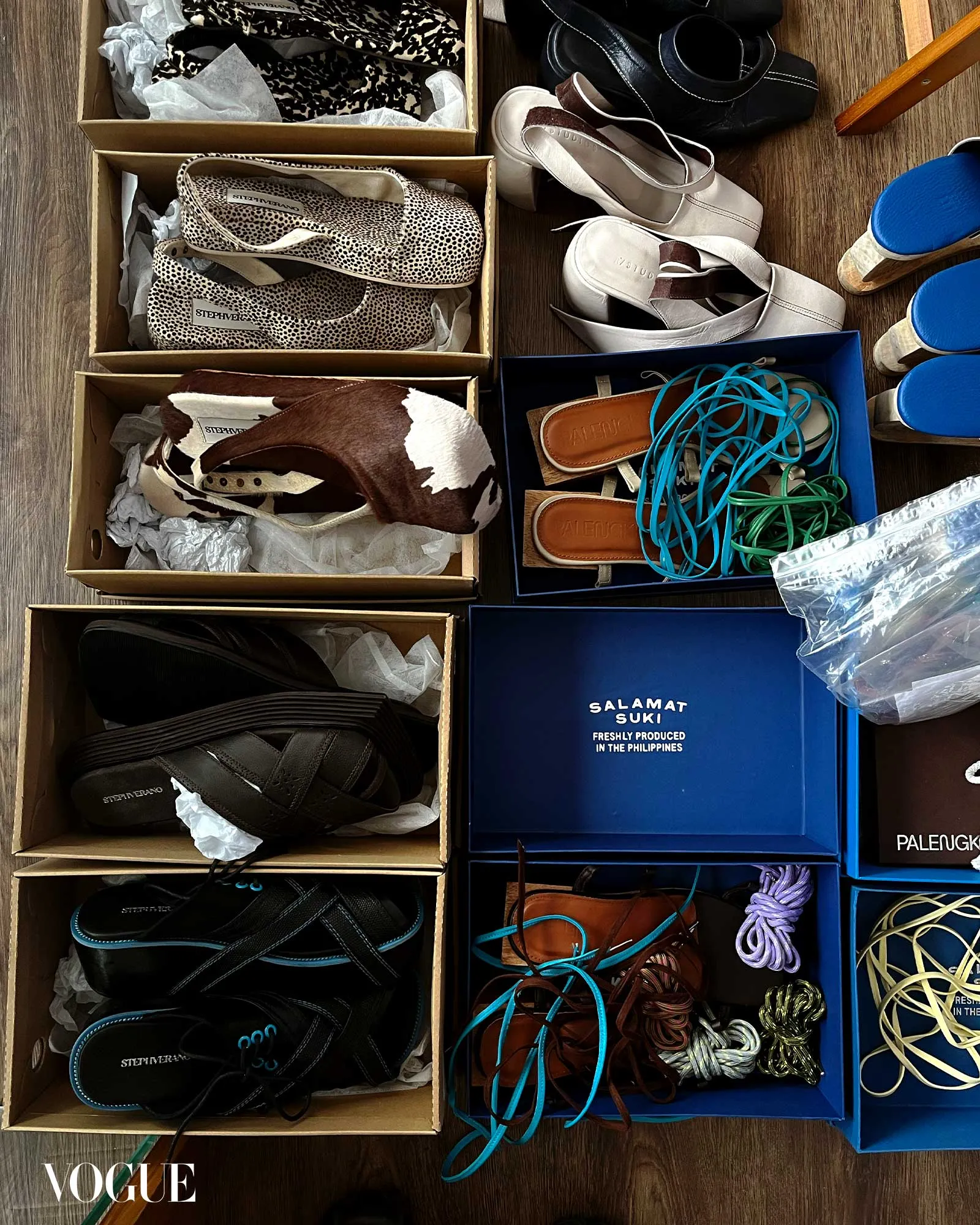
For producer Bianca Zaragoza, the shoot carried a personal resonance. Having followed the designers’ journeys over the years, she described the experience as a full-circle moment. “It felt special to finally work with them and highlight their work on our pages,” she shares. “The energy on set was infectious, filled with laughter and playful moments, almost like a group of friends hanging out together.”
At one point, the designers gathered for their group portrait and carried themselves with a quietly confident kind of ease. Watching them, Zaragoza remembers how naturally they occupied the space they had carved for themselves. “They’re all within my age range, and it was inspiring to see how accomplished they are in what they do,” she says. “There was a time when opportunities like this weren’t as easily accessible for women, but they forged their own paths and claimed their space, front and center.”
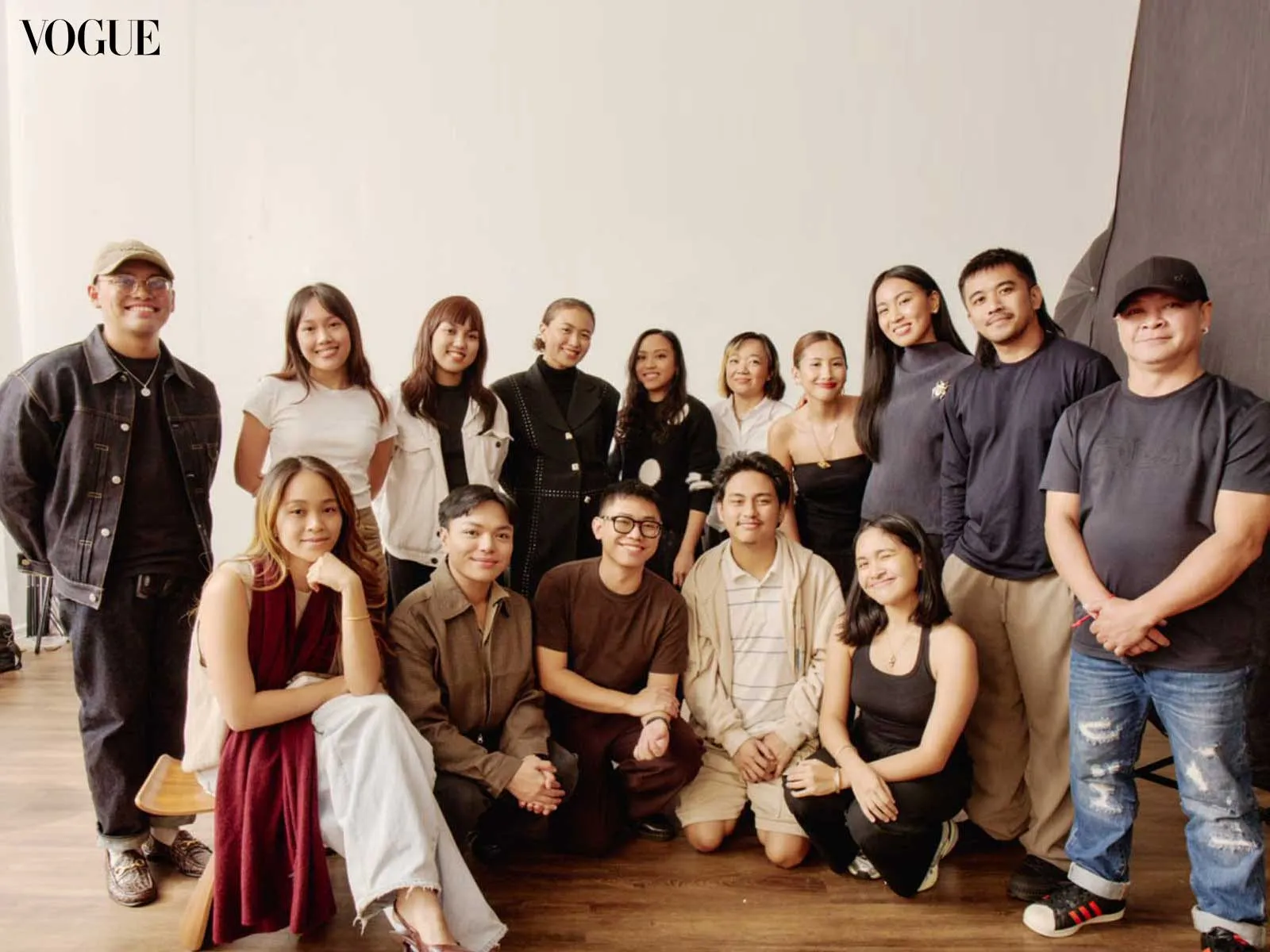
Despite accolades and growing recognition, the work continues with the same urgency. Collections evolve, ideas expand, and the process begins again.
When women lead the frame, success becomes a starting point.
Legacies are shaped
We also spent time with the women now carrying forward the legacy of the house of Jul B. Dizon, the renowned Filipina designer whose name has long been synonymous with Philippine jewelry. Today, the brand is managed by her daughters Janina and Candy, and her daughters-in-law Ginny and Lucille, who each bring their own perspectives while honoring the vision the matriarch built.
At first, writer Ticia Almazan admits she felt a sense of awe stepping into the room. “Jul B. Dizon is a brand you hear about all the time, from many different people,” she recalls. “I didn’t know what to expect coming into it.” What she found instead was warmth. “I was pleasantly surprised to learn how warm each of the sisters really is, although they have very distinct personalities. It made the shoot a breeze.”
The team had initially suggested pastel tones for the shoot, but the sisters arrived wearing coordinated ensembles by Jo Ann Bitagcol to echo the colors of their heritage home. “It turned out even better,” Almazan laughs.
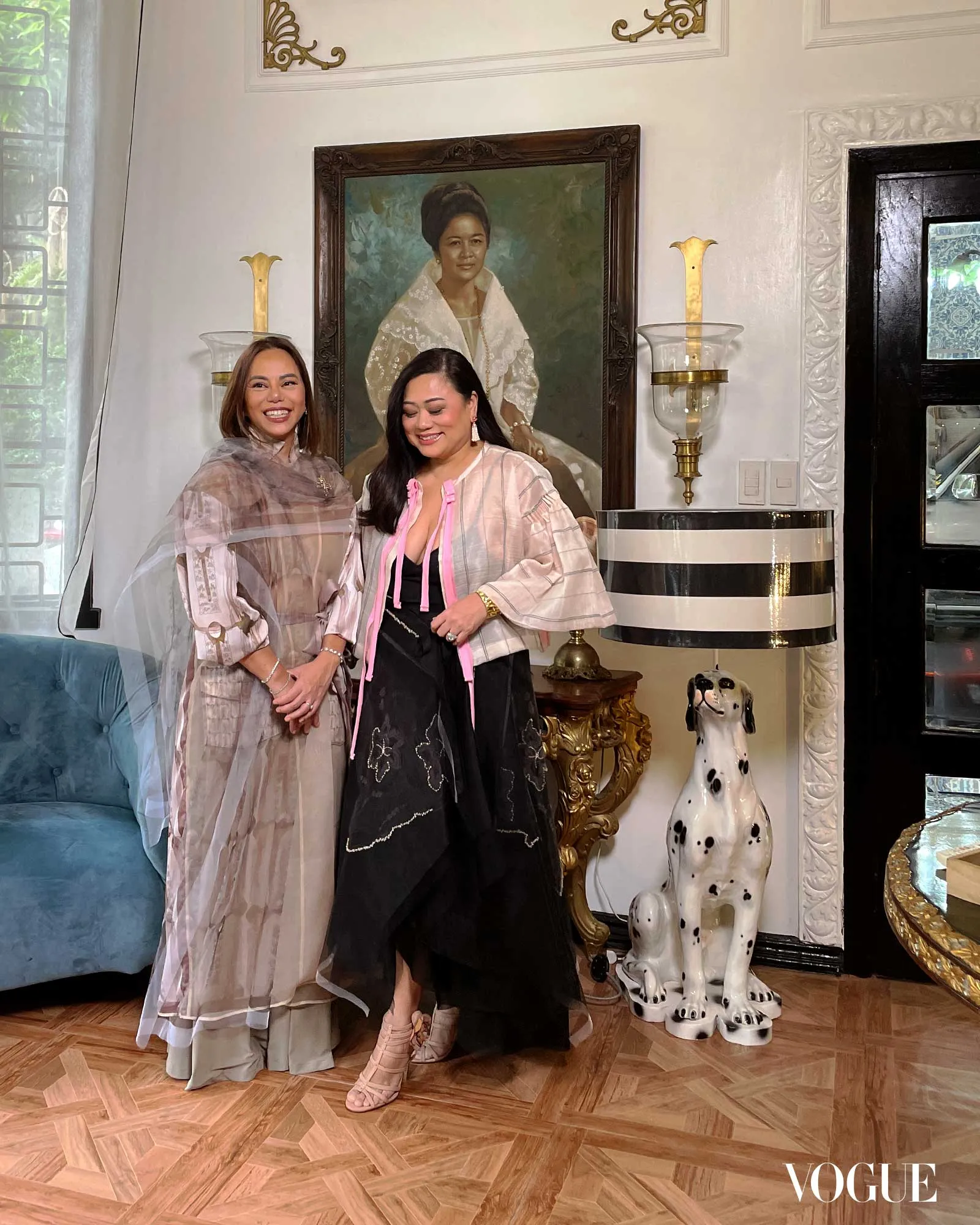
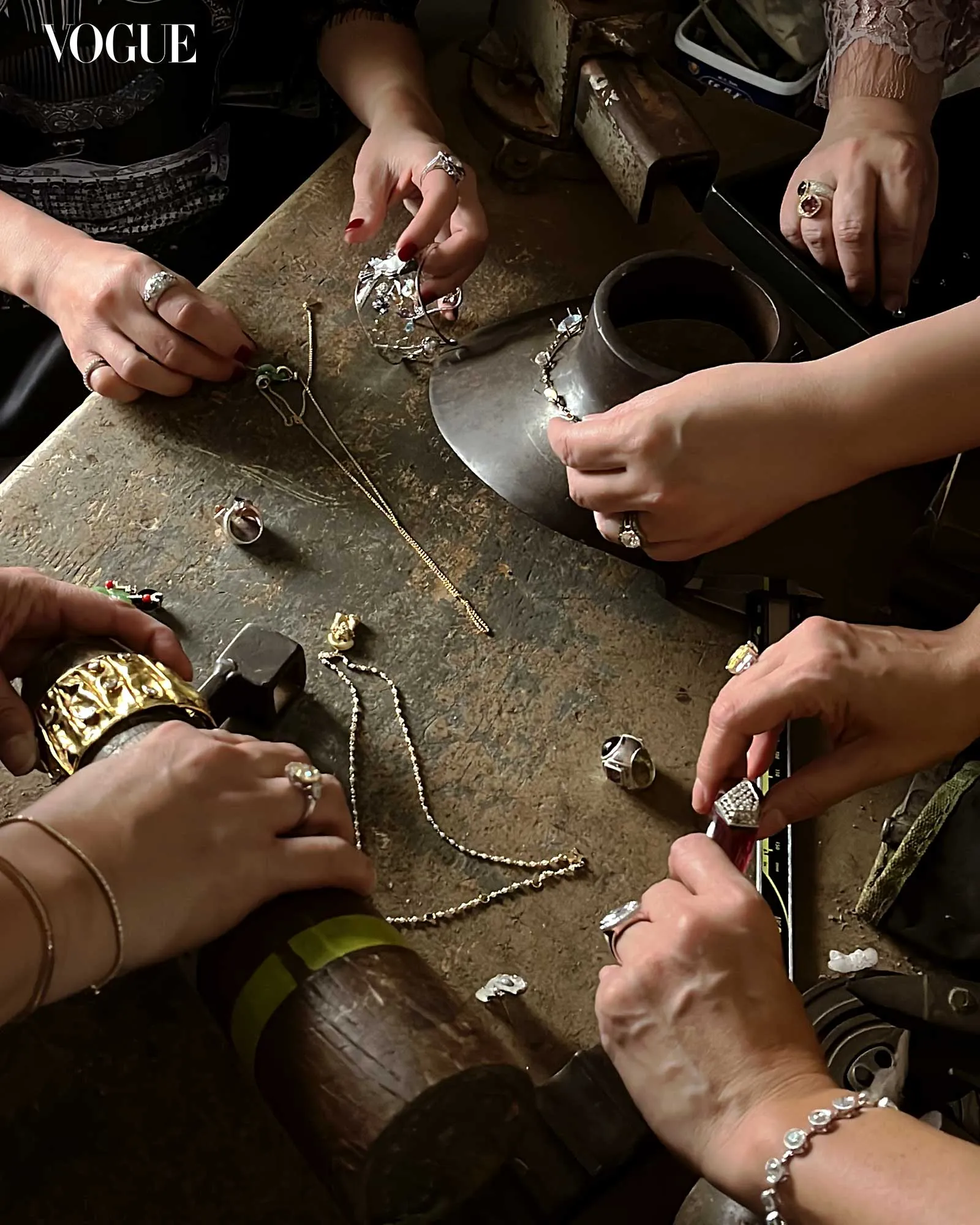
After the shoot, lunch was served family-style, with the dishes crammed across the table. “It was total chaos in the best way, everyone grabbing, passing, laughing,” Almazan recalls. The sisters even spread out to make sure no one felt left out, checking in on every guest. Between bites and stories, it felt less like a formal lunch and more like being invited into a family kitchen.
Later, they showed us around their workshop, where the sisters shared their commitment to the artisans behind the brand. Workers are fairly compensated, with housing and meals provided. “We help our artisans become who they are,” Janina told Vogue Philippines. “Without them, we can’t do what we’re doing.”
In moments like these, fashion felt larger than garments or reputation. As Almazan reflects, “When we speak of the ‘next generation,’ the conversation often centers on young individuals just beginning to make their mark. But after speaking with the Dizon sisters, it became clear that it’s just as profound to shape and be shaped by an existing, inherited legacy.”
When women lead the frame, legacies are shaped and strengthened.
Across these shoots, one thing became clear to me: When women step forward, the frame expands. It becomes more honest, more layered, and more alive.
Zaragoza witnessed that spirit across productions of very different scales. Earlier in the month, she helped bring together our cover shoot featuring Autumn Durald Arkapaw, photographed by Hannah Reyes Morales, coordinating creatives across multiple time zones and continents.
For Durald Arkapaw, that sense of collaboration is exactly what allows women creatives to thrive. “Go find the best community,” she tells Vogue Philippines, “a community where you can be yourself, where you can be strong, and brave, and confident… and that you feel you’re there because of who you are and what you bring to the table.”
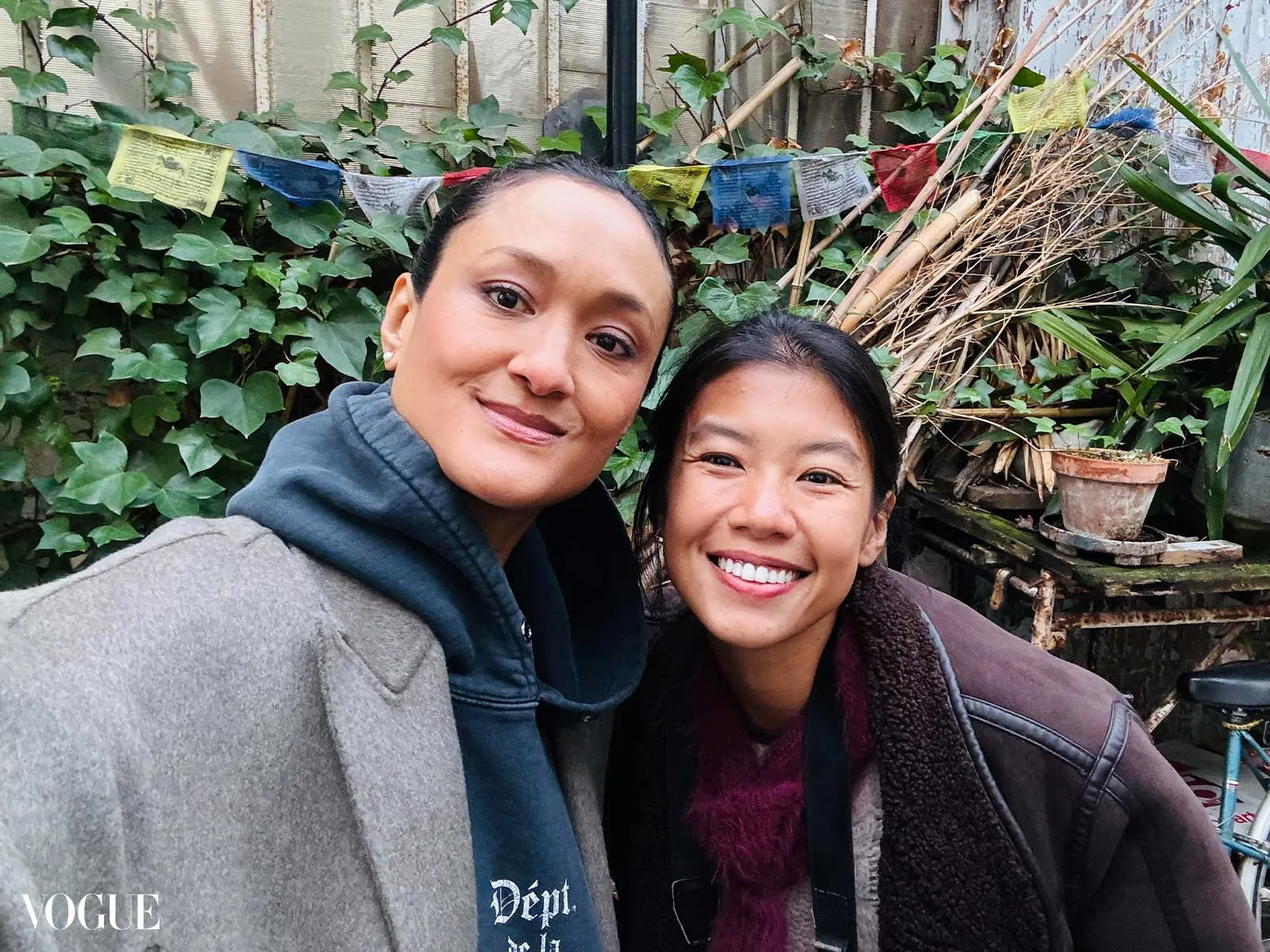
For Almazan, the experience reinforced something deeper about the theme she helped shape for the issue. “The women of now have the power to decide, for ourselves, which parts of our stories we preserve, rewrite, and pass on,” she says. In many ways, this reflection echoed throughout every set we stepped onto. Whether through movement, authenticity, mentorship, or autonomy, each story offered a different answer to the same question that lingered with me from the beginning.
Sometimes the most powerful thing a team can do is simple. Make space, and watch what happens when women lead.
- Behind the Pages: Love, From Many Hands and The Making of Vogue Philippines’ Love Issue
- Karla Puno Garcia Steps on Stage as Director of Theatre Group Asia’s A Chorus Line
- How the Sisters Behind Jewelry Brand Jul B. Dizon Propel a Legacy Forward
- A Portrait of Silvana Ancellotti-Diaz in Bold, Expressive Strokes


