
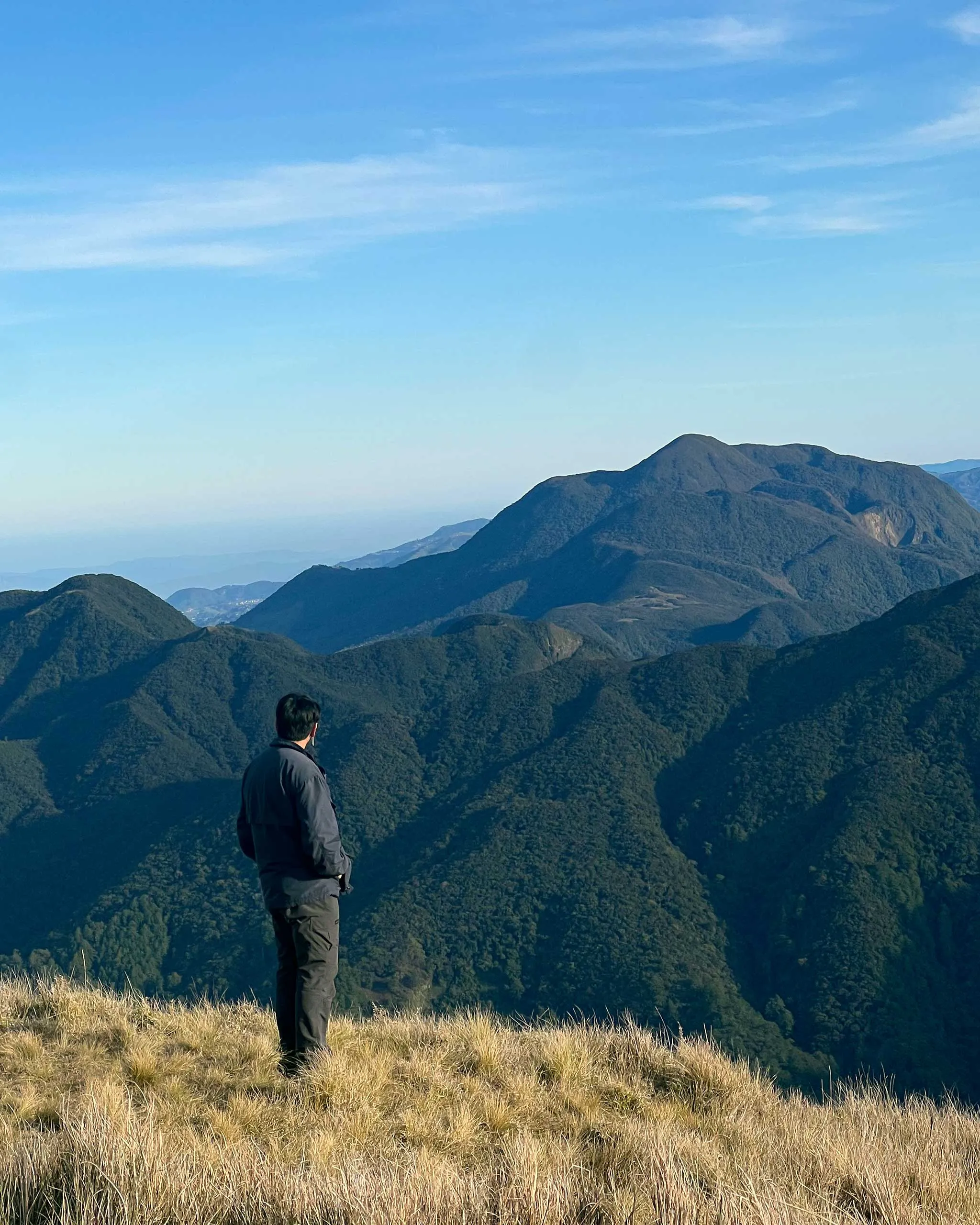
Courtesy of Gab Yap
For these mountaineers, the climb isn’t always about reaching the summit, it’s about the process, the community, and discovering yourself along the way.
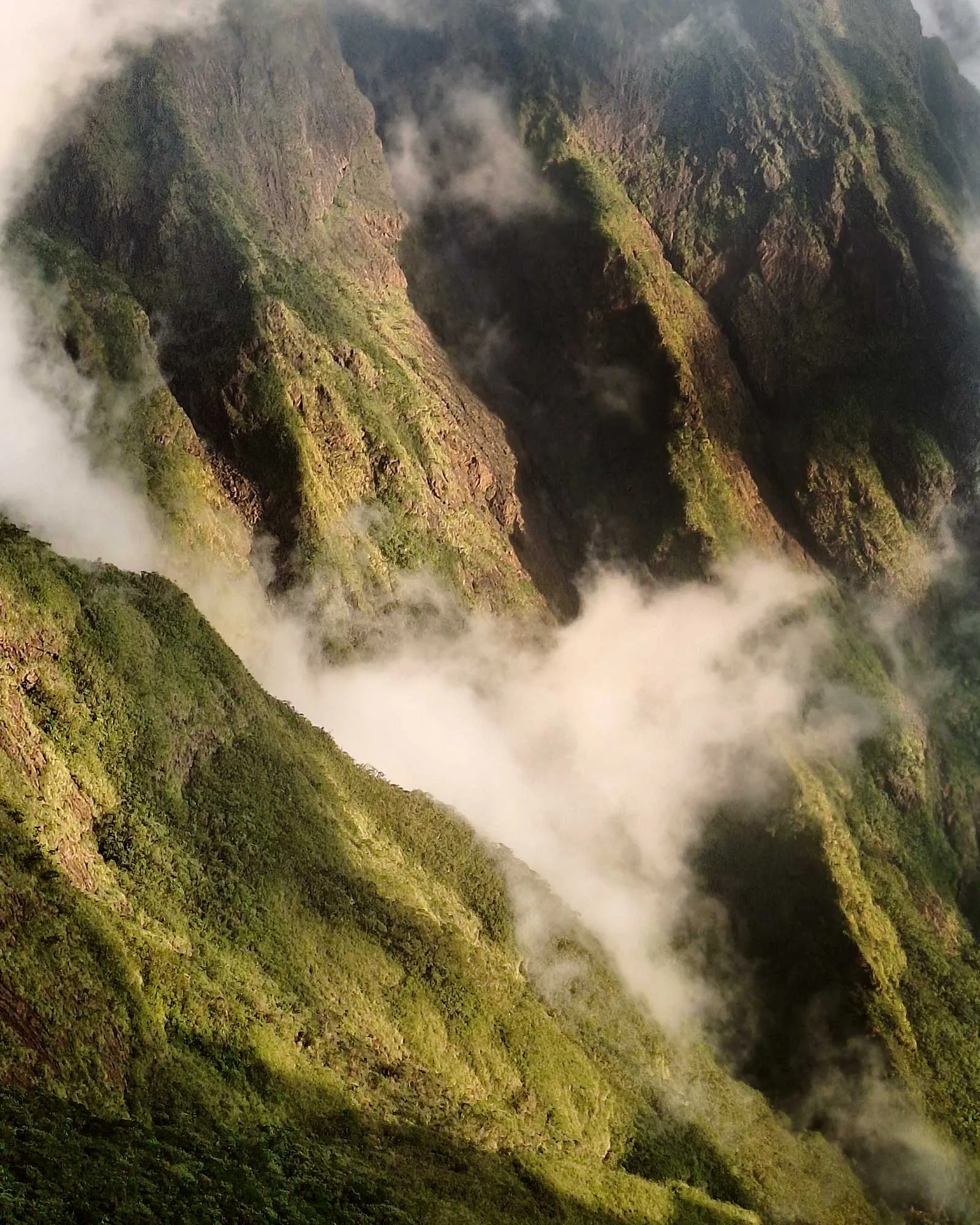
It had been a long time since I felt real fear. Not the abstract kind that lives in the back of your mind in meetings and deadlines, but one that floods your body all at once. It is a biological alarm, a voice that tells you to stop while you’re ahead. I felt it last April, during the fifteen-hour boat ride to Sibuyan Island, Romblon, as Mount Guiting-Guiting slowly revealed itself at dawn. Its jagged spines rose from the sea floor, sharp and unyielding, visible from nearly every corner of the island. The name itself, translated to “jagged” in the Romblomanon language, read like a warning.
For the Filipino mountaineering community, it’s one of the true tests of a climber’s body and spirit. It is one of only a handful of expeditions rated a nine out of nine in difficulty by Pinoy Mountaineer, the archive of record for our trails run by anthropologist and experienced climber Gideon Lasco. Its difficulty isn’t unfounded, as Guiting-Guiting carries history in its ridgelines. Our expedition coincided with the 40th anniversary of the UP mountaineers who perished there, caught in flash floods rushing down from its peaks—peaks later named in their honor. More recently, another climber had passed just minutes from Mayo’s Peak campsite, succumbing to exhaustion and hypothermia. These stories are not footnotes to the mountain; they are part of its terrain.
Around the same time, devastating news reached the wider mountaineering community. Philipp “PJ” Santiago II had passed away at Camp 4 on Mount Everest, attempting an ascent that would have ended a twenty-year drought for Filipino summiteers. When his colleagues later succeeded, the celebration was tempered by grief. Online, however, grief was not always the dominant response. Social media was filled with criticisms of recklessness, of selfishness, of choosing danger over family. Many asked why anyone would willingly risk so much.
A post on Facebook circulated shortly after, pushing back against the noise. It ended with a simple question: “Have you ever chased something so meaningful you’d risk everything for it?”
As I navigated Guiting-Guiting’s knife-edge trails, that question lingered like the mist that surrounded its peaks, even long after the expedition ended. Fear was present, but so was excitement. Within mountaineering, this tension is often described as “summit fever,” an intense fixation on reaching the top, sometimes at the expense of sound judgment. It is usually perceived as something negative, but among climbers, it is more often understood as neutral, even useful, when paired with experience.
Climber and photographer Matt Tiongco suggests that this phenomenon is “a tool that could be good or bad, depending on your mindset.” “I always treat mountaineering in the same lane as competing as an athlete,” he explains. “Not everybody has to understand it; it just has to make sense to you.” After all, marathon runners collapse miles from the finish line, and triathletes and ironmen push through searing pain without learning when to stop.
“You just need to be able to recognize your limits, not just mental ones, but physical and environmental ones as well,” adds Trei Altarejos, who has recently completed international climbs to Fuji and Tateyama in Japan, and Rinjani in Indonesia.
This mindset matters because mountaineering is often misunderstood as either reckless or indulgent. In reality, most climbers are meticulous, often to the point of neuroticism, about preparation. Training plans stretch over months, gear choices are deliberate, routes are researched, and risk is acknowledged, not ignored. Accidents still happen, as they do in any sport, but they are not usually the result of carelessness alone.
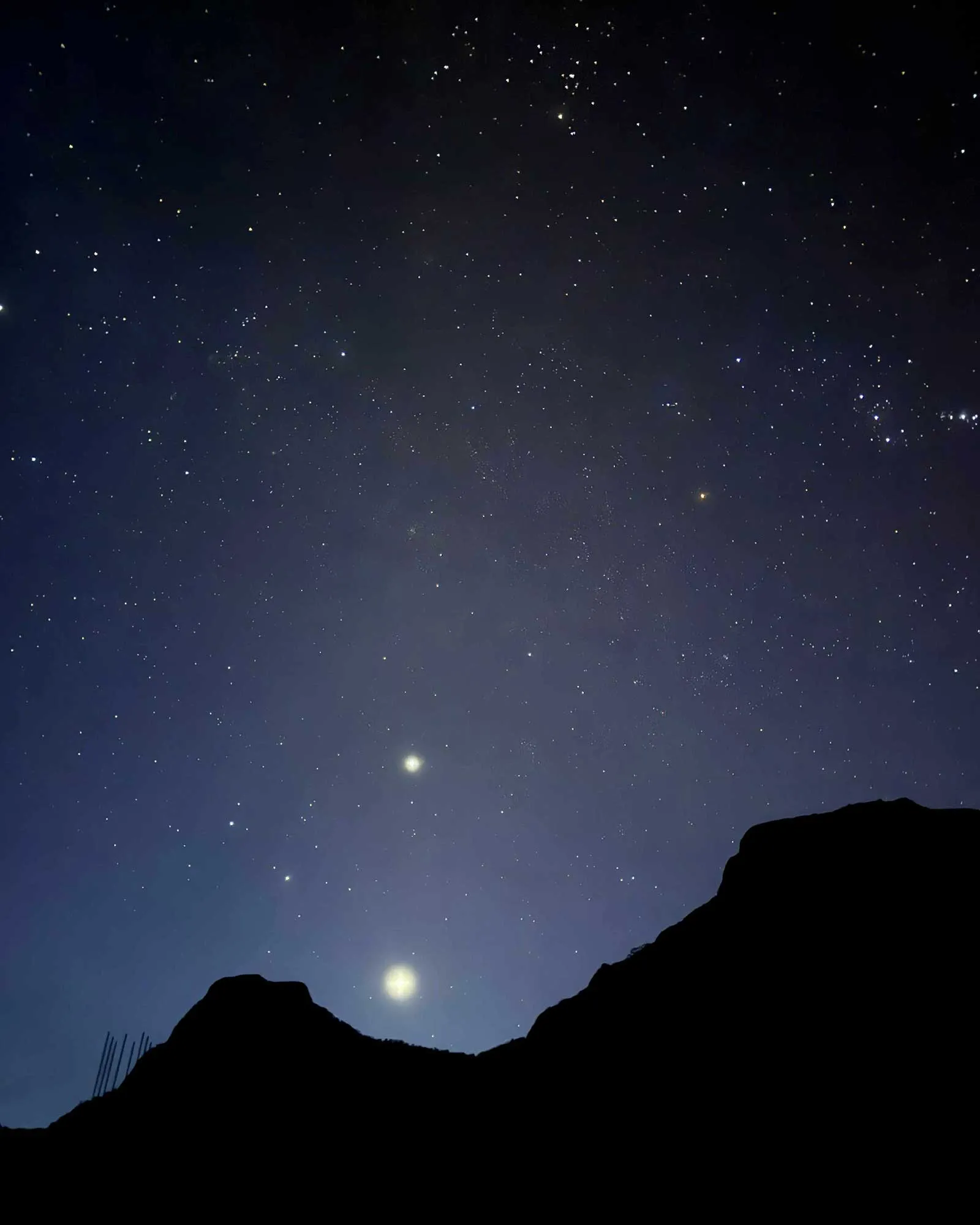
So why do we climb? The easy answers come first: the views, the sense of accomplishment. But those explanations feel incomplete. For many, the allure lies in the process rather than the outcome. It is also found in the sensory details that photos cannot capture: walking in the shadow of centuries-old trees, shivering in the vastness of Mt. Pulag’s sea of clouds, or finding solace in the mossy, tangled roots of Mt. Makiling.
Trei speaks of the mountains as a space removed from expectations, a place to think clearly, away from the pressures of career and city life. Hiking became a way to explore the landscape at first, and eventually, himself.
There is also something about difficulty that creates community. In Philippine mountaineering culture, climbing is rarely solitary. “You share long commutes, meals, cooking duties, and sometimes even the weight of each other’s packs,” Matt says. This communal aspect is often overlooked when mountaineering is reduced to summit photos. When Mia Azurin started the Sunday Hike Club in 2022, it was only a small group of friends that shared a similar passion. Now, it has grown into a full community with over 700 members.
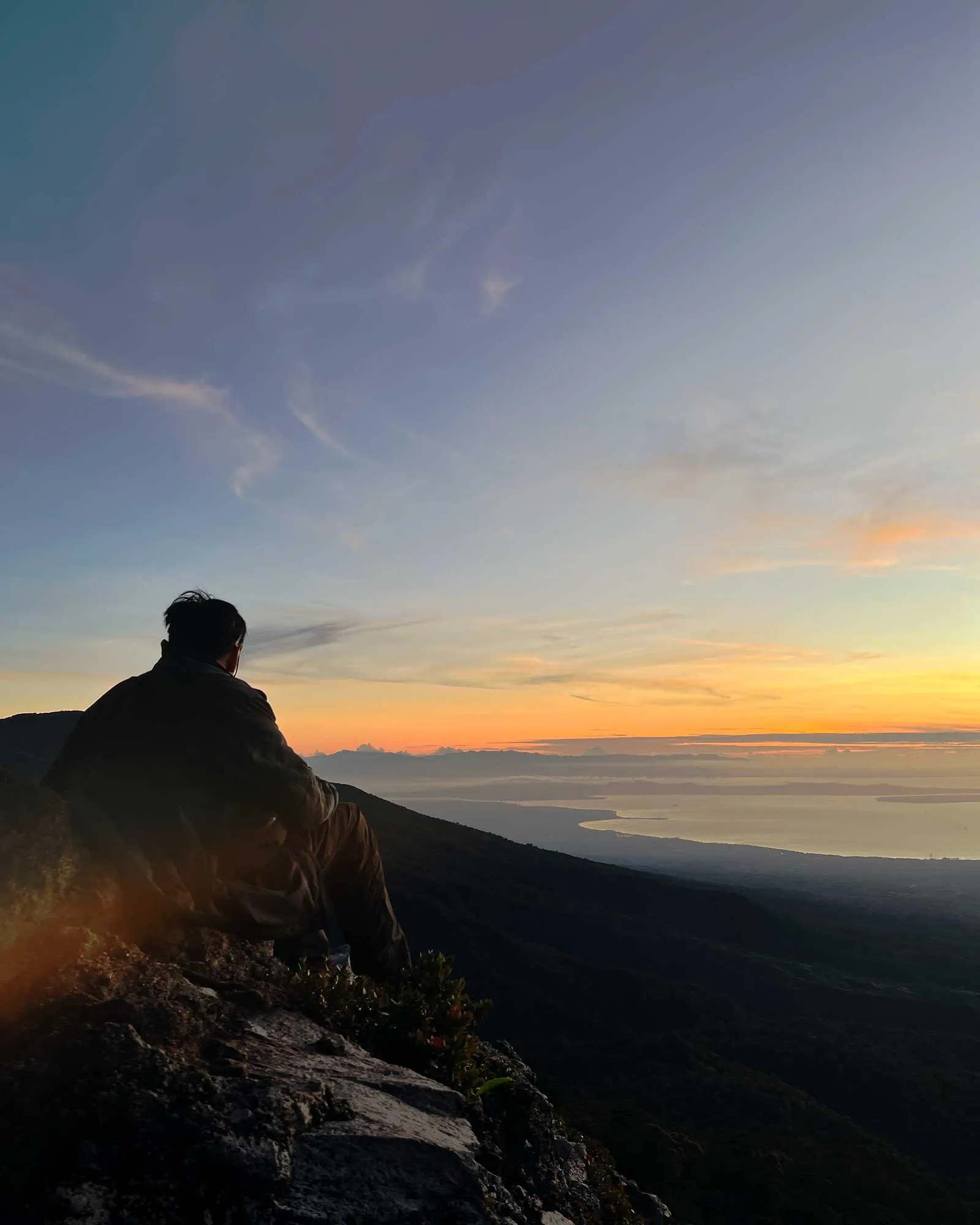
“What people see is the end result, but what they don’t see is that most of the climb is spent tired, wet, hungry, and uncomfortable,” she mentions. Yet she believes it is precisely that imbalance that makes the experience meaningful. Hard climbs mean long hours together, and those hours tend to create familiarity, explaining how shared discomfort creates bonds that are difficult to replicate anywhere else.
The sport also recalibrates perspective. After walking for hours in the rain, sleeping on uneven ground, or managing fatigue at altitude, everyday stressors feel different. Each of these climbers spoke about how their tolerance for discomfort off the mountain increased; traffic, work frustrations, and minor inconveniences felt smaller by comparison. The mountain does not erase problems, but it changes how they are held.
But despite the risks and the sacrifices, maybe we return time and time again because the mountains ask for honesty. They don’t bend to motivation or intention. You prepare, or you don’t. You listen, or you pay for it. In a life that often cushions us from consequence, climbing offers something rare: effort that is directly tied to outcome. The view matters, but not as much as what it takes to get there. And for us mountaineers, it’s not about courting danger; it’s about choosing a pursuit that feels earned, one that makes sense to us, even if it never has to make sense to anyone else.


