

Lady Gaga wears a DIOR dress and skirt. Photographed by Ethan James Green
Frederic Aspiras weaves heritage, emotion, and Filipino values into global glamour.
Before Frederic Aspiras found the words to express himself, he found hair.
In a video posted earlier this year, the Filipino-American wigmaker and hairstylist recalls how his mother, protective of her queer child in a world often unkind to difference, taught him to shield his spirit not with confrontation, but with craft. “She feared the world’s cruelty toward gay men and in that fear, I learned how to protect myself. Not with words, but with art. With hair.”
It’s a story of survival that evolved into mastery. Today, Aspiras is best known as Lady Gaga’s longtime hair artist and an Oscar-nominated hairstylist for House of Gucci. His wigs have told stories on global stages: transforming icons, sculpting personas, and giving characters their emotional cadence. But beneath the acclaim lies something quieter and far more enduring: a creative philosophy deeply rooted in Filipino values.
“Being Filipino is at the very core of who I am; it shows up in every detail of my work,” he says. Raised in San Francisco by a Filipino father and Vietnamese mother, Aspiras spent his formative years in his mother’s small salon. It was there that he first understood how beauty could be both a livelihood and a lifeline. “My mother always saw my gift in transforming people with hair and makeup and guided me into that world.”
His work today is braided with that early sense of purpose and love. “I carry the value of pagmamalasakit, deep care and compassion, and sipag at tiyaga, hard work and perseverance,” he shares. “Those memories are in every wig I knot, every look I build. They remind me to lead with heart.”
And he has, for over a decade, as the creative force behind Lady Gaga’s most memorable transformations. Their partnership began in 2009 and has endured from music videos and global tours to film sets and couture shoots. “Our collaboration is rooted in trust and shared evolution,” Aspiras says. “We don’t just create looks; we create moments.”
Whether designing high-velocity wigs for The Chromatica Ball or subtly mapping Patrizia Reggiani’s emotional descent in House of Gucci, Aspiras starts with the same question: “Who is this person underneath it all?” His process involves not just references and research, but emotional rhythm. “Hair is never just hair; it’s history, memory, and power.”
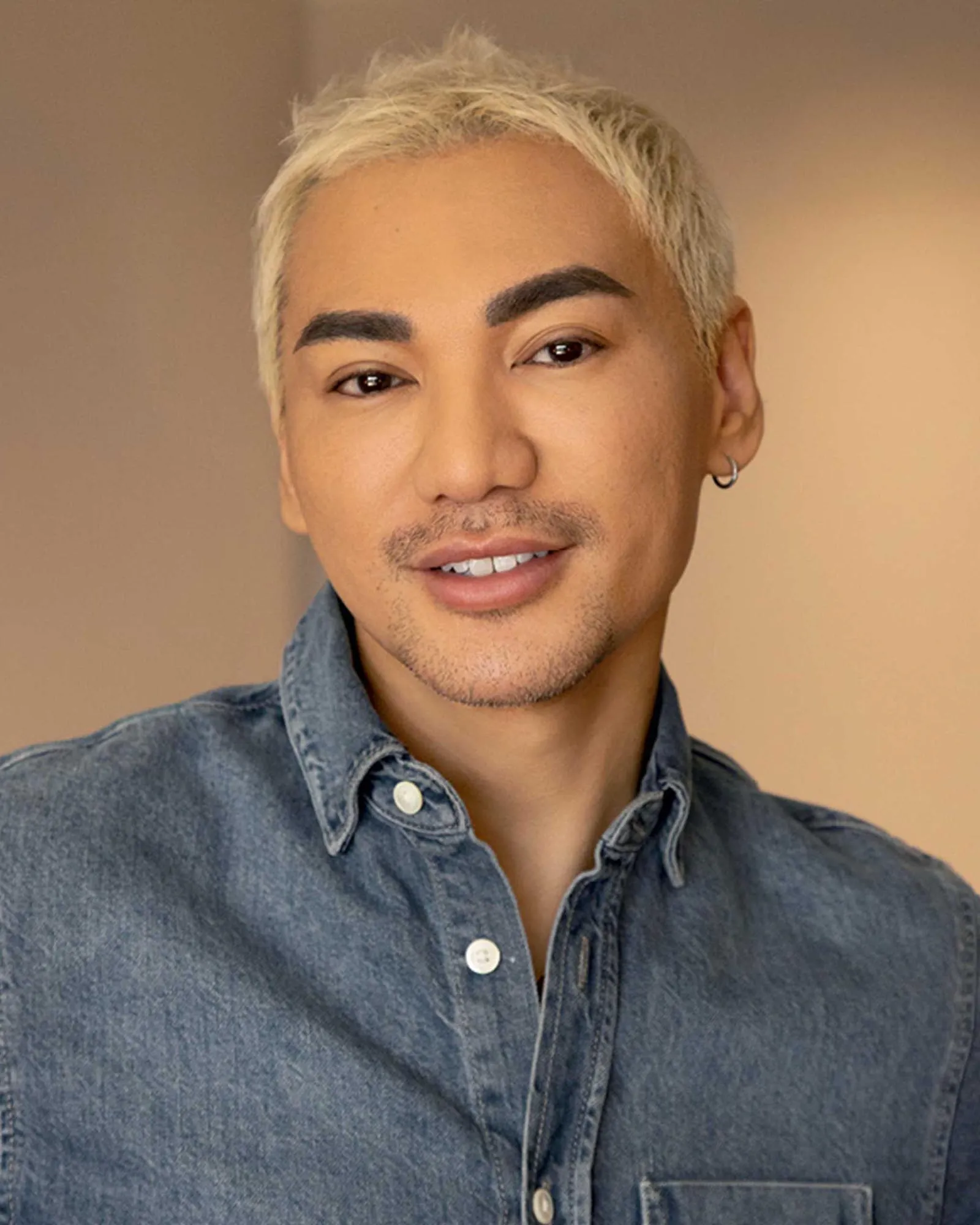
That sensitivity extends beyond the work itself and into how he approaches collaboration. Aspiras credits the Filipino concept of kapwa, shared identity and mutual regard as foundational to his creative ethos. “Kapwa is everything. It’s how we were raised: to take care of one another and lift each other up. When I work with Gaga, it’s not just about the result. It’s about the trust, the vulnerability, the listening.”
The result is a rare kind of artistry: intimate, expressive, and often deeply personal. One of Aspiras’ most meaningful creations, ironically, involved restraint. For the 2023 Oscars, Gaga walked the red carpet without a wig or heavy styling, just slicked-back hair and bare skin. “It reminded me of my father’s quiet dignity and my mother’s resilience after a long day in the salon,” he recalls. “Sometimes, the most powerful thing you can do is show up without armor.”
In 2022, Aspiras became one of the first Asian creatives to be nominated for an Academy Award in the makeup and hairstyling category. He dedicated the work to his late mother, whose tools and techniques from wet sets to pin curls, and all were passed down like heirlooms. “I thought about how underrepresented we are in this industry, and what that recognition meant not just for me, but for every Filipino dreaming of telling their story.”
Today, as the global creative and culture director of Sebastian Professional, Aspiras is expanding what it means to lead in beauty. “Hair is no longer confined to one gender, one style, or one idea of beauty,” he says. “I’m excited about the breaking down of boundaries.At Sebastian, we’re pushing for artistry that’s bold, cultural, and unapologetically expressive. I love seeing texture celebrated, identity explored, and craft redefined. Hair is becoming a true canvas for personal truth and I’m honored to help lead that movement.”
But even as he shapes global trends, Aspiras remains grounded in community. He is passionate about mentoring young Asian and Filipino artists and building spaces where they can be seen not as backstage help but as visionaries. “Never dim your light to fit in. Your Filipino heritage is not a limitation; it’s your secret weapon. The way we care, the way we hustle, the way we see beauty in details, that’s powerful.”
His dreams extend to heritage-centered work: a full collection inspired by Ifugao textiles, Babaylan mysticism, or the epic of Lam-ang. “There are so many powerful indigenous stories that haven’t yet been told through hair. I want to collaborate with Filipino artists, weavers, and historians to create something that honors those traditions while pushing hair artistry to new places.”
That reverence for the past runs through every aspect of his career. Aspiras speaks of wig making not as a trend, but as a tradition. “Wigs are sacred to me. They require patience, precision, and care, much like the way our elders cook or sew: with devotion. It’s not about vanity; it’s about giving someone their power, their identity.”
In many ways, Aspiras’ career has been a quiet revolution: proof that hair can be a vessel for memory, identity, and story. His artistry doesn’t demand attention; it commands it, with grace and intention. And at its core, his work is a tribute not only to his talent but also to the people and values that shaped it.
“I want to continue honoring my family’s legacy,” he says. “Not just through hair, but through heart.”
By CAROL RH MALASIG. Photograph by ETHAN JAMES GREEN. Portrait by STEVEN SIMIONE. Beauty Editor JOYCE OREÑA.


