
Rhoda Magbitang on the Food Memories That Inspired Her Winning Top Chef Meal


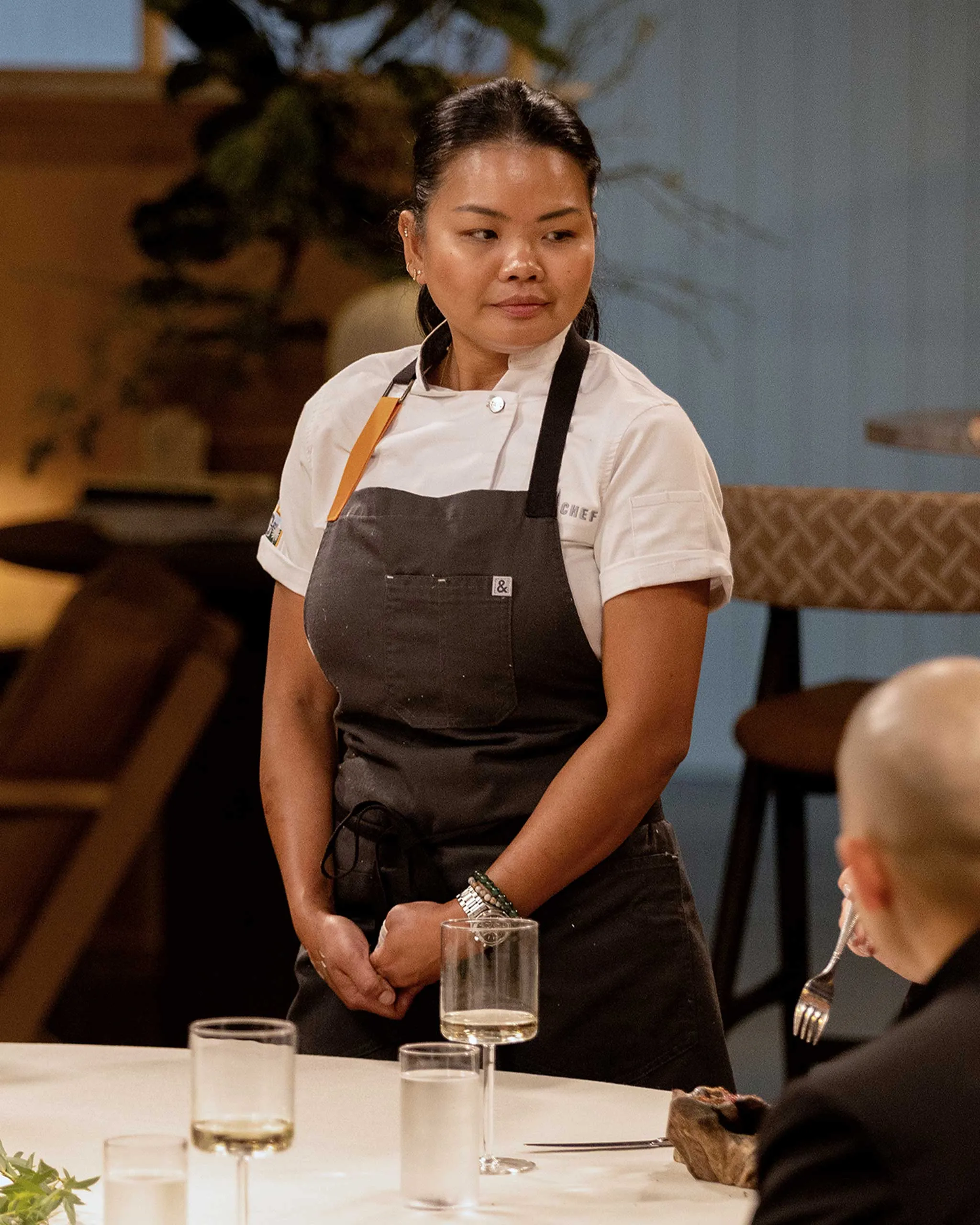
Rhoda Magbitang on Top Chef. Courtesy of NBC
In the 23rd season of Top Chef, Filipino chef Rhoda Magbitang wins with a four-course menu rooted in her early California career and Filipino heritage.
When Rhoda Magbitang learned that she would join the 23rd season of Top Chef, she didn’t prepare by coming up with ideas or concepts for dishes. Instead, the chef chose to fortify herself mentally.
“I would say, the lifetime of training and being in kitchens, there are a lot of extraneous factors that are involved in a setting like this that you have no control over. So, it’s akin to working in kitchens a lot,” she shares, looking back on the experience.
Magbitang was one of 15 participants in the season, where they faced a slew of challenges under the judges’ and the public’s eyes. The chef started strong, winning the first two episodes consecutively. But in episode five, Magbitang faced a true challenge, having to fight for redemption at the Last Chance Kitchen after her monkfish failed to impress the judges. However, she rose back up, earning four consecutive wins that led her to the finale.
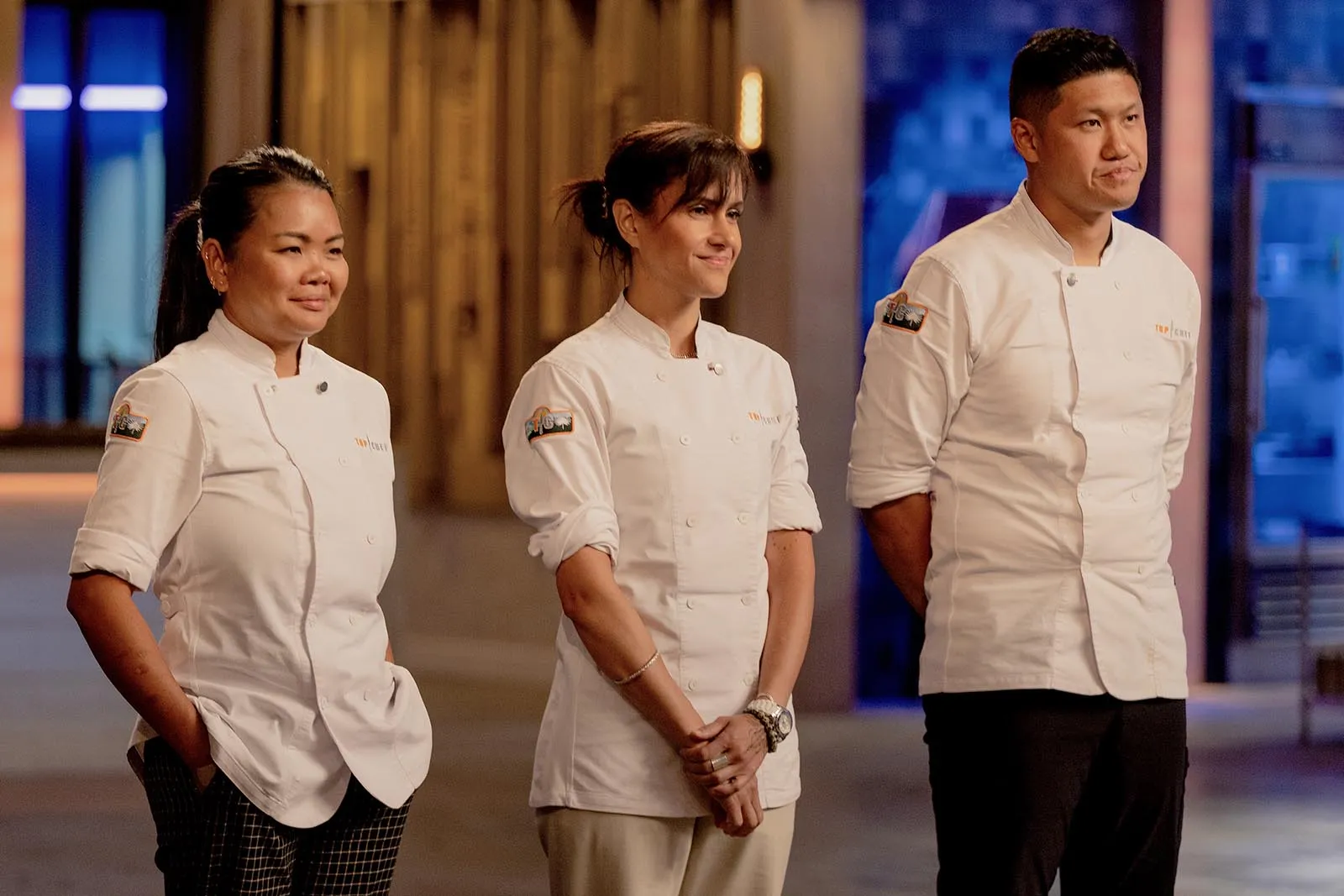
For her finale menu, Magbitang dug into her roots. The first course was an ode to California. “California has been home for over 20 years,” the chef says. Twenty years ago, she was a 17-year-old pursuing education, teaching kids at a preschool level. There, she led an after-school program teaching students how to make snacks, which led her to further her culinary skills at Le Cordon Bleu in Pasadena, California. From then on, the chef fell more in love with the craft and worked in the kitchens of well-known restaurants, including Mélisse, République, Chateau Marmont, Auberge Collection, and, at present, CanoeHouse in Hawai’i.
“It was one of those things where you get bitten by the restaurant bug, and you just don’t look back,” she says. Of all the roles she’s served, her favorite is being a line cook. “The rhythm, the movement, the prep, the synchronicity of the people that are there with you on the line, it’s almost like a dance.”
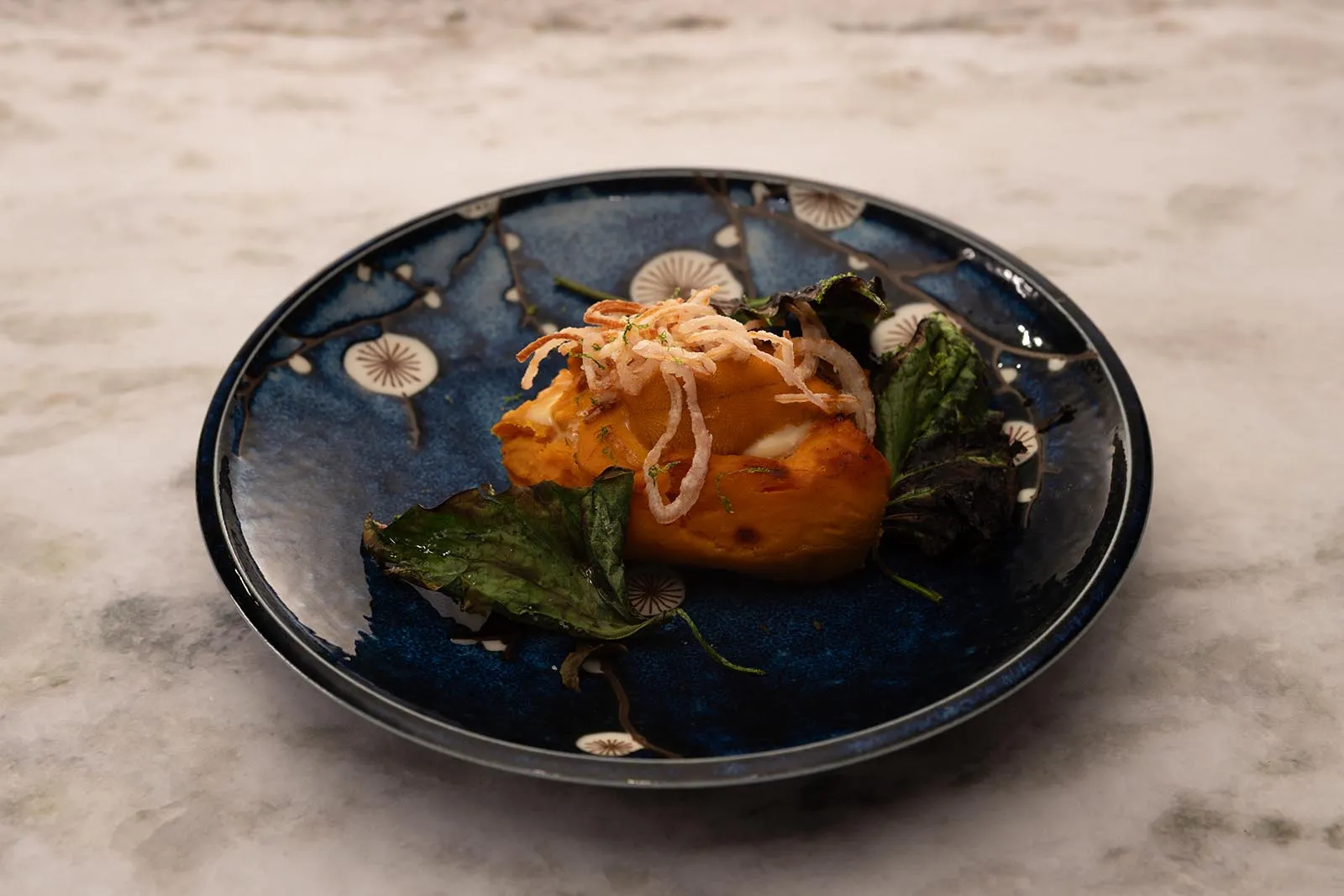
And so for the first course of her finale meal, she served roasted sweet potato with miso butter, fresh uni, and charred potato leaves. The uni, in particular, is a callback to her days at Mattei’s Tavern in Los Olivos, California, where she hosted a uni experience for guests. There, she taught them how to open, clean, taste, and pair the sea urchin with different ingredients.
The second course brings us back to the homeland, an abalone lugaw with abalone liver mousse. Lugaw, she shares, is a dish that her mom made for her when she was sick. “It just instantly made me feel better,” she says. “And to me, that’s home. The smell of it invokes a lot of these feelings of comfort and love.”
Magbitang grew up in Antipolo, Philippines, and is the eldest of six children. At home, she developed her passion for cooking in the family kitchen. On the weekends, she would help prepare bulk ingredients for her grandmother’s food stall. “I didn’t like cleaning the house,” she says, laughing. “But I did love cooking, and people got to eat, you know? There was something extremely rewarding about being able to make something that people enjoy, especially your loved ones.”
The third course is a toast to her first food memory. Recalling how her parents hand-fed her and her siblings, Magbitang distinctly remembers eating tortang talong, or grilled eggplant omelet. For the show, she elevates the dish with XO sauce, vinegar, crispy pork belly, and chili & fish sauce.
Lastly, the final course is a toast to her father, the kaldereta. Months before Christmas and New Year’s Eve, their family would buy a goat or a pig, which would then be slaughtered for the occasion. She fondly remembers how she loved watching the preparations for the dish, taking root as one of her strongest food memories.
It may come as a surprise, but this wasn’t the finale meal that she had initially planned, nor was it the second. But by the time the finale episode rolled around, Magbitang reflected on her story. “As far as developing as a chef, California, my parents, food memories, those are all things that I needed to be recognized in the final meal,” she says, looking back on her journey so far.
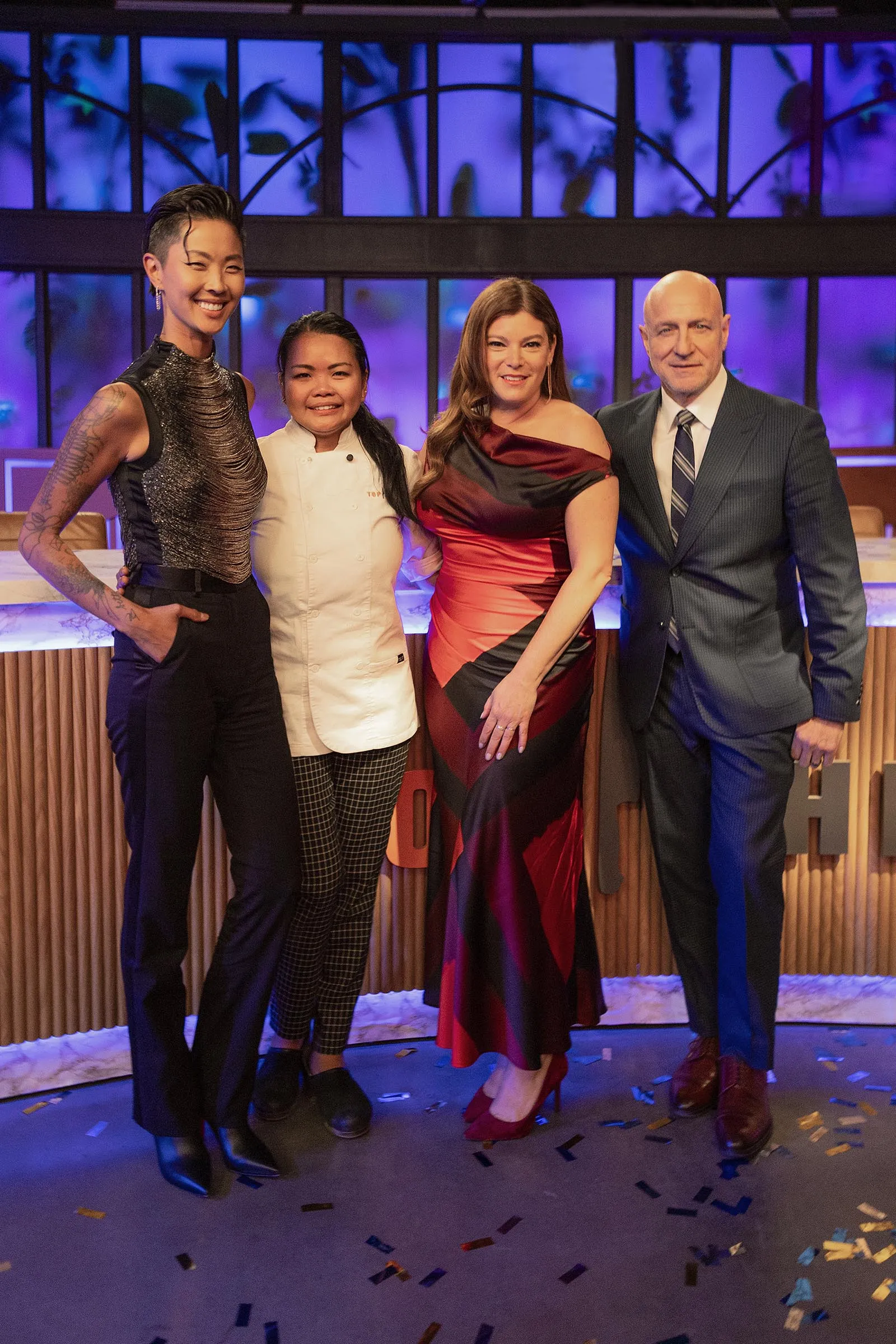
The four-course menu was a triumph; not only did Magbitang win the season, but she is the first Filipino and Hawai’i-based chef to win on the show. It was also a personal feat for Magbitang, as the chef had never served Filipino cuisine professionally before. But after the experience, she yearns to learn more. “Our islands are so vast, and they’re so different, not even having the same dialect from one island to another. There’s something about that that translates through food, and I’d love to know more about it,” she says.
While she doesn’t yet specialize in Filipino cuisine, Magbitang wants to be part of the conversation on the Filipino food movement. “I didn’t really anticipate the support that I’ve gotten from the Filipino community,” she says, sharing how Filipino chefs in Los Angeles reached out after her win. “I would love for the talk to become even bigger and for the spotlight to just be shown on different aspects of Filipino cuisine.”
For now, Magbitang’s home is in Hawai’i, where she continues to serve at CanoeHouse. But as she moves forward, she will always gaze back at the Philippines, feet firmly planted still in the homeland.
Frequently Asked Questions
Rhoda Magbitang is the executive chef of CanoeHouse on Hawai’i Island and is the first Filipino and Hawai’i-based winner on Top Chef.
Chef Rhoda Magbitang is based in Kailua-Kona, on the Big Island of Hawai’i.
Top Chef is a reality competition television series where professional chefs face off in culinary challenges.
For the finale, Rhoda Magbitang served a four-course menu: roasted sweet potato with miso butter, fresh uni & charred sweet potato leaves; abalone lugaw with abalone liver mousse, grilled eggplant omelet with XO sauce, vinegar, crispy pork belly, chili & fish sauce (tortang talong); and braised short rib with liver sauce & vegetables.
In season 23, the grand prize on Top Chef is USD 250,000, a feature in Food & Wine magazine, an appearance at the Food & Wine Classic in Aspen, and a chance to host dinner at the James Beard House.