
Between Music and Sport, Tallulah Proulx Finds Her Rhythm on the Slopes



Photographed by Rojan Maguyon for the June/July 2026 Issue of Vogue Philippines
As the first Filipina and youngest athlete from the Philippines to qualify for the Winter Olympics, alpine skier and violinist Tallulah Proulx brings sunshine to the snow, with a story only just beginning.
Tallulah Proulx always brings a violin to her ski races. She was only two years old when she was introduced to, and inevitably fell in love with, both disciplines. Skiing came through a family tradition of spending Californian winter weekends up in the snow, where she would fly down the hill with her tiny hands on her knees, cheeks pink from the cold, and a big smile before routinely thawing out over hot cocoa. Her parents enrolled her in a violin program around the same time, where she learned how to hold the instrument and easily made friends with the same brightness she brought to the slopes. She was, as her parents would put it, always a ray of sunshine.
At the 2026 Winter Olympics in Italy, Tallulah is in conversation with Vogue Philippines, wearing a black puffer, natural curls, and the same big dimpled smile. This time, she admits, the violin did not make the trip. There were simply “so many things happening,” between traveling from Salt Lake City to Paris, Paris to Venice, and then by car into the mountains of Cortina.
At 17 years old, Tallulah is the first and the youngest female Filipino athlete to qualify for the Winter Olympics. There is, understandably, a lot going on. Still, against the backdrop of the Olympic Village, she feels at ease.
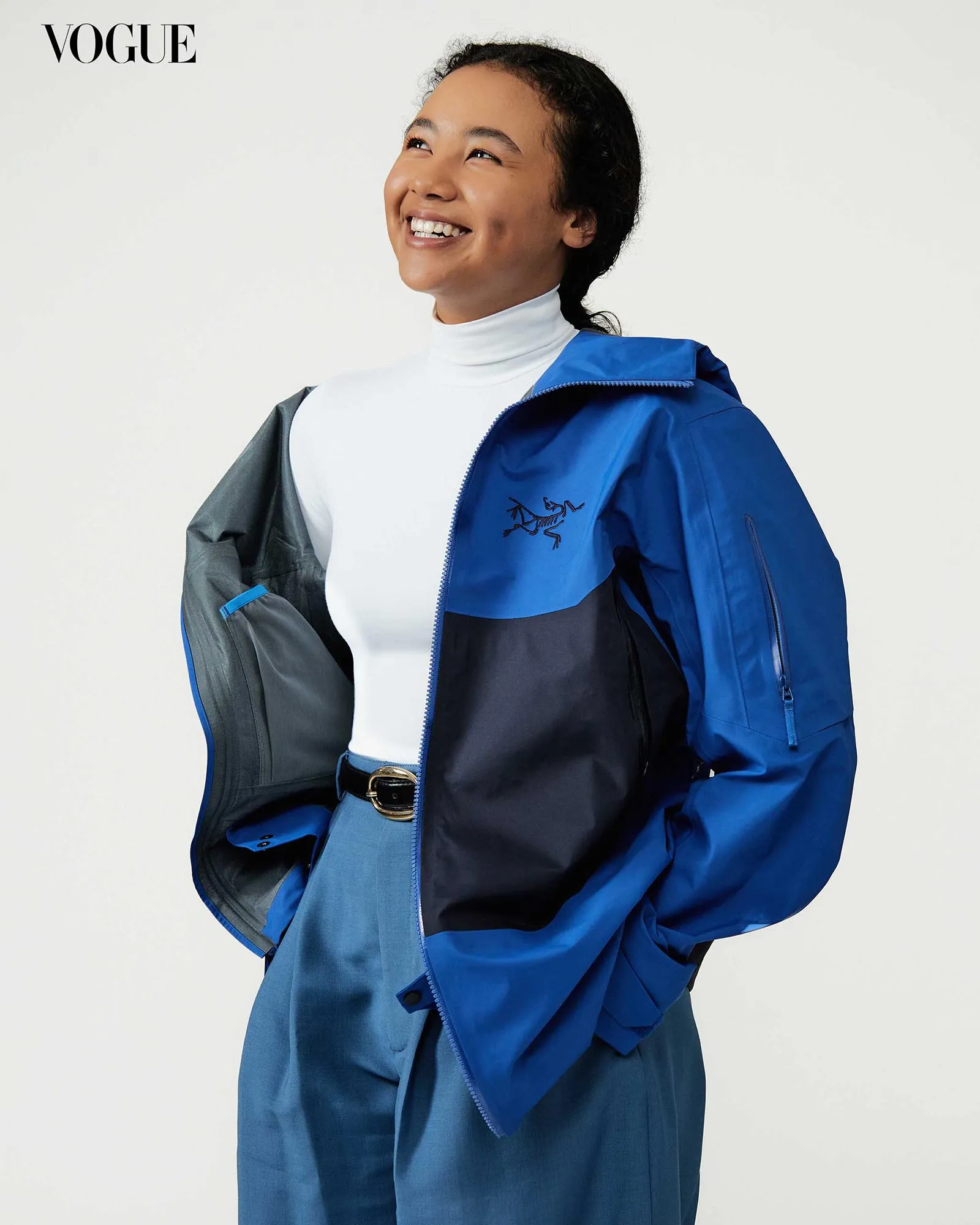
“They’re both very technical [disciplines,]” she explains. “With violin you have to be really precise with your movements and just the slightest bit of pressure can affect everything. I think that’s the same with ski racing. The slightest pressure at a certain moment can affect your turn.”
Alpine skiing demands control in conditions that are never entirely controllable. No two courses are the exact same, so you never know what you’re going to get. “Every race, you go to a new slope, and then there’s a new course setter and a new combination,” Tallulah enthuses. “It’s really fun to train for! You have to be very flexible. It’s a very unpredictable sport, so training and repetition is important.”
Arriving at the gates of the Olympics, then, was no easy feat. To train and race more fully, Tallulah had to rearrange her life around the demands of snow, switching to a school schedule that allowed her to study in the summer and spend winters training, competing, and gathering as many races as possible. “Really chasing snow no matter the time of year,” she grins. Her preparation became an all-year pursuit: five weeks in Chile for training and her first competition of the season, time in Saas, Switzerland, and constant work back home in Park City, where she trained six days a week at the Utah Olympic Park.
Off the slopes, she built strength through weightlifting, cardio, deadlifts, squats, and core work, conditioning her body to counter the force of moving downhill at speed. On snow, she repeated slalom and giant slalom courses again and again, lapping the gates until adaptability was second nature.
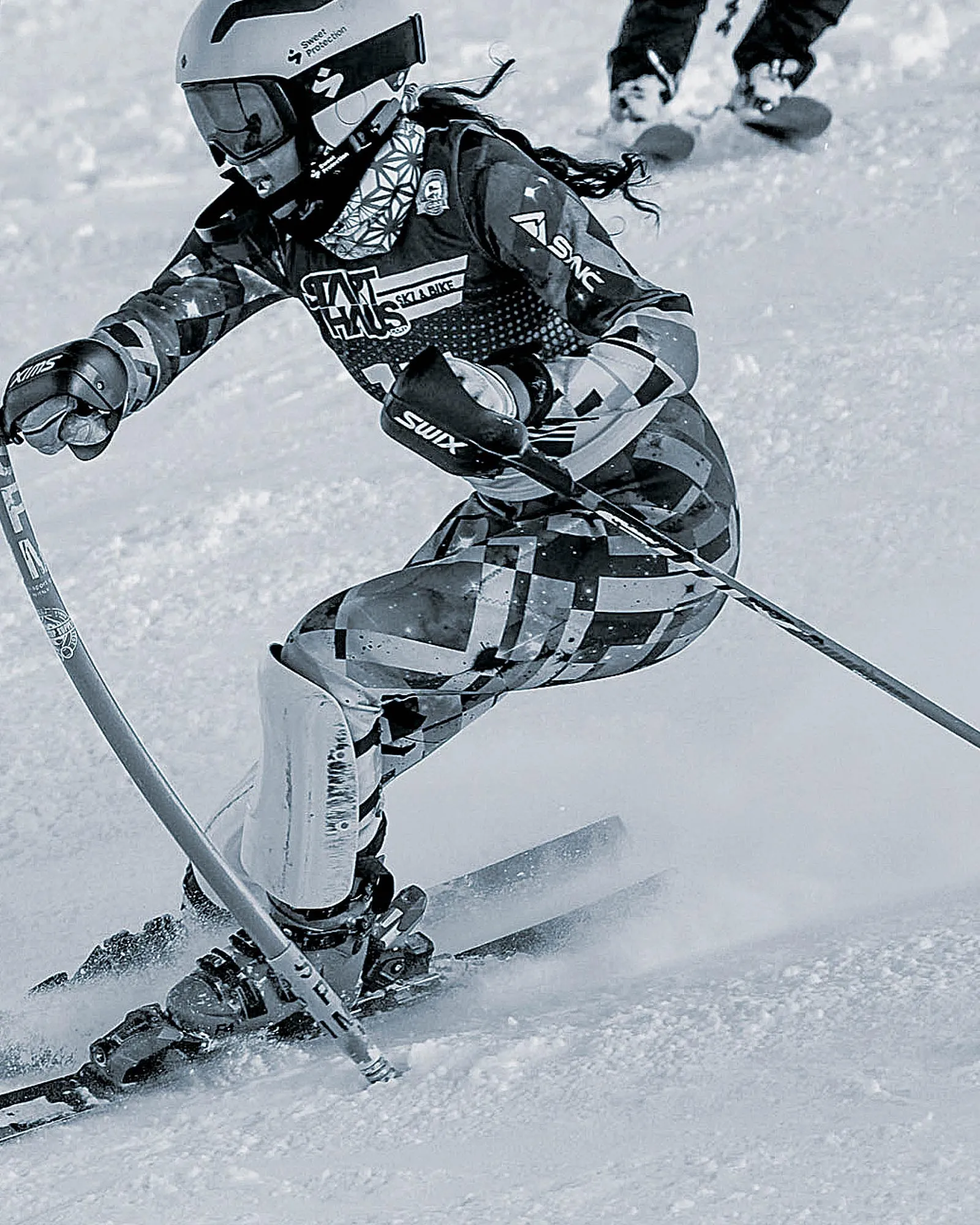

“I love how freeing it is,” Tallulah says of what she loves most about the sport. Learning to be familiar with uncertainty and discomfort has only deepened her connection to the snow, and to herself. “The feeling that you get when skiing is something you can’t replicate in anything else. You’re going super fast down the slopes. You can hear the wind, but at the same time, you can smell the snow, the mountains are beautiful, and everything’s just calm.”
Amid the sport’s discipline and rigor, Tallulah credits her mental poise to her mother. “My mom, from a young age, instilled that growth mindset in me, [that] you can only improve and push past your limits by being uncomfortable,” Tallulah shares. “Although it can be uncomfortable, you’re going to grow through that, and you trust yourself to be able to achieve the things you want to achieve. At the end of the day, your effort will not be in vain. She was definitely a big reason for my outlook on ski racing and life in general.”
Born to a Chinese-African-American mother and a Filipino-American father, Tallulah grew up in a hotpot of different cultures and disciplines. While her mother introduced her to a love for skiing, her father James nurtured her love for music, often accompanying her violin with his piano. On his side, the family’s Filipino roots trace back to Tallulah’s grandmother, who migrated to the United States in her 30s from her hometown in Eastern Samar.
Tallulah spent much of her childhood around her lola, who kept Filipino traditions alive within their family. She taught Tallulah and her brother all about Filipino culture through food, from cooking lessons for lumpia and bibingka to the generous spreads she would prepare on Christmas Day. Family would gather in her house, where Tallulah would play the violin, choosing a different piece each time to show how she had improved, then share her ski videos, which they all happily supported.
The decision to compete for the Philippines only felt natural. “My mom was the only one of the four grandparents who was born outside of the country,” explains James. “Just to have that connection to the Philippines and to be able to embody the values of the community and the country of my mom…[We thought] what an amazing opportunity that would be.”

“Unfortunately, she passed away last spring,” Tallulah shares. “Coming to the Olympics, I think of it as doing it for her. I know that somewhere she’s watching and she’s proud. I’m just grateful that I get to represent the Philippines in the Olympics because of her.”
To represent such an important part of her heritage on a historic stage made the three weeks in Italy emotional from the start. During the opening ceremony, Tallulah walked through the streets of Cortina d’Ampezzo with the Philippine flag in hand as people around her cheered, “Philippines! Philippines!” Across the villages, Filipino volunteers were present too, their support felt even in the mountains of Italy, unceasing until the very end.
The Philippines first sent a delegation to the Winter Olympics in 1972, becoming the first tropical country to do so. Since then, the Philippine Ski and Snowboard Federation, or the PSSF has continued to help open pathways for Filipino athletes in winter sports. Much of the work is led voluntarily by figures like Jezreel Apelar, who accompanied Tallulah and fellow Winter Olympian and alpine skier Francis Ceccarelli as the Philippines’ Chef de Mission or CDM.
“Tallulah’s presence there as the first Filipino Winter Olympian is absolutely historic and a milestone for us,” Apelar shares. “Since 1972, it’s 2026, we finally have a woman, a female [athlete] that’s able to carry our flag. It’s brought on so much positive intention and inspiration. She’s a super girl at 17.”
Apelar says that even during the Olympics, they received an influx of inquiries from members of the Filipino diaspora who wanted to walk in the same footsteps. “Ang ganda ng nagawa ni Tallulah for young girls and boys as well who are thinking about representing our country. It is possible!” he emphasizes. “We live in such a divided world, but sports bring people together, and it’s so important for us to also reflect on what brings us together as a country.“
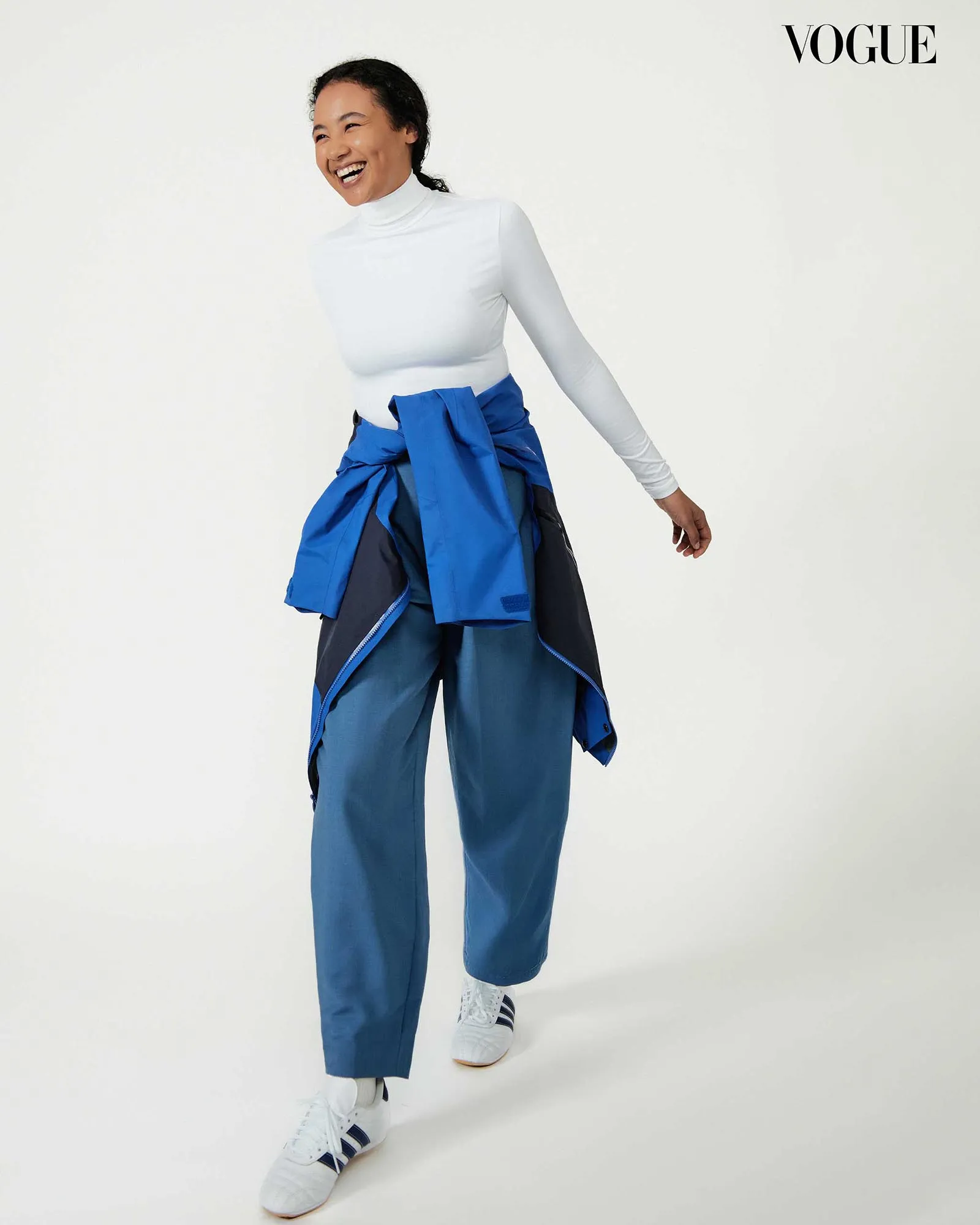
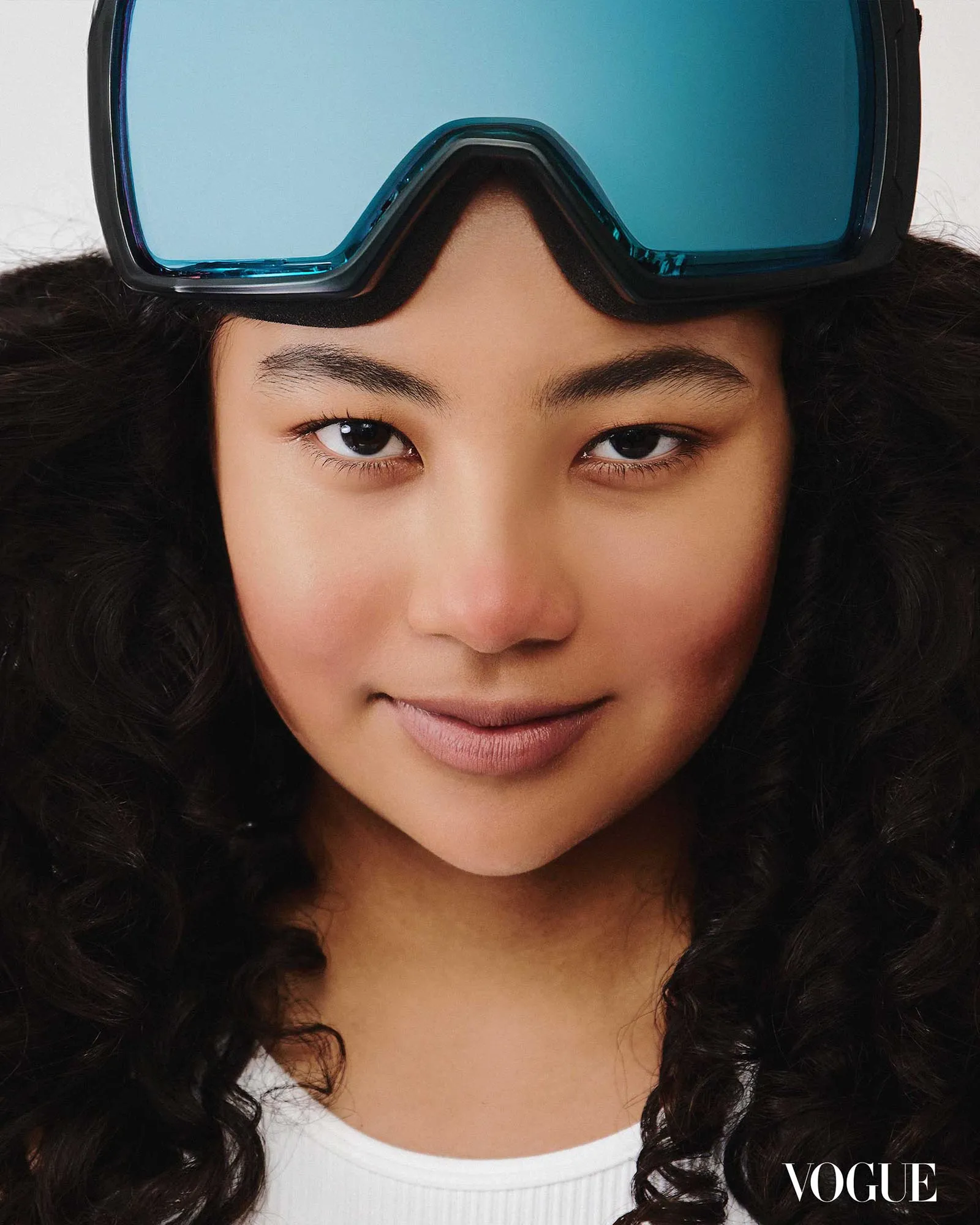
At the center of Tallulah’s Olympic run was fun. It showed in the memories she and Apelar held onto most: listening to Katseye’s “Internet Girl” and Blackpink’s “Forever Young” on the drive to Cortina, dining with fellow Olympians, and making connections with ASEAN athletes and beyond. Off the slopes, she was still a teenager taking it all in. “I already think it’s successful being here,” she shared in that initial conversation. “This is the experience of a lifetime and I know that it’ll go by so quickly. I want to savor every little moment that I have. I think if I do that, then I’ll consider this a success no matter what the results of my competition may be.”
Over a month later, stepping into her first Vogue Philippines shoot on her first trip to Manila, she feels she achieved exactly that. Tallulah finished 54th in the giant slalom and 50th in the slalom races, a feat to be proud of in a sport where skiers commonly do not finish. “After the first run of the slalom race, I had kind of a mess up in the middle, but when I got down and I saw my family and I made it down successfully, I was really happy and I just kept on thinking, I’m so glad I got to be here and compete.”
That unshakeable joy is what she considers the most Filipino thing about her. She takes pride in her warmth and desire to uplift others, and hopes young Filipino athletes see themselves in her. “I hope [they learn] that if you don’t see someone represented in your sport, you can be that person. You can be the person to push and go forward in your passions, and be that person for other people as well.”
The PSSF continues to lobby for more Filipino representation in global winter sports, with ongoing efforts to build up homegrown athletes for the snow. In the meantime, Tallulah has her eyes set on watching BTS for her 18th birthday, playing more violin, and continuing the pursuit that brought her here in the first place: chasing snow.
By BIANCA CUSTODIO Portrait by ROJAN MAGUYON. Talent: Tallulah Proulx. Beauty Editor: Joyce Oreña. Fashion Editor: David Milan. Art Director: Jann Pascua. Producer: Mavi Sulangi. Multimedia Artist: Mcaine Carlos. Videographer: Angelo Tantuico. Makeup: Pam Robes. Hair: Jayson Jaime of L’Oréal Professionnel Philippines. Nails: Extraordinail. Photography Assistant: Xavier Lancelot Mallari. Hair Assistant: Jayr Escultero of L’Oréal Professionnel Philippines

Frequently Asked Questions
Tallulah Proulx is a 17-year-old alpine skier who became the first Filipina to compete in the Winter Olympics. She represented the Philippines at the 2026 Games while also training as a violinist alongside her athletic career.
Alpine skiing is a winter sport where athletes ski downhill on marked courses as fast as possible. It requires strength, balance, and precise control to navigate sharp turns and changing terrain.
Slalom skiing is an alpine skiing discipline where athletes race down a course marked by tightly spaced gates. It requires quick turns, precision, and strong technical control at high speed.
The Winter Olympics is an international sporting event held every four years featuring snow and ice sports. Athletes from around the world compete in disciplines like skiing, skating, and snowboarding.
Tallulah Proulx represents the Philippines in alpine skiing. She is part of a growing group of Filipino athletes competing in winter sports on the global stage.