
The Vision Behind Keavan Yazdani’s Moving Pictures


Photographed by Tinay Montelibano
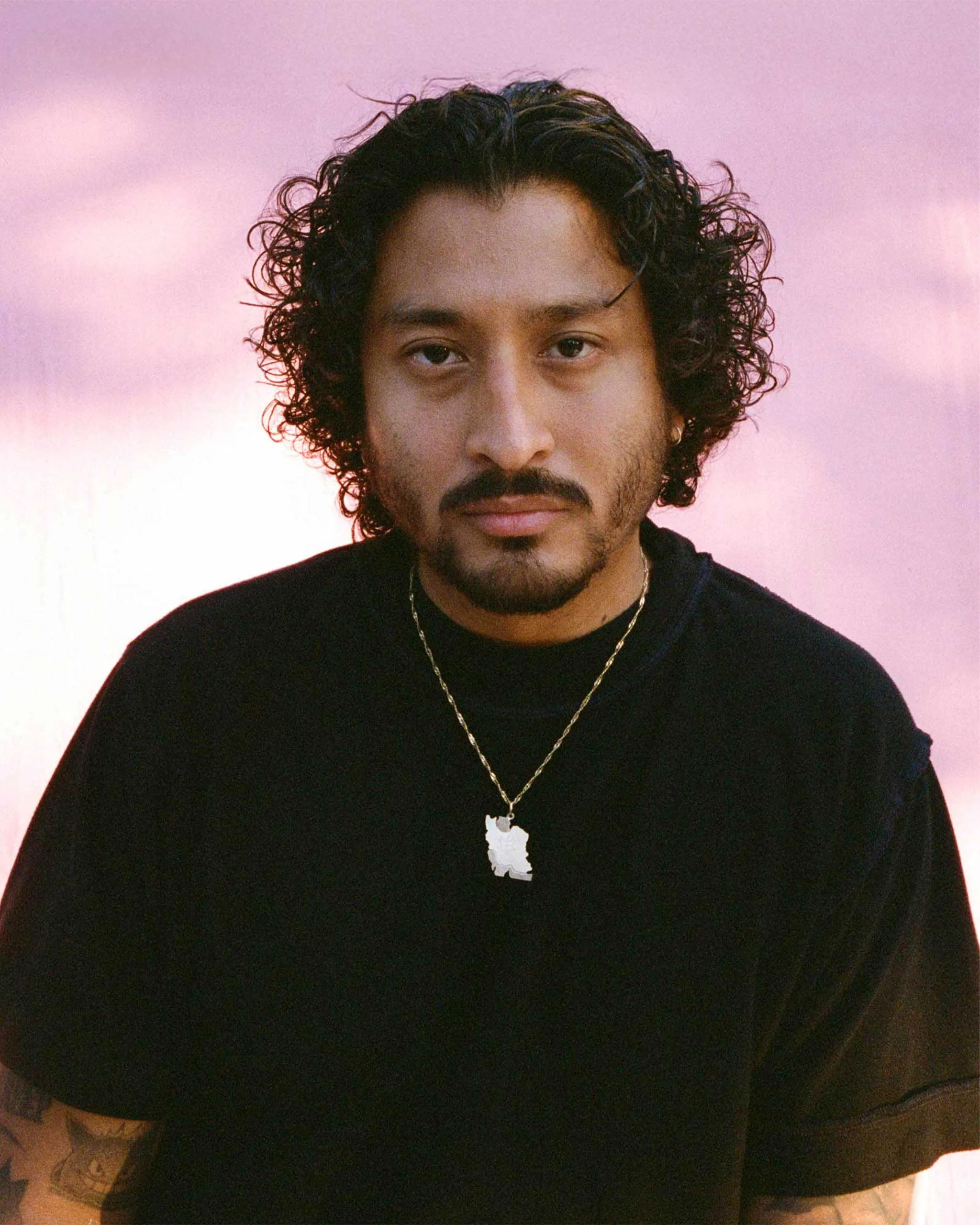
Working between Toronto and Manila, visual artist Keavan Yazdani builds images that move from screen to page to object.
Before the albums and music videos, there was weather. He learned to stay outside when it rained. Smell the concrete; hear the puddle; feel the cold enter his cuffs and rain boots. To this day, that memory sets Toronto-born artist Keavan Yazdani’s pictures in motion.
This afternoon in the suburbs, a kid pauses in front of Yazdani’s house. He is mid-shoot. An electric-blue motorbike rests beside a newly painted pink canvas while he fiddles with a Minolta film camera.
He keeps directing even as he talks: “Concept-wise, maybe [the team] can get a shot of me while I’m in this call,” he says, letting the making stay in frame. In his eyes, every moment is an opportunity for documentation, a potential for a balanced cinematic still. For him, the image emerges first. The sound follows. Subsequently, he builds the place where both can live.
If you’ve handled Daniel Caesar’s Freudian sleeve or watched his early tour screens swell and recede, you’ve been inside Yazdani’s pictures. He began as a documentarian in 2013, camera in hand, and then stepped into co-creative direction with designer Sean Brown, collaborating on album art, videos, stage design, and merchandise, alongside a tight studio circle. He learned early that a small crew gives ideas shape.
But first, let’s rewind a little. His origin story is more tactile than most. He grew up on Disney and Studio Ghibli teasers that felt “trippy and weird,” on clay dragons he baked and sold back to his mother for allowance, on LEGO builds that were always “off-book.” At home, his colorful upbringing set the room: Persian prayers and poetry on one side, Pinoy uncles jamming on their guitars on the other. “There was always value in play,” he says. “I’d close my eyes and think, if this were a film scene, how would it look?”
Toronto informs the framework he uses to view the world. He calls the city a “fruit-salad mixing pot” where Caribbean sound systems, Greek tavernas, Scarborough sari shops, and East Asian cafés taught him how many versions of home can coexist.
His sense of belonging is connected to the city’s multiculturalism: “Toronto has a little pocket of it all, so growing up [I understood] that the story of migration and the pursuit for a better life isn’t a monolith to any single culture.” Migration is plural. Everyone carries their own version. “I give Toronto all the credit for empathy,” he notes. “You see a lot of different kinds of people, and it gives you love and understanding beyond what you know.”
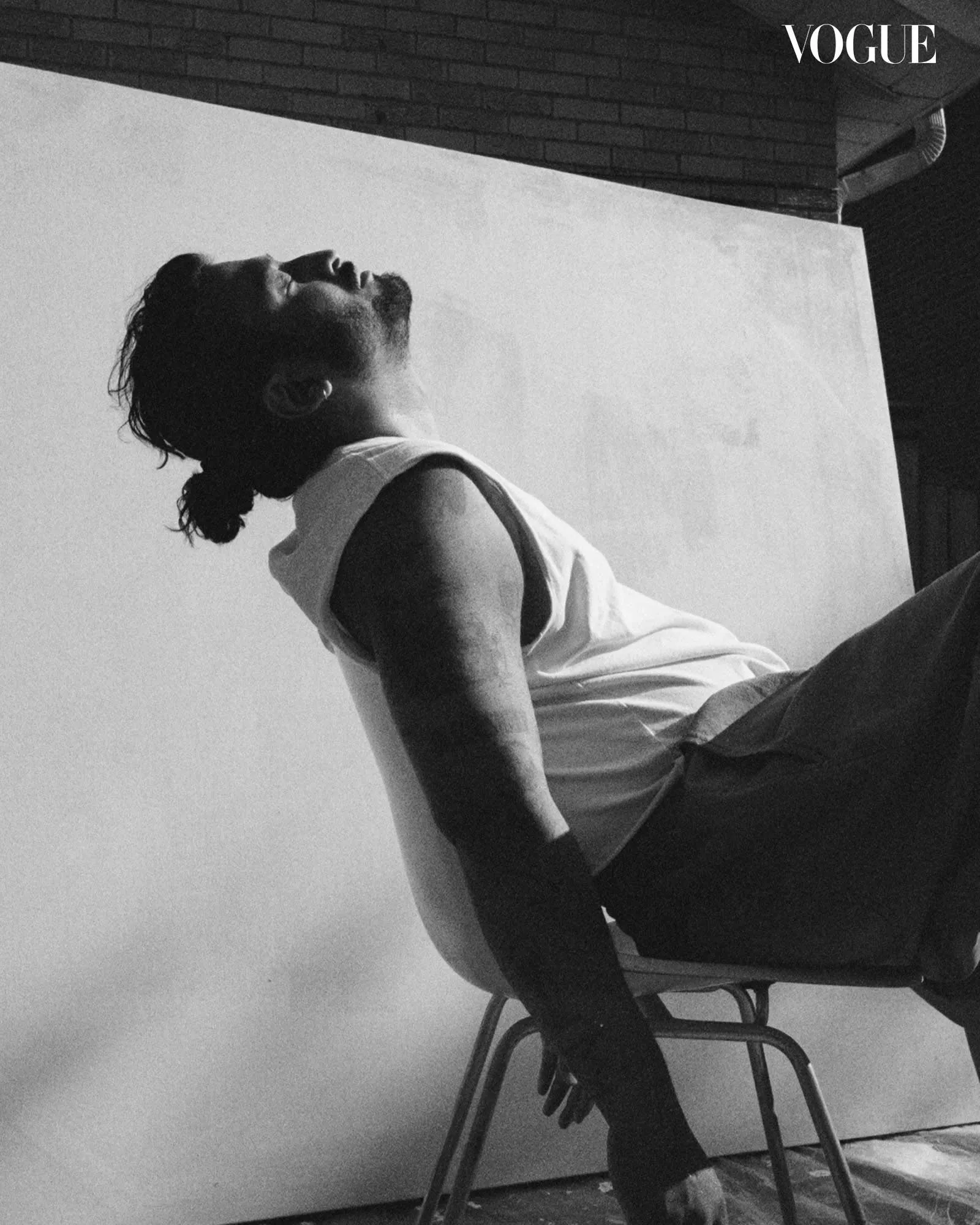
His first hustle started in high school. With a cracked copy from his cousin, he taught himself how to Photoshop, ran heat transfers onto Walmart blanks, and sold logo-flipped shirts around school. A few years later came the studio sessions with Toronto artists who would become family. He filmed everything. “I started being a bit of a historian,” he says, collecting the behind-the-scenes that would one day matter.
By 2018 and again in 2020, his work started to speak for itself. Two JUNO nominations for album artwork and packaging honored full visual worlds around Freudian and Case Study 01. The latter was anchored by a cover photographed in the Philippines. A writing credit on Justin Bieber’s “Peaches” carried him into the GRAMMY conversation. “It felt like one of those moments where your life’s work is why you’re in the room,” he recalls.
In 2022, he shifted to Manila. The intention was to observe first. “I did my best to listen and to learn,” he emphasizes. Later, he started creating. The “nucleus” assembled: Tofu, a younger collaborator and brother figure who reminded him of his early days “in terms of the grind”; Tinay, the partner with whom he trades ideas in real time; and a larger crew of producers, musicians, editors, and builders. He credits that circle with widening the frame. “Through collaboration,” he says softly, “let it become something else and [still] maintain its essence.”
Currently, his focus is split in two. The first is Diary of an Unstable Mind, a short film Yazdani describes as a visual poem. The film sits at the center, surrounded by a mixtape-format soundtrack with artists from the Filipino and Persian diasporas (and the “family tree” from Toronto and Manila), a process book printed in Manila, and a set of small figures that echo scenes on screen. They “exist as micro projects within a larger ecosystem.”
The second is Lino Leau, the product division under Joaquina World, the umbrella named in tribute to his lola (grandmother). Lino Leau is where images translate into material: clothing, accessories, furniture, collectibles. The references melt into a single collage: Filipiniana textiles and silhouettes, Persian motifs, early-2000s Toronto style, ’90s New York, Southern hip-hop. A recent shoot in Palawan and Cavite sets the first capsule in a Filipino landscape. The working title says enough: It’s Always Sunny in Palawan. The team is building production routes that settle within the Philippines and still reach a global shelf.
Technology sits in service of that flow. During the pandemic, he opened a VR gallery to exhibit and sell prints when rooms were closed. In the studio, he shifts between digital and analog. AI, for him, is “research and development,” a way to preview frames, props, and layouts before anyone rents a light. “We need human creation and human expression,” he underscores. “That will never be replaced.”
He thinks in senses, carving out “little universes.” A show should sound right, feel right, smell right. A book should hold its shape in the lap and invite the hand to trace its embossed letters. A figure should sit in the palm with a little weight. These aren’t extras; they’re how a viewer becomes a participant. He continues, “I’m a big believer that everything is a micro or macro of [everything else].”
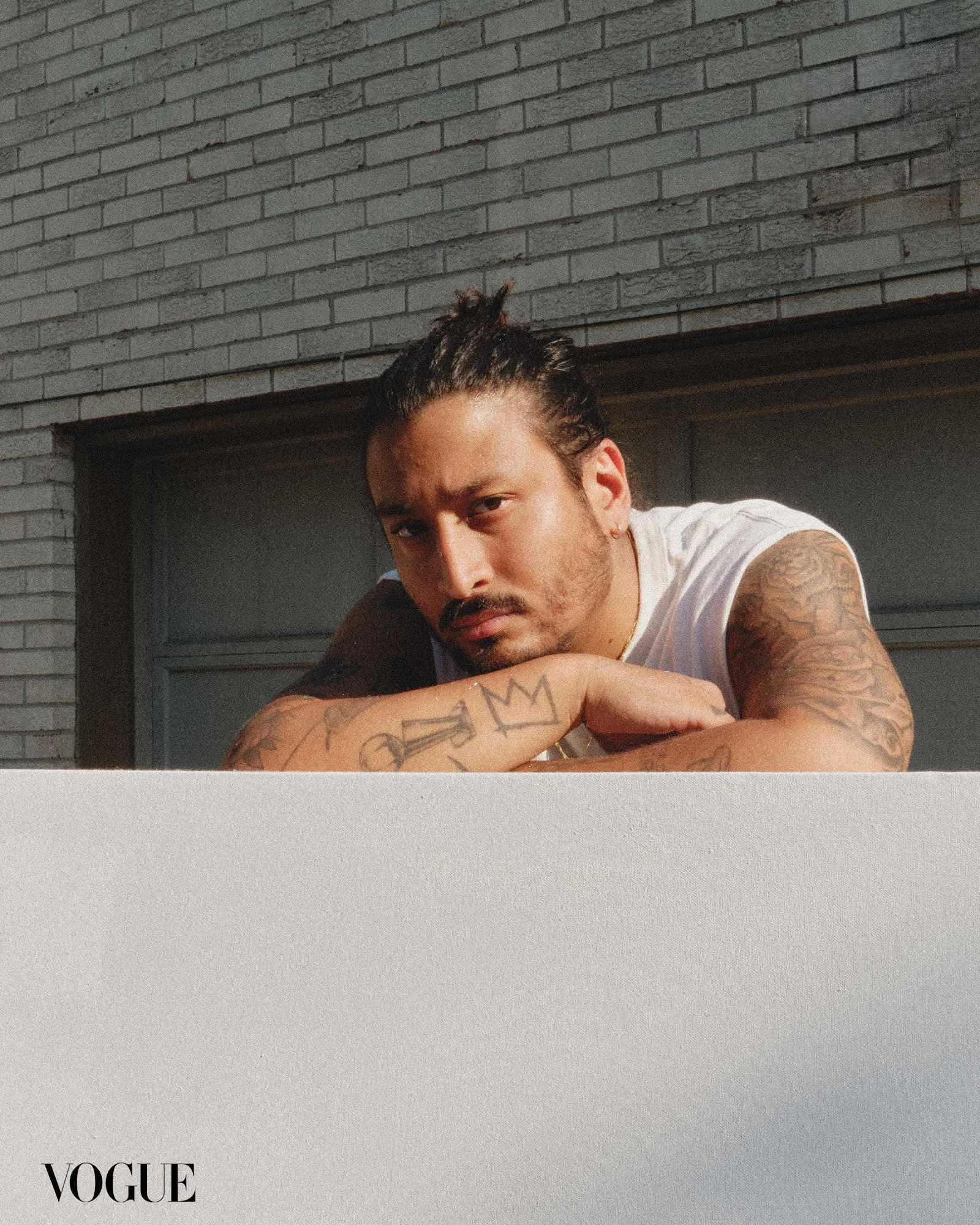
The season ahead is set: Toronto in September; Manila in October; Tokyo in November, and perhaps Taipei and Singapore. Intimate screenings and pop-ups come first, film-festival submissions in parallel. Lino Leau will arrive in teases, look books, and first runs while the studio lines up a sustainable plan for next year. Afterwards, a reset is due. In 2026, he wants time in the Japanese countryside or Barcelona, space to protect his health, and to rebuild structure. “I want to be a good leader,” he makes clear. “That means having the energy to lead.”
A coffee table book sits next to the rollout. Magandang Mundo, Vol. I gathers five to six years of film photographs from the Philippines, a capsule he hopes to tour through galleries. He explains, “The next chapter is preparing the foundation for letting the world into our world more consistently.”
A sculptural show, working title Don’t Die, Mabuhay, waits in the wings. His dream project lives closer to home: a feature on his father, Saeed Yazdani. The arc runs from his childhood in Iran, through the 1978-79 Iranian Revolution, to a truck bound for Pakistan, a long wait for Canada, his first few jobs, his first apartment, and at last, a son behind the camera. He wants to shoot it on location with historians and translators, with the music licensed the way the story deserves.
“I’m making things that help me understand myself and bring the inside out.” Process is part of the image. He invites the gaze to stand beside the lens with him.
Asked what he hopes people take from the work, he doesn’t reach for scale. “If you get up, there’s always a tomorrow,” he says. “You can love who you are. It’s always okay to come back home.” He resists the word “archive,” preferring a “reference library” you can return to when you need the sound of a year or the look of a place.
One line keeps surfacing as he talks about the process and the years ahead. “Forward motion is the only motion,” he says. “Slow motion is better than no motion.” The new film and the new objects carry the same instruction: begin with a film scene in your head, follow with a bar of music, build the frame it deserves, then make something from thin air that you can grasp.
Frequently Asked Questions
Keavan Yazdani is a Toronto-born, Manila-based visual artist known for creative direction on Daniel Caesar’s album art, music videos, and stage design. He has earned two JUNO nominations and a writing credit on Justin Bieber’s “Peaches.”
Yazdani grew up in a multicultural Toronto household blending Persian prayers and poetry with Filipino family traditions. This dual heritage informs projects like Lino Leau, which merges Filipiniana textiles with Persian motifs and Toronto street style.
Lino Leau is the product division under Yazdani’s studio Joaquina World, named after his grandmother. It translates his visual work into physical goods including clothing, accessories, furniture, and collectibles rooted in Filipino landscapes.
Diary of an Unstable Mind is a short film Yazdani describes as a visual poem, accompanied by a mixtape-format soundtrack featuring Filipino and Persian diaspora artists, a process book printed in Manila, and companion sculptural figures.
Yazdani is preparing Magandang Mundo, Vol. I, a coffee table book of Philippine film photography, a sculptural show titled Don’t Die, Mabuhay, and a planned feature documentary on his father’s journey during the Iranian Revolution.