Art in Motion: Capoeira and color collide in the work of Henri Lamy


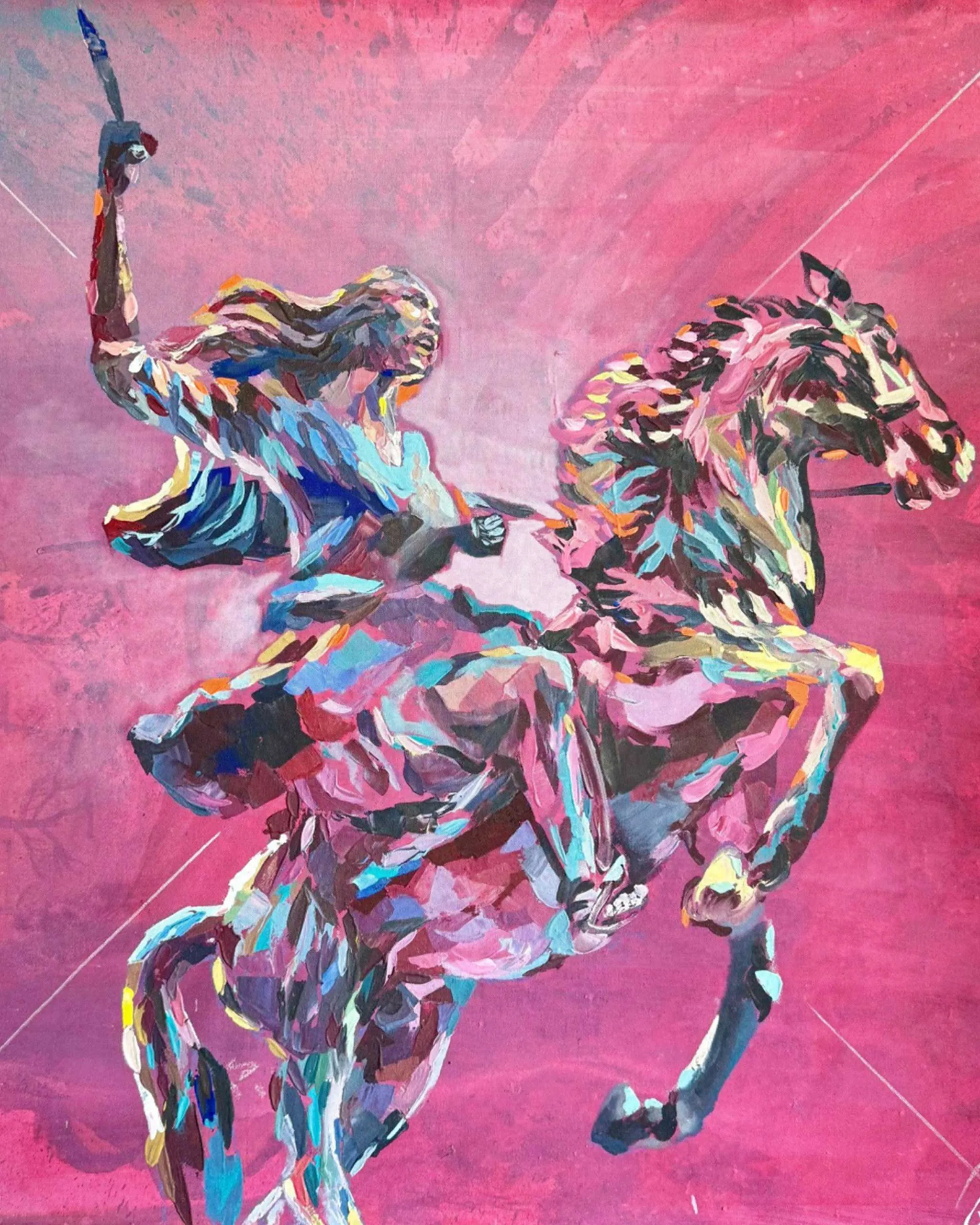
Gabriela Silang from the Sovereign Faces exhibit. Courtesy of Henri Lamy
French artist Henri Lamy returns to the Philippines with his blend of capoeira, portraiture, and performance.
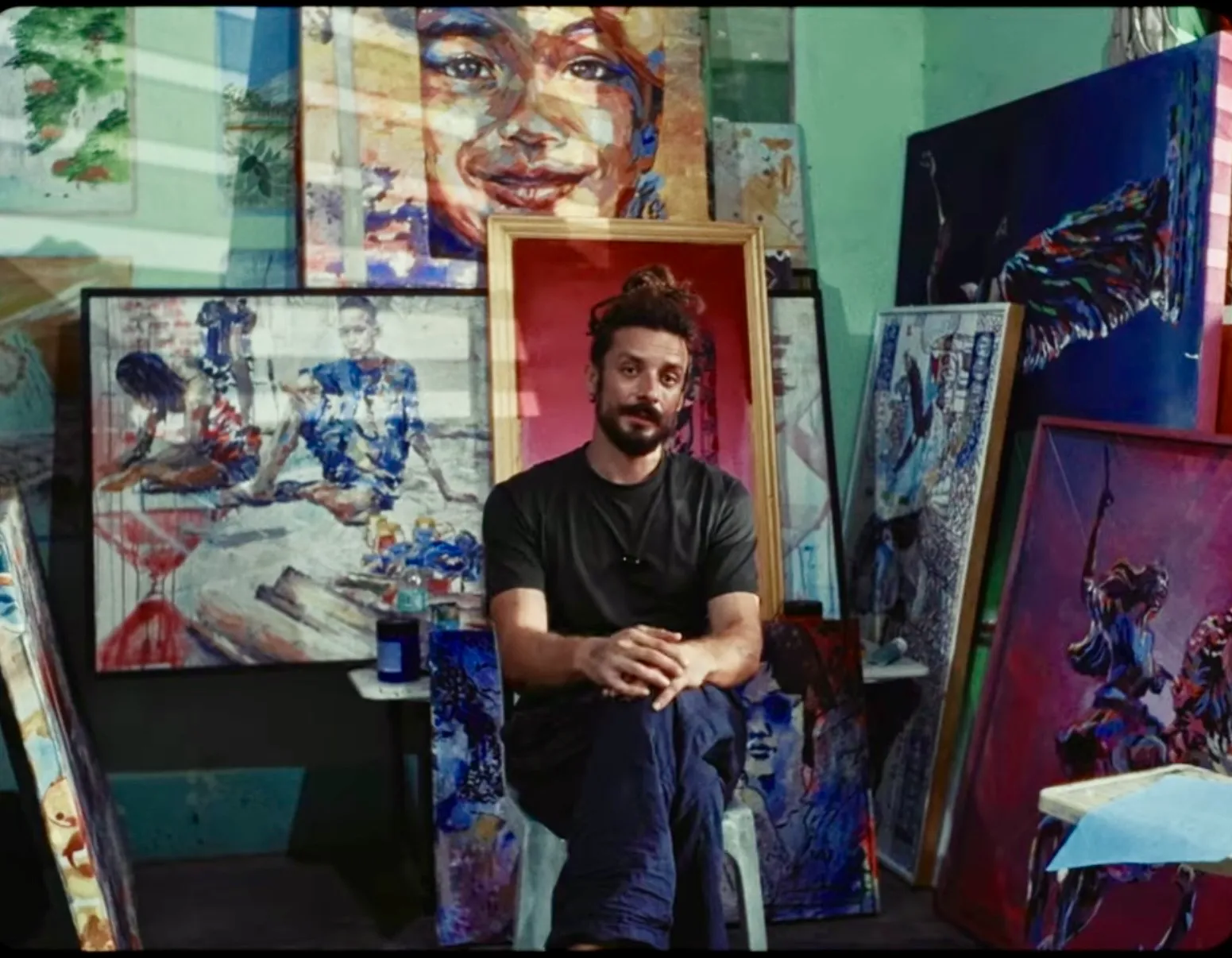
Henri Lamy is inside a cube made of plastic sheeting, one side a blank canvas waiting for the attack. The live drumming signals the start of the ritual, and he slowly begins to move, swinging his body in wide arcs, standing on his hands, landing softly from a cartwheel. As he moves he flings paint from tubes he holds in his hands, sometimes he kicks the canvas, spreading the paint with his bare feet. He is painting through capoeira, two practices he merged several years ago into a performance art he has since brought around the world: France, the Maldives, Japan, and Australia, and to the Philippines where he feels it resonates most powerfully. On March 21, he is taking his cube to the ILOMOCA museum in Iloilo for the first time.
The French painter, who is husband to French Filipina artist Maïa d’Aboville and father of two boys now growing up between the mountains and the sea in Puerto Galera, is back in the Philippines after five years away. This month he brings to the Iloilo Museum of Contemporary Art his solo exhibition Sovereign Faces, a series of paintings honoring women across generations and borders. Portraiture has long been a focus of Lamy’s, gravitating toward faces and what they carry. “I’m interested in what the energy of a person projects, rather than their title or status,” he says. Sovereign Faces centers on the question of whose face we choose to elevate. Among the works heading to Iloilo is a piece that began in Bangkok 2014, when Lamy reproduced a 1,000-baht bill with the queen’s face in place of the king’s. The gallery there censored the work; it was never shown. He adapted the concept for the Philippines, replacing the traditional male figurehead with a woman.
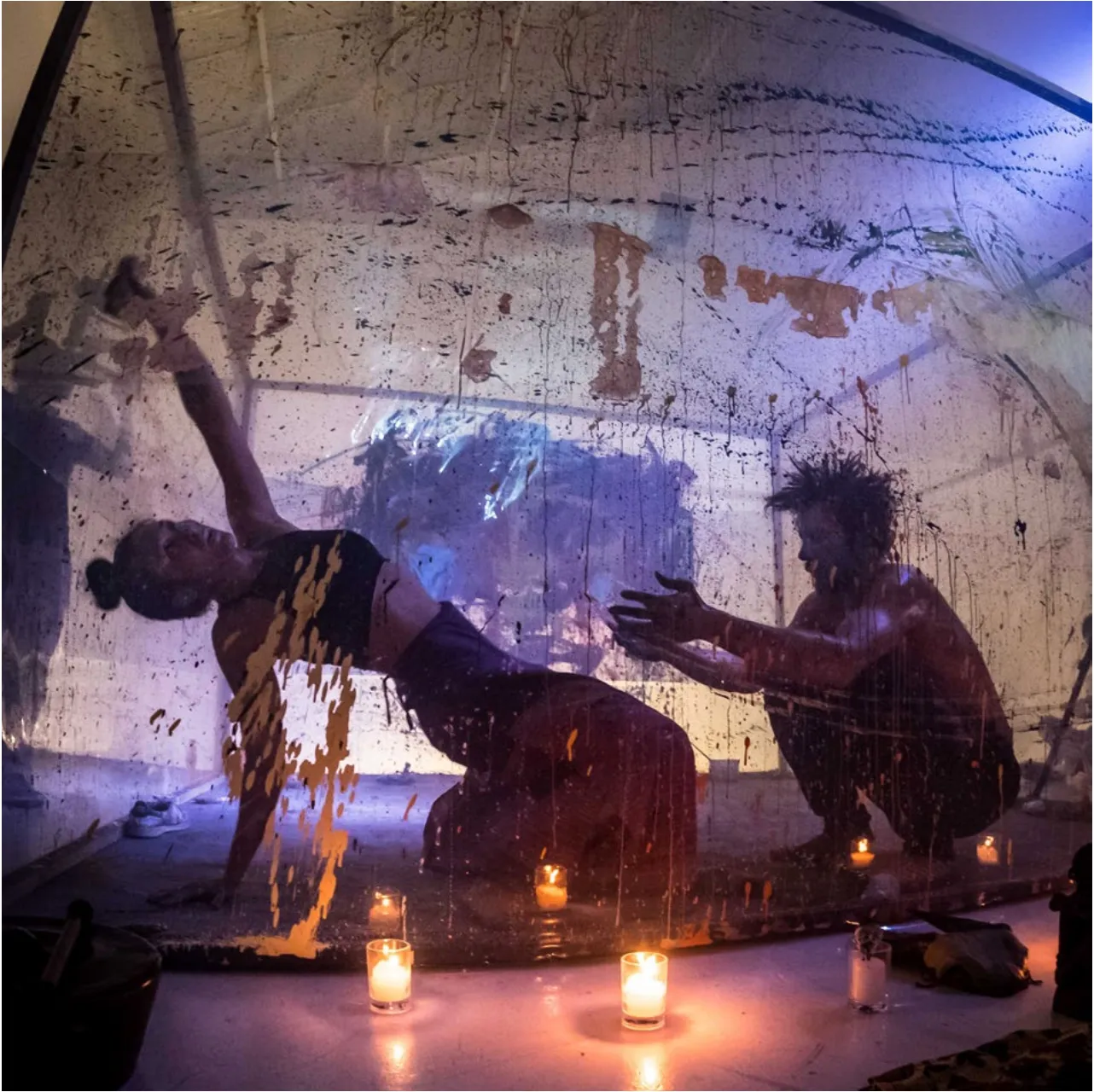
For the Iloilo capoeira performance, Lamy will be joined by Maïa in the cube. His wife has not performed with him in years, and her return is something he looks forward to, especially since capoeira is a game meant to be played by two people. “We’re moving and painting, kicking, exchanging at the same time. When we do it together, it’s almost like a love parade or something,” he describes. “We’re also questioning what is it to master a piece by traditional techniques, and what is it to deconstruct it by the course of our body moving.”
His practice began in Paris, at 59 Rivoli, the art squat on a busy shopping street that the City of Paris eventually acquired and turned legal. Henri was selected as a resident there in his mid-20s, and when he was not in the studio he would be at the park, learning the Afro-Brazilian martial art. It was a mestre he met during that period who suggested combining his two occupations, as they were both ways of expressing himself.
The pandemic interrupted what had been a steady rhythm between France and the Philippines. Henri and Maia had been spending months at a time in each place, running Taverne Gutenberg, an art residency program in Lyon that collaborates with schools and community organizations, and initiating similar projects around the Philippines, like Ugnayan sa Poblacion, which took over a burned-down house called the Ruins in Poblacion, Makati and held workshops with foundations like Project Pearls, Stairway, and Museo Pambata.
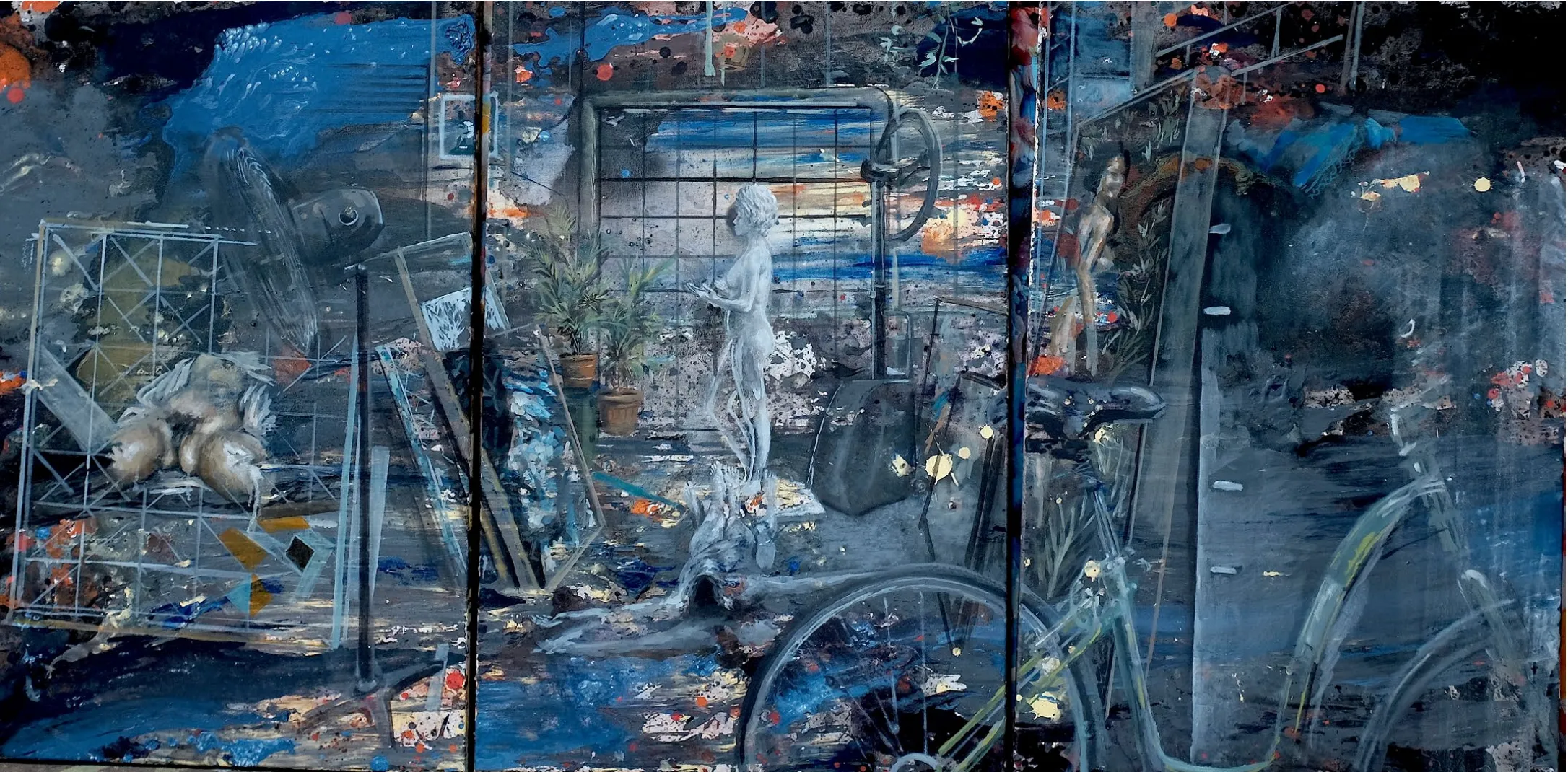
Last August, the family came back on a more permanent basis. Maïa had stepped away from directing Taverne Gutenberg to focus on the D’Aboville Foundation’s work with the Mangyan community in Mindoro and its efforts to protect the tamaraw from extinction. Henri, meanwhile, has been given an entire unused classroom at the Montessori school his son attends in Puerto Galera, which he has turned into his studio. “It’s very often been like that, to be honest. In Marseille, I was also occupying an unused factory building.”
As a way of paying it forward, he gives workshops whenever the chance appears, playing capoeira or painting with children for hours. “The studio can feel a little lonely at times. It’s important to go around and exchange with people who want to learn and share that practice.”
The connection between capoeira and the Philippines is something Lamy returns to often. It began on a beach in Daet, Camarines Norte, where he watched children tumble on the sand and do backflips off fishing boats. He joined the kids in their acrobatics, communicating through movement because as he didn’t speak the language yet. “Filipino people have an open mind to movement and music and dance,” he says, sharing how bringing in drummers to his Iloilo performance gives homage to the Mangyan and to the African slaves that brought capoeira to Brazil. “The fact that a French guy is interpreting it is a sign of interconnectedness. I’m aware that those practices used to exist in France, but it’s all disappeared.”
At the center of Lamy’s practice is the conviction that art is a conversation, an exchange of culture, movement, and community. From the confines of a cube to the shores under wide open skies, his work is the living dialogue that emerges when language dissolves and the body speaks.
Henri Lamy’s Sovereign Faces runs from March 20 to June 1, 2026 at the Iloilo Museum of Contemporary Art.
Frequently Asked Questions
Sovereign Faces honors women across generations and borders through vivid portraiture. The collection focuses primarily on the energy people project rather than their titles or societal status.
The exhibition runs from March 20 to June 1, 2026, at the Iloilo Museum of Contemporary Art. This showcases his first major performance in the region.
Henri Lamy blends martial arts and fluid movement by flinging paint from tubes while performing capoeira acrobatics. He frequently applies and spreads the medium using his bare feet.
French Filipina artist Maïa d’Aboville, Lamy’s wife, joins him during live performances. Together, they use synchronized bodily movements to deconstruct traditional fine art painting methodologies completely.
The Philippines serves as a primary creative home where community openness to dance inspires Lamy. He routinely hosts local workshops to share his multidisciplinary performance art with children.