A World in Flux: Inside the Diriyah Contemporary Art Biennale 2026


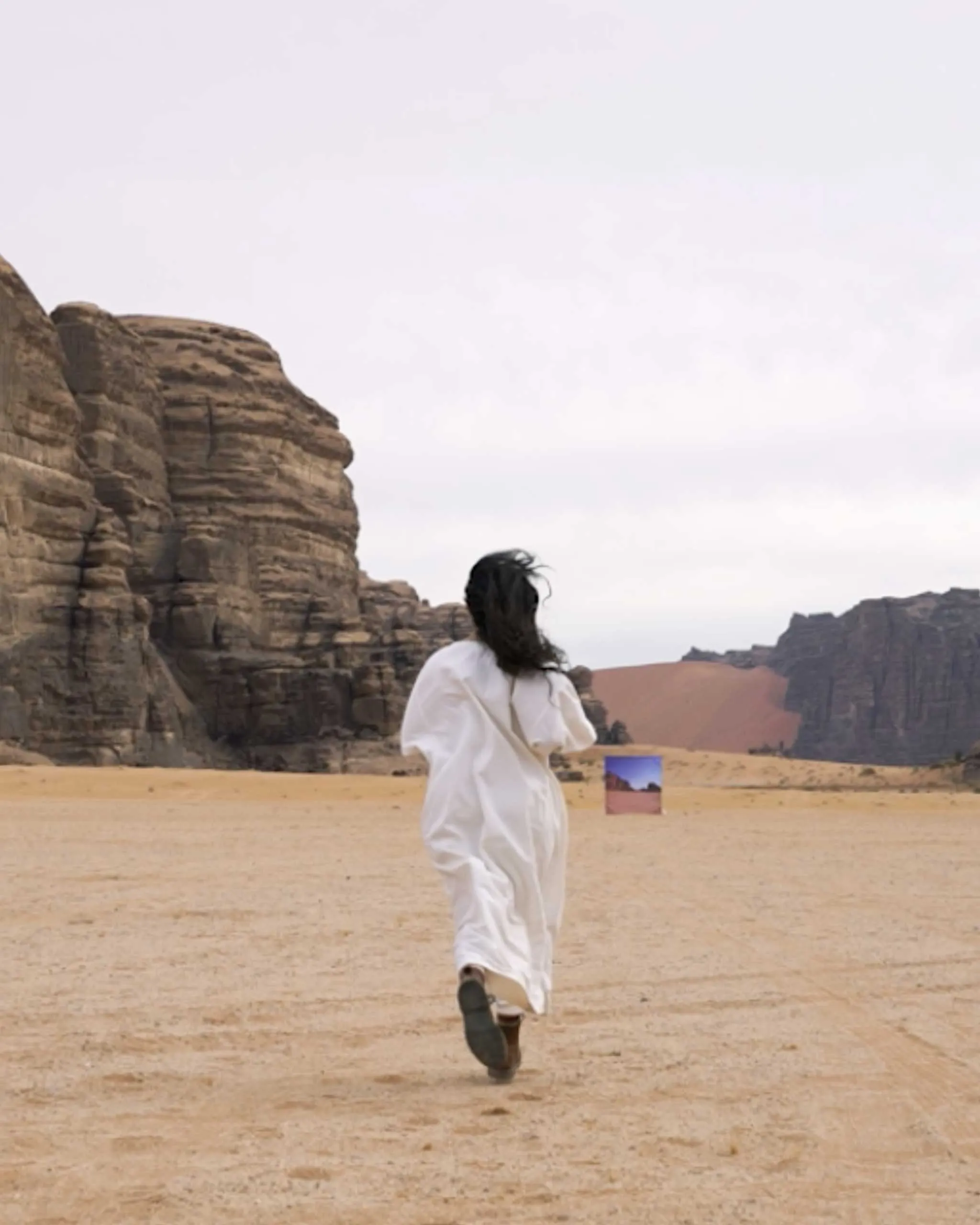
The Run (2025), Ahaad Alamoudi. Courtesy of Diriyah Biennale Foundation
At this year’s Diriyah Contemporary Art Biennale in Riyadh, the world is understood as a multitude of processions.
Land Cruisers, camels, and Saudi men dressed in traditional robes and checkered red shemagh trekked down the Wadi Hanifah, a dry river valley leading to the JAX District of Diriyah. Musicians beat drums and chanted to an ancient rhythm known as rajaz, a poetic meter that mimics the movement of camels when the nomadic Bedouins traversed the desert. As the welcoming caravan made their way to the center of the former industrial district, the crowd joined the line. The performance, called “Folding The Tents,” marked the opening of the 2026 Diriyah Contemporary Art Biennale. At the plaza, the procession turned into a concert with the multi-hyphenate creative Mohammad AlHamdan jumping on the decks and Palestinian rapper Shabjdeed taking the mic.
It was my first time hearing Arabic hip hop, and I certainly didn’t expect to get swept up in such a diverse mini-mosh pit, bobbing and dancing to the foreign lyrics yet universally familiar heavy bass of trap. But this is Saudi Arabia today, where contemporary art, music, and the rapidly changing landscape live alongside tradition and heritage. My Filipino Saudi cousin, who tried translating the rapper’s words for me, pointed out that less than 10 years ago, this scene would have been unimaginable: men and women congregating closely together, at a live hip hop show no less.
The theme of the third edition of the Biennale spirals around these movements, shifts, and tremors, and the quiet momentum that builds in between. In “In Interludes and Transitions,” the world is considered as a multitude of processions. “They can be joyful, they can be celebratory, but they can also be commemorative and mournful,” says Nora Razian, co-artistic director. “With this premise, the Biennale wanted to contain a world in flux, a world of movement, and a world in transition.”
From the seven million tons of sand that travel from Sub Saharan Africa to the Amazon every year, forming a river of sand visible only via satellite, to the human microbiome consisting of two kilograms of bacteria living inside our body, to the 500 million birds that fly above the states and nations every year, forming geographies of their own, to the Suez Canal blockade in 2021 that stalled 16 million tons of cargo (or more recently, the Strait of Hormuz closure that led to a rise in global oil prices), the world can be seen to be in perpetual motion. These are the central images that the artistic directors use to evoke the idea of inscribing pathways, and the histories and memories that persist as something gets carried from place to place.
“We also were inspired by many philosophers like Édouard Glissant, who talked about ‘echo-monde’ as understanding the world through such echoes, sounds and reverbs,” says co-artistic director Sabih Ahmed. “He says that we have to learn to tremble with the world. We’re not trembling in the world. The world is not trembling around us. We’re trembling with it. Imagine yourselves as tuning forks vibrating with the syncopations of our time.”
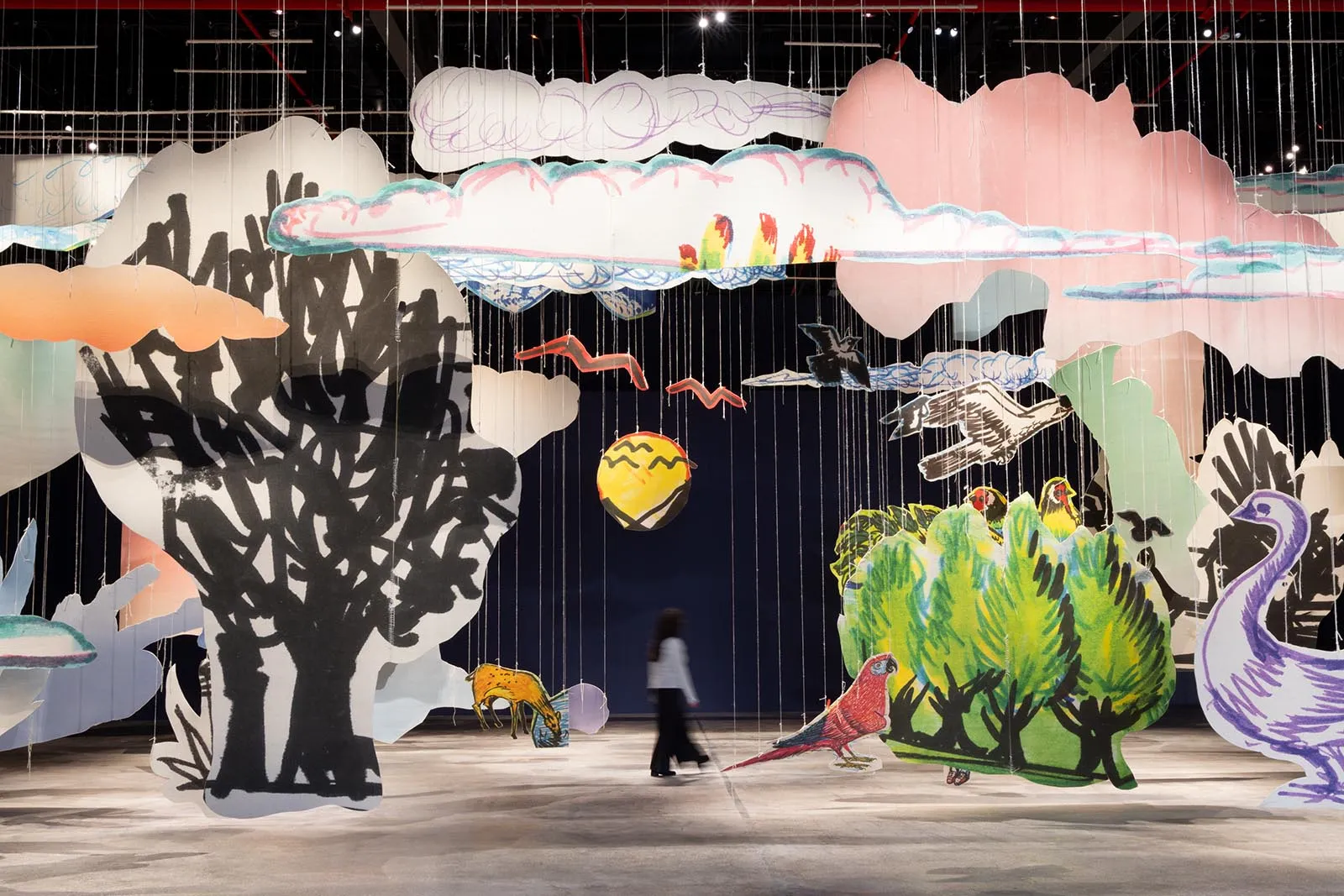
The first exhibition hall, titled “Disjointed Choreographies,” opens with a large installation of felt printed drawings suspended like curtains in a theater. The whimsical drawings are large-scale replicas of the trees, birds, and clouds that artist Petrit Halilaj sketched during an art therapy program he was part of as a 13-year-old refugee of the Kosovo war. Layered in the colorful scenes are scribblings denoting darker memories. Walking through the pictures, one enters the artist’s reenactment and reclamation of the past, where innocence and imagination become a shelter and path to healing.
In “Hall of Chants,” the second hall, language emerges as a link to the past and a portal to other places. Here we are presented with two Filipino artists, the late Pacita Abad and her nephew Pio Abad, who lives in London. Pacita was a world traveler who learned techniques from artisans and craftspeople she encountered, incorporating them into her large-scale, exuberant trapuntos, or quilted paintings. On view in Diriyah are her pieces from her 1983 to 1992 series Asian Abstractions, which were created after she trained in traditional Korean ink painting. From studies of rice stalks in black ink, the paintings evolved into graphic and layered compositions punctuated by the delicate application of craft, tiny buttons and mirrors stitched onto the canvas.
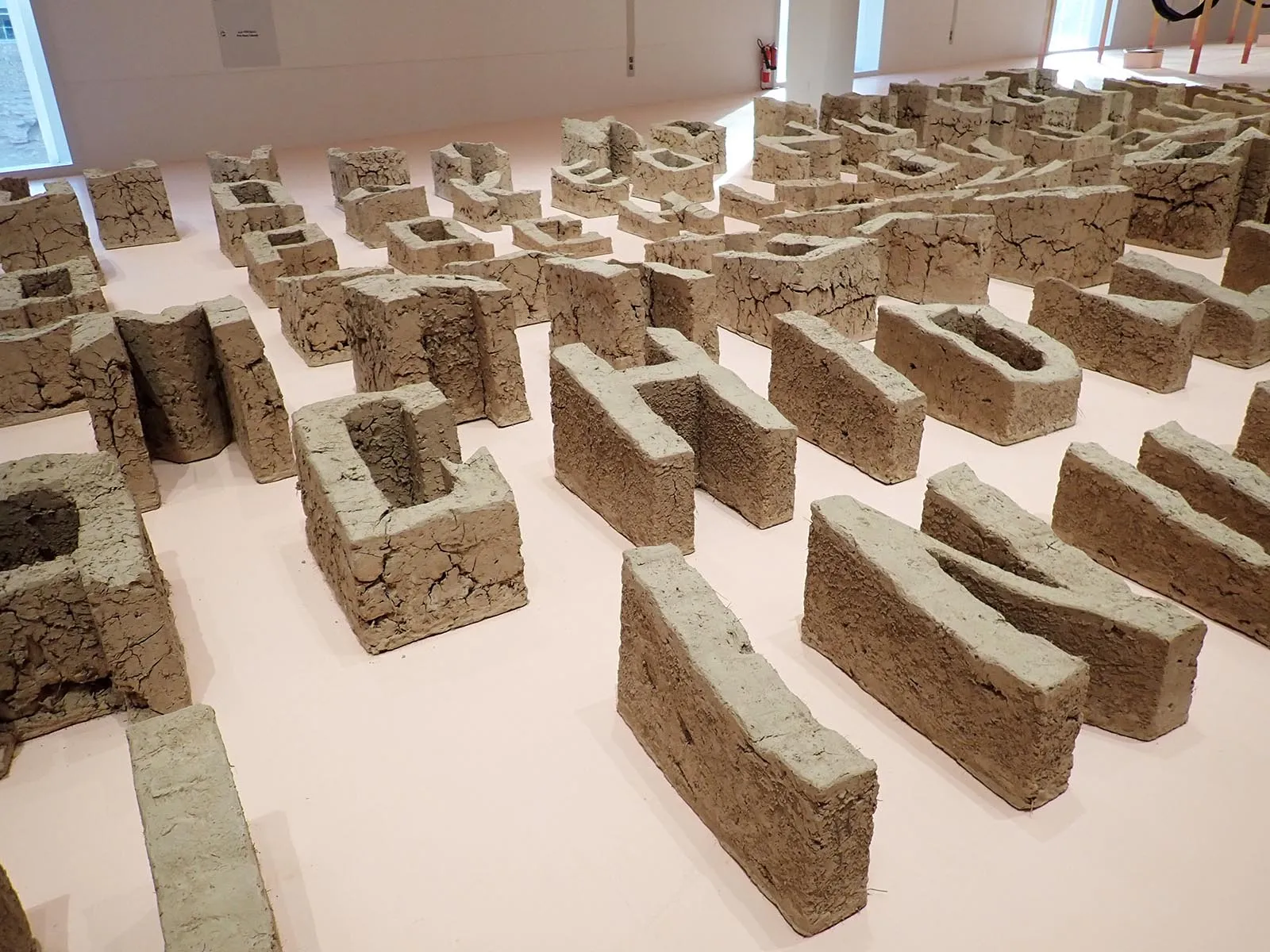
Adjacent to Pacita’s work, which hangs lightly in midair in an explosion of color, is Pio Abad’s earthen installation “Vanwa,” 99 mud-brick sculptures that spell out a fragment from an Ivatan folk poem known as laji:
Ivuvun mo yaken du asked nu kuku mo ta
pachisuvusuvuay ko du kanen mo a mahutu as
pachidiludilupay ko du inumen mo a danum.
Which is translated as: “Bury me under your fingernails, that I may be eaten along with every food you eat, that I may be drunk along with every cup of water you drink.”
Laji are traditionally recited or sung during rites of passage in Batanes, an island to the northernmost part of the Philippines and the birthplace of his father and aunt Pacita. Abad remembers hearing these songs at weddings, town fiestas and wakes, performed by the elders of the community. Echoes of Batanes ripple across the seas, burrow into the sand, and reconstitute themselves as letters built with rammed earth reminiscent of the Najdi style of earthen architecture, as seen in the restored palaces and excavated ruins on the edge of the Wadi Hanifah.
“I wanted the work to be initially approached as a landscape that then reveals itself as a poem,” Abad says. “The relationship between land, belonging and language contained within the poem is then given monumental form. I am drawn to the idea of the archaeological site not only as a site of loss, but also as a site of possibility and discovery.” Giving the Ivatan words sculptural form is an invitation to the audience to navigate the work in their own way.
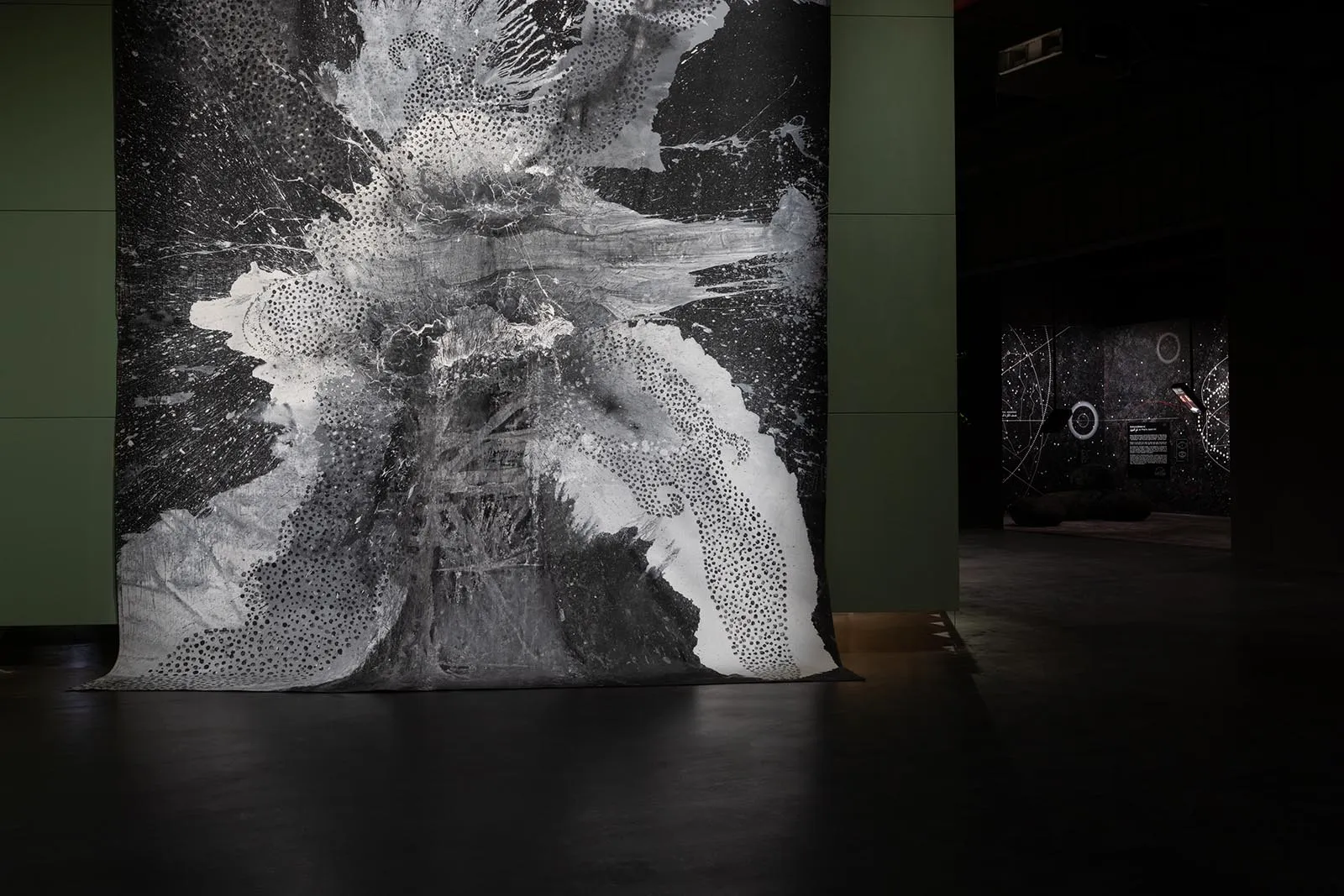
Central to the Biennale’s mission is a shift in focus, away from merely representing Saudi Arabia toward exploring what the world looks like from this specific vantage point. Since the 1990s, a new generation of Arab artists has emerged, rooted in local context and identity. From the Sharjah Biennial which first took place in 1993, to the launch of Art Dubai in 2007, to mega-projects across the region like the Louvre and Guggenheim in Abu Dhabi, the Gulf art scene has entered the global conversation in a significant way.
Set within the JAX district, a hub of contemporary art museums, festivals, even fashion and beauty conferences, the Diriyah Biennale positions Saudi Arabia as an important cultural center, both regionally and internationally. Its artists have used the format to reflect on the sweeping transformations and transitions taking place while opening a channel of dialogue with the wider world.
Saudi artist Ahaad Alamoudi’s 22-minute video The Run is one such piece that questions the Kingdom’s massive ambitions. Its backdrop is an expanse of land in the northern coast whose landscape has been irreversibly reshaped by the hyperfuturistic giga-project Neom. A lone figure runs across the desert toward a mirror-like image reflecting the surroundings, until she bursts through what appears to be a printed tarp. She keeps running; futility and persistence is on loop. The planned centerpiece of Neom is a 170-kilometer long mirrored skyscraper called The Line that appears to defy logic and engineering. Recently, it was announced that Neom and much of The Line has been significantly scaled back due to feasibility and skyrocketing costs; there is simply not enough steel and glass in the world to build an invisible city.
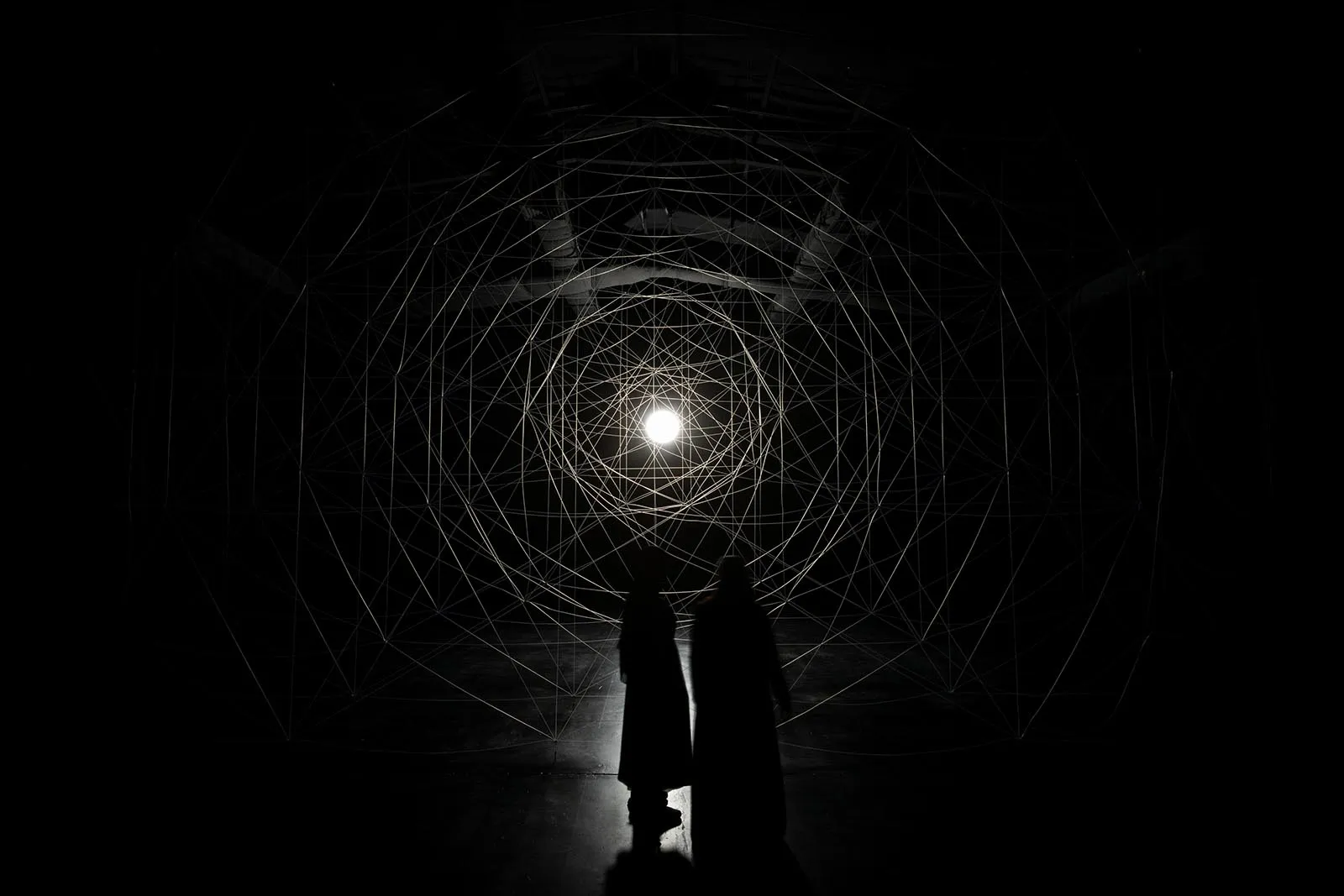
Moving through the exhibition spaces, I wandered into a room plunged in total darkness. The artwork was perception itself. As my eyes adjusted, the spiderweb-like filaments came into focus; an LED bulb shone like the moon. I was simultaneously transfixed and transported: I was not in this cold repurposed warehouse, but somewhere back in my home country, where I imagine I have stared up at the night sky, possibly on psychedelics, the pinpoint of stars forming some kind of sacred geometry. The work of Ivana Franke, a Croatian artist, plays with perceptual thresholds based on neuroscience and can feel destabilizing. It was, in its way, another kind of procession, one that moves through the mind and body of the viewer.
Back in Manila, I could still feel the reverberations from that opening caravan. The drums echo across the valley, carried by the cool desert wind. This Diriyah Biennale is an attempt to excavate the geological, political, and personal histories that sediment and shape a people and place in transition. The arabic meaning of the biennale’s title, Fil Hil Wal Terhal, conveys a deeper sense of connection than its English translation. It’s a colloquial saying that indicates solidarity through times of change and transition. “The connections I’ve made with my fellow artists is a constant source of strength,” Abad reflects, “and this biennial celebrates the shared struggle to insist on art making as hopeful act, amidst some very dark and unstable times.”
The Diriyah Contemporary Art Biennale 2026 runs until May 2, 2026, in Riyadh, Saudi Arabia.
Frequently Asked Questions
The Diriyah Contemporary Art Biennale is a contemporary art exhibition held in Riyadh, Saudi Arabia. Its third edition, themed “In Interludes and Transitions,” runs until May 2, 2026, exploring the world as a series of processions, movements, and transitions.
The Biennale features the late Filipino artist Pacita Abad, known for her large-scale trapunto quilted paintings, and her nephew Pio Abad, whose installation “Vanwa” uses 99 mud-brick sculptures to spell out a fragment of an Ivatan folk poem from Batanes.
“Vanwa” is a mud-brick sculptural installation by Pio Abad that spells out a fragment of an Ivatan laji, a traditional folk poem from Batanes, Philippines. The work draws on Najdi earthen architecture found in Diriyah’s restored palaces and ruins.
The 2026 Diriyah Biennale is co-directed by Nora Razian and Sabih Ahmed, who developed the theme “In Interludes and Transitions” around the idea of the world as a series of joyful, celebratory, commemorative, and mournful processions.
“The Run” is a 22-minute video by Saudi artist Ahaad Alamoudi, set against the landscape of Neom, Saudi Arabia’s large-scale development project. It follows a lone figure running across the desert, reflecting on the ambition and futility of the giga-project’s massive scale.