
Sa Tahanan Co. Finds Their Way Home at Art Fair Philippines 2026


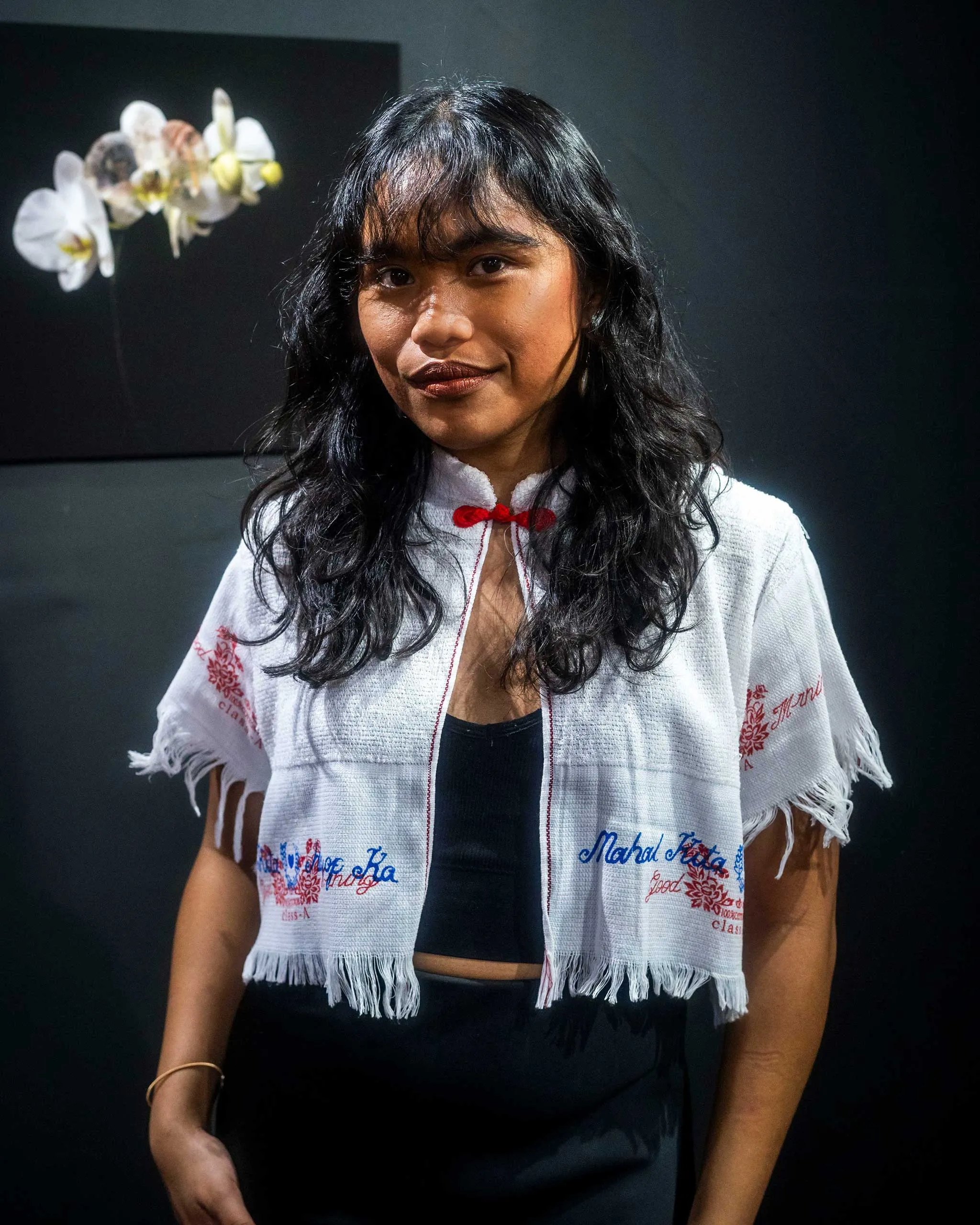
Photographed by Angelo Tantuico
At this year’s Art Fair Philippines, Anna Bernice Delos Reyes of Sa Tahanan Co. talks about diaspora, Filipino memory, and distance with Vogue Philippines.
In the middle of the Art Fair PH/Projects, there is a little corner of home for Filipino artists practicing across the migrant diaspora at Sa Tahanan Co.’s “Narito, Naroon” exhibition. Translated into English, “Here, There” is an exhibition that brings back the works of five artists from the diaspora. And in this exhibition, they explore their lamentations and ruminations about what it means to be a Filipino body in that context.
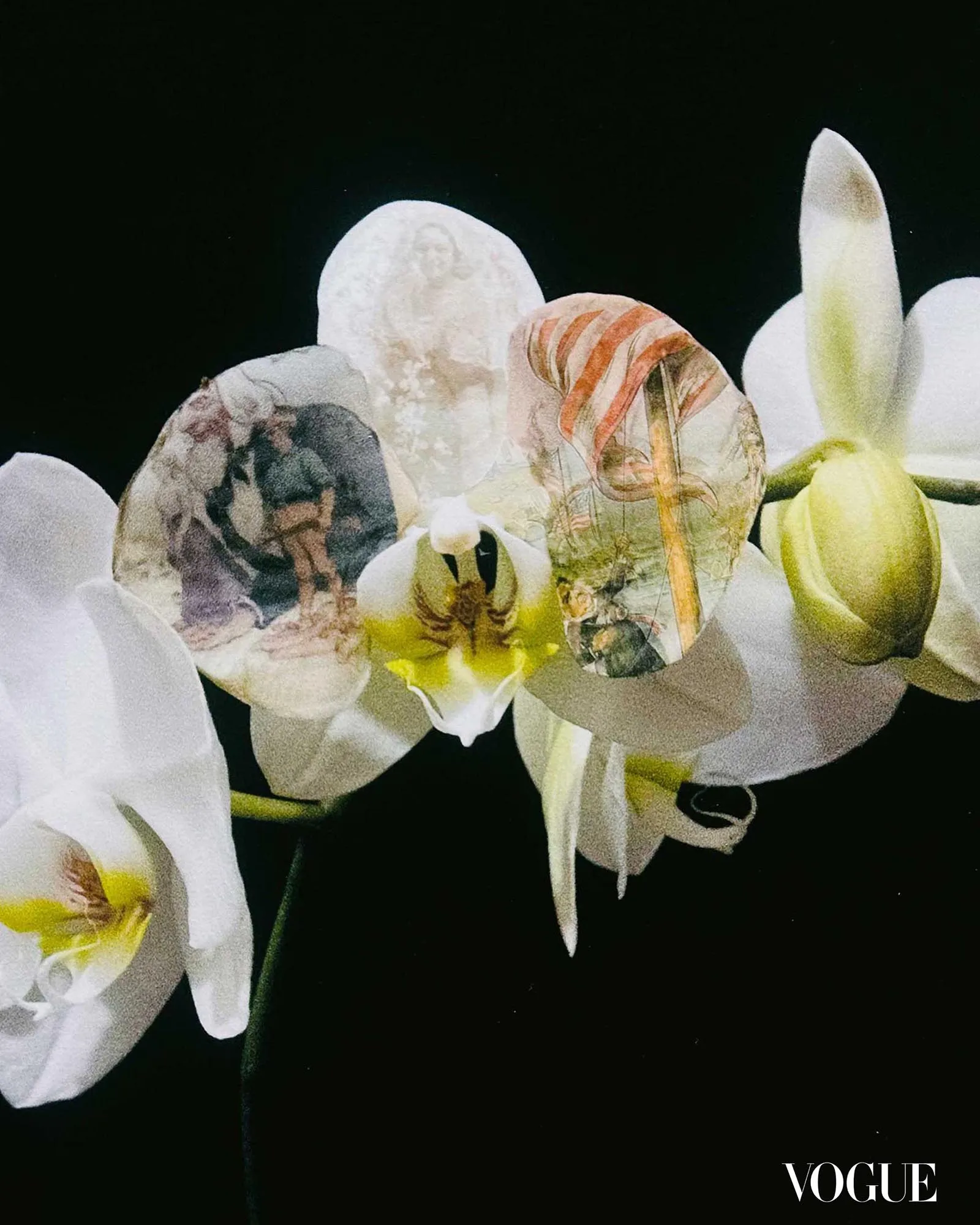
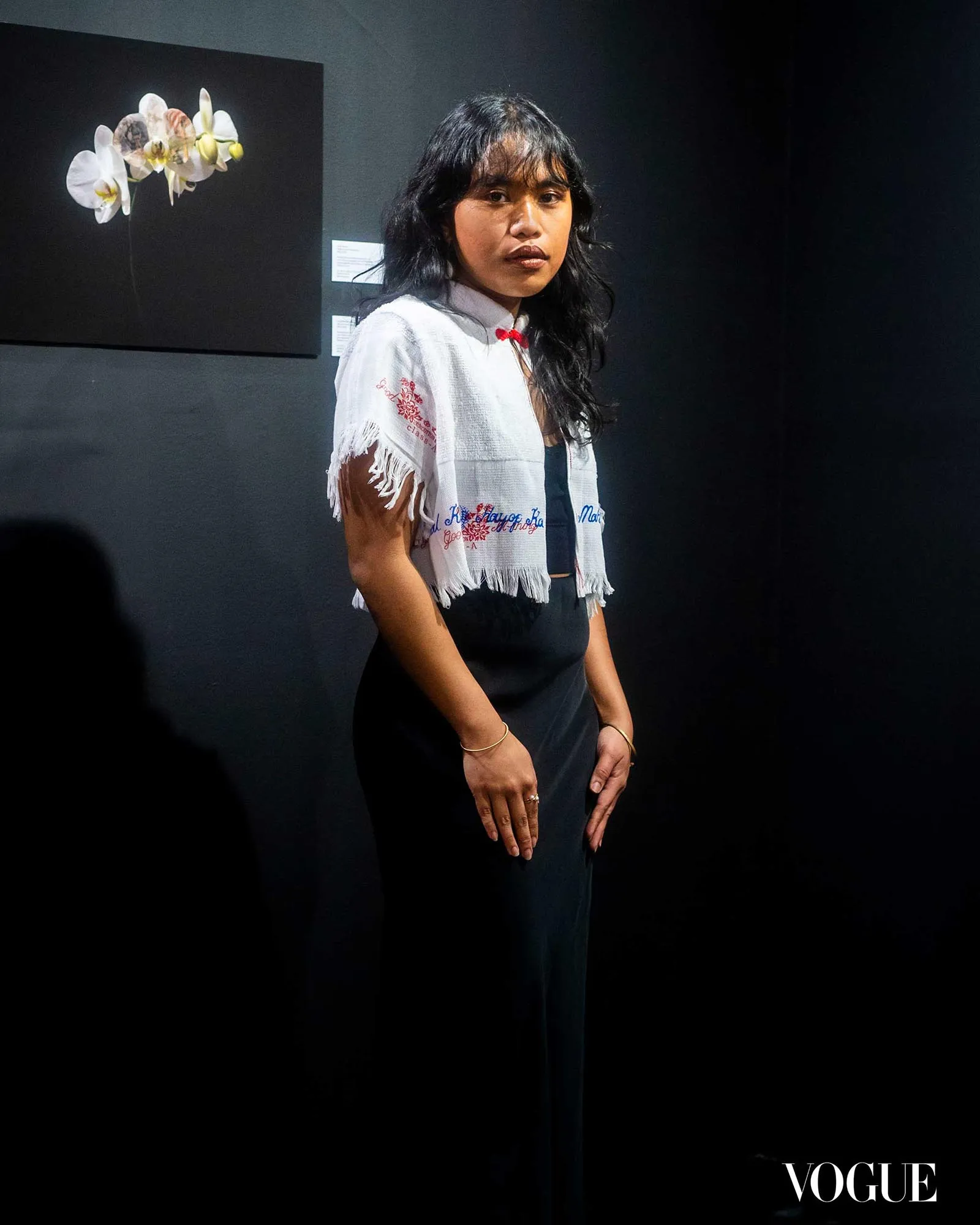
In Katie Revilla’s photographs, you can see U.S. anti-Filipino propaganda from the 1940s, printed on the petals of an orchid, an exploration of how Filipinos were documented overseas. On a stack of eight Balikbayan boxes, Lizza May David projects a video installation that examines the Filipino existence in the Philippines. Anna Bernice Delos Reyes, co-founder of Sa Tahanan, shares that in a nutshell, these are the types of topics they wanted to explore for Art Fair Philippines.
“We want to start a dialogue between artists who are practicing abroad and here, and showing other perspectives that Filipino artists abroad are thinking about when it comes to referring back to the motherland as a source of their practice,” she says.
During the 2026 Art Fair Philippines’ vernissage, Delos Reyes talks to Vogue Philippines about perspectives from the diaspora, distance from the homeland, and Filipino history.
This interview has been edited for length and clarity.
The curatorial notes describe time spent abroad as a “soft exile.” How does this idea manifest across the works in the show?
I think it manifests through the time and the rumination that it takes to maybe come to a lot of realizations about how the existence of the diaspora abroad is, in many ways, like a post-colonial residue. And I think it’s also the distance that allows us to think and maybe slow down and kind of see things from a macro perspective.
Obviously, it comes with a lot of privilege in many ways, but to maybe be in dialogue also with other artists abroad, and be able to maybe compare and contrast or see how other diasporas as well have similar ruminations and kind of strengthen what we’re already feeling and thinking about why we exist as a diaspora in the first place.
What does distance make possible that proximity might not?
I think it’s a space of questioning. Have you ever taken some time off from something that you maybe really like doing, or a place that you love being in, and the time apart, and maybe the unmarination or not being in that space allows you to ask questions that being in that daily kind of routine or grind may not allow you the space to think. So, I think distance really allows for questioning.
And not questioning negatively, but really a critique of why things are the way that they are and why we exist the way that we do? Especially because everywhere I go, I’ve been living abroad for the last 10 years, and everywhere I go, there’s always a Filipino community. And I think in many ways we take pride in our existence globally, but the existence of the diaspora, we were not made to be.
In the past, when you have those kinds of conversations, do you find that there’s a common ground when it comes to how people are exploring that topic?
I think also in the current climate, I think there’s a lot of frustration perhaps. And this ironic kind of helplessness also. Especially with a lot of us who keep in touch with what’s going on politically in the country. And also sociopolitically as well. This feeling of frustration about what we can do from so far away, to be able to not just contribute to the conversations that are happening, but also to perhaps make a difference.
And how do we maybe educate ourselves better in what’s going on, and how do we continue to be in touch with our “Filipino-ness”, whatever that might mean. And I think there’s a yearning to be, I think there’s a growing yearning to be in company with one another. And to learn from each other. I think that’s kind of what I’m feeling. At least in the current moment.
What kind of responsibilities do you feel presenting diasporic critique back here in the Philippines?
It’s definitely a very… I think it’s definitely a very fickle and… Maybe not fickle, but it’s got a precarious conversation. Yeah, because we exist in a different context. I think the responsibility, of course, on a personal level, I feel quite… Maybe nervous also. But I think the responsibility is just to initiate a conversation and a dialogue. And maybe on a more public level, an awareness also.
Even for me, as a curator, when I was doing studio visits, I didn’t know that there was a whole bulul collection in the Asian Art Museum in San Francisco. And that there are actually so many colonial objects that are being stored in these places. From my own perspective, when I lived here for school, we didn’t really learn a lot of these things.
And ironically, I learned more about Filipino history and our colonial residues through Filipino artists that I met abroad. And it’s like, why is that? Why did I not learn about Filipinos? Why did I not learn about this when I was in school? Why is this not taught? And I think maybe things have changed now. I’m a bit older. And I think there’s a resurgence also of learning about our cultures from abroad.
But I think introducing maybe what discussions we’re having that are beyond obviously acknowledging our privilege of being able to be abroad, but also the criticality, and this feeling of searching for identity beyond the usual, but through objects and also archives, and maybe looking at the perception that Filipinos are also encountering while being abroad. I feel like it’s a lot of responsibility, but I’m very grateful to the artists who have trusted us to present their work.
How do you think this exhibition challenges who gets to tell and interpret Filipino memory?
I think with the artists that we have, a lot of them are taking agency and kind of, I don’t say rewriting the narrative, but maybe looking at the narrative in our own way. And I think something is interesting about, kind of maybe ironic about these archives that are created by these foreigners, these colonizers, and then being rediscovered by Filipinos who are immigrating as a result of their colonial presence. There’s kind of like a strange, maybe a catch-22 in that where it’s like these realizations wouldn’t have happened if these artists hadn’t happened to have migrated.
How do you see or maybe expect people to engage with this exhibit, especially Filipinos? And what kind of questions, or what are the things that you want them to think about?
I think through this exhibition, in a very kind of cheesy way, kind of showing also, and I think a lot of the artists also in the project section, that it is possible with the right clustering of opportunities and circumstances to be able to produce a legible artistic practice. And I think what I would say also with a lot of the artists that we work with at Sa Tahanan, many of them have day jobs. I have a corporate day job. And there are a lot of sacrifices that are required if you do decide to pursue an artistic path.
But I guess it’s just kind of wanting to say that yes, it is possible. It’s not easy, but with the right kind of… I don’t want to romanticize the Filipino hard work, because I think that also can be problematic in its own way, this Filipino resilience kind of idea. But I think that a lot of the artists that we work with have really made their practices work. Though it has required a lot of sacrifice, it is a practice that also exists alongside living.
Frequently Asked Questions
Sa Tahanan Co. presented “Narito, Naroon” (“Here, There”) at Art Fair Philippines 2026. Curated within the Projects section, the exhibition showcases five contemporary artists from the global diaspora exploring identity, historical alienation, imperial archives, and their relationship to the homeland.
Sa Tahanan Co. was co-founded by corporate professional, curator, and art advocate Anna Bernice Delos Reyes. Living abroad for a decade, she established the collective to build a critical dialogue between domestic Filipino artists and creative practitioners navigating the migrant diaspora.
Artist Katie Revilla addresses historical racism by printing 1940s United States anti-Filipino military and political propaganda directly onto the delicate petals of living orchids. The visual juxtaposition highlights how brown bodies were clinically cataloged, objectified, and documented by foreign entities overseas.
Lizza May David utilized a vertical stack of eight structural Balikbayan boxes as the projection screen for her complex video installation. The artwork critiques modern socio-economic existence, migration, and the domestic labor realities shaping current cross-border family networks.
The curatorial framework defines “soft exile” as the complex psychological space created by prolonged geographic separation from the motherland. This forced distance allows artists to slow down, analyze post-colonial systemic residues from a macro perspective, and critique institutional global labor structures.