
Meet Kieran Tamondong, the Filipino American Actor Behind Monster, The Paper Tigers, and Warrior


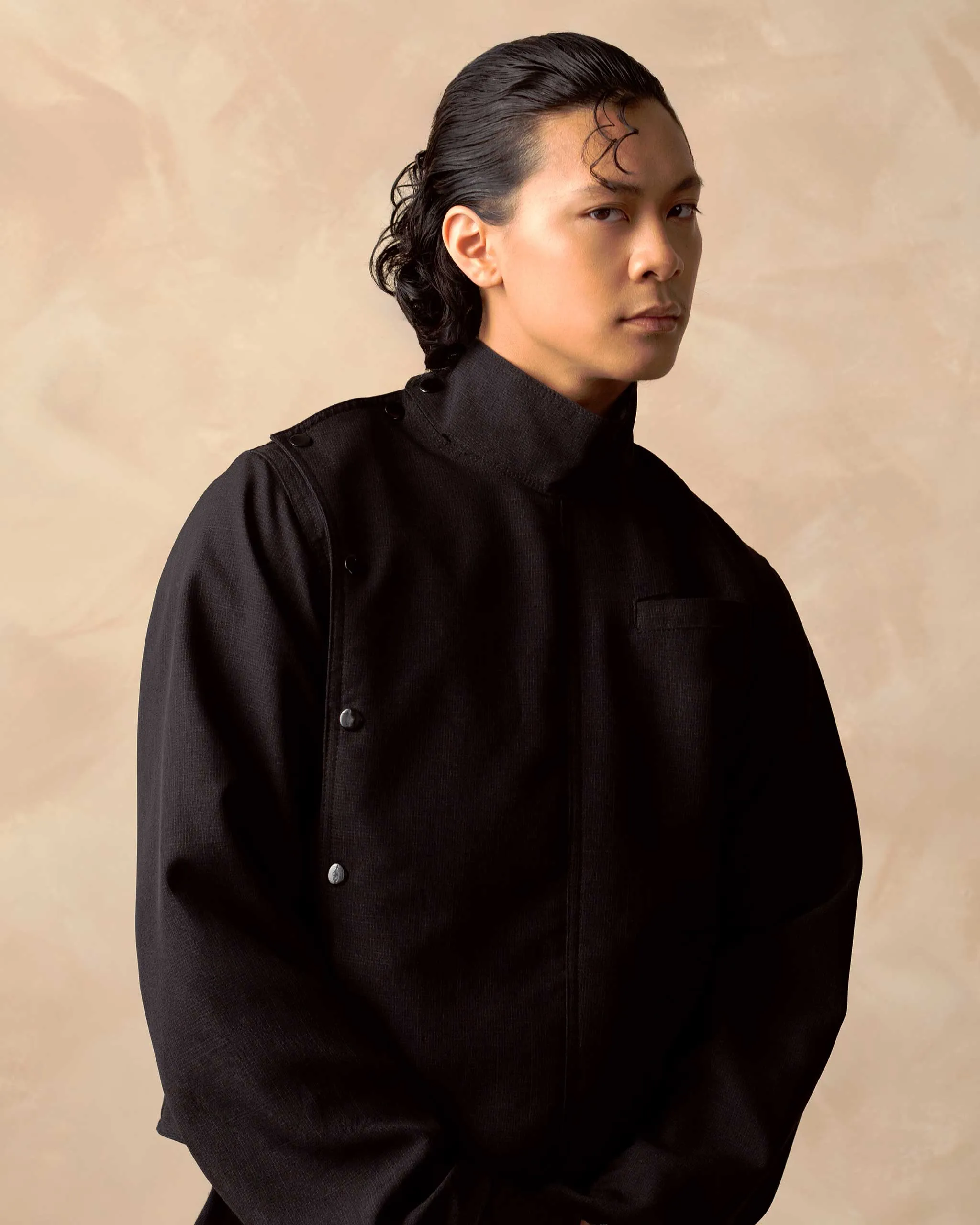
NEUWIEDIA jacket, LOUIS VUITTON trousers, and vintage shoes. Photographed by Ryan Barhaug
Actor Kieran Tamondong reflects on identity, representation, and his roles in Monster (2022), The Paper Tigers (2020), and Warrior (2019).
Kieran Tamondong learned early that ambition can be both a gift and a burden. While many discover their passions gradually, his arrived with urgency. Performing, acting, and competing on a global stage were not distant aspirations but lived realities, taking place in rooms where he was often the youngest and least seasoned. “I had to find myself in a sea of soon-to-be legends,” he reflects. The pressure to match or surpass them was constant, and at times overwhelming. What kept him steady, he says, was a singular question: If I don’t love doing this, why am I here?
That early environment shaped more than his work ethic; it shaped his relationship to doubt. Surrounded by excellence from the outset, Tamondong grew accustomed to measuring himself against high standards, often before he felt fully ready. Yet discipline came early too, instilled through years of martial arts. Competitive training taught him how to stay present under pressure, how to endure failure without retreating from it. Some defeats, he admits, were devastating, shaking his confidence at its core. But they also trained him to return, recalibrate, and continue.
As a Filipino American actor, the same instinct to adapt surfaced in different ways. Early on, Tamandong felt the pressure of being perceived through a narrowed lens, what he describes as the feat of being reduced to “only a Filipino-American actor.” Even people he trusted suggested the industry might not work in his favor. For a time, he internalized those limitations, mistaking them for realism. It took years to recognize what he now sees clearly: that his identity is not a constraint but a source of strength. Representing “a lineage of love and cultural vibrancy,” he calls it a “superpower.”
His early screen roles reflect that intersection of physical discipline and emotional searching. Projects like Warrior (2019) and The Paper Tigers (2020) placed him in worlds where bodily precision and endurance were essential, which aligned naturally with his martial arts background. The roles validated his training, but they also reinforced an expectation he would later have to challenge: that physicality alone would define his range. “You’ll only be able to play roles that include martial arts,” he once told himself.
That narrative began to shift as his relationship to acting deepened. Tamondong became less interested in proving capability and more invested in learning how to inhabit characters from the inside out. By the time Monster (2022) arrived, he was prepared for work that demanded emotional exposure as much as control. “First day on set,” he says, “I questioned whether I was really the one to carry this task.”
A recalibration came in the form of a question posed by a director or coach: Are you here because you love it, or because you love being told you’re good at it? The question disrupted a period of drifting. Since then, Tamondong has committed himself to earning, drawing wisdom from mentors, collaborators, and lived experience. The result is not just growth, but longevity.
He does not romanticize the work. Twelve-to-fourteen-hour days, exhaustion that resets overnight, and an industry increasingly driven by algorithms and profit margins are all part of the reality. Still, he carries no regrets about the roles he has taken or passed on. Each project, whether on a sprawling set or a smaller production, has sharpened his understanding of storytelling and reinforced his commitment to the craft itself. “No amount of notoriety or money,” he says, “can equate to that chance.”
When conversations turn to representation, Tamondong resists spectacle. Authenticity, for him, is not performative pride but presence. The most meaningful form of representation, he believes, is excellence without pretense: honoring who you are by doing the work well.
As visibility grows, so does responsibility. His approach is deliberate: check the ego, stay grounded, and practice gratitude. Journaling keeps him centered; kindness keeps him connected. His own story, he admits, is uneven; marked by imposter syndrome, losses in competitive martial arts, and moments of uncertainty. Yet it is precisely that unevenness he knows he will one day need to share.
For now, Tamondong focused on what has always guided him: the love of the work, the pursuit of truth, and the resolve to keep getting back up again and again.
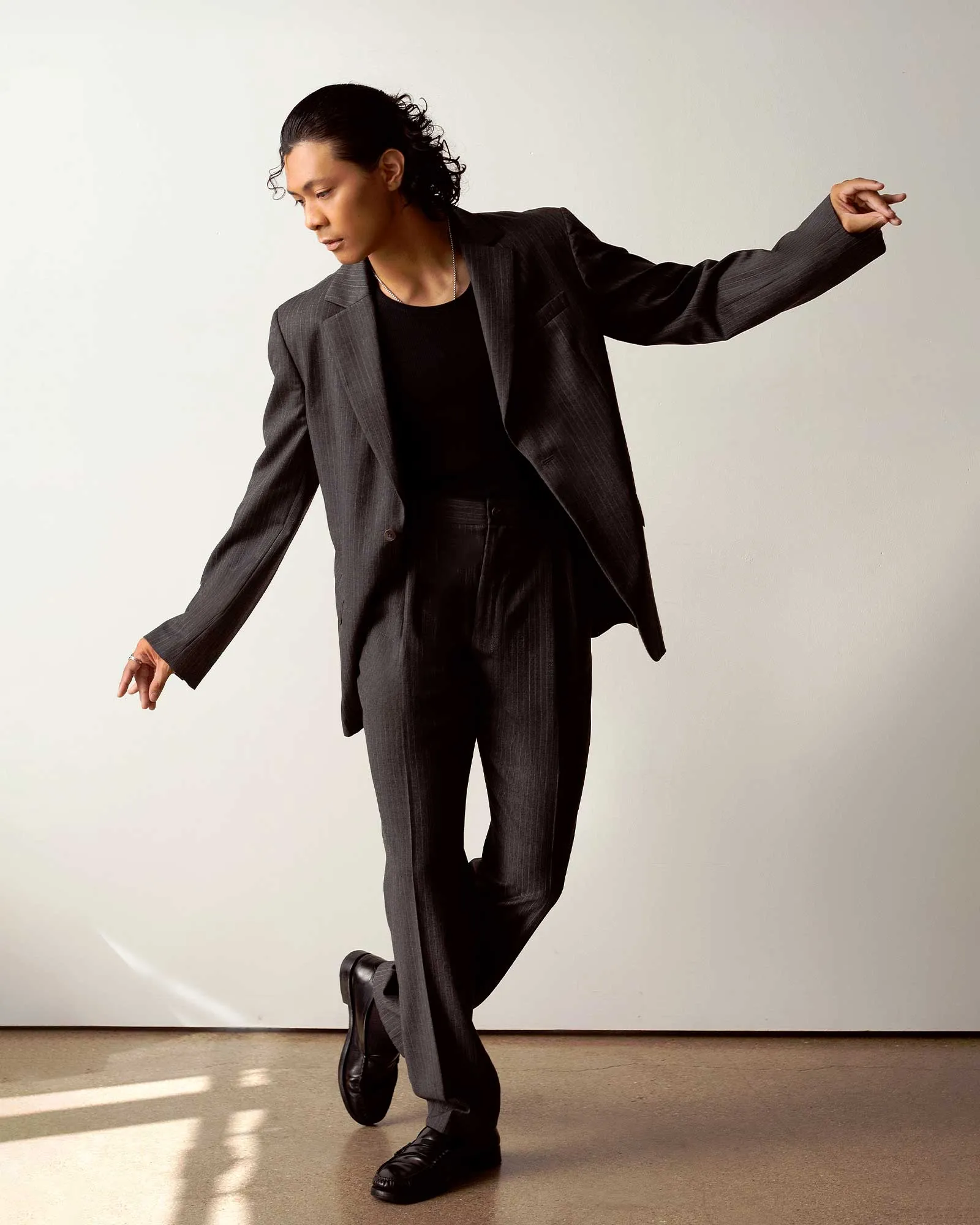
By DAPHNE SAGUN. Photographed and produced by RYAN BARHAUG. Styled by Cassi Crededio. Hair and Makeup: Esther Han. Stylist Assistant: Maximillion Marco. Studio provided by Slate Studios Chicago.
Frequently Asked Questions
Kieran Tamondong is a Filipino American actor known for roles in Monster (2022), The Paper Tigers (2020), and Warrior (2019). His background in competitive martial arts has informed both his physical training and his approach to acting discipline.
Tamondong initially felt limited by being perceived as “only a Filipino-American actor,” but came to see his identity as a source of strength, describing it as representing “a lineage of love and cultural vibrancy” and calling it his “superpower.”
Yes. Tamondong’s martial arts training informed early roles in Warrior and The Paper Tigers, which relied on physical precision. He later worked to expand beyond physicality-driven roles, seeking projects like Monster that demanded emotional depth.
Kieran Tamondong appeared in Monster (2022), a role that required emotional exposure rather than the physical control his earlier martial arts-influenced roles demanded, marking a shift in his approach to character work.
For Tamondong, representation is not performative but rooted in presence and excellence without pretense. He believes honoring his identity through consistent, honest work is more meaningful than visibility for its own sake.