
Protecting Creative Work: A Conversation on Intellectual Property Rights in the Philippines


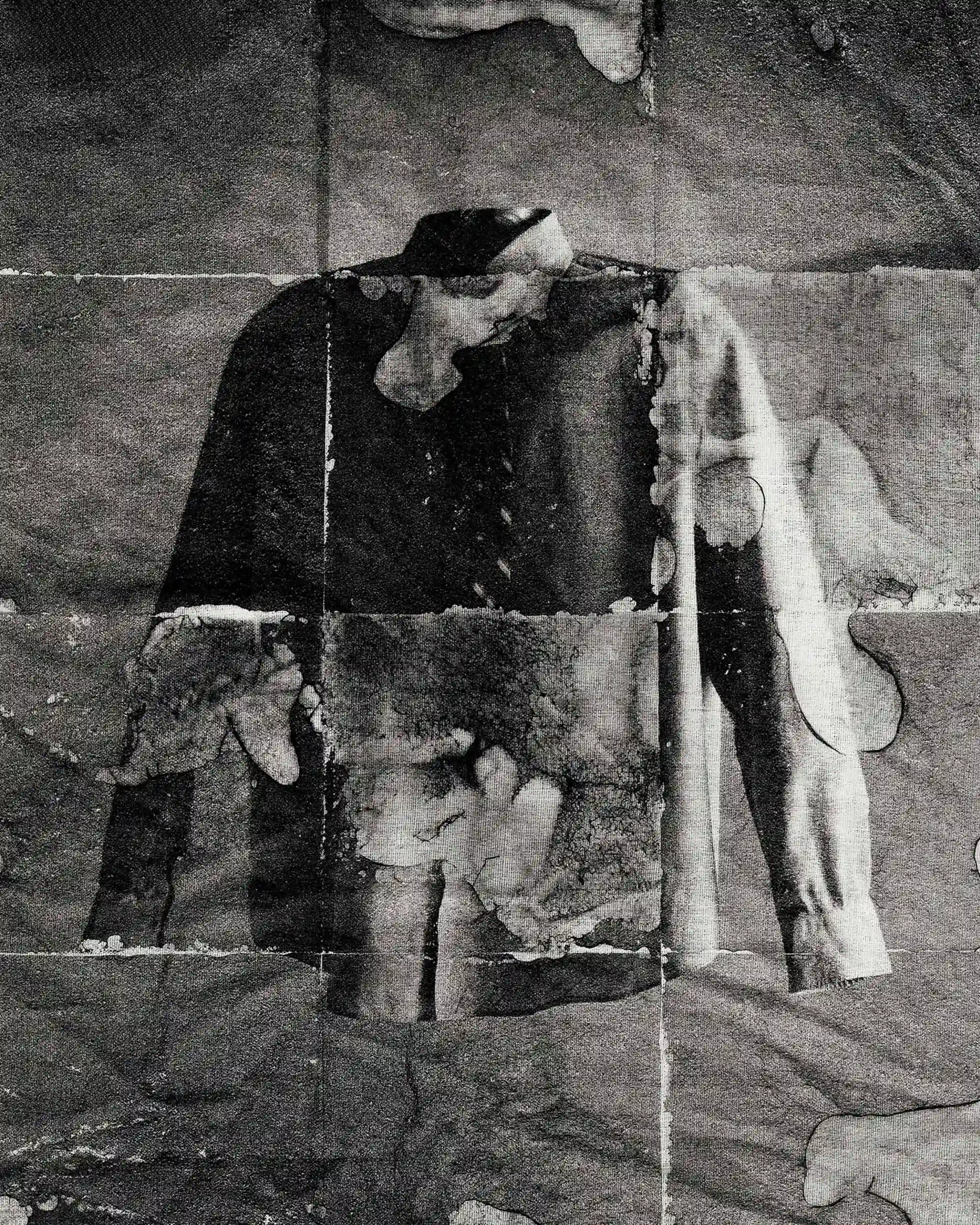
Photographed by Myu Inoue
Kenneth Cobonpue and Esme Palaganas discuss intellectual property rights in the Philippines, and the necessity of equipping young creatives with the tools to protect their craft.
It was in the mid-2010s when Kenneth Cobonpue decided that he had enough. The industrial designer’s roots may be in Cebu, but over the years, after graduating from New York City’s Pratt Institute, his designs have become distinguished across the globe. In 2006, Time magazine hailed him rattan’s “first great virtuoso,” and his pieces have found their place in the home of Brad Pitt and a casino set for the film Ocean’s Thirteen, among many other spaces.
This recognition, however, comes with its own perils: endless counterfeits. The constant stream of reproductions pushed Cobonpue to take legal action, and soon, local news outlets covered his team raiding factories that manufactured them, from Tagaytay to Pampanga. The designer himself was present, looking on as members of his team destroyed and burned the replicas.
Elsewhere, budding designer Esme Palaganas was fresh from completing her bachelor’s in fashion design and merchandising from the De La Salle-College of Saint Benilde. She would go on to co-found the PHx Fashion Group, an incubator for emerging designers, and at present, pursue a PhD in London on Management of Creative Intellectual Property and Artificial Intelligence Systems. In giving back to her alma matter, she has partnered with DLS-CSB to establish an intellectual property initiative, a trademark concierge. Additionally, via a consultancy and advisory firm A Blank CD, she advises select ventures on their business and brand and how it relates to intellectual property in partnership with legal firms in the Philippines.
As staunch advocates for intellectual property rights, the two come together to discuss what it means for designers not just to take pride in, but also take hold of, your creative work.
Vogue Philippines: When and how were you first acquainted with the idea of intellectual property rights, and what prompted you to undertake it seriously later on?
Kenneth Cobonpue: My mother was a designer who did a lot of original work during the ’80s, and I saw how people copied her. So I was exposed to it as a young boy, and I saw how she suffered because it was very difficult to patent then. It was like a wild, wild west; there were really no clear mechanisms for persecution just like you have today. It really caused her a lot of anguish when people started to copy her work. So much so that when I started to make my first designs, I had them patented and copyrighted. What about you Esme?
Esme Palaganas: I was an independent fashion designer from around 2014 ’til 2022. During these times is when I got calls from stockists and even interested parties on my brand trademark (I didn’t know what it was during that time), and I was part of meetings and negotiations of artists offering the licensing of their artworks. So that was very interesting for me to learn on the job.
Eventually, while I was looking for further studies, that’s when I found out that there’s this thing called fashion law. It’s actually an LLM, or a law course in Fordham University in New York. That kind of sparked the whole intellectual property realm for me, that for something so intangible, you can create so much value.
VP: Kenneth, you have long been a champion of IP rights, and in the past, you’ve spent a lot of money on court cases. What ignited this desire to pursue concrete action for your own brand?
KC: Well, I think it’s very important. There’s no creative industry that can flourish if you don’t protect the intellectual property rights of its creators. So it’s very important for me to go after them, not only for my brand, but on behalf of the other thousands of designers all over the country who don’t really have the means to pursue their case. It takes a while. It takes a lot of resources, time, effort… actually, millions, to pursue a single case. So sometimes the designer also has doubts about whether to pursue it. I mean, even criminal cases take forever. How much more for intellectual property rights?
VP: What year did you begin pursuing these cases?
KC: About 10 years ago. And some of those cases were just settled a couple years ago. So you can imagine, during that time the evidence has to be stored somewhere, right? And then you’re paying for them to store it. After seven years, it can rack up to a million for the storage fees alone, and you can lose the case. So when you lose the case, you lose all that too. You’re never going to get that back. It’s a gamble.
“The system may be flawed, but it works when they know their rights.”
VP: What made you decide to raid the factories?
KC: Well, to get evidence, you have to raid the factory, because the law does not penalize the user. And that’s different because in fashion, in Europe, the user can also be liable. But here in our country, it’s the creator, the one who copies. And so you have to get evidence that they’re actually copying it. It’s not just the seller, you need to go to the manufacturer. It was difficult. They were all over Pampanga, and then we traced it to just a couple of factories.
But now the game has changed, because especially in fashion now, the ones copying are not from the Philippines so that makes it even more difficult. And online sites, you can’t hold them liable for selling counterfeit goods.
EP: Yes, it’s easier to sell online locally and globally, but it’s also easier to copy. And when artists and designers don’t know their very basic rights, that’s when they become exploited. You mentioned, doing it not just for yourself but for the industry, and I think it really sets a precedent for everyone that this kind of action can be done. It’s always a strong suit if there is a precedent case wherein the creatives are the ones winning; it ripples also to other creative sectors as well.
VP: Esme, you’re about to begin your PhD in London. You’ve also consulted with your alma mater, DLS-CSB, on intellectual property matters and projects. Where does the drive for these endeavors come from?
EP: I think probably two things. The first was being exposed to the power of policy and law in driving growth and protecting creative worker rights during my time as policy chairperson of the Philippine Fashion Coalition. I became interested in how creative policies could be designed to safeguard and strengthen the sector’s development. During that experience, Pauline Juan, who was then the DTI-CITEM executive director, was really pointing out that intellectual property is one of the key indicators of whether the country is flourishing creatively. So I think that really stuck in my head.
The second one is that Filipinos are inherently creative, especially in branding. Yet despite this natural creativity, they aren’t aware of how to protect the very reputation they build. That protection is what trademark safeguards. Big or small, everyone has the right to know these kinds of protections exist.The trademark was the first initial project that I had with the center of intellectual property management in Benilde, wherein they invited me for an IP conversation. I talked to Atty. Ma. Janice Tejano who’s the head of that center, said, “Let’s do a very simple thing which is a trademark concierge.” People think trademarks are expensive. Sometimes it is, but most of the time it really isn’t, especially if you’re a starting brand doing very few product categories. It’s always this lack of or limited access to information that gives us the very low ceiling of growth. If you don’t have problems or contentions about your trademark, you probably won’t pay more than 5,000 pesos for an initial application… and that’s already for 10 years.
Generally, I’ve been involved with mostly startup brands who are serious about the local market and actively want to expand beyond the Philippines later on. What are your personal thoughts or advice to those who are starting and expanding in regards to registering their IP early? When do you think they should think about the IP implications of their business?
KC: When you find a new, very exciting thing, I would say. Because, actually, most startups start out by being inspired by other people’s designs, and so it’s only maybe a couple of years after where you finally make something really original and something very different, it’s really worth protecting. Unless you’re onto something original, protecting your designs isn’t quite the priority yet, so it comes later. Protecting it is easy. It’s enforcing it, really, that’s a different animal.
VP: On that note, young creatives tend to be intimidated by the idea of intellectual property rights. Why do you think this is and what’s a common misconception with IP?
KC: I think, as Esme said, protecting it is not very difficult, it’s not very expensive. It’s easy once somebody actually copies you and you first send a lawyer’s letter, half of the time they back off. Most of the companies, they back off, especially when you put it on social media. So I would say that’s the best protection, actually, when you come out, accuse somebody of copying you, it’s in the court of public opinion. When you file a case, hire a lawyer, and then you need a team to gather evidence, that’s the expensive part, because these cases can go up to five, seven, 10 years, and then it’s difficult. Because there’s storage fees, there’s court fees, there’s lawyers fees. And in the end, if you don’t win, then you’ve lost whatever you put in.
So I would say that it’s either we change our intellectual property laws to also include the user and the seller. There’s a European country, they have this award called Plagiarius where the trophy is a dwarf with a big nose, and they award these to companies who copy every year, and they have an awarding ceremony. That’s why I said that’s probably the most effective. Sadly. [Laughs]
EP: I think it’s figuring out the definitions. People don’t know that surface design, such as one’s artistic illustrations or prints, are protected already just by posting it out there. I have worked with a client where posting alone was already a strong proof of provenance. When Kenneth mentioned the court of public opinion, that’s actually something that law professionals also use that all creative practitioners can keep in mind. A lot of designers now, they sketch, and I think it’s always professional to document the work that you have because that will also come in as very important once you are planning to register or protect it when an unfortunate event arises.
VP: On that note, why should designers, especially young designers, be more proactive in protecting integrity and rights to their creative work, and how important is documentation to every step of the process?
KC: Your work is your child, that’s what you bring to the world. So it’s quite natural that you protect it, because that’s all you have. Protecting it, though, is usually last on their minds. Most designers are just happy when their design gets made, it’s recognized, somebody buys it, and then they think of protecting it later on. Good thing, as Esme was saying, we have copyright, we have trademark. As I said, no creative industry can flourish if we don’t have the means to protect it.
EP: To add on to that, designers also have to know that they are protected. Right now, I am working with the law firm Divinalaw and partner Atty. Jayr Ipac, and we’re trying to figure out ways on how independent designers can work with the best legal professionals in the country so they can understand negotiations and maximize their creative power in the market. I feel like we’re having more and more lawyers that engage with designers and really treat them seriously, as much as the designers are treating themselves and their businesses seriously. Independent designers are the industry’s creators and source of value. The system may be flawed, but it works when they know their rights, and trust and collaborate with experts.
KC: So Esme, are there a lot of actual court cases involving fashion?
EP: Actually, in the Philippines, I was just talking casually with a highly-respected law practitioner and apparently there are very few. Not a lot of things go up to court, because a lot of things get settled. I think this is the reason we should tell more stories about it. That there are fights that can be won in closed doors. I was a non-legal student among legal professionals in a Harvard (Berkman Klein Center) x University of Turin’s copyright class, and our professor said that intellectual property is a basic human right, and I think everyone should know that. We have this intangible asset in every creative mind, and we can create value from it, protect it and fight for it if those rights are taken away.
By TICIA ALMAZAN. In this story: Photograph by MYU INOUE.
Frequently Asked Questions
Kenneth Cobonpue is a Cebu-born industrial designer known globally for his rattan furniture work, who has taken legal action against counterfeiters. Esme Palaganas is a fashion designer and intellectual property advocate pursuing a PhD in London, and co-founder of the PHx Fashion Group.
Kenneth Cobonpue raided factories in Tagaytay and Pampanga to gather evidence of counterfeiting, since Philippine law penalizes the manufacturer rather than the seller. He said pursuing these cases has taken years and cost significant resources, including storage fees for evidence.
Esme Palaganas partnered with her alma mater, De La Salle-College of Saint Benilde, to establish a trademark concierge, an intellectual property initiative meant to make trademark registration more accessible, especially for starting brands with limited product categories.
According to Esme Palaganas, if a brand has no complications with its trademark, an initial application typically costs no more than 5,000 pesos, covering a 10-year registration period, making it far more accessible than many assume.
Kenneth Cobonpue advises that IP protection becomes a priority once a designer creates something original and distinct, rather than during early stages when work is often inspired by others. He noted that protecting IP is relatively easy, while enforcing it is the more difficult and costly part.