
The Art of Preservation: Why Palacio de Memoria Is a Love Letter to Filipino Heritage


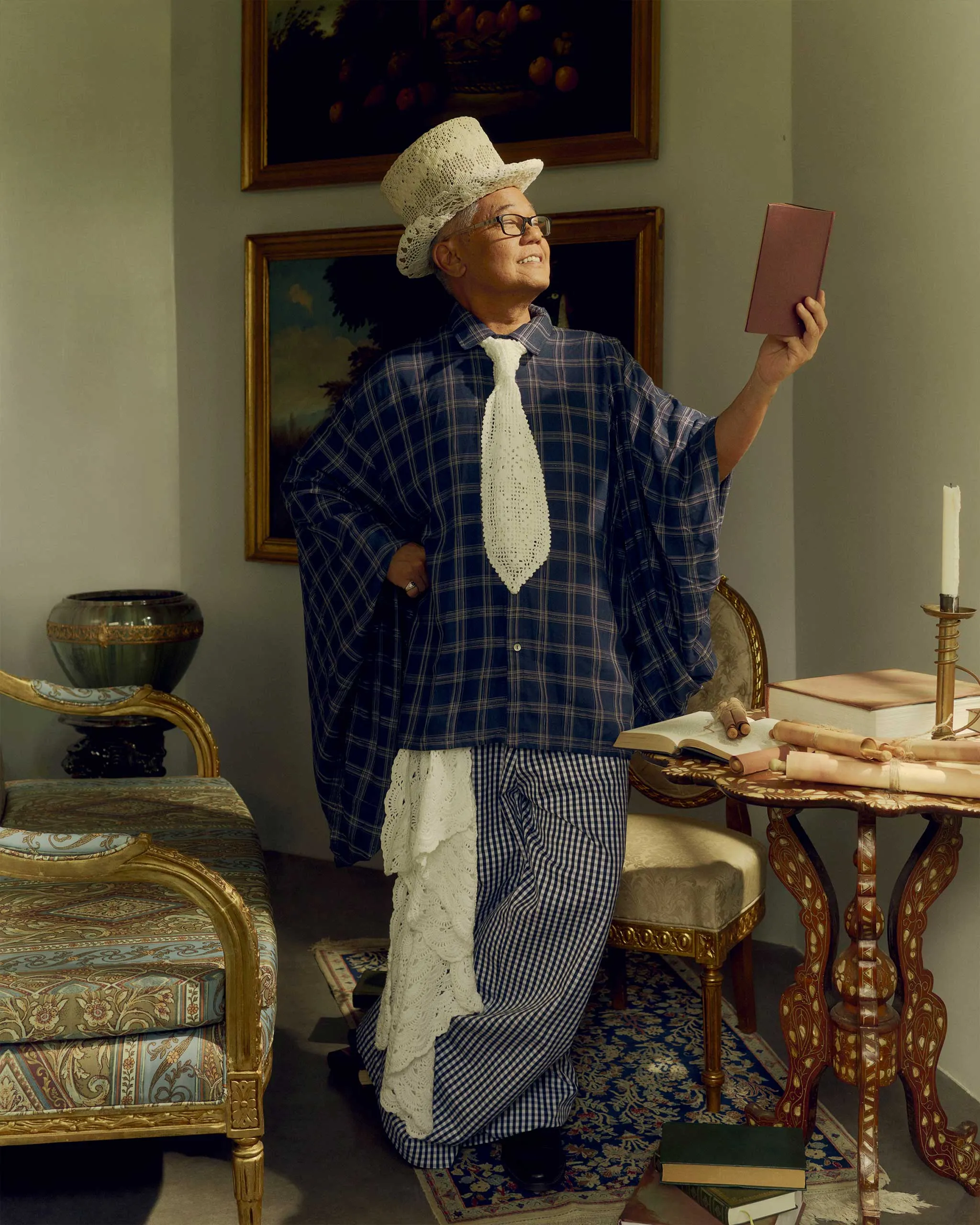
Known for his extensive work in Philippine theater, playwright and actor RODY VERA is a Palanca Awards Hall of Fame inductee and leader of PETA, with over 70 plays to his name. He plays the Narrator, guiding the audience through the musical’s intertwining tales. Rody wears a TAGPI shirt, tie, and trousers, and a GLORIOUS DIAS hat. Photographed by Artu Nepomuceno for the July/August 2025 Issue of Vogue Philippines
Defiant amidst a century of change, the Palacio de Memoria stands as a study in contrast, where history and heritage are preserved while making way for modern sensibilities. More than just a building, this landmark is home to stories waiting to be discovered.
If the walls of Palacio de Memoria could talk, one can just imagine what they’d say. Built in the 1930s in the Spanish Colonial Revival style, it was first owned by the third count of Perecamps, Don Antonio Melia y Palva and his wife Doña Margarita Melian y Zobel de Ayala. Fortunately, it was one of the structures that survived the war, and soon became home to Dr. Francisco and Esperanza Villaroman. To accommodate their growing family, the Villaromans added five more floors in the 1950s, creating the seven-story structure visible today.
Fast-forward to the 2000s, with most of the Villaroman heirs having immigrated, the Lhuilliers then acquired it with a vision of preserving a piece of Manila’s architectural and cultural heritage. After a meticulous restoration, it was opened to the public and christened Palacio de Memoria, a place where the past informs the present.
Stepping into the light-filled mansion, guests are greeted by a grand Art Deco staircase and a Murano chandelier decorated with crimson glass rosettes. One of the house’s focal points is the terrazzo floor, which the new owners had chanced upon when the renovations were underway. It was then discovered to be a creation of National Artist Juan Nakpil, featuring a bucolic scene of Philippine traditional life, replete with tinikling dancers and a bahay kubo among coconut trees and sampaguitas.
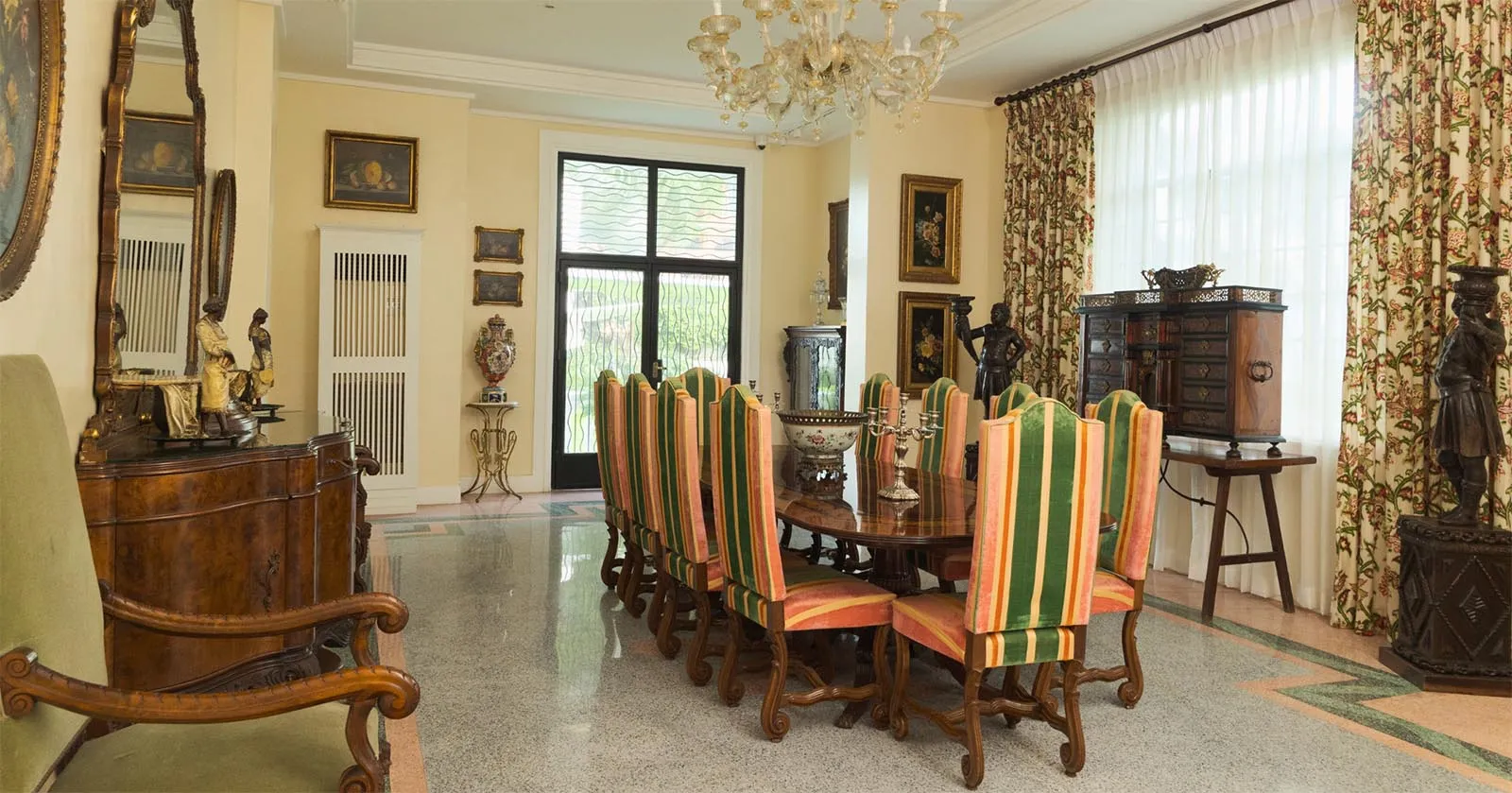
A veritable treasure trove of antiquities, landscape paintings and portraits of nobility, intricately carved wooden furniture, and a variety of objets d’art dot the many rooms and hallways of the house. Some are personal pieces of the Lhuilliers, like the Parisian pieces in the Ambassadors’ Dining Hall that pay homage to the family’s French roots. Then there are those that were carefully curated by the family, tapping their wide network of consignors around the world. Wanting to share these beautiful pieces with discerning collectors, they set up their auction house Casa de Memoria.
Coincidentally, the Lhuilliers are gearing up for their holiday auction this November. Going under the hammer are a notable selection of paintings, delicate 18th century porcelain, fine furniture, Southeast Asian pieces, and more. As the only auction house in the country specializing in European antiques, Casa de Memoria aims to exude the grandeur of old Manila.
Walking around the space is like taking a step back in time, when Manila was dubbed the “Pearl of the Orient.” Much care was taken when restoring the property to its former glory, keeping its unique personality and a bit of its patina intact while making it relevant for today. It’s indeed become a place for special celebrations, both big and small, and has hosted its fair share of elegant weddings. There was, of course, the Filipiniana-inspired wedding of Ella Pangilinan to Enrique Lhuillier Miranda in 2023, as well as a beautiful civil wedding of Camille Lhuillier to Andrea Albani in 2020.
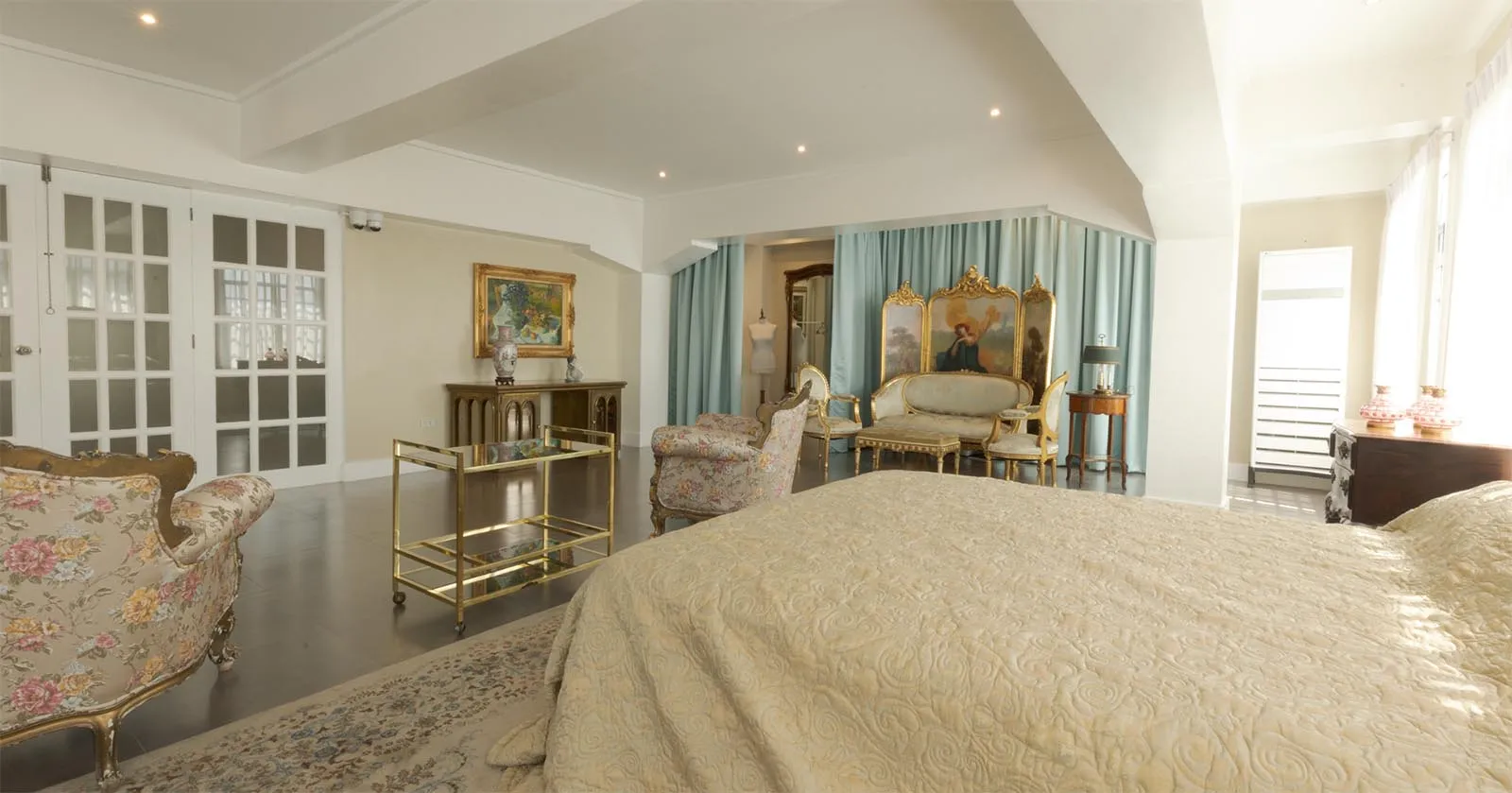
Palacio de Memoria has likewise opened its doors to couples hoping to say “I do” in a place that has been witness to so many decades of our nation’s history. One can either have a celebration at their Los Tamaraos Ballroom, Villaroman Function Hall, or perhaps in the sprawling gardens that surround the property. With more than a hectare of lush greenery and majestic trees, it makes for a gorgeous backdrop for meaningful celebrations.
For more intimate affairs or brand launches and even photo shoots, the mansion also has many well-appointed rooms like the Gray Room, which has been decorated like a “lady’s tea room,” drawing inspiration from the pre-war tradition of afternoon tea along Dewey Boulevard.
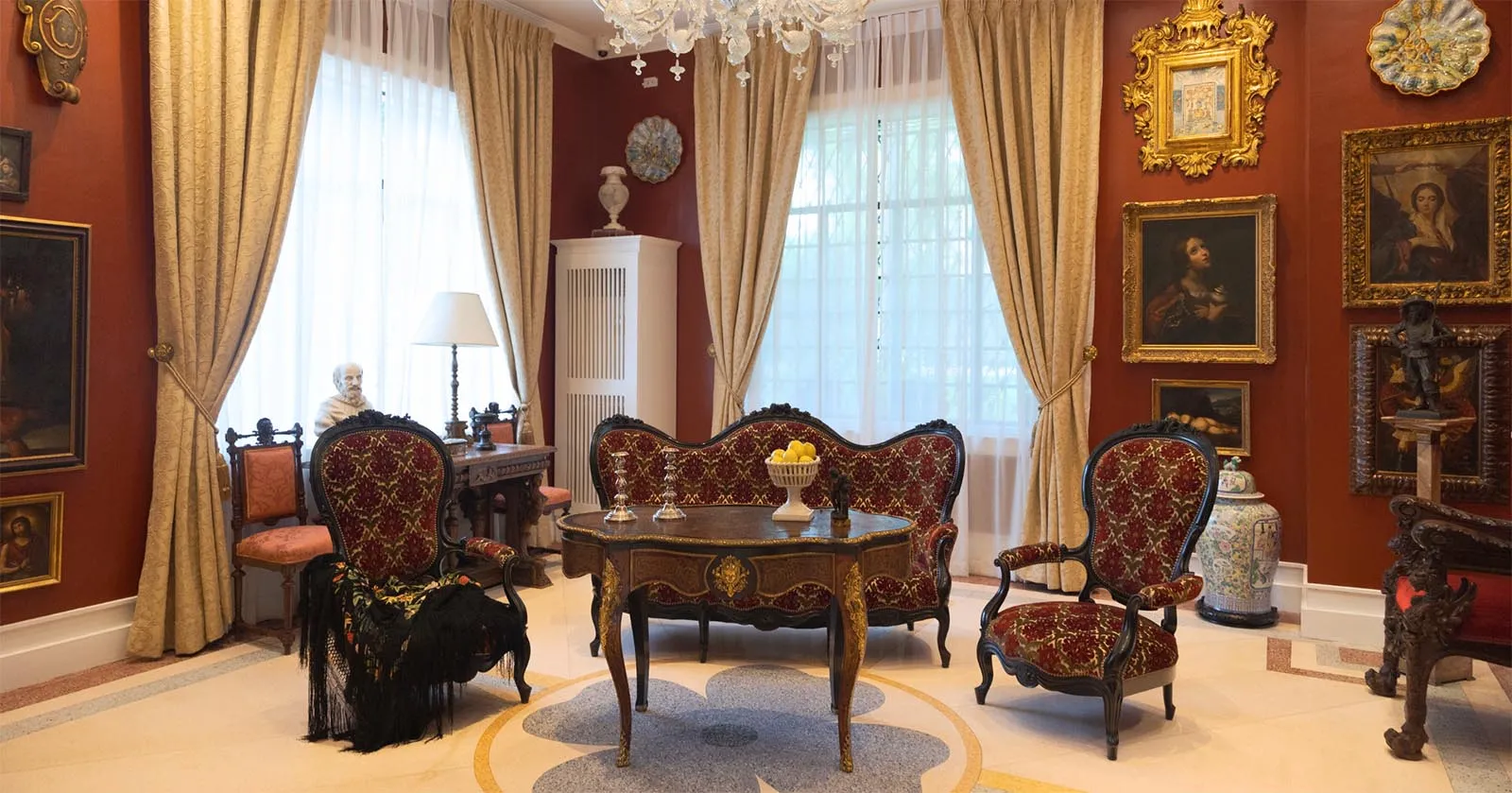
But even if you aren’t throwing a party, Palacio de Memoria is still a must-see. Visitors can come for tours to learn more about history, as well as listen to the many unique stories of their pieces. A 1930’s horse stable turned museum now hosts Ambassador Philippe Lhuillier’s collection of religious artifacts, which the family’s patriarch had amassed over the years. The ambassador’s favorite pieces are likewise displayed in what they now call the Red Room, which was previously the Villaroman receiving office.
There has indeed been a concerted effort to keep much of the property’s original grandeur intact, while transforming it into a space that can be meaningful today. A vintage Antonov airplane from the middle of the last century, for instance, has been converted into Mosphil Lounge and takes pride of place in the garden. Recognizing their efforts, Palacio de Memoria was awarded in 2021 by the NCCA with the Heritage Award for Adaptive Reuse.
Transcending time with its dynamic take on old world charm, Palacio de Memoria preserves the stories of our rich, nuanced, and at times complicated history. But perhaps what makes it truly interesting are not the historical anecdotes, but the questions still yet to be answered. There’s always that feeling of excitement as the provenance of the property and its pieces are gradually discovered and revealed, allowing us to appreciate the past while letting us weave our own tales and create our memories today.
In this story: Photograph by ARTU NEPOMUCENO. Deputy Editor PAM QUIÑONES. Beauty Editor JOYCE OREÑA. Fashion Editor DAVID MILAN. Styling by GENO ESPIDOL and CHARLOTTE SOMBILLO of QURATOR STUDIO. Art Director: Jann Pascua. Producer: Bianca Zaragoza. Beauty Writer: Bianca Custodio. Makeup: Gery Peñaso, Bea Mocorro, and Japeth Purog. Hair: Mong Amado, JA Feliciano, and Patty Cristobal. Production Designer: Justine Arcega Bumanlag. Nails: Extraordinail. Photography Assistants: Choi Narciso, Odan Juan, and Jom Ablay. Makeup Assistants: Princess Pisador and John Milliano. Production Assistants: Gabrielle Mantala, Louie Sandro, Jan Abal, John Amon, and Mavi Sulangi. Shot on location at Palacio de Memoria.