
At Home in the World: Joyce Wang’s Vision for Living


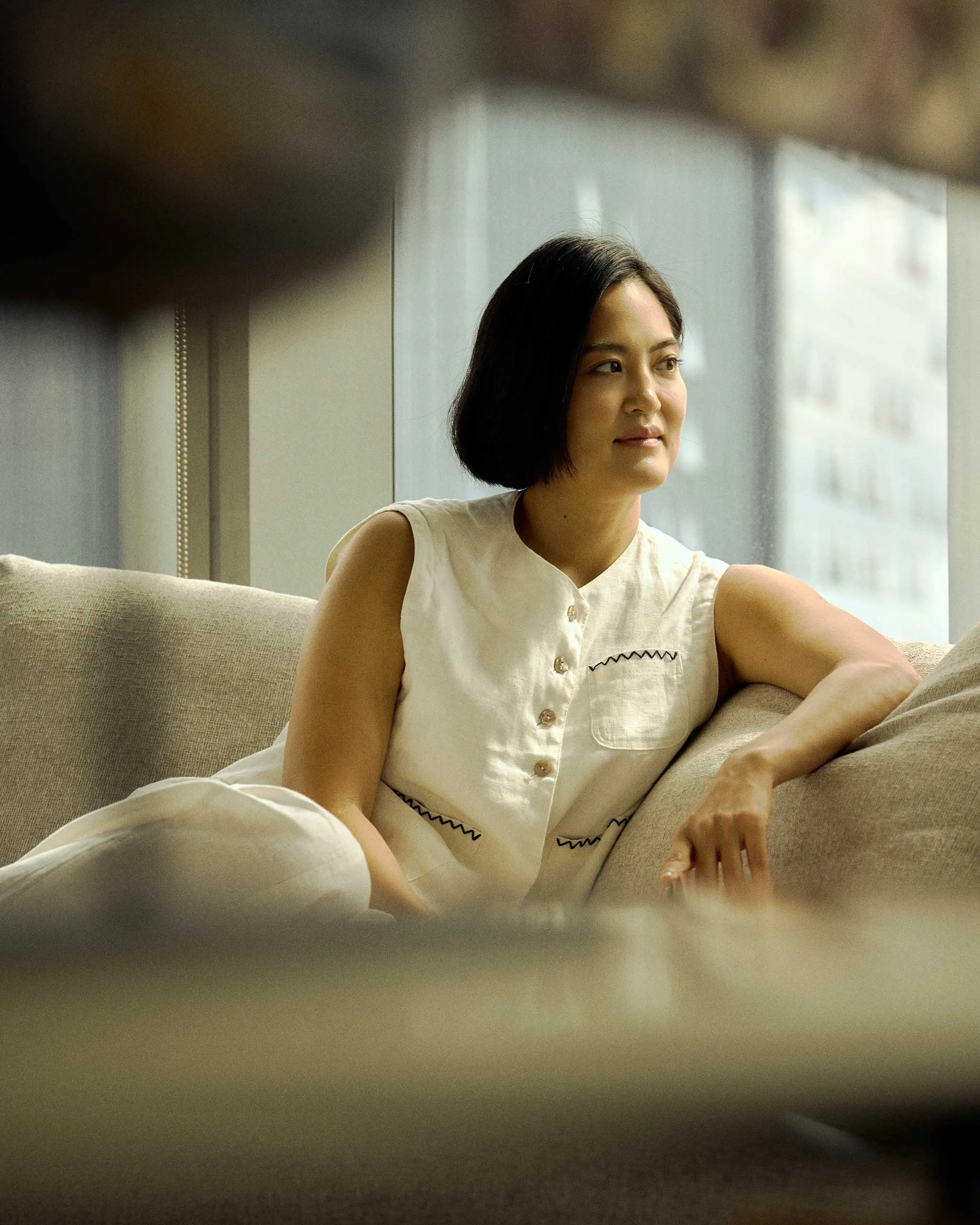
Photographed by Choi Narciso
Interior designer Joyce Wang brings cinematic storytelling to the Laurean Residences, her first project with Ayala Land Premier.
Joyce Wang has vivid memories of the different homes she visited as a child, when her engineer father would bring her on business trips around Europe, even spending an entire summer in the Black Forest. She remembers the textural details of the houses: the feel of a lambswool rug, the solidity of a wooden table, the aromas wafting out of the kitchen. They were not luxurious homes, but they were authentic, crafted from materials that were of the place. “I was looking back to think why I crave working in different places and with different cultures, and trying to understand what makes them call a place home. I was really interested in how people felt at home.” Her own home was vastly different, having grown up in an apartment in Hong Kong, where one could move through an entire day without ever touching the ground.
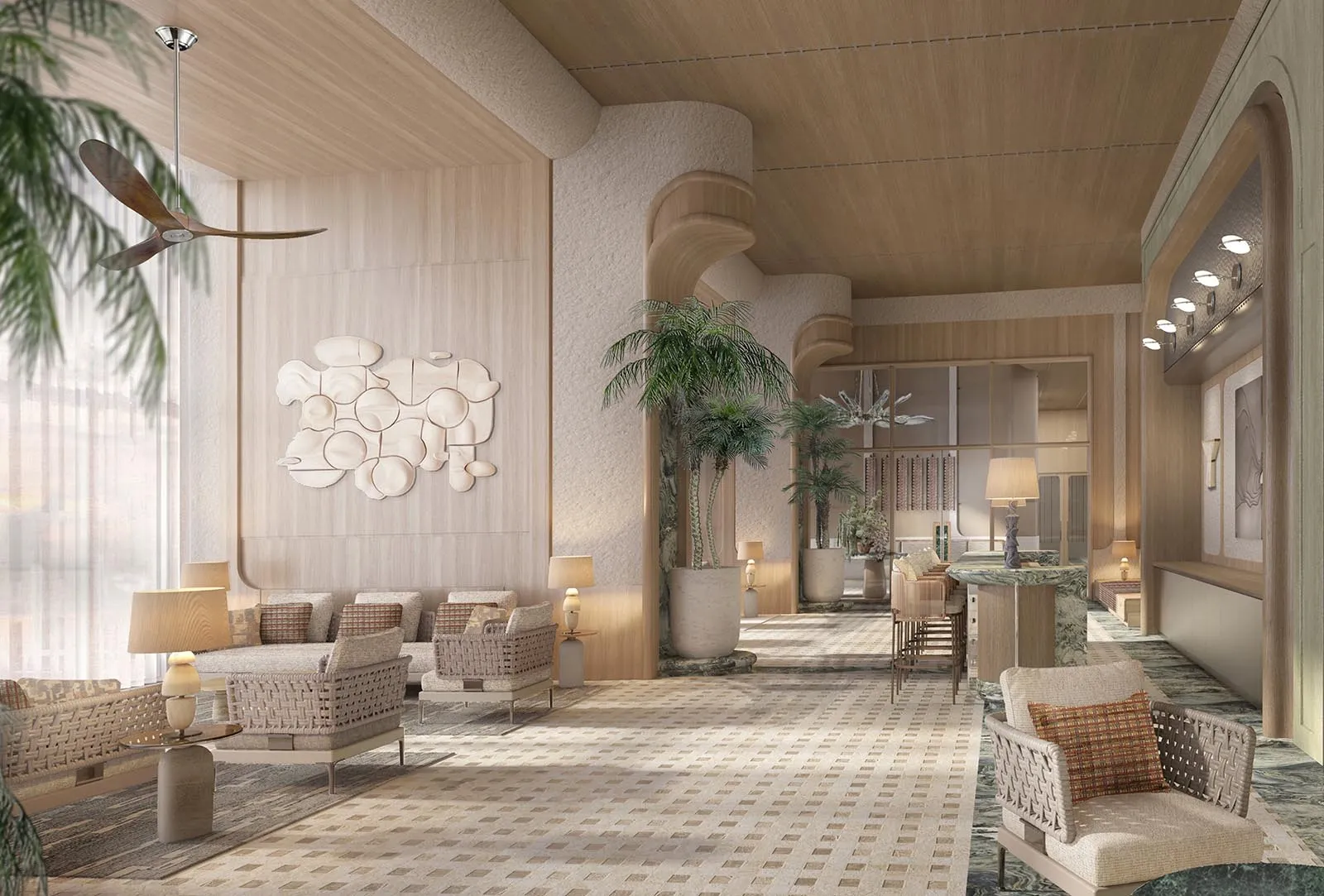
This early fascination with materiality shaped the designer she would become. After studying architecture and materials science at MIT, she worked at Foster and Partners before earning a master’s degree in interior design at the Royal College. Today, Wang leads Joyce Wang Studio, a multidisciplinary design studio with offices in London and Hong Kong. The studio’s projects span luxury hotels, retail spaces, and restaurants, and most recently, The Laurean Residences at Ayala Triangle Gardens. Normally, she would decline residential-only projects, but working with Ayala Land Premier on four levels of amenities fired her up as a hospitality designer.
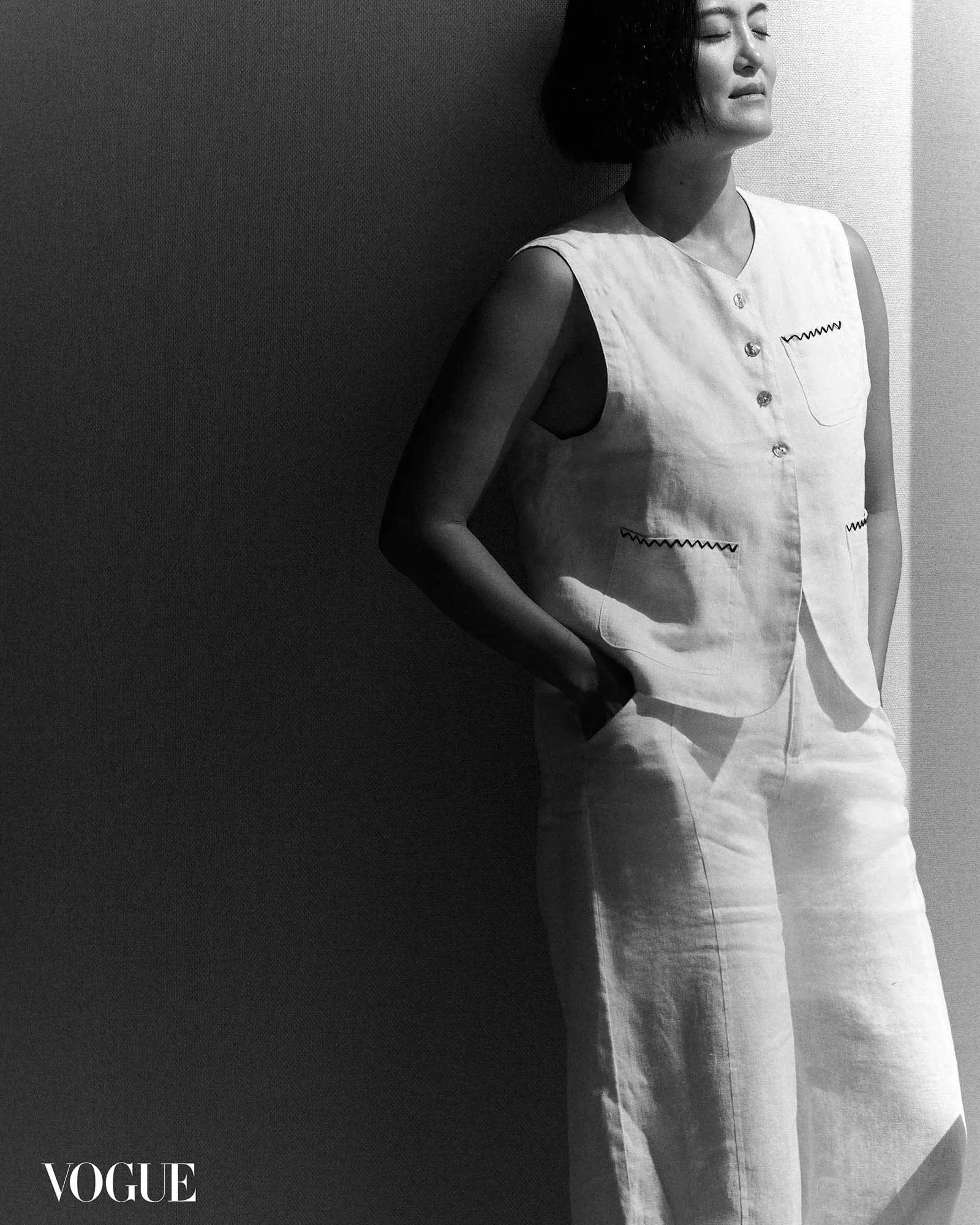
“When it comes to commercial residences, the amenities side holds so much of that value of being a host,” Wang says. “So when I’m able to empower somebody to be a great host, whether it’s for their own home or in a hotel, being really looked after, that’s what excites me.”
But before they could come together, Wang had make sure that they were compatible. She compares the first step of doing due diligence to cooking. “There has to be an initial alignment based on my kitchen and their appetite. If they don’t like spicy food, and all I have are fermented chilies, then it’s never gonna work, right?” They were an ideal match, as it turned out. When she received the floor plans, she knew there was considerable thought behind the relationships of spaces. Her material library was aligned with what ALP wanted to do with the space, but more importantly, they were open-minded and trusting with her aesthetic decisions.
The next part of the design process was becoming research historians, looking at the site and its context for inspiration. “I basically tell the team, we don’t look at images right now. We dig up journals, dig up articles that were written. I want to see text highlighted. I want to draw clues from quotes. And if there’s poetry, if there’s lyrics, if there’s anything that’s word-based, we can draw from that.” At this stage, visuals would be deterministic. Anyone can go scroll Pinterest and assemble a mood board. “But with text, you are not tempted to do that. In fact, your imagination then starts to flow,” Wang explains.
“It’s important for me that when somebody leaves a space, they can still talk about it, they can still remember it, and they can come back and find new things about it. It’s not just a moment.”
A quote surfaced rom Col. Joseph McMicking, the visionary who transformed the swampland that was Makati into a master-planned business district, which likened real estate development to a game of chess. “It’s paying homage to some of these older stories. And then, because you then have that narrative, that strand, it’s much easier to have a visual palette.” With chess as an anchor, the could begin looking at materials, asking questions like: Does this feels right? What did they make chess boards out of at the time? Again, what feels authentic to that place?
Aside from its history as a swamp, Ayala Triangle was also an airfield, its two sides serving as intersecting runways of the former Nielsen Airport. Aviation became the second strand of the visual story, leading to research into old aircraft interiors and airport architecture. But because they were both very hard, geometric, and industrial, Wang began thinking of something that would soften and balance the two. It was a Filipino designer from her studio who suggested looking at Filipino fashion design, and from there they drew inspiration from the use of pleating. “When the story is right, all the decisions made along the way feels very natural.”
For Wang, a well-designed space is like a well-made film. The language of cinema is something she shares with her parents, ardent moviegoers who knows what a good movie is even if they don’t understand interior design. “There’s something very immediate about the storytelling of film that huge audiences of different demographics can come and appreciate,” Wang says. “It’s important for me that when somebody leaves a space, they can still talk about it, they can still remember it, and they can come back and find new things about it. It’s not just a moment.”
And like films that sometimes contain hidden clues, Wang approaches design in the same way: composing the shot, adding conversation-striking details, essentially building a world that leaves its mark once you step into it. She’s taken inspiration from specific films like The Shining, its memorable carpet motif reinterpreted for the first Mott 32, and Alphaville, whose modernist spiral staircase she deconstructed as a chandelier in Ammo, both restaurants in Hong Kong. “Nobody would ever know, it’s very indulgent and just something fun to do,” she laughs.
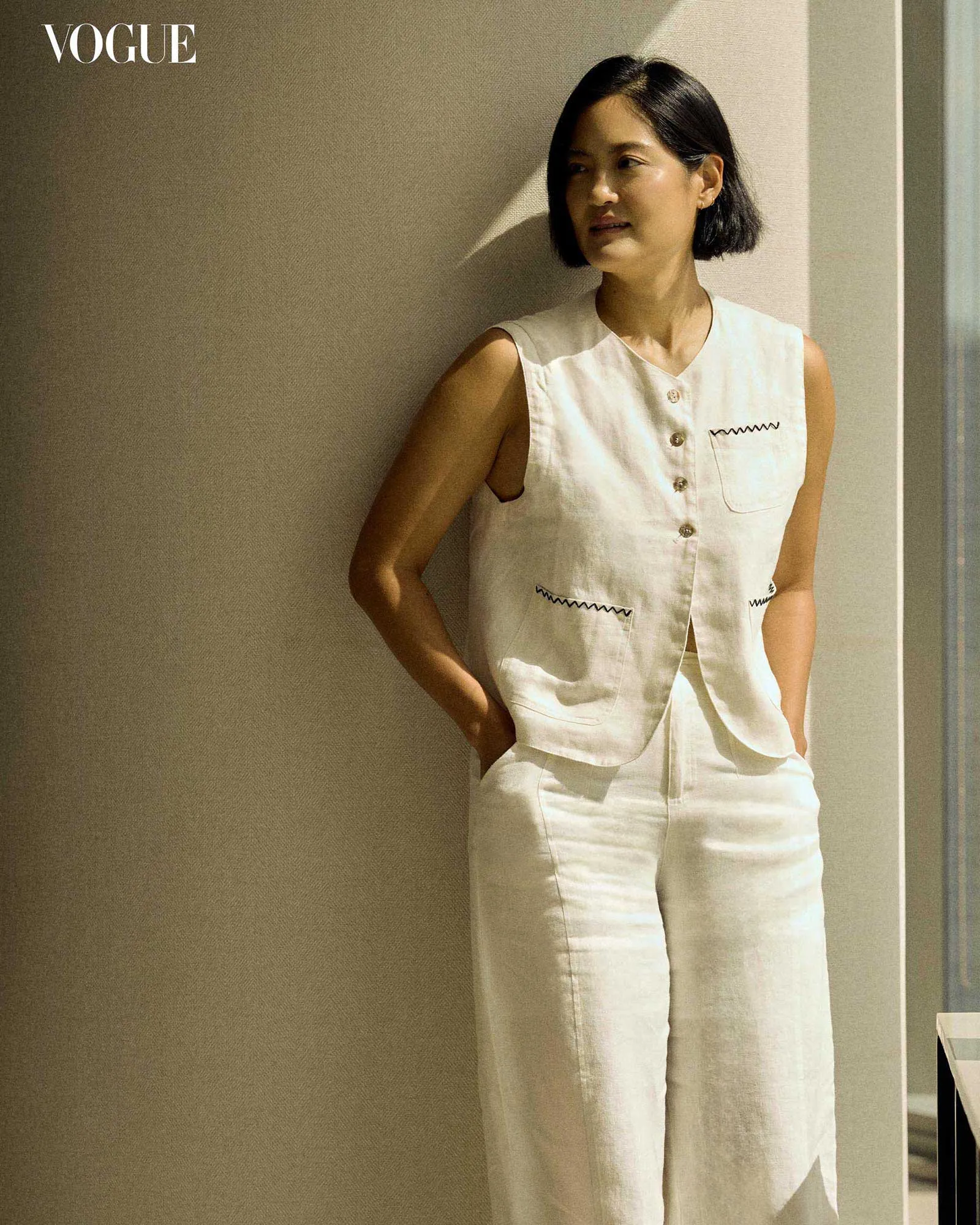
If there is a hallmark to Joyce Wang’s process, it’s rigor, a value she insists on from concept to completion. If the teams decide on a narrative, like chess, they study it deeply, reading everything around it. The narrative becomes a compass should the team lose their way down the line and forget the thread that got them there, or if they get stumped by difficult design choices. “I go back to the deck. What were the images that inspired us? Let’s look at the text again,” she says. It’s a way of keeping the design honest and true to its story.
Wang is looking forward to continuing her relationship with Ayala Land and returning to the Philippines with her team. Her curiosity piqued, she’s eager to explore local craft techniques that could push their material language further. Beyond material, however, what has been surprisingly enriching was working with Filipinos. “The day-to-day kind of humility, it really stays with us,” Wang reflects. “More than the work itself, the relationship is what makes the experience central.” It’s a philosophy that recalls those childhood memories of being welcomed as a guest in a strange land, where, above all, authenticity and human connection make a place feel like home.
By AUDREY CARPIO. Photographs by CHOI NARCISO. Digital Associate Editor: Chelsea Sarabia. Makeup: Christian Ray Arapoc.
Photography assistants: Odan Juan and Tara Reyes.