
Fernando Zóbel: Order is Essential Marks National Gallery Singapore’s First Solo Exhibition on Zóbel


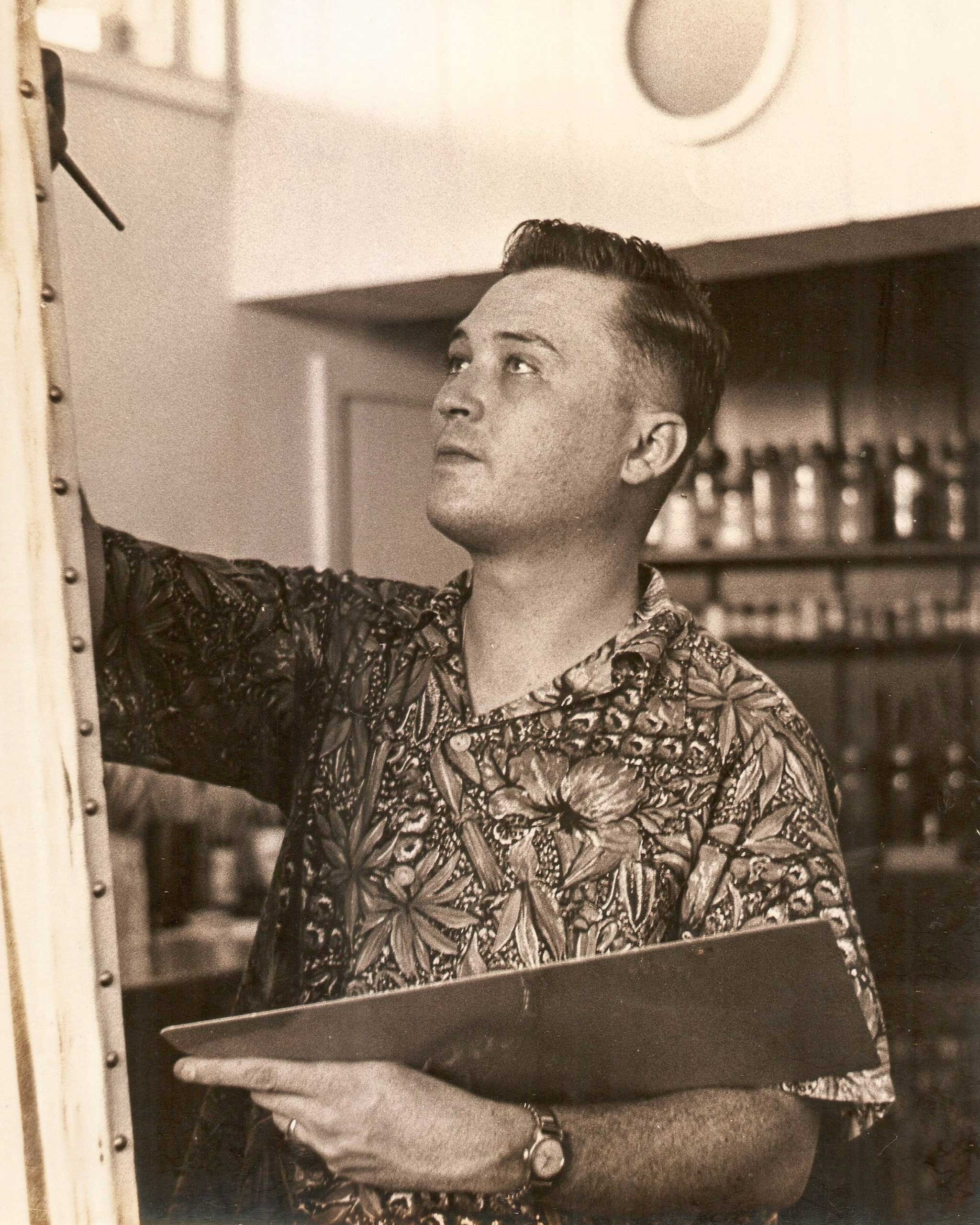
Nap-Jamir, Sr. Fernando-Zóbel, c.1950s, photograph. Archival collection of Nap Jamir II
The National Gallery Singapore presents how the transcontinental abstract artist Fernando Zóbel transformed personal experiences and cross-cultural movement into modern abstraction
Just like his art, Fernando Zóbel is all about structure and finding the beauty and tranquility in it. His principles, in life and art, flow in form and composition, proportion and space, light and shadow. It was a phrase attributed to him: “Order is essential” that the National Gallery Singapore anchors the theme of his first solo landmark exhibition in Singapore.
In many ways, the Philippine-born Spanish artist’s own story unfolded in quiet, deliberate sequence. In 1942, illness paused his education and confined him to bed in wartime Manila. In the periphery of his bedroom, he began sketching portraits of family, views from the window, and a variety of objects. This moment of pause, at age 18, shaped a lifelong practice of disciplined and refined abstraction.
Featuring more than 200 works (paintings, drawings, prints, photographs, and archival materials) Fernando Zóbel: Order is Essential spans across two gallery spaces with one prologue and four sections across the United States, the Philippines, and Spain. Each section presents a phase in the artist’s development, showing how his forms evolved in conversation with place, history, and technique.
The exhibition also features key international artists that Zóbel engaged with and collected in the span of his career, such as Mark Rothko, Antoni Tàpies, and Liu Kuo-sung. Each artist’s original artworks are juxtaposed with Zóbel’s creations.
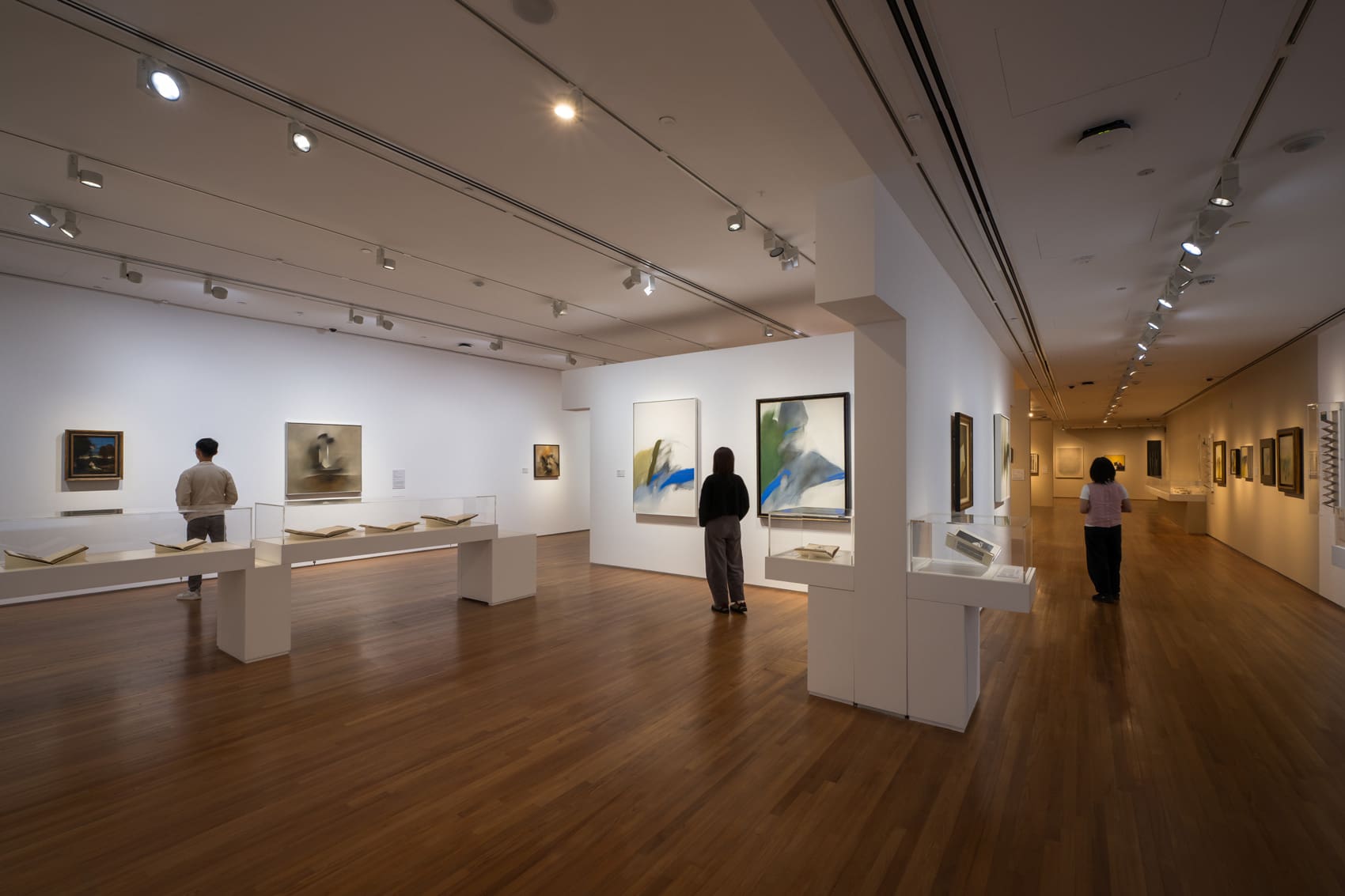
Fernando Zóbel: Order is Essential builds on Zóbel: The Future of the Past, which opened at Museo Nacional del Prado (2022) in Spain and was later restaged at the Ayala Museum (2024) in the Philippines. Expanding on key narratives, the Gallery’s distinct and fresh iteration introduces exclusive works and offers a unique perspective on Zóbel’s artistic evolution and transcontinental practice.
National Gallery Singapore’s exhibition is co-curated by chief curator Dr. Patrick Flores and curator Clarissa Chikiamco, together with the previous iterations’ curators Manuel Fontán del Junco and Felipe Pereda.
“Half of this haunted monk’s life”
The prologue of the exhibition narrates the arc of Zóbel’s journey into the arts across continents by pairing his first and last recorded paintings: Copy of “A Wheatfield with Cypresses by Vincent van Gogh” (1889) and El Puente (1984).
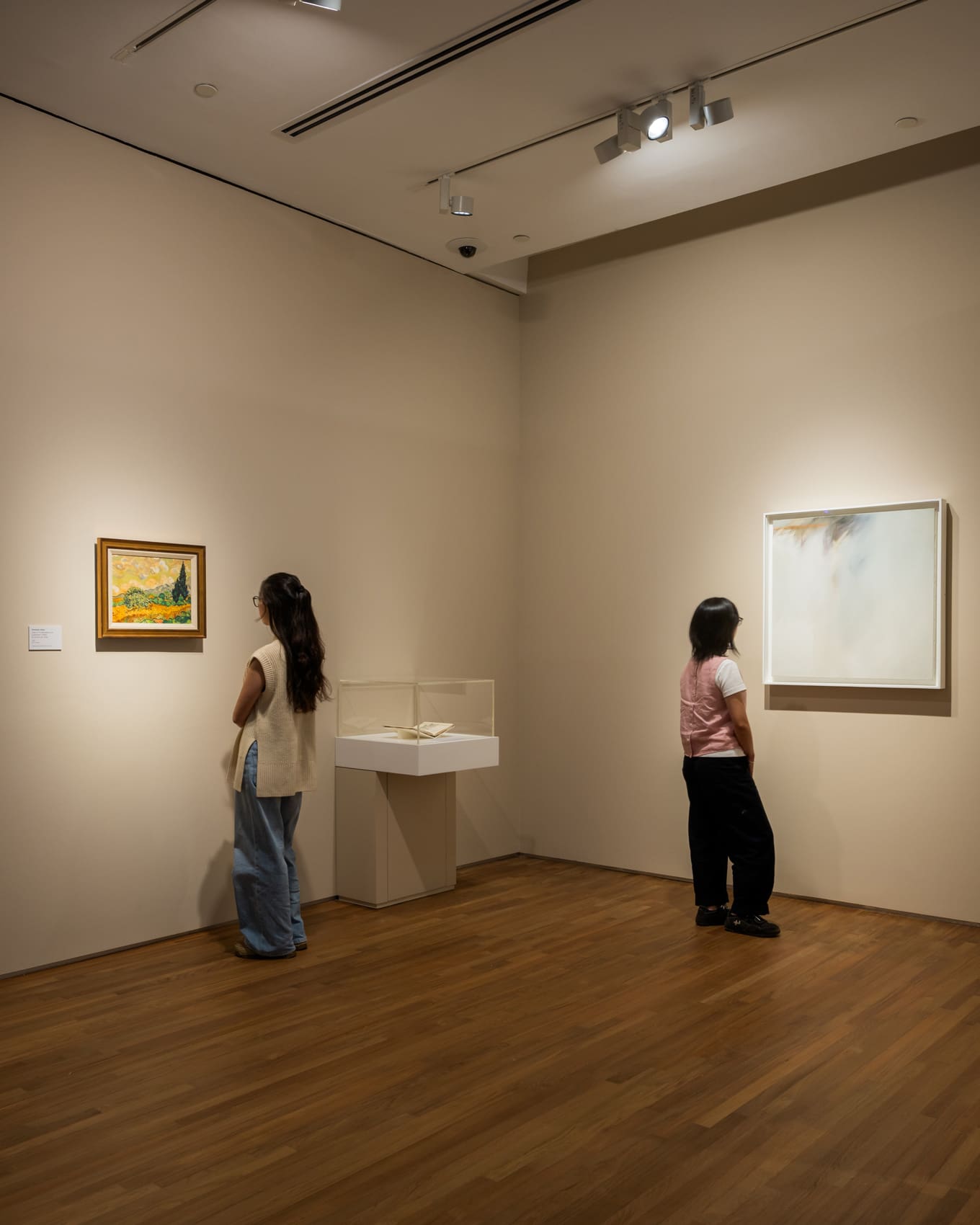
Inspired by a study of Vincent van Gogh’s painting, Zóbel’s piece shows his early inspiration through expressionist work, paired with his painting, El Puente (The Bridge), which was the final work before his passing. In a white canvas, patterns that evoke water ripples and brush strokes that seemingly reference a platform allude to the bridge over a river in Spain where he lived.
“With every single refinement”
In this section, wall projections and paintings recount Zóbel’s formative years in the United States, especially his time at Harvard and the Rhode Island School of Design. In the installations, slides from his Harvard art history class “American Art from the Revolution to the Present Day,” sketches, and pages from his lecture notebook are displayed, giving insight into his rigorous training.
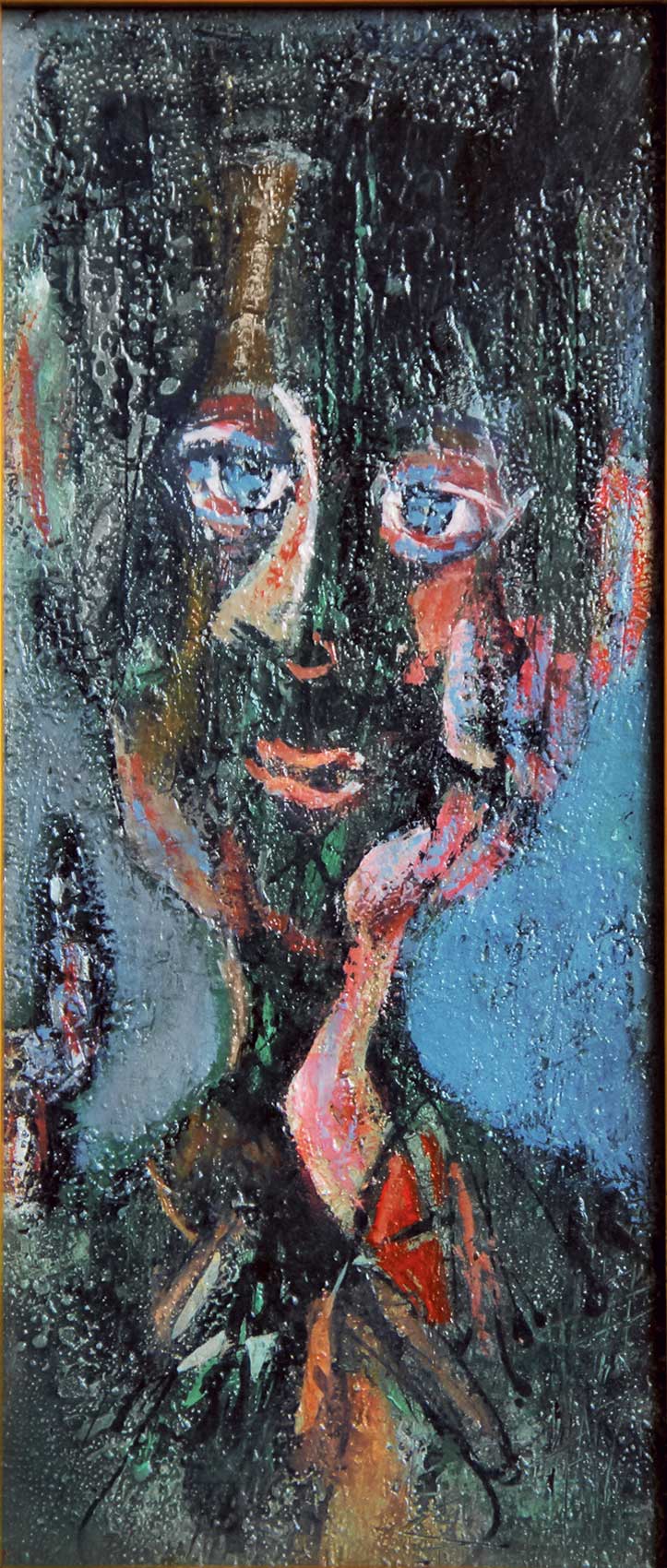
Across it, Portrait of Jim Pfeufer with Clarinet, the depiction of the head of the Graphic Design Program of the Rhode Island School of Design, signifies his transition into learning about American abstract expressionism from Alfonso Ossorio, Mark Rothko and Franz Kline.
“Thin lines against a field of colour”
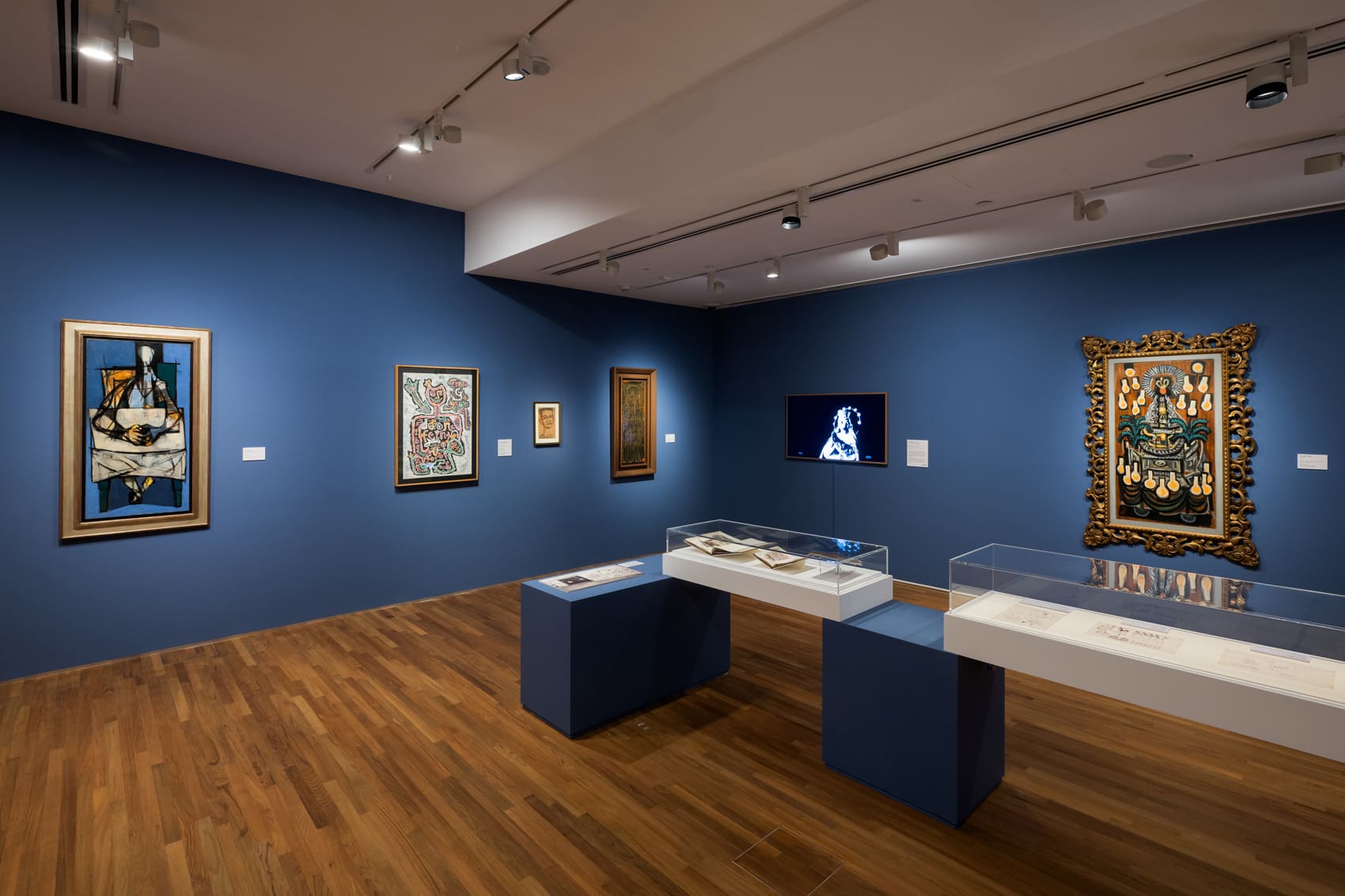
Returning to Manila in the 1950s, Zóbel created works that combined local forms with modernist ideas, with key works including: Carroza (1953), Seated Man (Nothing III) (1953), Saeta 44 (1957), Self-Portrait with Chinese Seal (1952), and Humming Quietly (Undated).
From learning lithography and engraving in the United States, Zóbel marries the principles he had learned and then translated them into pieces inspired by his birthplace, Manila. He also developed an innovative method of applying long, continuous lines of paint with a syringe through his Saeta paintings, which are on display exclusively in National Gallery Singapore’s iteration.
“Movement that includes its own contradiction”
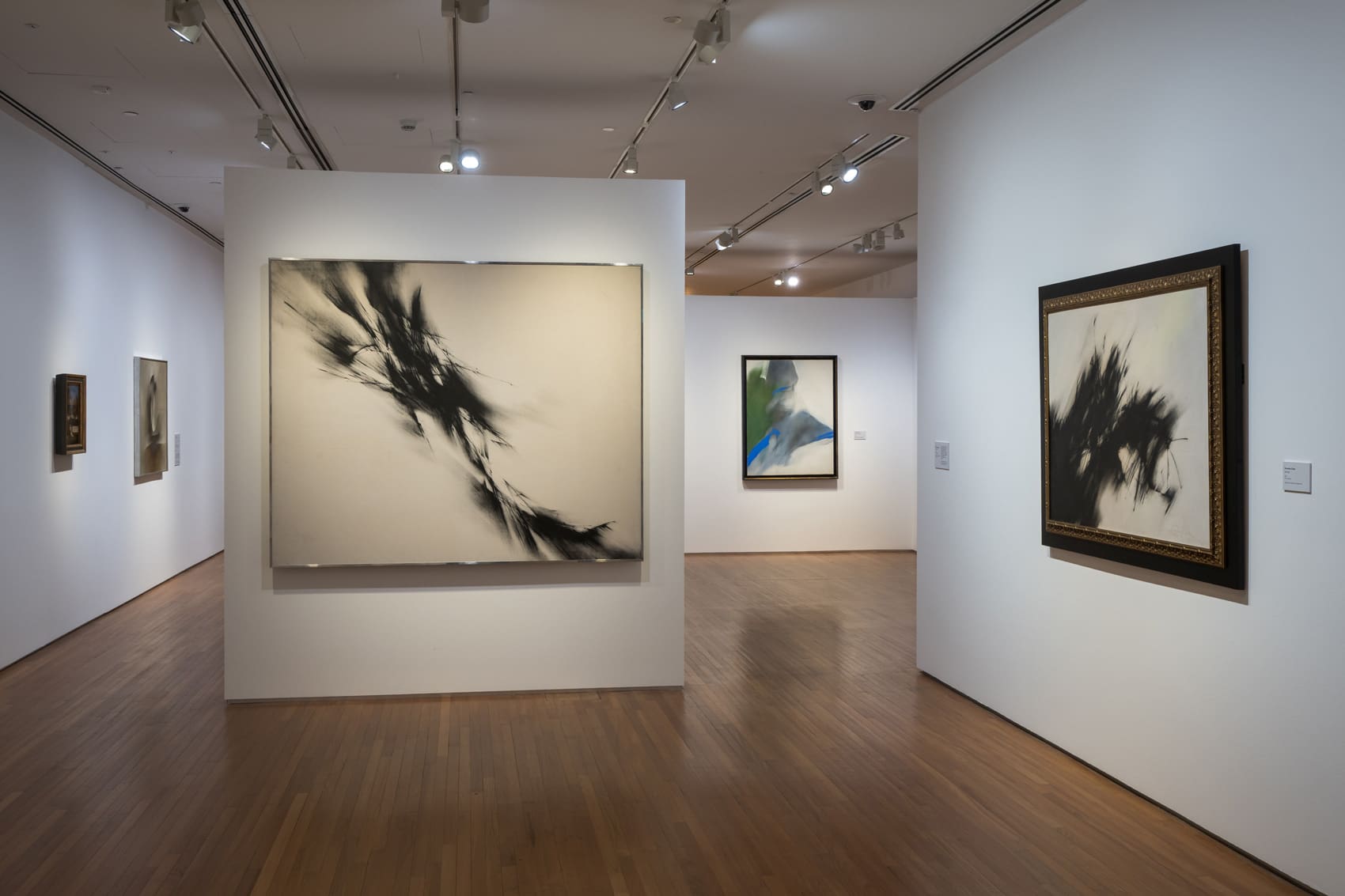
A revisit of his time in Madrid in the 60s, the Spanish painter created Serie Negra (Black Series) as an ode to the Art Informel movement. Zóbel brought darker palettes and abstraction as seen in motion, grid, and the tone of his paintings through La Visión (1961) and El sueño de la Doncella (ii). Conversación con Lorenzo Lotto. (1967).
“The light of the painting”
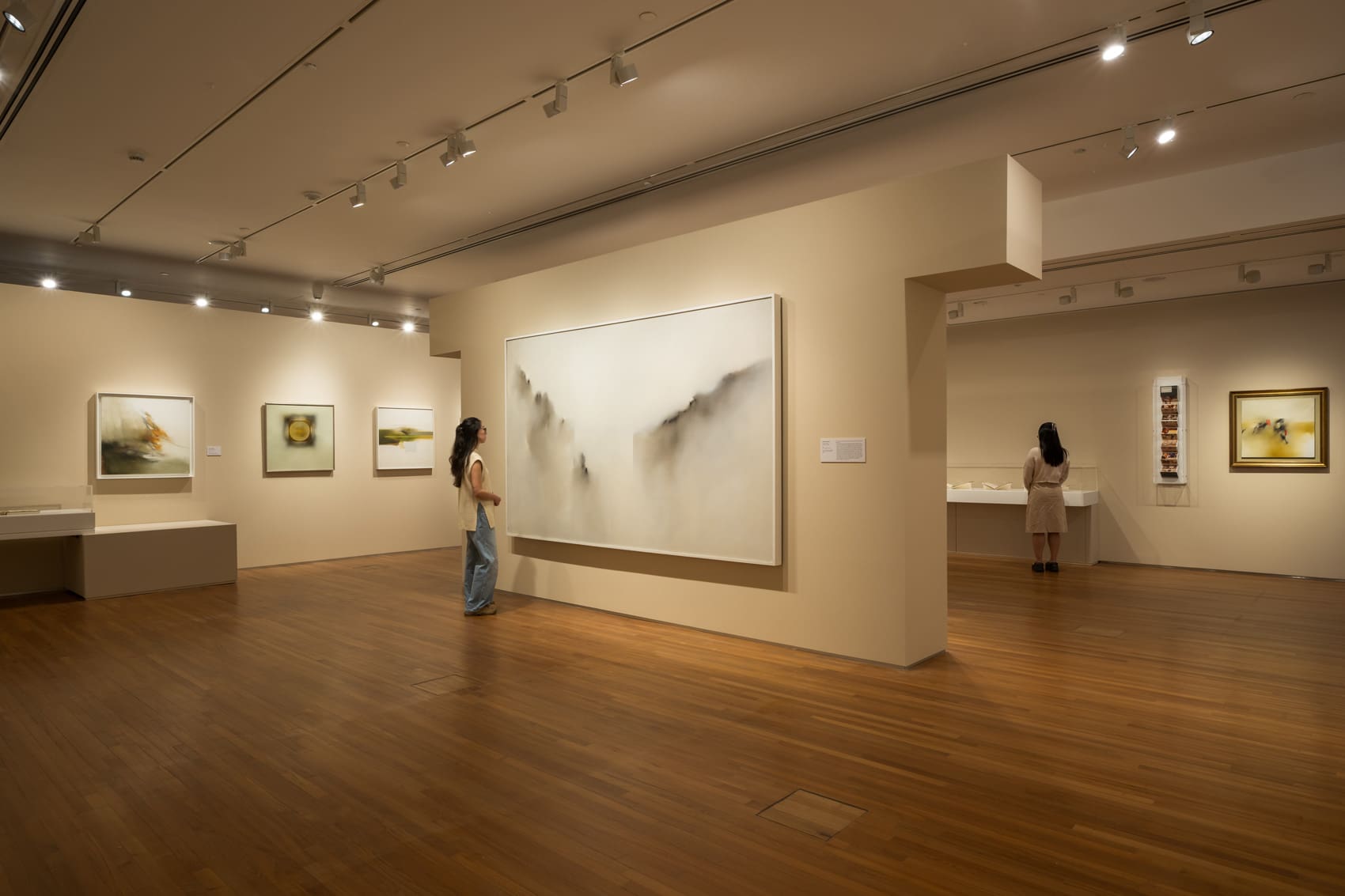
In Cuenca, a city in central Spain where the Philippine-born artist spent most of his later years, Zóbel turned toward light. The final room of the exhibition presents quiet landscapes, blurred football scenes, and memory-infused monochromes as figurative representations and impressions that show his fascination with capturing motion and the passage of time.
Fernando Zóbel: Order is Essential runs from May 9 to November 30, 2025 at the Wu Guanzhong Gallery and Level 4 Gallery at National Gallery Singapore and is presented in close collaboration with Fundación Juan March and the Ayala Museum. For more information, visit National Gallery Singapore’s official website.